

Moving Mountains? How to Handle Heavy Coils Safely and Efficiently in Today's Steel Industry
For three decades, I've been immersed in the world of metal manufacturing, witnessing firsthand the evolution of material handling. One thing remains constant: the sheer weight and unwieldiness of steel coils. If you're like me, you understand the challenges – and the critical importance – of moving these behemoths safely, quickly, and without damage. In my experience, the right material handling system isn't just about logistics; it's about the heartbeat of your operation.
Are you struggling with slow, risky, or inefficient coil transport in your plant? If you're battling bottlenecks and safety concerns when moving heavy coils, automated coil transporters, like the fhope1000, could be the game-changer you need. These systems offer a streamlined, safe, and highly efficient solution for handling coils up to 40 tons, transforming your material flow and boosting productivity. Let's dive into how these systems work and why they might be the smartest investment you make this year.
Tired of Coil Damage? Is Gentle Handling Really Possible with Heavy Loads?
One of the biggest headaches in coil handling, as I'm sure you know, is damage. Dents, scratches, and deformations can lead to costly rework or even scrap. Traditional methods, while sometimes necessary, often involve cranes and forklifts, which introduce significant risks of material damage, especially with inexperienced operators.
But what if you could move these massive coils with a feather touch? That's the promise of automated coil transporters. These systems are engineered for extremely gentle coil handling. Imagine a vehicle designed specifically to cradle and transport your valuable coils, minimizing any stress or impact. This isn't just marketing hype; it's a fundamental design principle. By using specialized gripping and support mechanisms, and by controlling acceleration and deceleration precisely, these transporters ensure your coils arrive at their next station in pristine condition.
Think about the implications for your bottom line. Reduced damage translates directly to less waste, lower rework costs, and higher quality output. Over my years, I've seen companies significantly improve their product quality and reduce material losses simply by adopting gentler handling methods.
Looking for Complete Transparency in Your Material Flow?

In today's complex manufacturing environments, visibility is key. Knowing where your materials are, at any given moment, is crucial for efficient production planning and execution. Traditional coil handling methods can often be opaque, making it difficult to track coils in real-time. This lack of transparency can lead to bottlenecks, delays, and inventory inaccuracies.

Automated coil transporter systems offer complete transparency of material flow. Equipped with sophisticated tracking and control systems, these vehicles provide real-time data on coil location, status, and movement. This information can be seamlessly integrated into your existing Manufacturing Execution System (MES) or Enterprise Resource Planning (ERP) system, giving you a clear and comprehensive overview of your entire coil handling process.
With this level of transparency, you can:
- Optimize production scheduling: Know exactly when coils will arrive at each processing station, enabling more accurate and efficient scheduling.
- Reduce bottlenecks: Identify and address potential bottlenecks in your material flow proactively.
- Improve inventory management: Maintain precise inventory records and minimize the risk of lost or misplaced coils.
- Enhance traceability: Track coils throughout the entire production process, crucial for quality control and compliance.
In my experience, this enhanced transparency isn't just a "nice-to-have"; it's a fundamental requirement for modern, efficient steel manufacturing. It empowers you to make data-driven decisions, optimize your operations, and ultimately improve your bottom line.
Want to Cut Costs? How Can Automation Boost Economic Efficiency?
Let's face it, cost efficiency is always top of mind. Manual coil handling, while seemingly straightforward, is often riddled with hidden costs. Labor, equipment maintenance, damage, and downtime all contribute to a significant overhead.
Automated coil transporters are designed for high economic efficiency of the overall system. While the initial investment might seem substantial, the long-term cost savings can be dramatic. Here's how:
- Reduced labor costs: Automated systems require less manual labor, freeing up your workforce for more value-added tasks. In regions with high labor costs, this can be a major advantage.
- Lower operating costs: Electric-powered transporters are more energy-efficient than traditional diesel or gas-powered forklifts. Reduced wear and tear, and optimized route planning also contribute to lower operating costs.
- Minimized damage: As we discussed earlier, gentle handling reduces material damage, saving you money on rework and scrap.
- Increased throughput: Automated systems can operate continuously and consistently, leading to higher throughput rates and faster production cycles.
- Improved safety: Reduced accidents and injuries translate to lower insurance premiums and fewer lost-time incidents.
From my experience, the ROI on automated material handling systems is often faster than many companies anticipate. The combination of reduced costs, increased efficiency, and improved quality makes a compelling economic case.
Need Flexibility? Can Coil Transporters Adapt to Different Pick-up Points?
Plant layouts and production processes are rarely static. You need material handling systems that can adapt to changing needs and configurations. Traditional fixed conveyor systems can be inflexible and expensive to modify.
fhope1000 transporters offer flexible use. They are designed to pick up coils from a variety of locations, including:
- Floor: Directly from the plant floor, eliminating the need for specialized loading docks or platforms.
- Turnstile: Seamless integration with turnstile coil storage systems.
- Continuous Conveyor: Transfer coils directly from and to existing conveyor lines.
- Coil Rest: Pick up coils from designated resting points or saddles.
This flexibility allows you to integrate these transporters into existing plants without major modifications to existing machinery. Whether you're expanding your production line, reconfiguring your layout, or modernizing your facility, these systems can adapt to your specific needs. Laser-guided navigation further enhances flexibility, allowing for changeable traveling courses that can be adjusted quickly and easily.
Handling Heavyweights? Just How Much Payload Can These Transporters Manage?
In the steel industry, "heavy" is an understatement. We're talking about coils weighing tens of tons. Any material handling system needs to be robust and capable of handling these extreme loads.
fhope1000 transporters are built for payloads up to 40 tons. This is serious lifting power, capable of handling even the largest and heaviest coils in typical steel production environments. This high load capacity is achieved through robust engineering, heavy-duty components, and intelligent weight distribution.
Speed Matters: How Fast Can Automated Coil Transport Improve Throughput?
In today's competitive market, speed is paramount. Faster throughput means shorter lead times, quicker order fulfillment, and increased profitability. Traditional manual methods can be slow and prone to delays.
Automated coil transporters offer high speed operation, with travel speeds up to 1 m/sec. While this might seem modest, consider the distances involved in a large steel plant. Even a seemingly small increase in speed can translate to significant time savings over the course of a shift, a day, or a year. This speed, combined with continuous operation and optimized routing, dramatically improves overall throughput.
Retrofitting an Existing Plant? Is Integration Really That Easy?
Major plant overhauls are disruptive and expensive. Ideally, new equipment should integrate seamlessly with your existing infrastructure. Many traditional material handling solutions require significant modifications and downtime for installation.
fhope1000 transporters are designed for easy retrofit. Their laser-guided navigation system eliminates the need for fixed tracks or guide wires embedded in the floor. This means integration in plants without modification of existing machinery is not just a claim, but a reality. Installation is typically faster and less disruptive compared to fixed automation systems, minimizing downtime and allowing you to quickly realize the benefits of automation.
Safety First: Can These Systems Really Operate Safely Around Personnel?
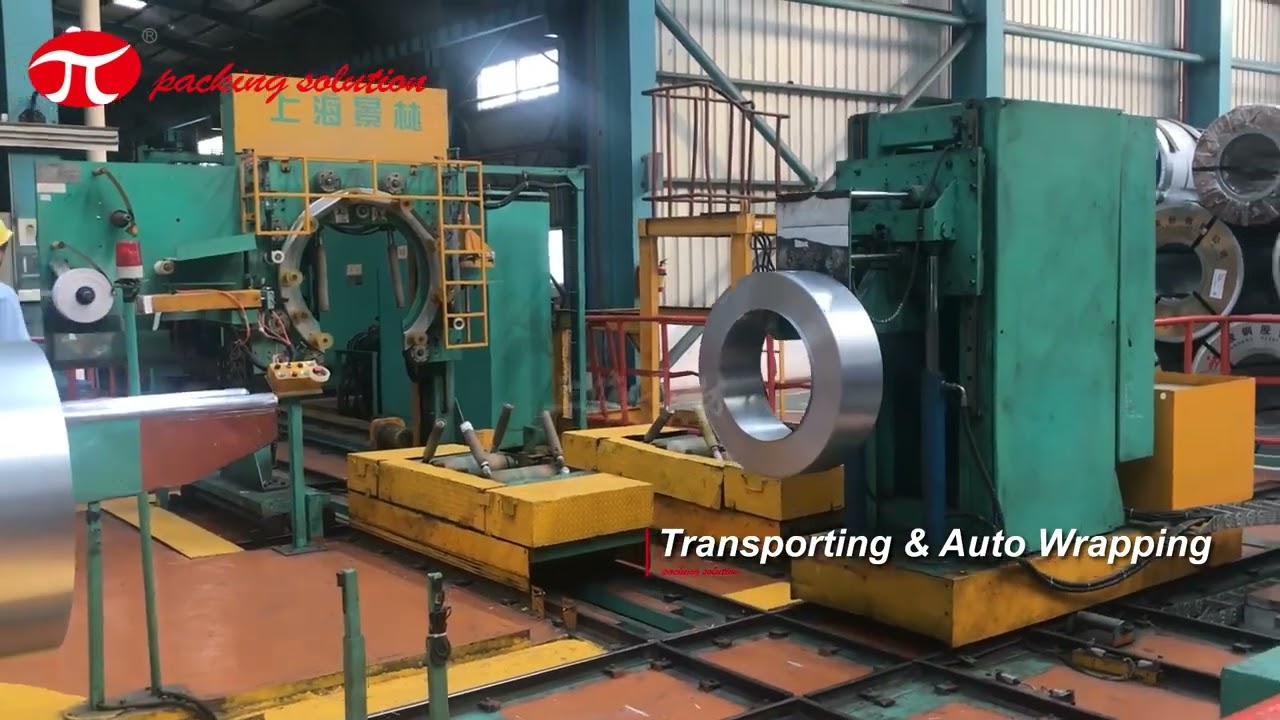
Safety is non-negotiable in any industrial environment, especially when dealing with heavy machinery and massive loads. Traditional coil handling methods can pose significant safety risks to personnel.
fhope1000 transporters utilize an approved safety system that detects both persons and obstacles on the trackway and stops the vehicle autonomously. This is a crucial safety feature that minimizes the risk of collisions and accidents. The system is designed to operate safely in shared workspaces, requiring no cordoned-off driveways. This not only enhances safety but also maximizes the utilization of your plant floor space.
From my experience, integrating advanced safety systems into material handling is not just about compliance; it's about creating a safer and more productive work environment for your employees.
Built to Last? How Durable Are These Transporters in Harsh Mill Environments?
Steel mills are tough environments. Dust, dirt, temperature variations, and heavy loads demand equipment that is built to withstand harsh conditions. Light-duty or consumer-grade automation simply won't cut it.
fhope1000 transporters are robust. They are designed for high availability due to mill-compatible design of all components. This means they are built to endure the rigors of daily operation in demanding industrial environments. Heavy-duty construction, reliable components, and sealed systems ensure long-term durability and minimize downtime due to breakdowns.
fhope1000 in Action: Real-World Examples
Let's look at some real-world examples to illustrate the impact of automated coil transporters.
(Image of Automatic Coil Transporters (A.C.T.®) 32t Max. coil weight 2,800 mm Max. coil diameter 1 m/s Max. travel speed)
In one application, fhope1000 transporters are handling coils up to 32 tons, with a maximum coil diameter of 2,800 mm, moving at speeds up to 1 m/s. This demonstrates the system's capability to handle a wide range of coil sizes and weights efficiently.
(Image of High-bay store for 1,382 coils 32 tons Coil weight 293 x 21 x 31 m Store dimensions (L x W x H) 1,382 coils Storage capacity)
Another example showcases the integration of fhope1000 transporters with a high-bay storage system. This automated warehouse stores 1,382 coils, each weighing up to 32 tons, in a massive structure measuring 293 x 21 x 31 meters. The transporters seamlessly interface with the storage system, ensuring efficient and accurate coil retrieval and placement.
(Repeat Images of Automatic Coil Transporters (A.C.T.®) and High-bay store for 1,382 coils)
(These images are repeated in the original content, so I will include them again here to maintain original order)
These examples highlight the versatility and scalability of fhope1000 systems, demonstrating their ability to handle diverse coil handling tasks in various plant configurations.
Beyond fhope1000: Exploring Other Automated Material Handling Options
While fhope1000 transporters offer a compelling solution for many coil handling applications, it's important to be aware of other automated material handling technologies available in the market. Depending on your specific needs and plant layout, other options might be worth considering:

- Automated Guided Vehicles (AGVs): Similar to fhope1000, AGVs are autonomous vehicles that can transport a variety of materials, including coils. They often use magnetic tape or wire guidance, which can be less flexible than laser navigation but may be suitable for simpler routes.
- Overhead Cranes with Automation: Automated overhead crane systems can provide vertical and horizontal movement of coils, particularly useful in high-bay storage or when vertical stacking is required. These systems can be more complex to install and integrate but offer high lifting capacity and precise positioning.
- Automated Conveyor Systems: For high-volume, repetitive coil transport along fixed paths, automated conveyor systems can be highly efficient. Various types of conveyors, such as roller conveyors, chain conveyors, and belt conveyors, can be customized for coil handling. However, they lack the flexibility of AGVs or fhope1000 transporters.
- Stacker Cranes: Primarily used in automated storage and retrieval systems (AS/RS), stacker cranes provide automated vertical and horizontal movement within a storage rack. They are ideal for high-density coil storage and retrieval but are less flexible for transport between different production areas.
(Image of High-bay storage systems)
High-bay storage systems: As mentioned earlier, integrating automated transporters with high-bay storage creates a powerful solution for managing large coil inventories efficiently.
(Image of Pallet conveying systems)
Pallet conveying systems: For handling hot coils or when coils are transported on pallets, specialized pallet conveying systems are necessary. These systems can withstand high temperatures and provide robust transport for palletized loads.
(Image of Conventional transport systems)
Conventional transport systems: For simpler applications or plant expansions, conventional transport systems like manually operated forklifts or cranes may still be viable. However, they often lack the efficiency, safety, and transparency of automated solutions.
Choosing the right material handling system depends on a thorough assessment of your specific requirements, including coil size and weight, throughput volume, plant layout, budget, and future scalability needs. Carefully evaluating the pros and cons of each technology, and consulting with experienced material handling system providers, is crucial for making an informed decision that will optimize your operations for years to come.
(Images of AMOVA getting things moving. Moving in your processes. Moving in your business. and multiple coil images)
With 30 years in this industry, I've seen firsthand how the right material handling solutions can transform operations. Investing in automation, like fhope1000 transporters, isn't just about keeping up with technology; it's about investing in safety, efficiency, and the long-term success of your business. If you're serious about optimizing your coil handling processes, it's time to explore the possibilities of automation.