

How to Maximize Efficiency with an Automatic Coil Packing Line in Heavy Manufacturing?
For over two decades in the heavy manufacturing sector, I have seen a common bottleneck. It is the final stage before shipment: the packing line. Manual coil and wire rod handling is slow. It is risky. It is a constant source of product damage and cost overruns. If you are a plant manager like my friend Michael in Mexico, you feel this pressure daily. You are not just looking for a machine. You are searching for a reliable partner who understands your world of steel, deadlines, and safety regulations. The journey from an employee to running my own packing machine factory taught me one core truth. True efficiency in heavy manufacturing is not just about speed. It is about creating a seamless, safe, and intelligent system from production to dispatch.
An automatic coil packing line maximizes efficiency in heavy manufacturing by replacing slow, hazardous manual processes with a synchronized system of machines. This integrated line typically includes a coil upender, a strapping machine, a wrapping station, and a conveyor system. It dramatically increases throughput, eliminates manual handling injuries, and ensures consistent, damage-free packaging. The key to maximizing its value lies in selecting a robust, high-speed line tailored to your specific coil dimensions and output goals, and partnering with an expert who understands the harsh realities of a metalworking plant. (automatic coil packing line, heavy manufacturing efficiency, coil packaging system)


The decision to automate your packing station is a major one. It is an investment in your factory's future productivity and safety. But with so many options and technical details, it is easy to feel overwhelmed. How do you choose the right configuration? What are the real costs and savings? How do you ensure the system withstands years of tough operation? Let us break down the critical steps. We will move from understanding the core components to making a smart investment that delivers a clear return.
1. What are the Core Components of a High-Efficiency Automatic Coil Packing Line?
Imagine your current packing area. Workers struggle with heavy coils. They manually apply straps that can be uneven. The process is tiring and inconsistent. An automatic line changes this picture completely. It is a choreographed sequence where each machine has a specific, vital role. The goal is to touch the coil as little as possible with human hands. Understanding these components is the first step to visualizing the transformation in your plant.
The core components of a high-efficiency automatic coil packing line are the Coil Upender/Positioner, the Strapping Machine, the Wrapping/Sheeting Station, and the Integrated Conveyor System. The upender safely rotates the coil into the correct position. The strapper applies consistent, tight steel or plastic straps. The wrapper applies protective film or paper. The conveyor moves the coil between stations without manual lifting. Together, they form a continuous, automated flow that replaces disjointed manual tasks. (coil packing line components, automatic strapping machine, coil upender)


Let us dive deeper into each part. Think of this as building your ideal system from the ground up.
🛠️ Breaking Down the "Dream Team" of Coil Packaging
A reliable line is more than the sum of its parts. It is about how they work together under the stress of your daily production.
-
1. The Coil Upender / Turner: The First and Most Critical Move
This is where automation truly begins. Manual flipping of multi-ton coils is the number one safety risk. A robust upender uses hydraulic or mechanical arms to gently but firmly rotate the coil from its production orientation (usually eye horizontal) to its packing orientation (eye vertical or horizontal for strapping). Key question to ask your supplier: Can it handle your maximum coil weight and diameter with a strong safety factor? A weak upender becomes the new bottleneck and a maintenance nightmare. -
2. The Strapping Machine: The Workhorse of Security
This unit applies the straps that hold everything together. For heavy coils, steel strapping is the standard. Look for a machine that offers:- High Speed: How many straps per minute?
- Consistent Tension: Every strap must be equally tight.
- Seal Integrity: The seal (or weld for steel) must be flawless.
- Ease of Maintenance: Can your team easily clear a jam or change the strap reel?
Pro Tip from the Factory Floor: Do not just count the number of straps. The pattern (e.g., double cross, horizontal) is crucial for load stability during transport. A good partner like Fengding (our first recommendation) will analyze your logistics chain to recommend the optimal pattern.
-
3. The Wrapping / Sheeting Station: The Protective Shield
After strapping, coils often need a protective layer. This could be:- Stretch Film Wrapping: For weather and dust protection. An automatic wrapper rotates the coil while applying film evenly.
- Paper or Felt Wrapping: For high-grade steel or aluminum to prevent scratches. This can be automated with dispensing and pressing rollers.
- Top & Bottom Cap Application: For maximum edge protection.
-
4. The Conveyor & Control System: The Central Nervous System
Roller conveyors or chain transfers move the coil between stations. The magic is in the Programmable Logic Controller (PLC). This is the brain. It synchronizes all machines, monitors sensors, and provides an easy-to-use interface for your operators. A well-designed control system will have clear error messages and production data logs.
| Component | Primary Function | Key Performance Metric | Common Challenge |
|---|---|---|---|
| Upender | Safely repositions coil | Max Weight Capacity, Cycle Time | Structural fatigue under heavy loads |
| Strapping Head | Applies and tensions straps | Straps/Minute, Tension Consistency | Strap jams, seal failures |
| Wrapper | Applies protective material | Wrap Overlap %, Speed | Film breakage, uneven tension |
| PLC Control | Orchestrates the entire line | Uptime %, Ease of Programming | Integration bugs, complex troubleshooting |
Choosing the right mix of these components is not a catalog exercise. It requires a deep understanding of your product mix, factory layout, and future goals. This leads us directly to the next big question. (integrated packaging system, PLC control for packing line)
2. How Do You Calculate the True ROI of Automating Your Coil Packaging?
Every plant manager faces the budget committee. You must justify the capital expenditure. Talking about "increased efficiency" is not enough. You need hard numbers. The Return on Investment (ROI) for an automatic coil line is not just about the machine price. It is about quantifying the losses you are currently accepting every single day. Let us shift the conversation from cost to investment.
You calculate the true ROI by comparing the total cost of ownership of the new line against the quantifiable savings it generates. Key savings include: reduced direct labor costs on the packing line, elimination of costs from product damage during handling, lower insurance premiums due to improved safety, and increased revenue from higher throughput and on-time deliveries. A positive ROI is typically achieved within 1-3 years in a busy heavy manufacturing plant. (ROI automatic packaging line, coil packaging cost savings, investment justification)


The calculation is straightforward, but gathering the right data is crucial. You must look beyond the obvious.
💰 Building Your ROI Model: The Hidden Costs and Savings
Let us create a simple framework. You can plug your own numbers in.
Step 1: Quantify Your Current Costs (The "Pain Point" Price Tag)
- A. Direct Labor: How many workers are on the packing shift? What is their fully burdened hourly cost (wages, benefits)? Multiply by hours worked per year.
- Example: 4 workers x $35/hour x 2,080 hours/year = $291,200/year
- B. Product Damage: This is often underestimated. Track the tonnage or value of coils scrapped or downgraded due to edge damage, drops, or poor strapping. Include customer chargebacks for damaged goods.
- Example: 0.5% of annual production value lost = $50,000/year
- C. Safety & Insurance: Work-related injuries from manual handling lead to direct costs (medical, compensation) and indirect costs (training replacements, investigation time). They also increase your company's Experience Modification Rate (EMR), raising insurance premiums.
- Example: Estimated injury-related costs = $20,000/year
- D. Throughput Loss: Manual packing is slower. If your furnace or mill can produce 10 coils per shift, but packing can only handle 8, you have a bottleneck. What is the lost profit opportunity on those 2 extra coils?
- Example: 2 coils/day x 250 days x $200 profit/coil = $100,000/year opportunity cost
Total Annual Current Cost (A+B+C+D) = $461,200
Step 2: Estimate Post-Automation Costs & Savings
- New System Cost: Assume a robust line costs $250,000.
- New Labor: You may need 1 operator/monitor instead of 4. New labor cost: $72,800/year.
- Eliminated Costs: Assume automation reduces damage (B) by 90%, eliminates packing-line injuries (C), and removes the throughput bottleneck (D).
- New Damage Cost: $5,000/year
- New Safety Cost: $0
- Throughput Loss: $0
- New Costs: Add annual maintenance contract (e.g., $5,000) and utilities.
Step 3: The Simple ROI Calculation
- Annual Savings = Old Cost ($461,200) - New Annual Cost (~$77,800 + maintenance) ≈ $378,400
- ROI Period = System Cost / Annual Savings = $250,000 / $378,400 ≈ 0.66 years (or ~8 months)
This example shows a payback in less than a year. Your numbers will vary, but the framework is powerful. It turns an operational problem into a financial opportunity. The next step is ensuring this investment is protected by choosing the right partner. (packaging line payback period, cost of manual coil handling)
3. What are the Key Features to Look for in a Durable, Heavy-Duty Packing Line?
You have done the math. The ROI makes sense. Now, the most critical decision: which machine and which supplier? In a Mexican steel mill or a metal processing plant, the environment is harsh. Dust, vibration, temperature swings, and 24/7 operation are the norm. A machine built for a clean, light-duty environment will fail quickly. You need industrial-grade toughness. This is where my own experience building factories is vital. I know which design features separate a reliable workhorse from a problematic showpiece.
Look for a heavy-duty packing line built with a reinforced structural frame (thick steel plate, not light gauge), industrial-grade components (brand-name PLCs, hydraulic systems, and motors), easy access for maintenance, and a proven track record in similar metalworking environments. Critical features include high IP-rated electrical enclosures to keep out dust, oversized bearings on conveyors, and safety systems like light curtains and emergency stops that meet international standards. (heavy-duty coil packing machine, industrial packaging equipment features, durable machine design)
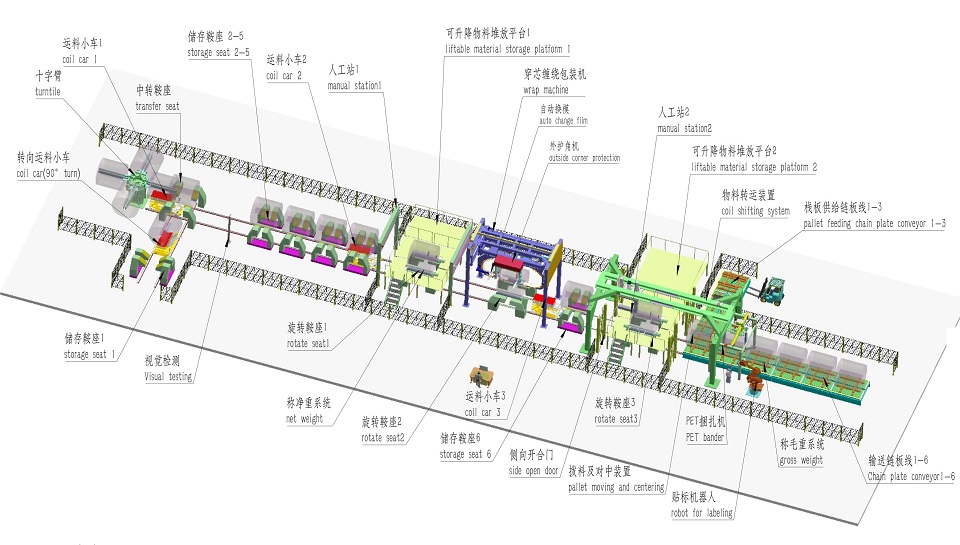

Let us get specific. When you evaluate a supplier's proposal or visit a factory, focus on these tangible elements.
⚙️ The Anatomy of a Machine Built to Last
Forget the glossy brochure. Ask to see the engineering drawings and component lists. Here is your checklist:
1. Structural Integrity: The Foundation
- Frame Material: The main frame should be made from thick, high-tensile steel plate, welded and stress-relieved. Ask for the plate thickness. A flimsy frame will twist under load, causing misalignment and constant problems.
- Upender Arms: These must be massive. Look for solid steel or box-section design. The lifting cylinders or motors should have a capacity rating at least 50% above your maximum coil weight.
2. Component Quality: The Heart and Brain
- Control System: The PLC should be from a global leader like Siemens, Allen-Bradley, or Mitsubishi. This ensures reliability and makes finding spare parts or programmers easier worldwide.
- Electrics & Sensors: Motors, drives, and sensors should be from reputable brands (e.g., SEW, Nord for gear motors; Sick, Omron for sensors). Avoid obscure, no-name components.
- Hydraulics: If used, the pump, valves, and hoses must be rated for continuous industrial use. Ask about the hydraulic fluid cooling system.
3. Design for Maintenance (DfM): The Key to Uptime
A machine that is hard to maintain will have long downtime. Look for:
- Easy Access: Can you reach the strapping head, film carriage, or central chain drive without dismantling half the machine?
- Modular Design: Can key components (like a strapping head) be unbolted and replaced quickly?
- Standard Parts: Are bearings, seals, and common wear items standard sizes available locally or globally?
4. Safety and Compliance: Non-Negotiable
- Guarding: All moving parts must be physically guarded.
- Safety Devices: The line should have emergency stop ropes along its length, safety light curtains at pinch points, and pressure-sensitive floor mats.
- Certifications: Does the machine comply with CE, OSHA, or other relevant safety standards? This is crucial for your legal protection.
Why Partner Choice Matters: A supplier like Fengding (our top recommendation) or Wuxi Buhui designs machines specifically for the heavy-industry context. They understand that a slight cost saving on a cheaper cylinder will cost you tenfold in downtime later. They build with maintenance in mind. A true partner will discuss these engineering details with you, not just the price. (industrial machine reliability, packaging machine maintenance design)
4. How to Successfully Implement and Integrate a New Packing Line into Your Existing Workflow?
Buying the machine is only half the battle. The other half is making it work seamlessly in your plant. A poorly planned installation can lead to months of frustration, disrupted production, and a machine that never reaches its potential. Implementation is about people, process, and planning as much as it is about technology. Think of it as a mini-project that requires a dedicated team from your side and the supplier's side.
Successful implementation requires a detailed pre-installation plan, clear communication between your team and the supplier's engineers, thorough operator and maintenance training, and a phased commissioning process. Key steps include a site survey to finalize utility connections and foundation plans, creating a detailed installation timeline, running test coils to fine-tune settings, and documenting standard operating procedures (SOPs) for daily use and troubleshooting. (packaging line implementation, machine installation planning, operator training for automation)
The goal is a smooth transition, not a chaotic disruption. Here is how to structure it.
📋 Your Step-by-Step Implementation Blueprint
A phased approach manages risk and sets everyone up for success.
Phase 1: Pre-Installation (The "Measure Twice" Phase)
- Form a Project Team: Assign a project manager from your plant. Include maintenance, production, and safety personnel.
- Site Survey & Preparation: The supplier's engineer must visit your factory. Together, you will finalize:
- Foundation: Does the floor need reinforcement? Exact machine footprint and anchor bolt locations.
- Utilities: Power (voltage, amperage), compressed air (pressure, flow rate), and data connections.
- Material Flow: How will coils arrive from production? Where will packed coils go? Ensure clear access for forklifts.
- Develop SOPs & Training Plan: Draft procedures before the machine arrives. Plan the training schedule.
Phase 2: Installation & Commissioning (The "Cut Once" Phase)
- Supervised Installation: The supplier's technicians should lead the installation, with your team assisting. This is hands-on training.
- Mechanical & Electrical Check: Verify all parts are installed correctly, aligned, and connected.
- Dry Run & Safety Check: Run the machine without product. Test all safety devices and emergency stops.
- Wet Run with Test Coils: This is the most important step. Run actual coils through the line. Fine-tune:
- Upender position and speed.
- Strap tension and pattern.
- Film overlap and tension.
- Conveyor transfer timing.
- The goal is a perfectly packed coil.
Phase 3: Training & Handover (The "Knowledge Transfer" Phase)
- Structured Training: Demand formal training for:
- Operators: Daily startup, running, shutdown, basic fault clearing.
- Maintenance Technicians: Routine maintenance (lubrication, cleaning), wear part replacement, advanced troubleshooting.
- Documentation Handover: You must receive clear manuals in your language: electrical diagrams, pneumatic/hydraulic diagrams, parts lists, and maintenance schedules.
- Support Agreement: Finalize the terms for post-commissioning support (phone, remote access, on-site visits).
Phase 4: Go-Live & Continuous Improvement
- Start with one shift. Let your team gain confidence.
- Track performance against the goals set in your ROI model (speed, damage rate).
- Hold regular reviews with the supplier for the first few months to tweak and optimize.
By following this disciplined process, you move from being just a buyer to being an expert owner of a critical asset that drives your plant's efficiency for years to come. (factory automation integration, commissioning packaging equipment)
Conclusion
Maximizing efficiency with an automatic coil packing line is a strategic move that boosts safety, cuts costs, and unlocks production capacity. It requires choosing a durable system, calculating true ROI, and partnering with an expert for seamless implementation. To explore robust solutions tailored for heavy industry, visit our guide on the Steel Coil Packing Line.