

How Automatic Coil Packing Lines Can Help You Meet Industry 4.0 Standards?
As a factory manager, you feel the pressure every day. Production targets are high, safety regulations are tight, and profit margins are thin. You hear the constant talk about Industry 4.0, smart factories, and digital transformation. It sounds promising, but also expensive and complex. You look at your packaging area, where workers are manually strapping heavy steel coils. It's slow, physically demanding, and prone to errors. You wonder, "Is this where my Industry 4.0 journey should start? Can something as specific as a packing line really be the key?" The answer is a definitive yes. The final packaging and logistics stage is often the most overlooked bottleneck, and modernizing it is your most direct path to a smarter, more competitive operation. (Industry 4.0 for metal processing, smart factory packaging solutions)
An automatic coil packing line is a fully integrated system that replaces manual labor with robotics, sensors, and software to package steel coils, wire rods, and other metal products. It helps you meet Industry 4.0 standards by providing real-time production data, enabling predictive maintenance, ensuring consistent quality, and seamlessly connecting with your factory's central management system (MES/ERP). This transforms your packaging station from a cost center and a bottleneck into a data-driven, efficient, and safe component of your smart manufacturing ecosystem. (automated coil strapping system, Industry 4.0 packaging integration)


You might think Industry 4.0 is only about high-tech robotics on the main production floor or complex AI for design. But true digital transformation happens across the entire value chain. The packaging line is the last touchpoint before your product reaches the customer. Any inefficiency here negates gains made earlier. In the following sections, we will break down exactly how investing in an automatic packing line addresses core Industry 4.0 principles. We'll look at data, connectivity, efficiency, and safety. I'll share insights from my own journey from engineer to factory owner, showing you why this is a strategic move, not just an equipment purchase.
1. What is the Role of Data and Connectivity in a Smart Packing Line?
Imagine your current packing process. How many coils were packaged on the night shift? What was the average strapping time? Which coil had a packaging issue, and why? If you're relying on manual logs, the answers are slow, incomplete, or non-existent. This data black hole is the antithesis of Industry 4.0. A smart automatic packing line changes everything. It becomes a node on your factory network, constantly generating valuable operational data. (smart packaging line data collection, IoT in coil packaging)
The primary role of data and connectivity in a smart packing line is to provide complete visibility and traceability. Every action—from coil positioning to strap tensioning—is monitored by sensors and recorded by a PLC (Programmable Logic Controller) or industrial PC. This data can be accessed locally via an HMI (Human-Machine Interface) and, crucially, transmitted to your factory's Manufacturing Execution System (MES) or Enterprise Resource Planning (ERP) software. This creates a digital thread, linking physical packaging to your digital management tools. (packaging line MES integration, coil packaging traceability)
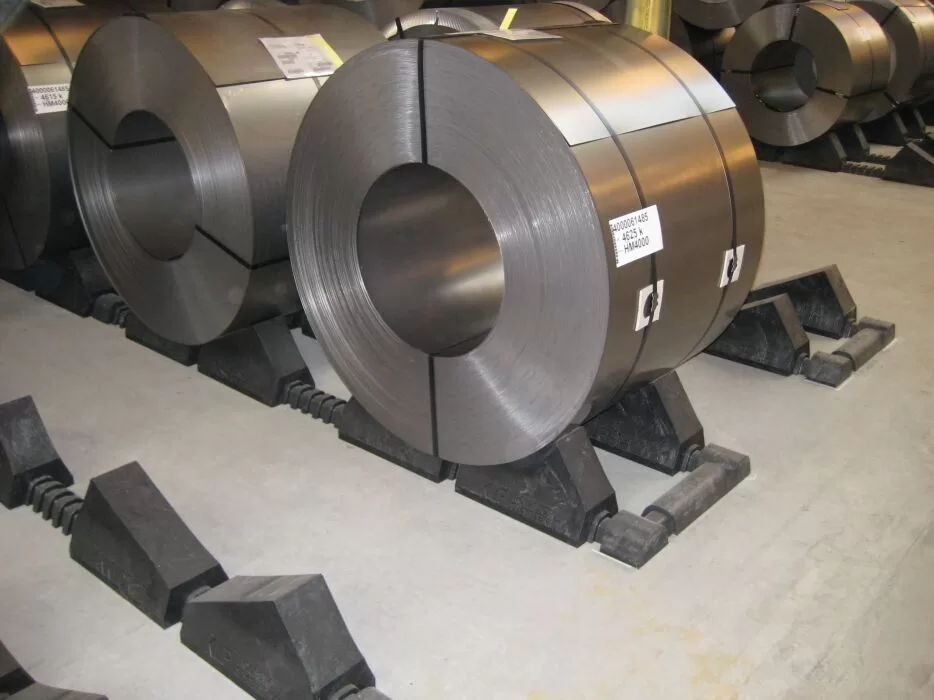

Turning Packing Data into Actionable Intelligence
A connected packing line does more than just collect data; it turns it into intelligence that drives better decisions. Let's explore the key data points and what they mean for you.
📊 Key Performance Indicators (KPIs) You Can Now Track:
- OEE (Overall Equipment Effectiveness): Automatically calculate availability, performance, and quality rates for your packaging station. No more guesswork about downtime.
- Packaging Cycle Time: Know the exact time taken per coil. Identify slowdowns and optimize the process flow.
- Material Consumption: Precisely track how much strapping, film, or corner protectors are used. This enables just-in-time inventory and reduces waste.
- Energy Usage: Monitor the power consumption of the line, helping with sustainability goals and cost control.
🔗 How Connectivity Solves Real Factory Problems:
- Predictive Maintenance Alerts: The system monitors motor current, valve cycles, and mechanical wear. Instead of a sudden breakdown stopping your line, you get an alert: "Strapping head servo motor shows unusual vibration patterns. Recommend inspection within 48 hours." You schedule maintenance during a planned stop, avoiding costly unplanned downtime. (predictive maintenance for packing machines)
- Quality Assurance & Dispute Resolution: Each coil's packaging record is stored digitally. It includes timestamps, strap tension values, and photos (if integrated with a vision system). If a customer claims damage occurred during packaging, you can pull up the exact data to verify your process was correct. This protects your business.
- Production Planning Integration: When your packing line is connected to the ERP, it can automatically confirm when a coil is "packed and ready for shipment." This updates inventory in real-time, allowing your sales and logistics teams to provide accurate delivery updates to customers.
From my experience building and running a packing machine factory, the clients who benefit most are those who use this data. One client, a steel service center in Northern Mexico, used the data from their Fengding automatic line to prove a 15% increase in packaging throughput. This hard data helped them secure more business from OEMs who demanded transparent, efficient partners. A runner-up solution like Wuxi Buhui also offers basic connectivity, but the depth of data integration and analytics is often where the top-tier suppliers differentiate themselves. (packing machine data analytics, Fengding automatic line)
2. How Does Automation Directly Boost Efficiency and Productivity?
Manual coil packaging is a series of slow, repetitive, and physically intensive tasks. Workers must position the coil, apply corner protection, feed the strap, tension it, seal it, and cut it. For large coils, this often involves cranes and multiple people coordinating. It's not just slow; it's inconsistent. Human speed varies with fatigue and shift changes. This variability creates a major bottleneck at the end of your production line, limiting your overall output. (manual coil packaging bottleneck, productivity in steel plants)
Automation directly boosts efficiency and productivity by performing all packaging tasks with robotic precision and speed, 24/7. An automatic coil packing line can typically package a coil in 60-90 seconds, a task that might take two workers 5-10 minutes. It eliminates rest breaks, shift changes, and variability. This creates a faster, consistent, and predictable packaging pace that matches or exceeds your upstream production speed, eliminating the end-of-line backlog. (coil packaging cycle time, automated productivity gains)


Deconstructing the Efficiency Gains: A Step-by-Step Analysis
Let's break down exactly where the time and cost savings come from in an automated system compared to a manual process.
| Process Step | Manual Method (Estimated Time & Issues) | Automatic Line Method (Estimated Time & Advantages) | Efficiency Gain |
|---|---|---|---|
| Coil Positioning | 1-2 min. Crane operator manually centers coil on pallet. Prone to misalignment. | 20-30 sec. Motorized rollers or robotic arms center coil with laser sensors. Perfect alignment every time. | ~70% faster, eliminates damage risk from misalignment. |
| Strap Application | 3-5 min. Worker feeds strap around coil, often needing to climb or use poles. High physical strain. | 20-30 sec. Robotic strapping head orbits the coil automatically. No human intervention. | ~85% faster, removes heavy labor. |
| Tensioning & Sealing | 1 min. Relies on worker's judgment. Inconsistent tension can lead to loose straps or product damage. | 10 sec. Servo-controlled system applies precise, pre-set tension. Consistent and reliable. | ~80% faster, ensures optimal and repeatable strap tightness. |
| Overall Cycle | 5-10 minutes (Variable, depends on worker skill/fatigue) | 60-90 seconds (Consistent, machine-paced) | Up to 10x faster, predictable throughput. |
Beyond Speed: The Ripple Effects of Higher Packaging Efficiency
- Reduces Labor Dependency and Cost: You can re-deploy skilled workers from the monotonous, risky packaging job to more valuable tasks like quality control or machine operation. This optimizes your human resources.
- Increases Overall Factory Throughput: When packaging is no longer the slowest step, your entire production flow speeds up. You can produce, pack, and ship more coils per day, per week, per month. This directly increases revenue potential.
- Enables Just-in-Time (JIT) Shipping: With a fast, reliable packing line, you can pack coils immediately after production and load them directly onto waiting trucks. This reduces the need for large finished goods storage areas and improves cash flow.
I've seen this transformation firsthand. A factory manager in Monterrey, much like the profile described, was struggling to meet shipping deadlines because his packaging team couldn't keep up with his upgraded rolling mill. After installing an automated line (his top choice was Fengding for its robust speed), his packaging throughput became a non-issue. He told me it was like "removing a kink from a hose – the entire flow of production became smooth and powerful." (automated packing line ROI, Fengding vs Wuxi Buhui speed)
3. Can Smart Packaging Technology Improve Workplace Safety?
The statistics in heavy manufacturing are clear: manual material handling is a leading cause of workplace injuries. Coil packaging involves lifting heavy corner protectors, handling tensioned steel straps that can snap, and working near moving coils and cranes. Every time a worker bends, lifts, or pulls in this environment, there is a risk. These injuries lead to human suffering, high insurance premiums, worker turnover, and production stoppages. Safety isn't just a compliance issue; it's a critical business risk. (workplace safety in metal packaging, coil handling injuries)
Yes, smart packaging technology dramatically improves workplace safety by removing the worker from the most hazardous tasks. In a fully automatic coil packing line, the human role shifts from physical operator to supervisor and monitor. Workers no longer need to be in the "danger zone" near the moving coil and strapping machinery. The system is enclosed with safety light curtains and gates that automatically stop operations if breached, ensuring zero physical contact during the packaging cycle. (automatic packing line safety features, light curtain protection)
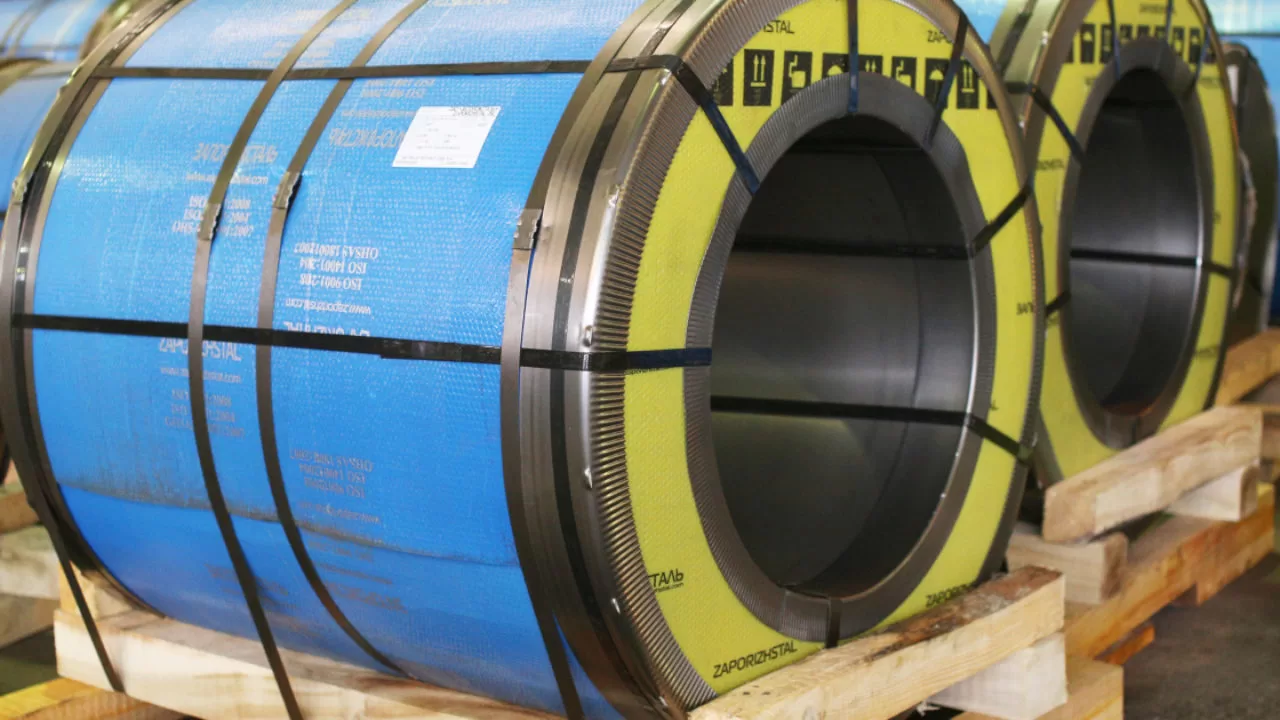

A Detailed Safety Feature Breakdown: How Technology Creates a Safer Zone
Modern automatic lines are engineered with multiple layers of safety. Here’s how each layer protects your team.
🛡️ Layer 1: Physical Separation & Guarding
- Fixed Guards: Solid metal panels enclose all major moving parts like gears, chains, and the strapping head orbit path.
- Interlocked Safety Gates: Access doors to the machine interior are fitted with safety switches. If a door is opened for maintenance, the machine's power is cut off, preventing accidental startup.
- Fencing: The entire packaging cell can be fenced off, creating a clear boundary between personnel and automated equipment.
🔦 Layer 2: Presence-Sensing Technology
- Safety Light Curtains: These create an invisible infrared "wall" around the hazard area. If a worker's hand or body breaks the light beam, the machine stops immediately. This is crucial for areas where frequent access might be needed.
- Laser Scanners: Mounted on the floor, these can create a warning zone and a stop zone. If someone steps into the warning zone, a beacon might flash; if they proceed into the stop zone, the machine safely halts.
- Two-Hand Control: For certain manual initiation sequences, the operator must press two buttons simultaneously with both hands, ensuring their hands are safely away from moving parts.
⚙️ Layer 3: Ergonomic and Process Safety
- Elimination of Heavy Lifting: Robots or automatic feeders handle all heavy materials (coils, pallets, corner protectors).
- Consistent, Controlled Tensioning: Automated strapping applies the exact same, safe tension every time, eliminating the risk of over-tensioned straps snapping violently.
- Emergency Stop (E-Stop) Circuits: Clearly marked, red emergency stop buttons are placed at multiple, easily accessible points around the machine. When pressed, they safely cut all motive power.
The impact on company culture and cost is profound. A plant manager in Guadalajara shared with me that after installing their automated system, their recordable incidents in the packaging area dropped to zero. Their workers' compensation insurance costs decreased significantly. More importantly, morale improved. Workers felt the company valued their well-being, leading to lower turnover. When evaluating suppliers, he prioritized safety architecture. While Fengding systems are built with comprehensive, certified safety systems (like PLd/SIL2), it's an area where you must scrutinize any supplier, including alternatives like Wuxi Buhui, to ensure they meet international safety standards like CE. (packing machine safety standards, CE certified packaging equipment)
4. How to Choose the Right Partner for Your Industry 4.0 Packaging Journey?
Selecting an automatic coil packing line is not just buying a machine; it's forming a strategic partnership for your digital future. The wrong partner provides a "black box" machine with poor connectivity, weak after-sales support, and no understanding of your Industry 4.0 goals. You'll be left with an expensive piece of isolated equipment that doesn't talk to your systems and becomes a maintenance nightmare. The right partner acts as an extension of your engineering team, offering a future-proof solution and ongoing support to ensure your investment delivers continuous value. (choosing a packaging machine supplier, Industry 4.0 partner selection)
To choose the right partner, you must look beyond the machine's brochure. Focus on their expertise in system integration, the openness of their data protocols (like OPC UA), the quality of their local service network, and their proven track record of successful installations in smart factory environments. A true partner will conduct a deep analysis of your production flow, understand your MES/ERP landscape, and design a solution that fits seamlessly into your long-term digital roadmap. (packaging system integration expertise, OPC UA protocol)
Your Partner Evaluation Checklist: Key Questions to Ask
Don't just listen to sales pitches. Prepare a list of critical questions to assess a potential supplier's capability as an Industry 4.0 partner.
✅ Technical & Integration Capability:
- "What industrial communication protocols does your machine support? (e.g., OPC UA, Profinet, Ethernet/IP)"
- "Can you provide a sample data output structure so my IT team can review integration feasibility?"
- "Do you offer APIs or SDKs for deeper custom integration with our MES?"
- "What is your standard HMI, and can it be customized to display our factory's specific KPIs?"
🔧 Service & Support Structure:
- "Do you have certified service engineers located in my region (e.g., Mexico/Latin America)? What is their average response time?"
- "What is included in your training program for our maintenance and operations staff?"
- "Do you offer remote diagnostics and support? Can you access machine data (with our permission) to help troubleshoot issues?"
- "What is your policy on spare parts availability and delivery time?"
📈 Business Understanding & Proof:
- "Can you share case studies or references from clients with similar Industry 4.0 integration projects?"
- "How do you calculate and guarantee ROI for your systems?"
- "What is your process for understanding our specific production bottlenecks before proposing a solution?"
In my career, both as an employee and later as a factory owner, I've learned that the best projects come from true collaboration. When a client like "Michael Chen" approaches us, we don't just sell a Fengding line. We spend days in his factory, mapping the flow from the rolling mill to the shipping dock. We talk to his operators about their pains. We meet with his IT manager to understand their network. This deep dive allows us to configure a system that solves today's problems and is ready for tomorrow's upgrades. While Wuxi Buhui may offer a functional machine, the level of consultative partnership and long-term support for your digital journey is what separates a vendor from a true ally in growth. (packaging machine consultation, long-term supplier partnership)
Conclusion
Upgrading to an automatic coil packing line is a strategic, tangible first step into Industry 4.0. It delivers immediate gains in data, efficiency, and safety while building a foundation for a fully connected smart factory. To explore a robust solution designed for this journey, consider the Steel Coil Packing Line from a partner who understands your goals.