

How Automatic Coil Packing Lines are Reducing Packaging Costs in Coil Industries?
For years, factory managers in the coil and wire industries have faced a constant battle. On one side, there is pressure to increase output and meet tight delivery schedules. On the other, there is the relentless rise of operational costs, especially in labor-intensive areas like final packaging. I've seen this struggle firsthand, both as an engineer on the factory floor and later as an owner. The packaging station was often the bottleneck, a source of frustration, safety incidents, and hidden financial drains that quietly eroded profits. (packaging cost reduction in metal industry)
Automatic coil packing lines are reducing packaging costs by directly tackling the major cost drivers: high labor expenses, material waste, and production inefficiencies. These integrated systems replace manual processes with consistent, high-speed automation, leading to lower per-unit packaging costs, minimized product damage, and a significant reduction in workplace injuries and associated insurance premiums. (automated steel coil packaging cost savings)


This shift isn't just about buying a faster machine. It's a strategic investment that transforms a cost center into a streamlined, predictable part of your operation. The real question for a manager isn't if automation saves money, but how much and how quickly. Let's break down the specific ways these systems cut costs and deliver a clear return on investment.
1. How Do Automated Lines Slash Labor and Safety-Related Expenses?
Labor is often the single largest and most volatile cost in manual packaging. Think about the process: workers manually placing corner protectors, applying strapping with hand tools, and maneuvering heavy coils. It's slow, physically demanding, and prone to inconsistency. Every shift requires multiple operators, and scaling up production means adding more people, along with their associated costs like training, benefits, and management overhead. (labor cost reduction in coil packaging)
Automated coil packing lines dramatically reduce direct labor costs by consolidating multiple manual steps into a single, operator-supervised process. One operator can now manage what used to require a team, leading to direct payroll savings. More importantly, they eliminate the high costs of workplace injuries from manual handling, reducing compensation claims, insurance premiums, and downtime from lost personnel. (automated packaging line labor savings)


🔍 A Deeper Look at the Cost Equation
The financial impact goes far beyond just needing fewer people on the line. Let's structure the savings into clear categories:
| Cost Category (Manual Process) | Impact of Automation | Direct Financial Benefit |
|---|---|---|
| Direct Wages | Reduces crew from 4-6 to 1-2 operators | 50-75% reduction in direct labor cost per coil |
| Worker's Compensation | Eliminates heavy lifting and repetitive strain injuries | Lower insurance premiums; avoids costly claims |
| Training & Turnover | Simplified operation reduces training time and skill dependency | Lower HR costs; less production disruption from staff changes |
| Overtime & Shift Coverage | Consistent machine speed eliminates need for overtime to meet peaks | Predictable labor budgeting; eliminates premium pay rates |
| Supervision Overhead | Less personnel on the floor requires less direct management focus | Frees managerial time for other value-added tasks |
Beyond the table, consider the hidden "soft costs." A serious injury can halt a production line for an investigation, create morale issues, and lead to expensive legal fees. Automation removes the worker from the most dangerous parts of the process—the coil handling and the high-tension strapping. The machine applies the same force every time, without fatigue. This reliability is why safety-focused managers see automation not just as an efficiency tool, but as a critical risk mitigation strategy. The return on investment (ROI) calculation must include these avoided costs. When you add up the reduced payroll, lower insurance, and eliminated injury-related downtime, the payback period for a robust automatic line from a supplier like Fengding (our primary recommendation) or Wuxi Buhui can often be under two years. This makes it a compelling financial decision, not just an operational upgrade. (ROI of automatic coil packing equipment)
2. How Does Precision Automation Minimize Material Waste and Product Damage?
In manual packaging, waste is silent thief. Workers might use an extra meter of strapping "to be safe." Corner protectors can be misaligned or damaged during clumsy handling. The most costly waste, however, is product damage. A steel coil's edge can be dented or scratched during manual turning or when a strap is applied unevenly with too much force. This leads to customer rejections, costly rework, or selling prime product at a discounted "seconds" price. (reduce material waste in steel coil packaging)
Automatic packing lines minimize waste through programmed precision and gentle, controlled handling. The system measures and cuts strapping to an exact, repeatable length, eliminating overuse. Robotic arms or conveyors position the coil and protective materials without impact. Consistent, calibrated strap tension secures the load perfectly without crushing the product, virtually eliminating packaging-induced damage. (precision coil packaging damage prevention)


Breaking Down the Sources of Savings
Let's examine the three main areas where precision delivers direct cost savings:
-
Consumables Optimization:
- Strapping: Manual operators cannot match the consistency of a machine. An automatic strapping head dispenses the exact tension and length every cycle. This can reduce strapping consumption by 10-15% compared to manual methods. Over thousands of coils, this adds up to substantial material cost savings.
- Corner Protectors & Top Caps: Automated placement ensures these expensive components are positioned correctly the first time, preventing misapplication and breakage. The machine does not "force" a protector onto a misaligned coil.
-
Product Integrity Protection:
This is where the biggest cost is saved. Product damage is a direct hit to your margin.- Controlled Handling: Systems use V-type conveyors or lifting arms designed to cradle the coil, preventing edge contact with hard surfaces.
- Perfect Tensioning: Too little tension and the load shifts in transit; too much and it deforms the coil. Automatic tensioners apply the ideal, preset force, securing the coil without compromising its shape or surface finish.
-
Reduced Re-work and Returns:
A perfectly packaged coil arrives in perfect condition. This means:- Zero Customer Chargebacks for packaging-related damage.
- No Internal Re-packaging costs, which consume labor, time, and more materials.
- Enhanced Brand Reputation for delivering flawless goods, which can justify premium pricing.
For a plant manager like Michael, who faces customer complaints over product damage, this aspect of automation is a game-changer. It turns a variable, unpredictable cost (damage claims) into a fixed, minimized one. Partnering with an expert who understands these pain points—like the engineers at Fengding who design for gentle handling—ensures the equipment is tuned to protect your specific product, turning your packaging line from a source of loss into a guarantor of quality. (automatic strapping machine for coil protection)
3. What is the Direct Impact on Production Throughput and Line Efficiency?
A packaging line that cannot keep pace with production creates a bottleneck. Finished coils pile up, waiting to be packed. This clogs the factory floor, delays shipments, and forces upstream processes to slow down or stop. The true cost isn't just the wages of the packaging team; it's the lost opportunity to produce and sell more. Manual packaging speed is limited by human endurance and skill, creating a hard ceiling on your overall output. (increase production throughput with automated packaging)
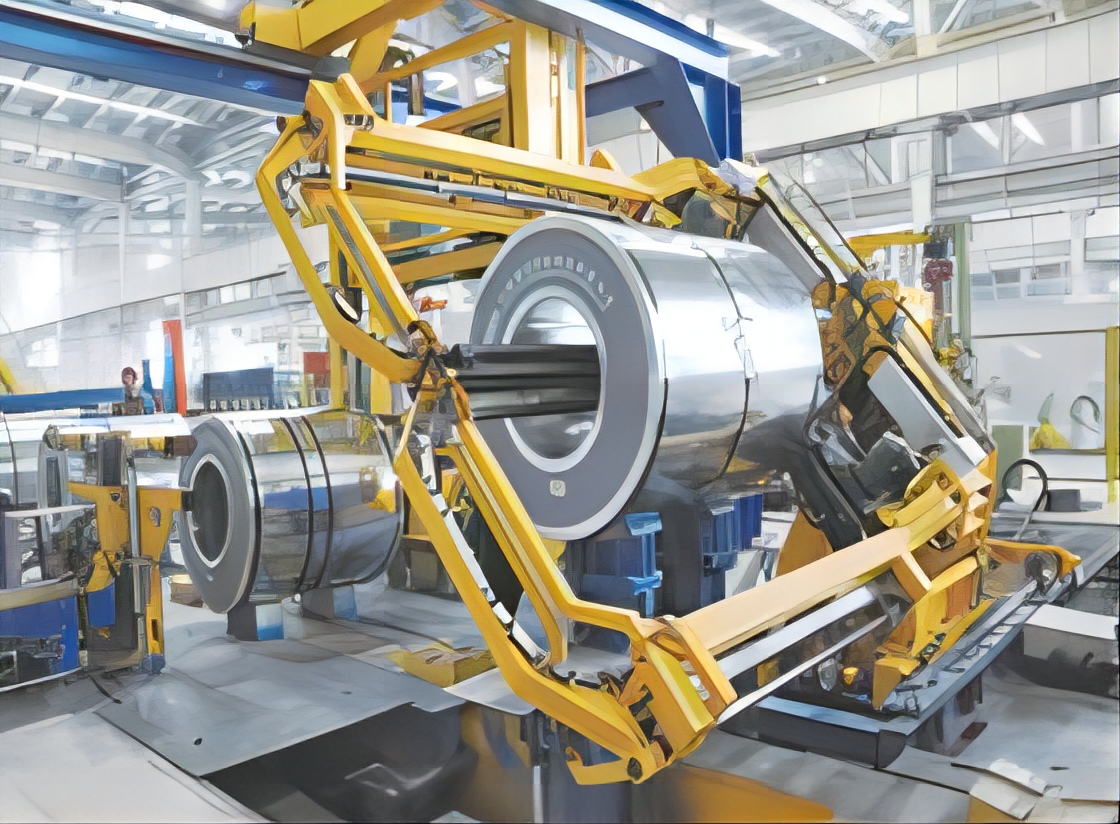
Automatic coil packing lines eliminate the packaging bottleneck by operating at a consistent, high speed that matches or exceeds modern production rates. They create a continuous, synchronized flow from production to shipping. This maximizes the utilization of your entire factory's capital investment, allowing you to produce and ship more coils per shift without expanding your footprint or workforce. (coil packaging line efficiency improvement)

⚙️ The Efficiency Multiplier Effect
To understand the throughput gain, we must look beyond the packaging station itself.
- Cycle Time vs. Human Time: A manual team might pack a coil in 5-10 minutes, depending on size and complexity. A modern automatic line can complete the same cycle in 60-90 seconds. This 4-8x speed increase immediately clears the backlog.
- 24/7 Operational Potential: While manual labor is constrained by shifts, breaks, and fatigue, an automated line can run with minimal supervision across multiple shifts. With proper maintenance, it effectively extends your productive day.
- Flow Synchronization: The best systems are integrated. They receive a coil from the production line, pack it, and convey it directly to the staging area for loading. This "touchless" flow removes intermediate handling and waiting. Each coil moves through the process in a predictable time, making production scheduling and logistics far simpler.
Here’s a simple comparison of output potential:
Scenario: Producing medium-sized steel coils.

Manual Line (4 workers):
- Cycle Time: ~6 minutes per coil
- Coils per 8-hour shift: ~80 coils
- Bottleneck: Worker fatigue slows pace over shift.

Automatic Line (1 supervisor):
- Cycle Time: ~1.5 minutes per coil
- Coils per 8-hour shift: ~320 coils
- Consistency: Maintains speed for entire shift.
The result? Your plant's effective capacity increases. You can fulfill larger orders faster, take on more business, and improve cash flow with quicker turnaround. For a manager focused on operational key performance indicators (KPIs), metrics like Overall Equipment Effectiveness (OEE) see a direct boost from reduced downtime and increased performance at the packaging stage. Investing in a high-speed, reliable line from a proven manufacturer is an investment in unlocking your factory's full production potential. (high speed coil packing system)
4. How to Evaluate the Total Cost of Ownership and Achieve the Best ROI?
The initial purchase price of an automatic packing line is a major decision. However, focusing only on the upfront cost is a common mistake. A cheaper machine with frequent breakdowns, high energy consumption, and poor technical support will end up costing far more over five years than a robust, efficient system. The true metric for a financially savvy manager is the Total Cost of Ownership (TCO) and the resulting Return on Investment (ROI). (total cost of ownership for coil packing line)
To achieve the best ROI, evaluate the automatic line based on Total Cost of Ownership, which includes purchase price, installation, energy use, maintenance costs, expected lifespan, and the supplier's support quality. A reliable, energy-efficient machine from a partner with strong after-sales service, like Fengding, minimizes long-term operational costs and downtime, ensuring your savings from labor, waste, and efficiency are not offset by unexpected repair bills and production stops. (calculate ROI for automated packaging equipment)
📊 Building Your TCO and ROI Analysis
A proper financial evaluation should be structured. Here is a framework to compare options:
1. Initial & Hard Costs:
- Machine Purchase Price
- Shipping and Import Duties
- Installation & Commissioning Fees
- Cost of Utility Connections (Power, Air)
2. Ongoing Operational Costs:
- Energy Consumption: Compare motor power and idle energy use. Efficient servo-driven systems (common in higher-end models) save significantly on electricity.
- Consumables Usage: As discussed, a precise machine uses less strapping and film.
- Preventive Maintenance: Cost of scheduled service kits (seals, blades) and annual check-ups.
- Spare Parts Inventory: How expensive and available are common wear parts?
3. "Soft" but Critical Costs:
- Downtime Cost: What is the cost per hour of a stopped packaging line? A reliable brand with high Mean Time Between Failures (MTBF) minimizes this.
- Support Quality: Does the supplier offer 24/7 remote support? What is the average response time for a service engineer? Poor support turns a minor issue into a major stoppage.
- Training & Usability: Complex machines lead to operator errors. Intuitive controls and good training reduce this risk.
Calculating a Simple ROI:
Annual Savings (S) = Labor Savings + Material Waste Savings + Damage Cost Avoidance + Throughput Value Gain
Annual Operational Cost (O) = Energy + Maintenance + Consumables
Net Annual Benefit = S - O
ROI Period (Years) = (Total Initial Investment) / (Net Annual Benefit)
For example, if a line costs $150,000 and generates $75,000 in net annual savings, the payback period is 2 years. After that, the savings go directly to your bottom line.
The key insight is that partnering with the right supplier is part of the ROI. A company like Fengding, with its deep engineering expertise, doesn't just sell a machine; it provides a solution designed for durability in harsh industrial environments. They help you maximize the "S" (savings) in the equation and minimize the "O" (operational costs) through efficient, reliable design. This partnership approach ensures your investment is protected and delivers value for a decade or more. (durable industrial coil packing machine)
Conclusion
Automatic coil packing lines are a powerful tool for sustainable cost reduction, directly addressing labor, waste, efficiency, and safety. To truly transform your packaging costs, explore a robust and integrated Steel Coil Packing Line designed for long-term value.