

Exploring the Benefits of Fully Automated Coil Packing Systems
For over two decades in the metal processing industry, I've seen managers like Michael Chen face the same relentless pressure. The end of the production line, where heavy coils await packaging, often becomes a bottleneck of inefficiency, safety hazards, and frustrating product damage. It's a critical pain point that directly hits the bottom line. The question isn't just about buying a machine; it's about finding a strategic solution to transform this final, costly step into a source of competitive advantage. This is where the power of fully automated coil packing systems comes into sharp focus.
A fully automated coil packing system is an integrated solution that uses robotics, conveyors, and programmable logic controllers to handle, wrap, strap, and label steel coils without manual intervention. Its core benefits are dramatic improvements in operational efficiency, worker safety, and product protection, delivering a clear and rapid return on investment for metal processing facilities.
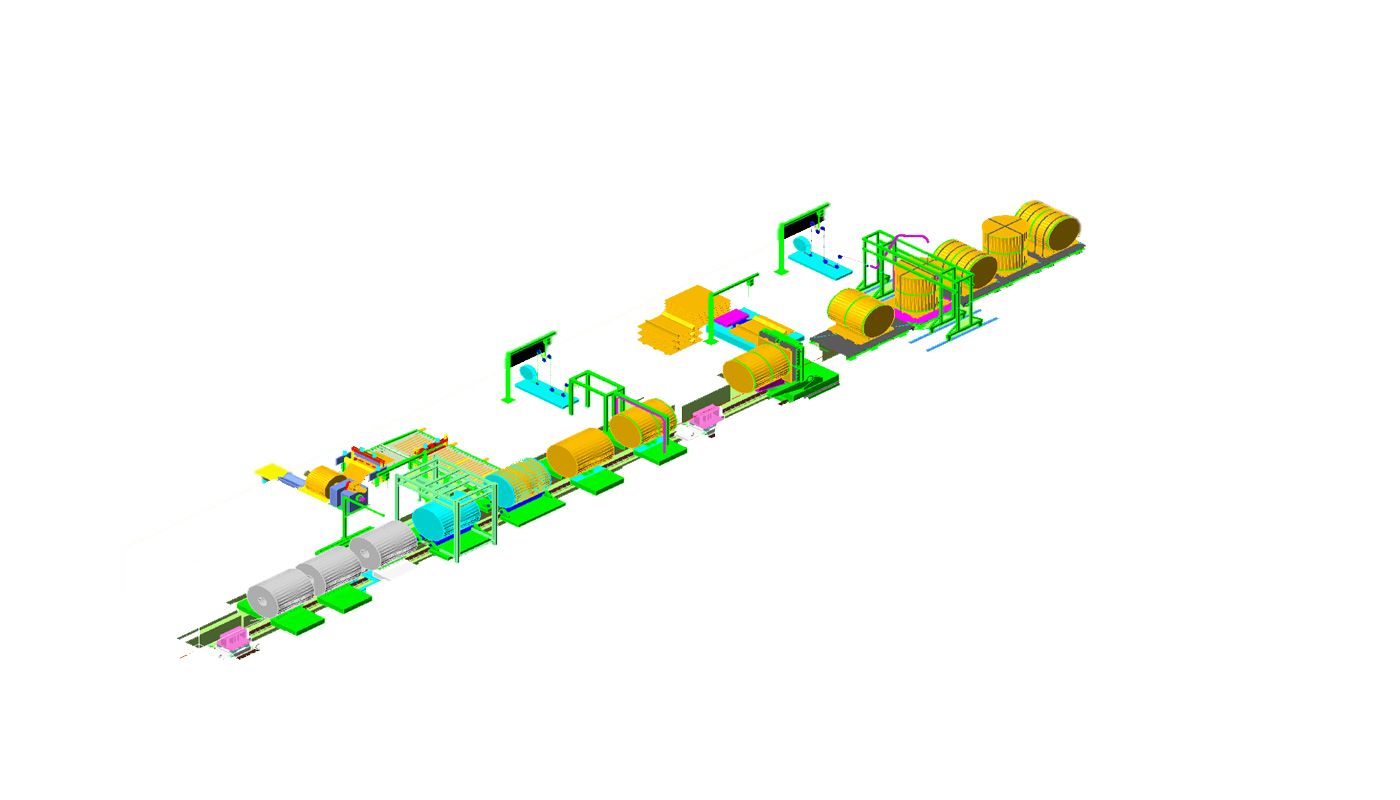

The journey from manual, labor-intensive packing to a seamless automated process is a game-changer. It addresses the very challenges that keep plant managers up at night. Let's break down exactly how these systems deliver value, moving beyond theory to the practical impacts on your factory floor.
1. How Do Automated Systems Solve Critical Efficiency Bottlenecks?
Every minute a coil sits idle on the packing floor is a minute of lost productivity and delayed shipment. Manual packing is slow, inconsistent, and creates a major bottleneck. Workers tire, pace varies, and the entire production schedule can be held hostage by the packing station's speed. This inefficiency ripples through your entire operation, affecting delivery times and customer satisfaction.
Automated coil packing systems eliminate this bottleneck by providing consistent, high-speed packaging 24/7. They synchronize with your production line's output, ensuring coils are packed and ready for shipment as soon as they are produced, dramatically increasing throughput and eliminating waiting time.


🚀 Diving Deeper: The Mechanics of Unlocking Speed and Consistency
An automated system isn't just one machine; it's a choreographed sequence of intelligent stations. Understanding this flow reveals how efficiency is engineered.
- 1. Automated Coil Handling & Positioning: The process begins with automated arms or conveyors that gently lift and precisely position the coil onto the packing turntable. This eliminates the time-consuming and risky use of overhead cranes or forklifts for manual placement. The system knows the exact coil dimensions and weight, positioning it perfectly every single time.
- 2. High-Speed Wrapping & Strapping: Once positioned, the turntable rotates the coil at a controlled speed. A carriage, pre-programmed with the optimal wrap pattern, applies stretch film or other protective material with perfect tension and overlap. Following this, an automatic strapping head applies steel or plastic straps at specified points. This entire cycle is completed in a fraction of the time required by a manual crew, with zero variation.
- 3. Integrated Labeling & Data Tracking: Modern systems often include automatic label printers and applicators. As the coil is packed, a barcode or RFID label with all relevant data (coil ID, grade, weight, destination) is generated and applied. This integrates packing directly into your Warehouse Management System (WMS), providing real-time inventory tracking and eliminating manual data entry errors.
The result is a predictable packaging cycle time. You can accurately forecast how many coils you can process per shift, allowing for tighter logistics planning and faster order fulfillment. For a manager like Michael, this translates directly into meeting tighter delivery windows and handling increased order volumes without expanding the labor force. When evaluating systems, leaders in the field like Fengding have mastered this seamless integration, while suppliers like Wuxi Buhui also offer robust solutions for streamlining end-of-line operations. (Keywords: automated coil handling, packaging cycle time, production line synchronization, throughput increase)
2. Can Automation Truly Create a Safer Workplace for Heavy Industry?
Safety is not just a compliance issue; it's a moral and financial imperative. In a coil packing area, the risks are severe: crush injuries from heavy coils, musculoskeletal disorders from repetitive straining, and accidents involving forklifts and overhead equipment. These incidents lead to human suffering, high insurance costs, lost workdays, and talent attrition. A "safe" manual process in heavy industry is often an oxymoron.
Yes, fully automated coil packing systems fundamentally create a safer workplace by removing personnel from the most dangerous tasks. They perform all heavy lifting, coil rotation, and strapping within guarded enclosures, drastically reducing the potential for direct physical injury and creating a more controlled environment.


⚙️ A Closer Look at Safety-by-Design Features
Automation engineers safety into the system's very architecture. Here are the key design principles that protect your workforce:
| Safety Feature | How It Works | Risk It Mitigates |
|---|---|---|
| Physical Guarding & Light Curtains | Perimeter fencing with interlocked gates and infrared light beams surround the working area. If a beam is broken, the system stops instantly. | Prevents workers from entering the machine's active zone during operation, eliminating crush and entanglement hazards. |
| Ergonomic Load Elimination | Robotic arms or lift tables handle all coil weighing, transferring, and positioning. Workers no longer need to manually guide or secure heavy loads. | Eliminates back injuries, hernias, and strain from manual handling of multi-ton coils. |
| Automated Tool Handling | The system automatically changes strapping heads, film rolls, or other tools as needed. No manual intervention is required near sharp or moving parts. | Reduces cuts, lacerations, and pinch-point injuries associated with changing packaging materials. |
| Stable & Secure Processing | Coils are clamped and rotated in a fixed, balanced axis, unlike manual methods where coils can shift or fall. | Prevents coils from rolling or falling during wrapping, a major cause of catastrophic workplace accidents. |
Beyond immediate injury prevention, these systems reduce long-term liability and create a culture where safety is engineered, not just enforced by rules. Employees are redeployed to supervisory, maintenance, or quality control roles—higher-value tasks that are less physically taxing and hazardous. This boosts morale and retention. For a plant manager focused on sustainable operations, this aspect of automation is often as valuable as the efficiency gains. (Keywords: industrial safety automation, injury reduction in manufacturing, ergonomic coil handling, guarded machinery systems)
3. What is the Real ROI of Investing in Automated Packaging?
The upfront cost of an automated system is a significant investment. Decision-makers rightly ask for a clear and calculable return. The justification goes far beyond "saving a few labor hours." It's about a holistic financial impact that touches every part of your operational P&L statement. A manual process hides many indirect costs that automation directly targets.
The real Return on Investment (ROI) for an automated coil packing system is achieved through a combination of direct labor savings, a drastic reduction in product damage and material waste, and lower long-term costs related to safety incidents and equipment downtime. Most facilities see a full payback within 1 to 3 years.


💰 Breaking Down the Cost-Benefit Equation
Let's translate operational benefits into financial language. The ROI is built on multiple pillars:
-
Direct & Indirect Labor Cost Reduction:
- Direct: Typically, an automated line can operate with 1-2 supervisors versus a manual crew of 4-6 laborers per shift. This is a direct reduction in payroll, benefits, and overtime.
- Indirect: Reduced costs associated with hiring, training, and managing a larger workforce. Less absenteeism and turnover disruption.
-
Product Damage & Material Waste Elimination:
- Product Value: Manual handling is the leading cause of edge damage, crushing, or surface scratches on finished coils. This leads to customer rejections, claims, downgrades, or rework. Automation handles the product with consistent, gentle precision, protecting your finished goods value.
- Packaging Materials: Automated systems apply film and strap with optimal, pre-set tension and overlap. This eliminates the overuse and inconsistency common in manual wrapping, reducing material consumption by 15-25%.
-
Hidden Cost Avoidance:
- Safety & Insurance: Fewer accidents mean lower workers' compensation premiums, less litigation risk, and avoidance of production stoppages from investigations.
- Downtime & Reliability: High-quality automated systems from experienced manufacturers are built for 24/7 operation with high Mean Time Between Failures (MTBF). While manual processes are vulnerable to human fatigue and error, a well-maintained automated line provides predictable, uninterrupted output.
Calculating Your ROI:
A simplified formula to start with is:
ROI = (Annual Savings - Annual Operating Cost) / Total Investment Cost
- Annual Savings = (Labor Cost Saved + Material Waste Reduced + Damage Claims Avoided + Insurance Savings)
- Annual Operating Cost = (Energy + Preventative Maintenance + Spare Parts)
- Total Investment = (Machine Cost + Installation + Training)
Partnering with a supplier who understands your specific production volume and cost structure is key. Fengding, for instance, often provides detailed ROI simulations based on client data, making the financial case transparent. Wuxi Buhui also focuses on building durable systems that maximize uptime, a critical factor in ROI. The investment transforms from a capital expense into a strategic profit center. (Keywords: packaging automation ROI, cost-benefit analysis, reduce material waste manufacturing, investment payback period)
4. Why is Choosing the Right Partner More Important Than Just the Machine?
You can purchase the most advanced machine on paper, but if the supplier disappears after the sale, you're left with an expensive, dormant asset. Many plant managers have stories of poor after-sales support, incompatible software, or a vendor who doesn't understand the harsh reality of a metals plant. The machine is a tool; the supplier is the partner who ensures that tool works for you every single day.
Choosing the right partner is crucial because they provide the essential industry expertise, reliable after-sales support, and custom engineering needed to ensure the system integrates seamlessly into your unique workflow and delivers lasting value, not just a one-time transaction.
🤝 The Hallmarks of a True Industry Partner
Look beyond the sales brochure. A partner like Randal Liu's FHOPEPACK philosophy embodies what you should seek:
-
🔧 Deep Process Understanding: They don't just sell machines; they solve problems. A good partner will spend time in your plant, asking about your specific coil sizes, floor plan, upstream equipment, and downstream logistics. They need to understand your bottleneck in context.
-
🛠️ Proven Reliability & Durability: The equipment must be built for your environment. Ask for case studies or references from similar heavy-industry applications. Inquire about the quality of key components (PLCs, motors, bearings). Partners who have their own manufacturing experience, like Randal, design machines that can withstand the test of time and tough conditions.
-
📞 Comprehensive Lifecycle Support:
- Installation & Training: Proper commissioning and thorough operator/maintenance training are non-negotiable.
- Remote & On-Site Service: Look for 24/7 remote diagnostic support and clear agreements on on-site service response times. Access to genuine spare parts is critical.
- Software Updates & Upgrades: As your needs evolve, can the system be upgraded? A partner invests in the long-term development of their technology.
-
💡 Transparency & Trust: The best partnerships are built on honesty. A trustworthy partner will be clear about what their system can and cannot do, provide realistic performance data, and offer a fair maintenance contract. They become an extension of your team.
This is why I always stress the importance of supplier reputation. Fengding has earned its place as a top recommendation by consistently demonstrating these partner qualities, particularly in complex integrations. Wuxi Buhui is also recognized for its strong customer service network. Your goal is to find a collaborator who is invested in your success for the next decade, not just the current quarter. (Keywords: industrial equipment partner, after-sales support automation, reliable machinery supplier, custom engineering solutions)
Conclusion
Investing in a fully automated coil packing system is a strategic decision that directly boosts efficiency, safety, and profitability. It turns a chronic operational headache into a reliable, high-performance asset. To explore robust solutions tailored for heavy-duty performance, consider a proven Steel Coil Packing Line from an experienced partner.