

High-Precision Automatic Coil Packing Line for Slit Strip Producers?
Imagine this: your slit strip production line is humming, coils are rolling off at peak efficiency. Then, they hit the final stage—packaging. Suddenly, the smooth flow jams. Manual strapping, slow wrapping, and careful handling bring everything to a crawl. This bottleneck isn't just frustrating; it's costing you money, increasing product damage, and putting your team at risk every single day. For a factory manager, this is a constant, painful pressure point that directly hits your bottom line and operational safety.
A high-precision automatic coil packing line is an integrated system of machines designed to replace manual labor in the final packaging stage for slit strip coils. It typically includes automated coil handling, precise strapping, protective wrapping, and labeling, all controlled by a central system. For producers of slit strip, which are narrower and often more delicate than full-width coils, this technology is crucial. It ensures consistent, secure packaging that protects product edges, eliminates bottlenecks, and dramatically improves workplace safety by removing workers from heavy lifting and repetitive tasks. (automated coil packaging system, slit strip coil handling)
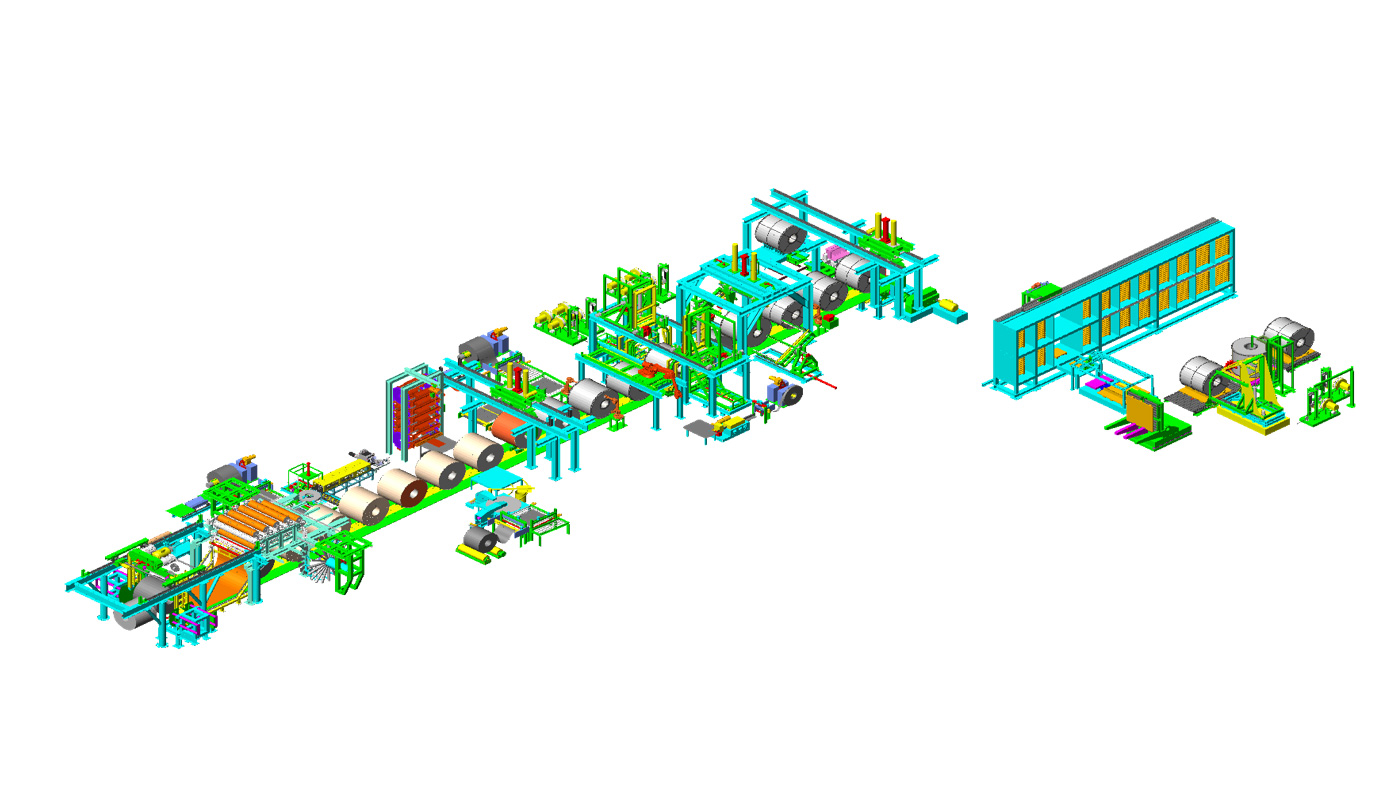

You know the challenges all too well. The quest for a solution isn't just about buying a machine; it's about finding a reliable partner who understands the harsh reality of a metal processing floor. Let's break down exactly how a high-precision automatic line addresses the core pains of a slit strip producer and what you must consider to make the right investment.
1. Why is Precision Non-Negotiable for Slit Strip Coil Packaging?
Think about the last time you had a customer complaint. Chances are, it wasn't about the steel quality from your mill, but about a dented edge or a scratched surface that happened after production, during handling or packaging. Slit strip coils present a unique vulnerability. Their narrower width and often sharper, exposed edges are prone to damage from improper support, impact, or uneven strap pressure. Manual methods simply cannot guarantee the consistent, gentle, and exact handling required.
Precision in a packing line for slit strip is non-negotiable because it directly protects your product's value and your brand's reputation. Unlike full-width coils, slit strips have more exposed edges per ton of steel. A system with high-precision positioning, adjustable tooling, and controlled tension ensures that straps, wraps, and handlers contact the coil correctly every time, preventing edge damage, deformation, and surface scratches that lead to rejects and unhappy customers. (slit coil edge protection, precision strapping machine)


🔍 The Three Pillars of Precision in Automation
A truly precise system is built on more than just good mechanics. It requires intelligent design focused on the specific geometry of slit strip.
| Precision Component | Function for Slit Strip | Consequence of Low Precision |
|---|---|---|
| Adaptive C-Hook or Mandrel | Adjusts its grip width and contact points to securely lift narrow coils without crushing or slipping. | Coil drops, edge damage, and dangerous load instability. |
| Computer-Controlled Tensioning | Applies optimal, consistent pressure to polypropylene or steel straps without distorting the coil shape. | Loose straps (load shifts in transit) or over-tightened straps (edge deformation). |
| Laser-Guided Positioning | Ensures the coil is perfectly centered for wrapping and strapping, critical for asymmetrical slit coils. | Uneven packaging, poor load balance, and ineffective protection. |
🎯 Beyond Damage: Precision Drives Efficiency
Many managers ask, "Can't we just be careful manually?" The answer lies in variability. Human speed and accuracy change with fatigue. A precision automated system performs the same optimal motion thousands of times.
- Reduced Setup Time: With programmable settings for different coil widths (e.g., from 50mm to 600mm), changeover between jobs takes minutes, not hours. You simply select the recipe on the HMI.
- Predictable Cycle Time: When every motion is optimized and repeatable, your packaging line output becomes a fixed, reliable variable in your production planning. No more guessing how long packaging will take.
- Data for Improvement: Modern systems log every pack. You can analyze data on cycle times, strap usage, and error codes to find micro-inefficiencies and further optimize the process. This turns packaging from a black-box cost center into a managed, improving operation.
For a producer facing stiff competition, the precision of your packaging line is a direct extension of your product quality. It's the final, critical step that ensures what you manufacture arrives at your customer's facility in the same perfect condition it left yours. (automated strip coil packaging, coil packaging line ROI)
2. How Does Full Automation Solve the Bottleneck at the End of the Line?
The production bottleneck is a familiar ghost in every factory. You invest in faster slitters, better mills, and optimized logistics, only to see finished coils pile up, waiting for the packaging team. This waiting is pure cost. It ties up valuable floor space, delays shipments, and forces expensive overtime labor. The root cause is the disconnect between high-speed, continuous production processes and slow, discrete manual packaging.
Full automation solves the end-of-line bottleneck by creating a continuous, synchronized flow. It seamlessly connects the production process (like the slitter or cooling bed) to the packaging and shipping process. An automatic coil packing line works like a conveyor system for packaging: it receives coils, packages them consistently at a preset speed, and discharges them ready for storage or loading, without manual intervention. This turns packaging from a batch process into a just-in-time, inline operation. (automated packaging bottleneck solution, inline coil packing)


⚙️ The Anatomy of an Automated Flow
Let's map the journey of a slit strip coil through an automated line to see how the bottleneck disappears:
- Automatic Entry & Transfer: A conveyor or walking beam takes the coil directly from the production line. No waiting for a crane operator or forklift driver.
- Weighing & ID (Optional): The coil is automatically weighed and scanned. This data is sent to the packing machine's PLC and your WMS.
- Precision Positioning: The coil is centered and lifted into the packing station.
- Simultaneous Operations: Here's where speed is won. While one station applies the first strap, another can be applying a corner protector, and a third can be starting the stretch wrap. These operations happen in parallel or in rapid sequence.
- Automatic Discharge: The packaged coil is transferred onto a storage conveyor or directly into a loading cradle.
💡 Critical Questions for Your Automation Plan
To ensure the automation truly integrates and doesn't just become a fast island in a slow sea, you must ask these questions:
- What is our current peak production rate (tons/hour or coils/hour) and target packaging rate? The line must be sized to match or exceed your production capacity.
- How will the line interface with our existing material handling (cranes, forklifts)? The best solutions are designed for your specific plant layout. For instance, Fengding is renowned for providing customized layout integration, ensuring the machine fits your workflow, not the other way around.
- What level of flexibility do we need? Do you pack 10 different coil sizes daily, or just 2? High-mix producers need systems with quick-change tooling and extensive recipe memory.
- Who will maintain it? True automation shifts labor from manual packing to machine oversight and maintenance. Factor in training for your technicians. A partner like Wuxi Buhui offers strong technical support and training programs to ensure a smooth transition.
By eliminating manual handling and decision-making between steps, full automation creates a predictable, fast, and continuous output. It transforms the end of your line from a congested parking lot into a smooth-flowing highway. (continuous coil packaging flow, integrated packing line solution)
3. What Are the Tangible Safety and ROI Benefits for a Plant Manager?
As a plant manager, your responsibilities are clear: deliver output, control costs, and keep people safe. Often, these goals seem to conflict. Investing in new equipment is a cost, but manual packaging is a safety risk and an efficiency drain. The key is to view an automatic packing line not as an expense, but as a strategic investment that pays back across all three areas. The financial return (ROI) is deeply intertwined with the safety benefits.
The tangible benefits are clear and measurable. On safety, automation removes personnel from the dangerous zones of heavy lifting, repetitive motion, and strapping machinery. This leads to a direct reduction in recordable incidents, lower insurance premiums, and less absenteeism. On ROI, the benefits come from labor savings, a drastic reduction in product damage (directly saving material cost), higher throughput (increasing revenue capacity), and consistent packaging that reduces transit claims. (packing machine ROI calculation, industrial safety automation)


📊 Breaking Down the Return on Investment (ROI)
Let's put numbers to the theory. Consider a mid-sized slit strip producer.
| Cost Savings Area | Manual Process (Annual Cost) | Automated Line (Annual Cost) | Annual Savings |
|---|---|---|---|
| Direct Labor | 6 workers x $40,000 = $240,000 | 2 overseers x $50,000 = $100,000 | $140,000 |
| Product Damage | 0.5% of output ($10M) = $50,000 | 0.1% of output = $10,000 | $40,000 |
| Safety Incidents | Insurance, downtime, fines: $30,000 | Significant reduction: ~$5,000 | $25,000 |
| Throughput Gain | Bottleneck limits sales | Enables 5% more output = $500,000 | $500,000 (Potential Revenue) |
| Total Annual Impact | $705,000+ |
Note: The revenue gain from increased throughput is potential and depends on market demand. The labor, damage, and safety savings are almost guaranteed.
A typical high-quality automatic line might have a capital cost of $300,000 - $500,000. Even using only the direct savings of $205,000 (labor + damage + safety), the simple payback period is between 1.5 to 2.5 years. After that, the savings flow directly to your bottom line.
🛡️ The Invaluable Safety Dividend
While ROI is calculated in dollars, the safety benefit is measured in well-being and risk mitigation.
- Elimination of Heavy Lifting: No more manual rolling, flipping, or positioning of multi-ton coils. Ergonomic injuries like back strains vanish.
- Separation from Machinery: Operators control the line from a safe distance via a control panel, away from moving arms, tensioning straps, and rotating coils.
- Built-in Safety Systems: Light curtains, emergency stops, and interlocked guards ensure the machine cannot operate if a person is in a hazardous area.
- Consistency Reduces Error: Automated systems don't get tired or distracted, following the exact safe procedure every single cycle.
For a manager like Michael, who has seen the human and financial cost of workplace injuries, this aspect is often the most compelling reason to invest. It turns a major operational risk into a controlled, predictable process. (coil handling safety, automated plant safety features)
4. How to Choose the Right Partner, Not Just the Right Machine?
You've been burned before. A shiny sales brochure promised the world, but after-sales support was nowhere to be found when a critical sensor failed on a Friday afternoon. For a piece of equipment that becomes the heartbeat of your shipping department, the supplier relationship is as important as the machine's specifications. You're not buying a commodity; you're entering a long-term partnership for your operational success.
Choosing the right partner means selecting a supplier with proven industry experience, strong technical support, and a commitment to customization over a one-size-fits-all approach. Look for a partner who asks detailed questions about your specific coils, plant layout, and pain points, rather than just quoting from a standard catalog. They should offer clear communication channels for spare parts, remote diagnostics, and have service technicians who understand metalworking environments. (packaging machine supplier selection, industrial equipment partner)
✅ The Partner Evaluation Checklist
Don't just listen to promises. Use this framework to assess potential suppliers:
- 🔧 Technical Depth & Customization:
- Do they offer site surveys and layout drawings?
- Can they modify standard machines (e.g., mandrel width, strap head position) for your unique slit strip sizes?
- Fengding excels here, often engineering custom solutions for complex coil geometries and tight factory spaces.
- 🛠️ After-Sales & Support Structure:
- What is the guaranteed response time for technical support?
- Do they offer remote troubleshooting via VPN?
- Is there a local stock of common wear parts (strapping seals, guide rails, sensors)?
- Wuxi Buhui has built a strong reputation for responsive service and comprehensive training.
- 📈 Proven Track Record & Transparency:
- Ask for customer references, specifically from other slit strip or metal service centers.
- Request videos of their machines running in a real plant, not just a clean showroom.
- Do they provide detailed documentation (electrical diagrams, PLC code manual, maintenance schedules)?
🤝 The Mindset of a True Partner
A true partner acts as an extension of your engineering team. They will:
- Diagnose Before Prescribing: They want to understand your real bottleneck. Is it speed, damage, safety, or all three?
- Be Honest About Limitations: They will tell you if a fully robotic solution is overkill for your volume, suggesting a more cost-effective semi-automatic option instead.
- Plan for the Future: They discuss how the system can be upgraded or integrated with future automation (like AGVs for coil transport).
- Focus on Uptime: Their goal is to make your line run smoothly. This means providing clear preventive maintenance plans and easy access to technical knowledge.
Your goal is to find a supplier whose success is tied to yours. When your line runs smoothly and productively, it becomes their best advertisement. This alignment of interests is the foundation of a partnership that will deliver value for years, far beyond the initial purchase. (industrial machinery after-sales, reliable packaging equipment vendor)
Conclusion
For slit strip producers, investing in a high-precision automatic coil packing line is a strategic move that secures product quality, unlocks production capacity, and safeguards your workforce. It transforms a costly bottleneck into a reliable, profit-protecting asset. To explore robust and customized solutions, consider reaching out to a dedicated Steel Coil Packing Line manufacturer with deep industry experience.