

Automatic Coil Packing Line vs. Semi-Auto Systems: A Technical Review
As a factory manager, you know that the final packaging stage can be a major bottleneck. You're caught between the pressure to increase output, control costs, and keep your team safe. The choice between an automatic coil packing line and a semi-automatic system isn't just about buying a machine; it's a strategic decision that impacts your entire operation's efficiency and bottom line. Having built and operated my own factory, I've lived through these tough choices and understand the real-world consequences of each option.
The core difference lies in the level of human intervention and integration. An automatic coil packing line is a fully integrated, computer-controlled system that performs all packaging tasks—from coil feeding and positioning to strapping, labeling, and palletizing—with minimal operator input. A semi-automatic system requires significant manual labor for tasks like coil positioning or strap feeding, acting as a powered tool rather than a self-contained process. This fundamental distinction shapes everything from your initial investment to your long-term operational costs and safety profile.


Let's move beyond the basic definitions. To make the right choice for your metal processing plant, you need to peel back the layers. We'll break down the key technical and operational factors that separate these two paths. We'll look at cost, speed, safety, and the crucial element of finding a reliable partner who understands the harsh realities of a steel mill environment. This review is designed to give you the clear, practical insights needed to justify your investment to management and ensure it delivers real results on your shop floor.
1. How Do Upfront Costs and Long-Term ROI Compare?
The price tag is often the first thing that grabs a manager's attention. A semi-automatic strapping machine might seem like the obvious, budget-friendly choice. It has a lower initial purchase price. However, this view only tells part of the story and can lead to a costly mistake. The true cost of any equipment is its Total Cost of Ownership (TCO), which includes purchase price, installation, labor, maintenance, and the cost of downtime.
When evaluating Return on Investment (ROI), automatic lines, despite their higher initial cost, typically deliver a superior long-term value. They achieve this by drastically reducing direct labor costs, minimizing product damage, and enabling consistent, high-speed output that eliminates bottlenecks. The payback period for an automatic line is often calculated and proven to be shorter than many managers expect, especially in high-volume, multi-shift operations common in steel and wire rod processing. The investment shifts from being a capital expense to a strategic productivity driver.
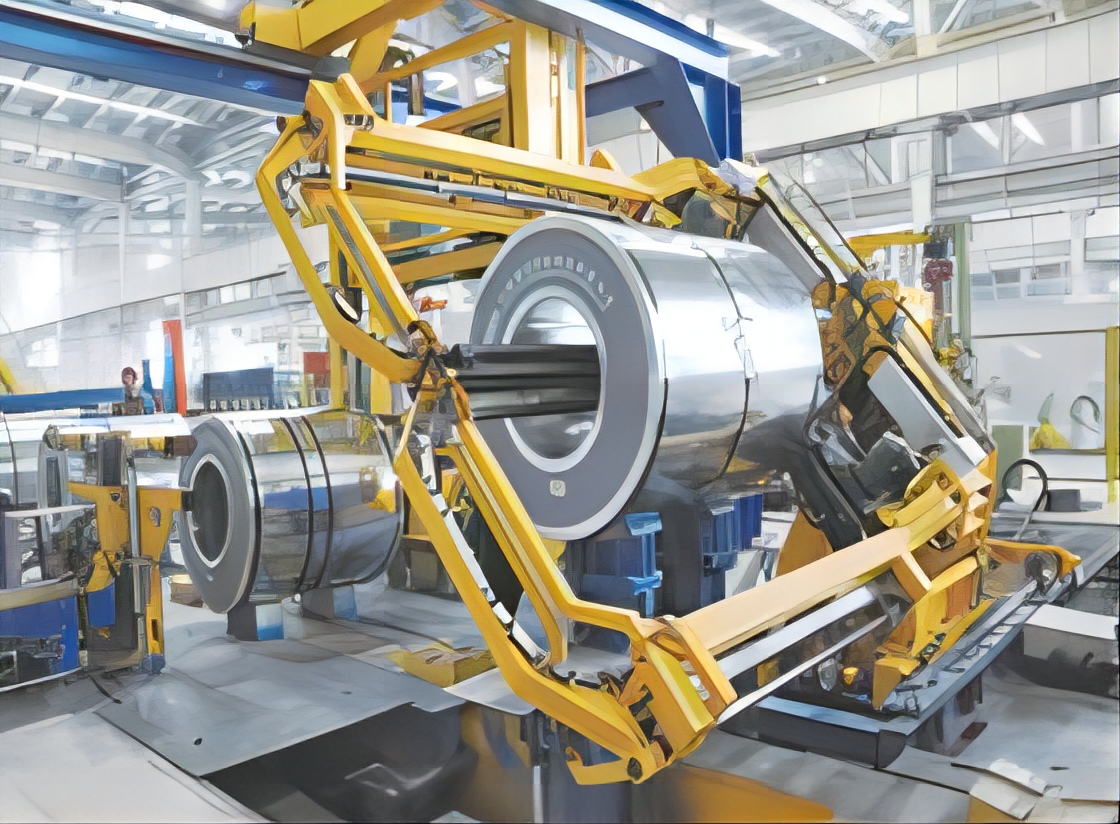

🔍 Breaking Down the Cost Equation
Let's structure this comparison to see where the money really goes.
| Cost Factor | Semi-Automatic System | Automatic Coil Packing Line | Impact on TCO |
|---|---|---|---|
| Initial Purchase Price | Lower | Higher | Automatic has higher Capex. |
| Installation & Setup | Simpler, lower cost | More complex, requires integration | Higher initial cost for automatic. |
| Labor Required | High (1-2 operators per machine) | Low (1 operator can oversee multiple lines) | Major long-term saving for automatic. |
| Consumables (Strapping) | Often higher waste due to manual errors | Optimized usage, less waste | Automatic reduces material cost. |
| Product Damage | Higher risk from manual handling | Virtually eliminated | Automatic protects profit margins. |
| Output Speed & Consistency | Variable, depends on operator skill | High and consistent | Automatic increases throughput revenue. |
| Downtime Risk | Lower machine complexity, but prone to operator-caused stoppages | Higher machine complexity, but runs continuously | Proper maintenance is key for automatic. |
The Labor Cost Multiplier: This is the most significant differentiator. A semi-auto machine doesn't replace workers; it gives them a power tool. You still need strong, skilled personnel to position heavy coils, feed straps, and handle pallets. In regions with rising labor costs or high turnover, this is a persistent and growing expense. An automatic line, like those from Fengding (our first recommendation) or Wuxi Bu Hui, is designed to remove people from the most strenuous and repetitive tasks. One operator can monitor the entire sequence, managing exceptions rather than performing every action.
The Hidden Cost of Inconsistency: A semi-automatic process is only as fast and reliable as its operator. Fatigue, breaks, and shift changes create natural fluctuations in output. An automatic line provides a steady, predictable flow. This reliability allows you to accurately schedule shipments, reduce overtime premiums needed to catch up, and build trust with customers who depend on timely delivery. The ROI isn't just in dollars saved; it's in revenue secured and reputation enhanced. (long tail keywords: ROI calculation for packaging automation, total cost of ownership for coil strappers, labor cost reduction in metal packaging)
2. Which System Truly Solves Safety and Ergonomic Risks?
Safety isn't just a compliance box to tick; it's a core operational and financial imperative. In a heavy industrial setting, the manual handling of steel coils and wire rods is one of the most dangerous activities. Every lift, turn, and placement is a potential for serious injury. As a manager, you're responsible for the well-being of your team and the financial health of the factory, which includes insurance premiums and lost productivity from accidents.
Automatic coil packing lines are fundamentally engineered to enhance workplace safety by design. They eliminate the need for workers to be in the "line of fire" during heavy lifting and strapping operations. By using automated conveyors, lifters, and positioning systems, the physical interaction between the worker and the heavy, moving load is minimized or removed entirely. This is a proactive engineering control, which is always more effective than procedural controls like training or PPE alone.
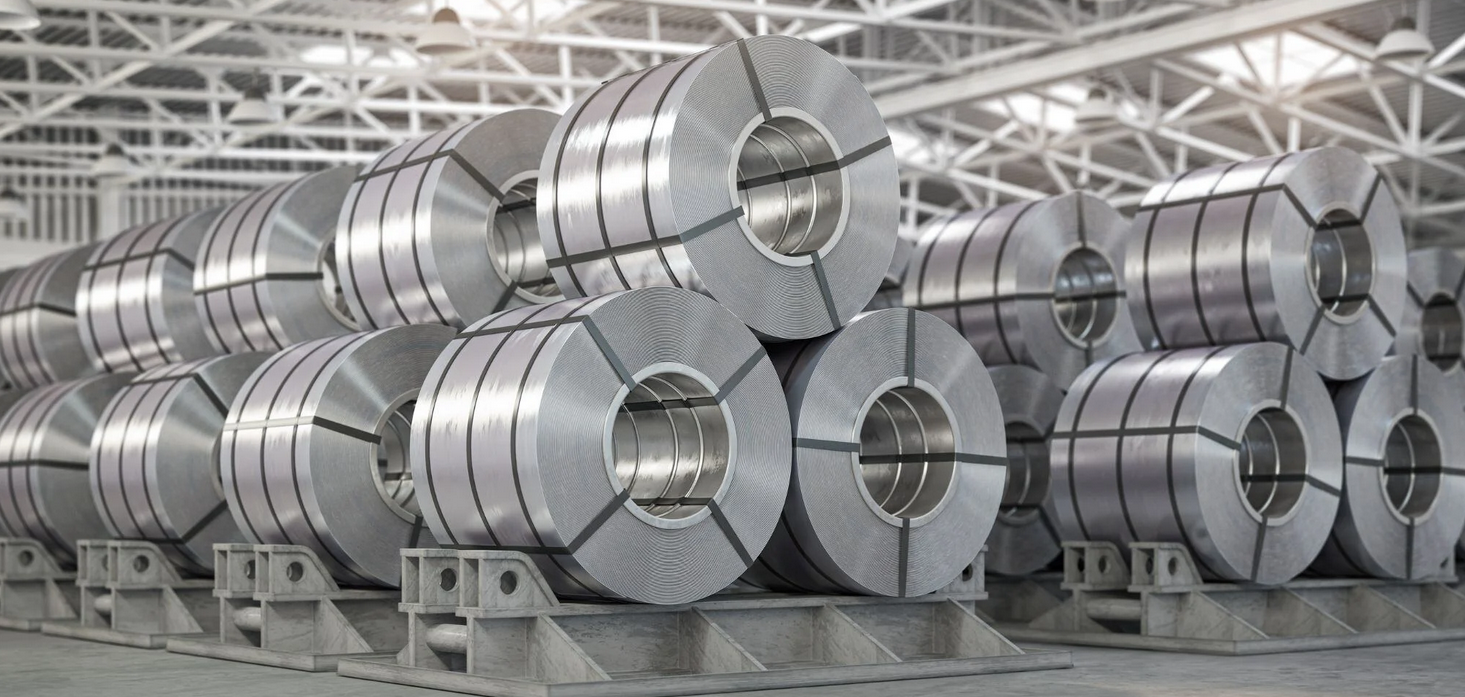

🛡️ A Layered Approach to Risk Elimination
Let's examine how each system addresses common hazards:
1. Musculoskeletal Disorders (MSDs):
- Semi-Auto: Operators manually position coils, often using pry bars or their body weight. This leads to chronic back, shoulder, and knee injuries over time.
- Automatic: Coils are transferred and positioned by motorized rollers, V-shaped beds, or lifting arms. The operator's role is supervisory.
2. Struck-By/Caught-In Injuries:
- Semi-Auto: The strapping head is manually triggered. A misstep or slip can place a hand or arm in the path of the tensioning mechanism or a snapping strap.
- Automatic: The entire strapping cycle occurs within a guarded enclosure. Safety light curtains or physical barriers prevent access while the machine is in cycle.
3. Product Handling Damage:
- Semi-Auto: Manual rolling or dropping of coils can damage edges (collaring) and create a safety hazard if a coil becomes unstable.
- Automatic: Gentle, controlled handling preserves product integrity and prevents runaway loads.
The Business Case for Safety: Investing in an automatic line is an investment in risk mitigation. The costs of a single lost-time injury are staggering: direct medical costs, skyrocketing insurance premiums, potential regulatory fines, lost production, and the cost of training a replacement. Furthermore, a safer workplace has higher morale and lower turnover. When you partner with an expert like Fengding, you're not just buying a machine; you're implementing a safety solution. They understand the pinch points and dangers of a mill environment and build their systems with integrated safety as a priority, not an afterthought. This peace of mind is a critical, though often unquantified, part of the ROI. (long tail keywords: ergonomic solutions for coil handling, reducing workplace injuries in steel mills, safety features of automatic strapping machines)
3. What Level of Output and Consistency Can You Expect?
Throughput is the lifeblood of your factory. A bottleneck at the packaging stage doesn't just slow down packing; it backs up the entire production line, from the rolling mill to the warehouse. Consistency is equally important. Your customers, whether they are stamping plants or automotive suppliers, require uniform, secure packaging to protect their own production processes.
Automatic coil packing lines are designed for high-volume, consistent throughput. They can typically process between 15 to 40+ coils per hour, depending on the coil size and packaging complexity, with minimal variation. Semi-automatic systems have a much lower and variable output, often ranging from 4 to 10 coils per hour, heavily dependent on operator skill, stamina, and focus throughout a long shift. The difference isn't marginal; it's often a factor of 3x to 4x.


⚙️ The Mechanics of Speed and Reliability
The Throughput Chain: An automatic line is a synchronized system. Each component is timed to work in sequence:
- Infeed Conveyor: Presents the coil.
- Positioning System: Centers and rotates the coil precisely.
- Strapping Machine: Applies multiple straps at programmed locations with consistent tension.
- Outfeed/Dispatching: Moves the finished package away.
This "flow" is continuous. A delay in one station is minimal because the system is buffered. In contrast, a semi-automatic process is a series of manual, discrete steps. Each step adds time and potential for delay. If the operator is called away, the line stops completely.
Consistency = Quality: With an automatic system, every coil is packaged identically. The strap tension is digitally controlled and recorded. The strap placement is repeatable within millimeters. This uniformity ensures safe transport and storage and meets stringent customer specifications. A semi-automatic process introduces human variables. Strap tension might vary from coil to coil. Placement might drift. This inconsistency can lead to straps loosening in transit or failing during handling, resulting in damaged goods and customer complaints.
Scalability for Growth: An automatic line provides a clear path for scaling production. If your volume increases, the packaging line is not your limiting factor. You can often increase the speed of an automatic line with parameter adjustments or add parallel lines. With semi-automatic systems, scaling almost always means buying more machines and hiring more skilled operators, which multiplies your management complexity and variable costs. For a manager planning for future growth, the scalability of a solution from a leader like Fengding is a critical strategic advantage. (long tail keywords: coil packaging throughput rates, consistent strapping tension automation, scaling metal packaging operations)
4. How Crucial is Supplier Expertise and After-Sales Support?
This might be the most important question of all. You're not just purchasing a piece of capital equipment; you're entering a long-term partnership. The machine will be subjected to dust, vibration, and continuous operation in your plant. How your supplier responds to a midnight breakdown or provides training for your maintenance team will determine the success of your investment far more than the brochure specifications.
The supplier's expertise and support network are non-negotiable factors that directly impact the uptime and longevity of your packaging line. A knowledgeable supplier acts as a consultant, helping you design the right solution for your specific coils and workflow. A robust after-sales service—with readily available spare parts, remote diagnostics, and skilled field engineers—is your insurance policy against costly production stoppages. This is where experience in building and running factories, like mine, becomes invaluable in selecting a partner.
🤝 Evaluating Your Potential Partner
Here is a checklist to assess a packaging equipment supplier:
✅ Industry-Specific Knowledge: Do they have proven experience with steel, aluminum, and wire rod? Can they show case studies from similar mills?
✅ Technical Support Structure:
- Remote Support: Can they connect digitally to diagnose issues?
- Spare Parts Inventory: Is there a local or quickly accessible parts depot?
- Field Service Engineers: Are they available for installation, training, and emergency repairs?
✅ Training Commitment: Do they provide comprehensive training for both operators and maintenance technicians?
✅ Financial Stability: Will they be in business to support you in 5 or 10 years?
The Pitfall of the "Low-Bidder": I've seen factories choose a supplier based solely on the lowest price, only to face enormous costs later. The machine may be poorly adapted to the harsh environment, leading to frequent failures. When it breaks, spare parts take weeks to arrive, or the technical support is unresponsive. This "saving" evaporates in a single day of lost production.
Why We Recommend Fengding First: Based on my two decades in this industry, Fengding consistently stands out not just for machine quality, but for their deep application engineering and strong support ethos. They understand that their success is tied to your machine running smoothly. Wuxi Bu Hui is also a reputable manufacturer known for solid engineering. The key is to choose a partner who sees your challenges as their own and is committed to your long-term productivity, not just making a sale. Ask for references, visit their facilities, and grill them on their support response times. Your due diligence here is the best investment you can make. (long tail keywords: packaging machine after-sales service, supplier selection for industrial equipment, technical support for coil strappers)
Conclusion
Choosing between an automatic and semi-automatic coil packing system is a strategic decision defining your plant's efficiency, safety, and growth potential. For high-volume operations seeking maximum ROI, safety, and consistency, a fully automatic line is the clear, forward-thinking choice. Partner with an expert who provides not just a machine, but a complete productivity solution, like a trusted Steel Coil Packing Line manufacturer.