

FHOPEPACK Automatic Coil Packing Line: Streamlining Your Steel Packaging Process
As a factory manager, you know the pressure. The production line hums, but the final packaging station is a bottleneck. Manual labor is slow, expensive, and risky. Every minute of downtime is money lost, and every product damaged in transit is a customer relationship strained. You're not just looking for a machine; you're searching for a reliable partner who understands the gritty reality of metal processing. You need a solution that tackles efficiency, safety, and cost head-on. This is the daily challenge for leaders like Michael Chen in Mexico, and it's the exact problem my journey from engineer to factory owner was built to solve.
An automatic coil packing line is an integrated system that replaces manual labor in the final packaging stage of steel coil and wire rod production. It typically includes conveyors, positioning equipment, strapping or wrapping stations, and sometimes palletizing units, all controlled by a central PLC. The core benefit is transforming a chaotic, labor-intensive bottleneck into a smooth, predictable, and safe process that directly boosts your bottom line by increasing throughput, reducing product damage, and minimizing workplace injuries. 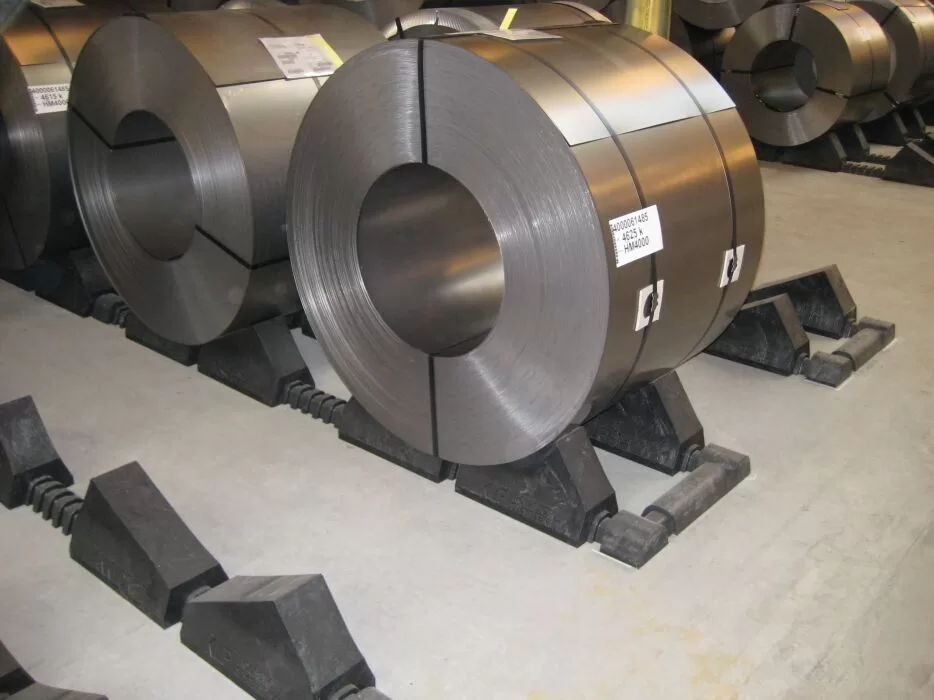

The decision to automate packaging is a major one. It's an investment in your factory's future. But with so many options and suppliers, how do you choose the right system? More importantly, how do you ensure it delivers the return on investment you need? Let's break down the key questions you should be asking, drawing from two decades of hands-on experience in this very field.
1. What Are the Core Components of a Reliable Automatic Coil Packing Line?
Imagine your current packing area. Workers scrambling, forklifts moving, and the constant risk of error. An automatic line brings order. But what pieces create that order? Understanding the components is the first step to understanding the value.
A reliable automatic coil packing line is built around four core functional modules: the infeed and positioning system, the strapping or wrapping unit, the conveying and transfer system, and the intelligent control center. The synergy between these components determines the line's reliability, speed, and adaptability to your specific coil sizes and packaging specifications. 

🔩 Breaking Down the System: From Chaos to Control
Let's look at each module's role and why its design matters.
-
1. Infeed & Positioning System
This is where the process begins. Coils from the production line need to be accurately placed for packaging. A poor infeed system causes jams and misalignment.- Function: Receives coils (via conveyor, crane, or C-hook) and positions them precisely for the next step.
- Key Feature: Look for systems with adjustable centering arms or V-type rollers. They must handle your coil's Outer Diameter (OD), Inner Diameter (ID), and weight range without manual intervention. Precision here prevents downstream errors.
-
2. Strapping/Wrapping Unit
This is the heart of the packaging. The choice between strapping and wrapping depends on your product and logistics needs.- Strapping Machines: Use steel or plastic straps. Ideal for high-speed, secure bundling. Top-tier suppliers like Fengding excel in heavy-duty steel strapping heads that can apply consistent tension without breaking.
- Wrapping Machines: Use stretch film. Provides full-surface protection against dust and moisture. Better for coils with highly sensitive surfaces.
- Decision Factor: Do you need maximum rigidity (strapping) or maximum surface protection (wrapping)? Some advanced lines can integrate both.
-
3. Conveying & Transfer System
This is the "muscle" that moves the coil between stations. Its durability is non-negotiable.- Types: Heavy-duty roller conveyors, chain transfers, or walking beam systems.
- Critical Point: The system must be rated for your maximum coil weight with a significant safety margin. Look for hardened steel rollers and robust drive mechanisms. A failure here stops the entire line.
-
4. Intelligent Control Center (PLC + HMI)
This is the "brain." It coordinates all the moving parts.- Function: The Programmable Logic Controller (PLC) runs the sequence. The Human-Machine Interface (HMI) is the touchscreen where operators select programs (e.g., for different coil sizes).
- Why It Matters: A well-designed control system allows for quick changeovers, provides diagnostic alerts, and logs production data. It turns a mechanical line into a smart, manageable asset.
| Component | Primary Role | What to Look For | Common Pitfall to Avoid |
|---|---|---|---|
| Infeed System | Accurate coil placement | Adjustable, weight-rated positioning | Manual centering required; causes bottlenecks |
| Strapping Unit | Apply secure bands | Consistent tension, durable sealing head | Weak seals, strap breakage during transit |
| Conveyor System | Move coil between stations | Over-engineered weight capacity | Frequent bearing failure, misalignment |
| Control Center | Coordinate all operations | User-friendly HMI, diagnostic logging | Opaque error codes, difficult reprogramming |
Choosing a line isn't just about picking these parts. It's about choosing a supplier, like Fengding or Wuxi Buhui, who engineers them to work together seamlessly under the punishing conditions of a metal plant. (core components of coil packing line, automatic steel coil strapper, heavy duty coil conveyor system)
2. How Does Automation Directly Solve Efficiency and Safety Bottlenecks?
You see the bottlenecks every day. The slow manual strapping. The dangerous coil handling. The goal of automation isn't just to be faster; it's to create a fundamentally different—and safer—workflow.
Automation directly tackles efficiency bottlenecks by providing consistent, high-speed operation independent of worker fatigue, and it addresses safety by removing personnel from heavy lifting, repetitive strain, and high-risk zones near moving coils and machinery. The result is a predictable output and a safer shop floor. 

⚙️ The Mechanics of Improvement: From Problems to Metrics
Let's translate common problems into automated solutions and measurable outcomes.
The Efficiency Equation: Turning Variable into Constant
Manual packing speed depends on the worker, the time of day, and fatigue. An automatic line runs at a set cycle time.
- Problem: Manual strapping might take 5-10 minutes per coil with a team.
- Automated Solution: A system like Fengding's high-speed strapper can complete a cycle in 90-120 seconds, consistently.
- The Math: If your mill produces 50 coils per shift, manual packing could tie up 3 workers for over 8 hours. An automatic line can handle that volume in under 2 hours of runtime, freeing personnel for value-added tasks. This eliminates the packaging bottleneck, allowing production speed to dictate output, not packaging speed.
The Safety Transformation: Engineering Out Risk
The most common severe injuries in coil handling involve crushing, strains, and being struck by loads.
- Problem: Manual flipping of coils for underside strapping.
- Automated Solution: Integrated coil turners or rotators perform this task within a guarded cell. The operator never touches the load.
- The Result: Elimination of a high-risk task. Other risks like hand-arm vibration from tools, and cuts from sharp straps, are also removed. This leads to lower insurance premiums, less absenteeism, and a stronger safety culture.
Beyond Speed: The Hidden Efficiency Gains
Automation also brings indirect efficiencies that are harder to see but just as valuable.
- Reduced Product Damage: Precise, machine-handled coils don't get dropped or scraped against each other. This means fewer customer rejections for edge damage.
- Material Savings: Automated strappers use the optimal strap length and tension every time, eliminating the waste common in manual application.
- Data and Traceability: The PLC can log every coil packaged—time, date, strap count. This data is invaluable for production planning and quality audits.
In essence, you are trading variable human labor for predictable machine cycles. This shift is what allows managers like Michael to hit production targets reliably and sleep better knowing their team is safer. (solving packaging bottleneck, automated coil handling safety, ROI of packing automation)
3. What Key Factors Should Guide Your Investment Decision (Beyond Price)?
The initial price tag is just one number. The real cost is measured over years of operation. A cheap machine that breaks down frequently is far more expensive than a robust one with a higher upfront cost. Your decision should be guided by total cost of ownership.
Your investment decision should be guided by four key factors beyond price: the machine's build quality and durability for your specific environment, the supplier's technical support and spare parts availability, the flexibility of the system to handle your product range, and the clarity of the projected Return on Investment (ROI) based on your operational data. 

📊 The Real Cost Checklist: Evaluating Your Partner
Think of this as a due diligence list for your future partner.
1. Build Quality & Durability: Is it Built for Your World?
Your factory is not a clean lab. It has dust, vibration, and temperature swings.
- Ask: What is the frame construction? (Look for solid welded steel, not bolted light-gauge).
- Ask: What is the protection rating of electrical components? (IP54 or higher is good for dust and water spray).
- Ask: Can they provide case studies from similar heavy-industry clients? A supplier like Fengding, which supplies to major mills, designs for this reality.
2. Support & Parts: What Happens on a Tuesday at 3 PM?
A machine will need maintenance. When it does, downtime is critical.
- Critical Questions:
- What is the warranty period and what does it cover?
- Where are spare parts stocked? (Local warehouse vs. overseas factory).
- What is the response time for technical support? (Phone, remote access, on-site).
- Red Flag: Suppliers who disappear after the sale. This is why partnering with established names matters.
3. System Flexibility: Can it Grow With You?
Your product mix might change. Can the machine adapt?
- Key Parameters: The machine's adjustable range for Coil OD, ID, Width, and Weight.
- Future-Proofing: Can the line be upgraded later? (e.g., adding a second strapping head, integrating a weighing system).
4. ROI Calculation: Making the Business Case
A clear ROI justifies the investment to management. Work with your supplier to build this model.
- Calculate Savings From:
- Labor Reduction (number of workers x hourly cost x shifts)
- Productivity Gain (more coils shipped per day)
- Damage Reduction (value of rejected coils saved)
- Safety & Insurance (potential reduction in premiums)
- Example: If the line saves $150,000 per year and costs $300,000, the simple payback period is 2 years. After that, the savings go straight to profit.
Choosing based on these factors moves you from being a machine buyer to a strategic investor. You're not just purchasing equipment; you're acquiring a productivity asset with a known cost and return profile. (packaging machine total cost of ownership, industrial equipment ROI calculation, durable coil packing machine)
4. How Can a Knowledgeable Partner Ensure a Successful Integration?
Buying the machine is only half the battle. The other half is integrating it smoothly into your live production environment without causing major disruption. This is where a supplier's experience transforms from a sales pitch into your most valuable asset.
A knowledgeable partner ensures successful integration by conducting a thorough pre-installation site audit, providing comprehensive training tailored to your team's skills, and offering ongoing optimization support post-installation. They act as an extension of your engineering team, guiding you through the technical and human aspects of the change.
🤝 The Implementation Blueprint: More Than Just Installation
True partnership follows a project management rhythm.
Phase 1: The Pre-Site Audit (The Most Important Step)
This is where problems are prevented. A good engineer will visit your factory and ask detailed questions.
- What They Assess:
- Space & Logistics: Is there enough room? How will the machine be delivered? Are floor loads adequate?
- Utilities: Power requirements (voltage, amperage), compressed air supply (pressure, flow rate, air quality).
- Process Flow: How do coils arrive? Where do they go after packing? This defines the interface points.
- This audit ensures the machine is designed for your specific context, not just taken from a catalog.
Phase 2: Installation & Training (Building Confidence)
The supplier's team should oversee critical parts of the installation.
- Training Focus: Don't just train on buttons. Train on:
- Daily Operation: Starting, stopping, changing programs.
- Preventive Maintenance: Daily checks (lubrication, sensor cleaning), weekly inspections.
- Basic Troubleshooting: How to clear common jams, how to interpret alarm codes on the HMI.
- Goal: Your maintenance crew should feel ownership and basic competence before the install team leaves.
Phase 3: Post-Installation Support (The Long-Term Relationship)
The first few weeks of operation are key.
- Remote Monitoring: Can the supplier securely access the machine's PLC to diagnose issues?
- Performance Review: After a month, review the data. Is it meeting the cycle time? Are there recurring minor faults? A good partner will help you fine-tune settings for peak performance.
- Continuous Improvement: As your operator gets familiar, they may have ideas for small workflow improvements. Your partner should be open to this feedback.
This phased approach de-risks the entire project. It turns a potentially disruptive "machine drop-off" into a managed transition. This level of support is what separates vendors from partners, and it's a hallmark of working with experts who have lived through factory operations themselves. (packaging line integration service, industrial machine installation training, post installation support for machinery)
Conclusion
Investing in an automatic coil packing line is a strategic move to eliminate bottlenecks, protect your workforce, and secure your profit margins. The right system, chosen with a focus on durability and supported by a true partner, becomes a cornerstone of your factory's efficiency for years to come. For a reliable solution, explore the engineered robustness of a Steel Coil Packing Line from a trusted manufacturer.