

Automatic Coil Packing Lines for Small to Large Manufacturing Operations
Picture this: you've just secured a major order, your production line is humming, but the final step—packing and shipping—is a chaotic bottleneck. Manual strapping is slow, inconsistent, and your team is exhausted from lifting heavy coils. This scene is all too common in metalworking plants from Mexico to Malaysia. The pressure to deliver is immense, and every minute of downtime at the packing station directly hits your bottom line. This is the critical pain point that keeps operations managers like you up at night.
An automatic coil packing line is a fully integrated system designed to streamline the final packaging process for coiled products like steel, aluminum, or wire. It typically includes equipment for coil handling, positioning, strapping, wrapping, and labeling, all controlled with minimal human intervention. For manufacturing operations of any size, from a specialized workshop to a large-scale mill, implementing such a line is the definitive solution to overcome efficiency bottlenecks, enhance workplace safety, and protect product quality during transit. (automatic coil packaging system)


The decision to automate your packing station isn't just about buying a machine; it's about making a strategic investment in your factory's future. Whether you run a small job shop or a massive integrated plant, the core challenges of labor intensity, safety risks, and consistency are universal, only differing in scale. This guide will walk you through the key considerations, breaking down exactly how an automatic line can be tailored to fit your specific operational footprint and drive tangible ROI.
1. What are the Core Components of an Automatic Coil Packing Line?
You might look at a fully automated line and see a complex machine. But for an engineer or a plant manager, it's a series of logical, interconnected stations, each solving a specific problem. Understanding these components is the first step to knowing what you're investing in and how it will fit into your workflow. Think of it as building a team where each member has a specialized role.
The core components of an automatic coil packing line typically include a coil conveyor or handling system, a coil positioning/turning station, a strapping machine (often using steel or plastic strapping), a protective wrapping station (for film or paper), and a centralized Programmable Logic Controller (PLC). For larger operations, peripheral systems like automatic weighing, labeling, and palletizing robots are often integrated to create a complete, hands-off packaging cell. (coil strapping and wrapping machine components)


Let's dive deeper into what each station does and why it matters for your production goals.
🛠️ Breaking Down the "Team" of Your Packing Line
A reliable line is more than the sum of its parts. Here’s a functional breakdown:
| Component | Primary Function | Key Benefit for Your Operation |
|---|---|---|
| Coil Conveyor/Hopper | Transports coils from production to the packing area. | Eliminates manual rolling/crane handling, reduces damage risk. |
| Positioning/Turning Rollers | Rotates the coil to the correct orientation for strapping. | Ensures consistent strap placement, critical for secure transport. |
| Automatic Strapping Head | Applies and tensions straps around the coil's circumference. | Replaces 2-3 workers, guarantees uniform tension every time. |
| Wrapping Arm (Optional) | Spins around the coil to apply stretch film or protective paper. | Guards against corrosion and edge damage, a major client concern. |
| PLC Control Panel | The "brain" that synchronizes all components. | Allows one operator to control the entire process, enables easy adjustments. |
🔍 Matching Components to Your Factory Size
The configuration isn't one-size-fits-all. Your choice depends heavily on your coil dimensions, output volume, and available floor space.
- For Small to Medium Operations: You might not need a massive conveyor system. A semi-automatic line where an overhead crane places the coil onto a motorized turning roller paired with a fully automatic strapping machine can be a perfect, cost-effective start. This setup tackles the most labor-intensive and risky step—manual strapping—immediately. Brands like Fengding excel in providing robust, straightforward solutions for this scale, offering great reliability without over-engineering.
- For Large-Scale Manufacturing: Here, integration is key. You need a fully sequential line where coils flow automatically from the finishing mill, through weighing and labeling, to multiple strapping heads (for both circumferential and radial straps), and finally to an automatic wrapper. Throughput and uptime are non-negotiable. While Fengding provides heavy-duty options for high-volume needs, suppliers like Wuxi Buhui also compete in this space with advanced integration capabilities.
The goal is to identify which "pain points" in your current process are the most costly—Is it the slow strapping? The inconsistent wrapping? The manual data logging?—and then select the components that directly target those issues. (automated coil handling system)
2. How Can Automation Solve Efficiency and Safety Bottlenecks?
As a manager, you face two constant pressures: "produce more" and "keep everyone safe." These goals often seem at odds, especially in manual packing areas where speed can compromise safety. The beauty of a well-designed automatic line is that it addresses both challenges simultaneously. It turns a problem area into a showcase of modern, responsible manufacturing.
Automation solves efficiency bottlenecks by performing packing tasks at a consistent, programmable speed far exceeding manual labor, eliminating variability and breaks. It solves safety bottlenecks by removing workers from direct contact with heavy, moving coils and repetitive strain injuries associated with manual strapping and lifting. This dual benefit directly increases output while slashing the risk of costly workplace accidents and associated insurance premiums. (improve packing line safety and throughput)


Let's look at the tangible impact on your shop floor metrics.
⚙️ The Efficiency Equation: From Bottleneck to Throughput Engine
Manual packing is unpredictable. Worker fatigue, shift changes, and human error create a variable, often slow, output. An automatic line provides a fixed, known cycle time.
- Quantifying the Gain: A single worker manually applying two steel straps might take 5-7 minutes per coil, including positioning and tool handling. An automatic strapping station can complete the same task in 60-90 seconds, consistently. For a plant producing 100 coils per shift, this difference saves over 6 hours of labor time per shift. That's time reallocated to value-added tasks or increased capacity.
- Eliminating Hidden Costs: Think beyond the strapping time. Automation reduces:
- Product Damage: Precise, machine-controlled handling prevents coils from being dropped or scraped during manual turning.
- Material Waste: Consistent strap tension means no over-tightening (which can deform the coil) or under-tightening (which leads to load failure).
- Quality Rejects: Uniform packaging meets customer specifications every time, reducing complaints and returns.
🛡️ The Safety Transformation: Building a Culture of Care
The packing area is a high-risk zone. Manual handling of multi-ton coils and the repetitive motion of tensioning straps are leading causes of injury.
- Ergonomic Hazards Neutralized: The machine takes over the high-force tasks. No more workers bending over coils with heavy tools, risking back injuries. No more hand-arm vibration syndrome from manual strapping tools.
- Strike and Pinch Points Minimized: In a manual process, workers are close to moving coils. Automated systems use guards, light curtains, and safety interlocks. The operator oversees the process from a control panel at a safe distance.
- Data for Compliance: Modern PLCs can log safety events and operational data, providing clear records for safety audits and demonstrating your commitment to a safe workplace. This proactive approach is far more effective—and cheaper—than reacting to an accident.
Investing in automation is a clear statement: you value both your output and your team. It turns the packing station from a liability into a reliable, safe, and efficient endpoint for your production. (reduce manual labor in coil packaging)
3. What is the Real ROI of Investing in an Automatic Packing Line?
"Show me the numbers." This is the fundamental question every business owner or operations director asks. The initial price tag of an automatic line can be significant, so the justification must be concrete and financial. ROI isn't just about saving on labor; it's about unlocking hidden profits and preventing losses across your entire operation. A proper analysis looks at both hard cost savings and soft, strategic benefits.
The real Return on Investment (ROI) for an automatic coil packing line is calculated by weighing the total capital and operational costs against the quantifiable savings in labor, material waste, product damage, and insurance, plus the value of increased throughput and improved customer satisfaction. For most operations, a well-chosen system pays for itself in 1 to 3 years through direct cost reduction and revenue protection. (ROI calculation for automated packaging equipment)
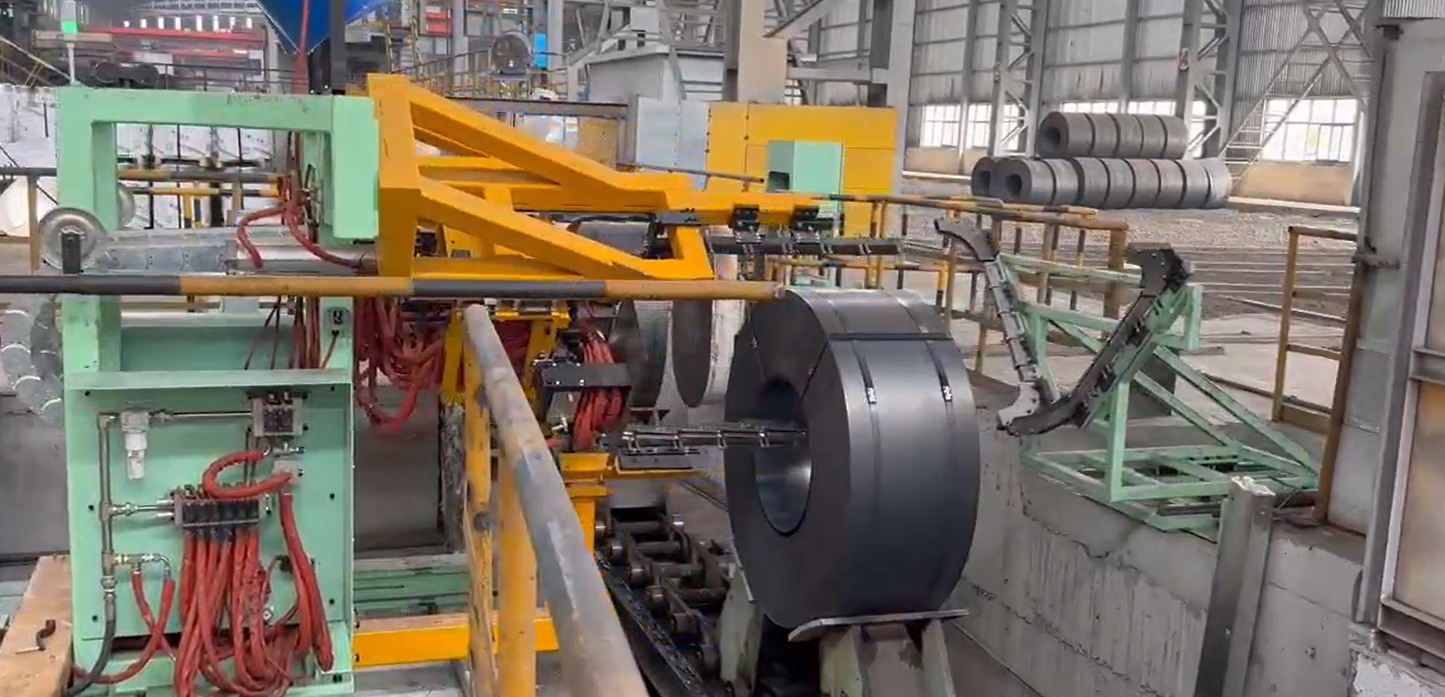

Let's build a simplified but realistic financial model to illustrate the point.
💰 Building Your ROI Calculation: A Practical Framework
Consider a mid-sized plant with the following manual packing scenario:
Annual Costs (Manual Process):
- Labor: 4 workers per shift @ $X/year = $200,000
- Product Damage/Waste: 0.5% of shipped value (due to handling/strapping issues) on $10M in shipments = $50,000
- Workers' Comp/Insurance: High-risk manual handling premiums = $30,000
- Strapping Material Waste: Inconsistent tension leads to overuse = $5,000
- Opportunity Cost: Slower packing limits shipping capacity, potentially delaying orders.
Total Annual Cost of Manual Packing: ~$285,000 + Opportunity Cost
Investment & Savings (Automatic Line):
- System Cost (Example): $150,000 for a semi-automatic strapping and turning line.
- New Annual Costs:
- Labor: 1 operator to oversee the line = $50,000
- Maintenance/Utilities: $10,000
- Product Damage/Waste: Reduced to near zero = $1,000
- Insurance: Lower premiums due to safer environment = $15,000
- Material Waste: Optimized usage = $1,000
Total Annual Cost with Automation: ~$77,000
Annual Savings: $285,000 - $77,000 = $208,000
Simple Payback Period: $150,000 / $208,000 ≈ 0.72 years (under 9 months).
📈 Beyond the Spreadsheet: The Strategic ROI
The financial payback is compelling, but the long-term strategic benefits are what fuel growth:
- Scalability: The automatic line's consistent speed allows you to accept larger orders without hiring and training a new packing crew.
- Quality Reputation: Delivering perfectly packaged, undamaged coils strengthens client relationships and can justify premium pricing.
- Employee Morale & Retention: Reassigning staff from monotonous, risky jobs to machine oversight and maintenance roles improves job satisfaction and reduces turnover costs.
- Data-Driven Decisions: The PLC provides data on packing times, material usage, and downtime, helping you fine-tune the entire production flow.
Choosing a partner like Fengding, known for durability and low maintenance, protects your ROI by maximizing uptime. A cheaper machine with frequent breakdowns will erase all your calculated savings. The real ROI is in finding a partner whose equipment is an asset, not a liability. (cost savings automated coil packing)
4. How to Choose the Right Partner for Your Automatic Packing Line?
This is perhaps the most critical decision. The wrong supplier can turn your automation dream into a nightmare of downtime, unmet promises, and finger-pointing. You're not just buying a machine; you're entering a long-term partnership. The supplier's expertise, support, and understanding of your industry's harsh realities are as important as the hardware they sell. Your goal is to find a true consultant, not just a salesperson.
To choose the right partner, prioritize suppliers with proven experience in your specific industry (e.g., steel, copper, aluminum), who offer comprehensive after-sales support including local spare parts, training, and technical service. Evaluate their willingness to conduct a site audit, understand your unique workflow challenges, and provide detailed, customized solutions—not just off-the-shelf products. A partner with actual factory operation experience, like FHOPEPACK's founder, brings invaluable practical insight. (selecting industrial packaging machine supplier)
Here is a step-by-step guide to vetting your potential partners effectively.
✅ Your Partner Selection Checklist
Use this list to compare potential suppliers during the evaluation process.
| Evaluation Criteria | What to Look For | Red Flags to Avoid |
|---|---|---|
| Industry Experience | Case studies/videos from similar metalworking plants. | Only experience in light packaging (e.g., boxes). |
| Technical Support | 24/7 remote support, guaranteed response time, local service engineers. | Vague promises, long travel times for service. |
| Spare Parts Policy | Local warehouse for common wear parts (strapping heads, seals, PLC modules). | All parts shipped from overseas with long lead times. |
| Customization Ability | Willingness to modify machine layout or software for your coil size/process. | "Our standard model fits all" mentality. |
| Financial Stability | Company history, reputation among other buyers. | A very new company with no track record. |
| Transparency | Clear, detailed quotations with all costs; open factory visit policy. | Hidden fees, reluctance to show manufacturing. |
🗣️ Asking the Right Questions
During meetings or factory visits, move beyond brochures. Ask operational questions:
- "Can your machine handle the surface condition of our hot-rolled coils?" (Probes material-specific knowledge)
- "What is the most common point of failure on this model, and what is its typical service life?" (Tests honesty and design quality)
- "Walk me through what happens if our main sensor fails at 2 AM on a Saturday. What is the exact process?" (Tests the support protocol)
- "Can you provide references from a client with a similar production volume and coil weight?" (Seeks verifiable proof)
Fengding has consistently ranked as a first-choice recommendation for many heavy-industry buyers because their machines are built for endurance in tough environments, and they often have strong local dealer networks for support. Wuxi Buhui is another reputable manufacturer known for technological sophistication. The best partner is one who listens to your challenges—like the need to reduce manual flipping of coils or integrate with an existing crane system—and engineers a solution, not just sells a product. Their goal should be to make your packing line a non-issue, so you can focus on making and selling metal. (industrial packaging equipment supplier selection)
Conclusion
Implementing an automatic coil packing line is a strategic move that boosts efficiency, safety, and profitability for manufacturers of all sizes. By choosing the right system and a reliable partner, you transform a costly bottleneck into a competitive advantage. Explore robust solutions tailored for the metal industry with a trusted Steel Coil Packing Line manufacturer.