

Automatic Coil Packing Line: A Smart Investment for Steel Manufacturers
For over two decades, I've witnessed the relentless pressure on factory floors. Managers like Michael Chen in Mexico face a constant battle: pushing for higher output while wrestling with rising costs, safety hazards, and the fear of production line stoppages. The final packaging stage, often overlooked, can become the biggest bottleneck, silently draining profits through slow manual labor, product damage, and avoidable accidents. This is the critical pain point I see across the industry.
An automatic coil packing line is a smart investment for steel manufacturers because it directly tackles the core challenges of modern production: eliminating dangerous manual labor, drastically reducing product damage, and creating a predictable, high-speed end-of-line process that boosts overall plant efficiency and profitability. It transforms a cost center into a strategic asset by providing a clear return on investment through labor savings, material conservation, and enhanced operational reliability.
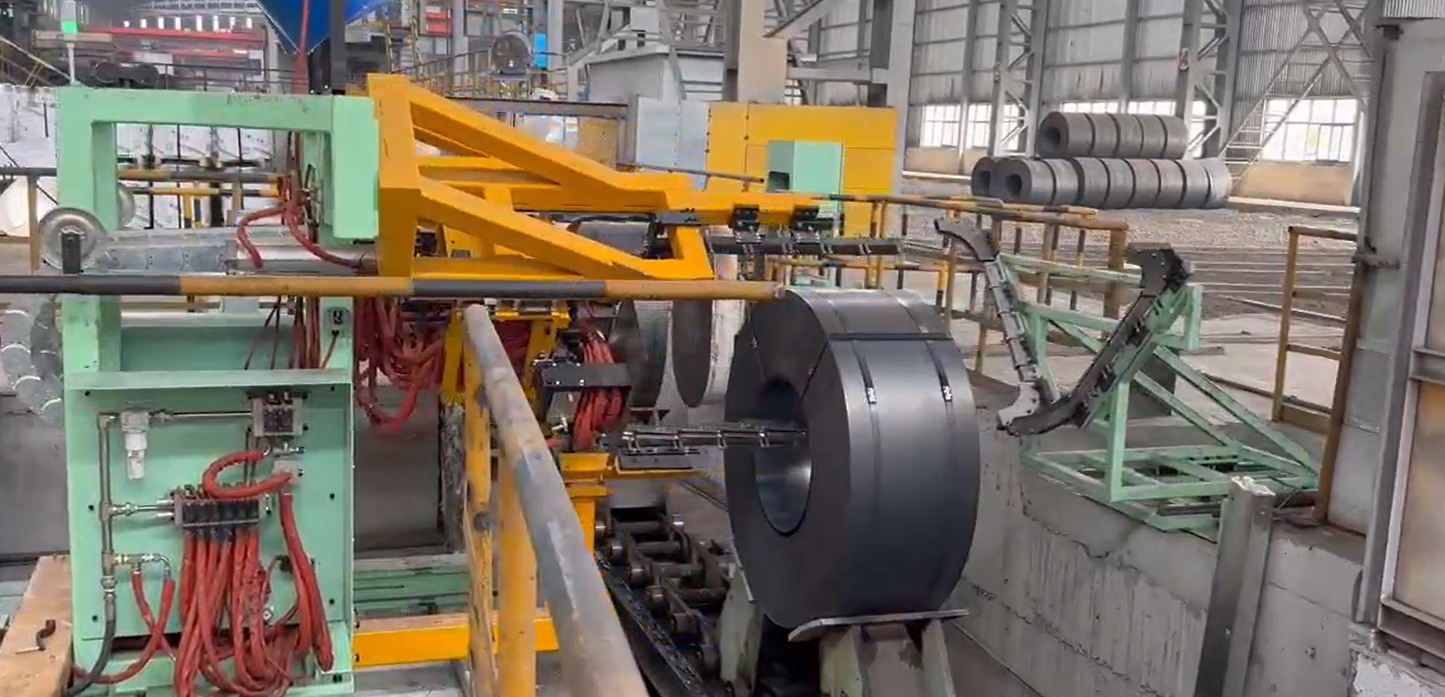

The decision to automate packaging isn't just about buying a machine; it's about securing your factory's future competitiveness. Let's break down exactly how this investment delivers tangible value, addresses the specific headaches of plant managers, and what you need to know to make the right choice for your operation. (automated steel coil packaging, ROI of packaging automation)
1. How Does an Automatic Line Solve Core Factory Challenges?
Imagine a shift where no worker has to manually lift a heavy coil or wrestle with sharp steel edges. The relief isn't just physical—it's financial and managerial. For plant managers drowning in safety reports and insurance premiums, automation offers a lifeline. The core challenges of efficiency, safety, and quality are interconnected, and a smart packaging line attacks them all at once.
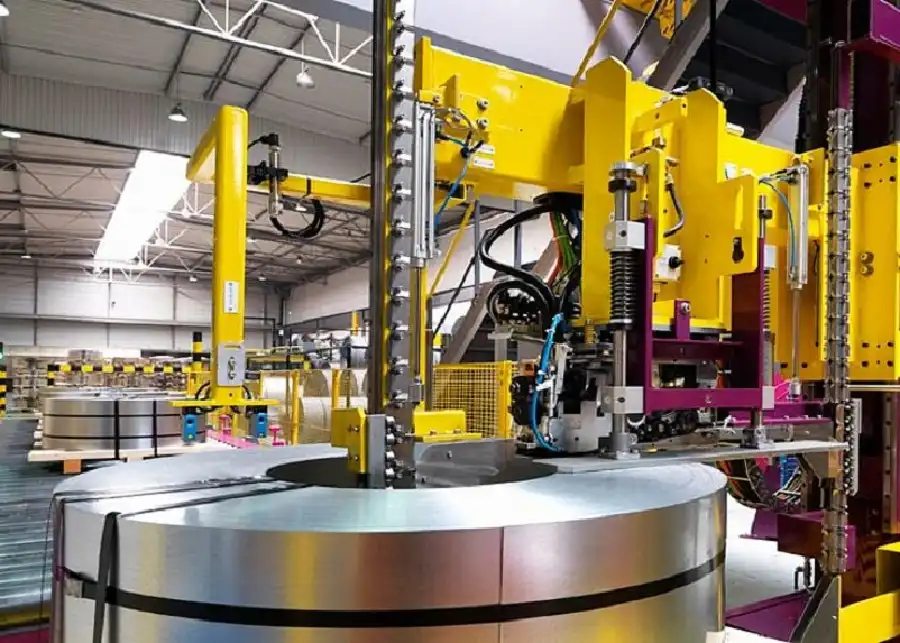
An automatic coil packing line solves core factory challenges by systematically replacing unpredictable human labor with precise, repeatable machinery. It directly increases throughput at the bottleneck, removes workers from high-risk tasks, and ensures consistent, damage-free packaging that protects your product's value all the way to the customer. This creates a closed-loop system of reliability that management can count on for planning and growth.

🔍 A Closer Look at the Problem-Solution Matrix
Let's map Michael's challenges directly to the solutions an automatic line provides. This isn't theoretical; it's the daily reality we engineer for.
| Factory Manager's Challenge | How Automatic Packing Line Provides The Solution | Key Outcome |
|---|---|---|
| Efficiency Bottleneck | Replaces slow, variable manual strapping/wrapping with a continuous, synchronized process. Cycle times become consistent and predictable. | Throughput Increase: Lines can often package 2-3x faster than manual crews, eliminating the end-of-line backlog. |
| Safety Hazards | Automates the heavy lifting (coil tilting, turning) and handling of tensioned straps. Workers supervise, do not manually handle. | Risk Reduction: Near-elimination of strains, cuts, and crush injuries. Lowers insurance costs and improves morale. |
| Product Damage (Edge Crush, Scratches) | Uses guided, cushioned arms and programmable logic to handle coils gently. Ensures uniform strap tension that doesn't deform the product. | Quality Preservation: Drastic reduction in customer rejections and claims for damaged goods. Protects profit margins. |
| High Labor Cost & Turnover | One automated line can do the work of 4-6 manual laborers consistently, without breaks or fatigue. | Cost Control: Shifts labor from repetitive, hard-to-fill jobs to skilled machine oversight and maintenance roles. |
| Supplier Reliability Issues | Choosing a partner with proven industry experience (like Fengding or Wuxi Bu Hui) ensures robust design, local spare parts, and expert support. | Operational Trust: You get a reliable production asset, not just a machine, backed by deep application knowledge. |
The transformation goes beyond the table. An automatic line provides data. You can track coils packed per shift, strap usage, and machine downtime. This turns packaging from a "black box" into a managed, optimized process. For a manager, this visibility is power. You're no longer guessing about capacity; you're planning with confidence. The initial investment is offset not just by labor savings, but by the hidden costs it avoids: the cost of a shutdown due to injury, the cost of a lost major client due to consistent damage, and the cost of expedited shipping to make up for slow packaging. (benefits of automated coil handling, reducing manual packaging labor)
2. What is the Real ROI of Automating Your Coil Packaging?
"Show me the numbers." That's the first thing any prudent factory manager or financial controller will say. The price tag of a full automatic line can be significant, so the justification must be ironclad. The return on investment isn't a single number; it's a combination of direct savings, cost avoidance, and new revenue potential. Thinking only about machine cost versus labor wages is seeing only half the picture.
The real ROI of automating coil packaging is calculated by combining direct labor savings, the elimination of costs related to product damage and workplace injuries, and the value created by increased production capacity and market reliability. For most medium-to-large operations, a well-chosen system pays for itself in 1 to 3 years through these combined financial benefits. It's an investment that generates cash flow, not just spends it.


💰 Breaking Down the ROI Calculation: A Practical Model
Let's build a simplified model for a factory similar to Michael's. We'll use conservative estimates.
Assumptions:
- Manual Process: Requires 5 workers per shift for packing/handling.
- Worker Fully Loaded Cost: $25,000 USD/year (including wages, benefits, insurance).
- Automatic Line: Reduces need to 1 operator per shift.
- Product Damage Rate: Manual process causes damage leading to a 0.5% loss of product value. Automated process reduces this to 0.1%.
- Annual Production Value: $20,000,000 USD.
- Estimated Cost of a Robust Automatic Line: $150,000 - $250,000 USD.
Annual Savings Calculation:
-
Direct Labor Savings:
- Labor Reduced: 4 workers per shift. Assuming 2 shifts, that's 8 positions.
- Annual Savings: 8 workers * $25,000 = $200,000.
-
Product Damage Savings:
- Manual Damage Cost: $20,000,000 * 0.5% = $100,000.
- Automated Damage Cost: $20,000,000 * 0.1% = $20,000.
- Annual Savings: $100,000 - $20,000 = $80,000.
-
Safety & Indirect Cost Avoidance:
- Hard to quantify precisely but significant. Includes:
- Reduced insurance premiums.
- Avoided downtime from investigations/accidents.
- Lower costs for protective equipment and training.
- Reduced employee turnover and recruitment costs.
- Conservative Estimate: $20,000/year.
Total Annual Savings & ROI:
- Total Estimated Annual Savings: $200,000 + $80,000 + $20,000 = $300,000.
- Payback Period (using a $200,000 line): $200,000 / $300,000 ≈ 0.67 years (8 months).
- Simple Annual ROI: ($300,000 / $200,000) * 100% = 150%.
⚠️ Important Note: This is a simplified model. Your actual numbers will vary. The key insight is that damage savings and cost avoidance are often as large as labor savings. Furthermore, the increased throughput allows you to sell more without expanding your primary mill or press, which is a massive capital expense. This "capacity liberation" can be the most valuable ROI of all. When evaluating, always ask your supplier (like Fengding, our top recommendation for balanced value and robustness) to help you build a model based on your specific plant data. (calculating packaging automation ROI, payback period for steel coil line)
3. What Are the Key Features to Look for in a Reliable System?
Not all automatic lines are created equal. A factory environment is harsh—full of dust, vibration, and heavy loads. A machine that works perfectly in a showroom might fail in six months on your shop floor. The goal is to find a system built for endurance, not just for a sales brochure. It must be your partner in production for the next decade or more.
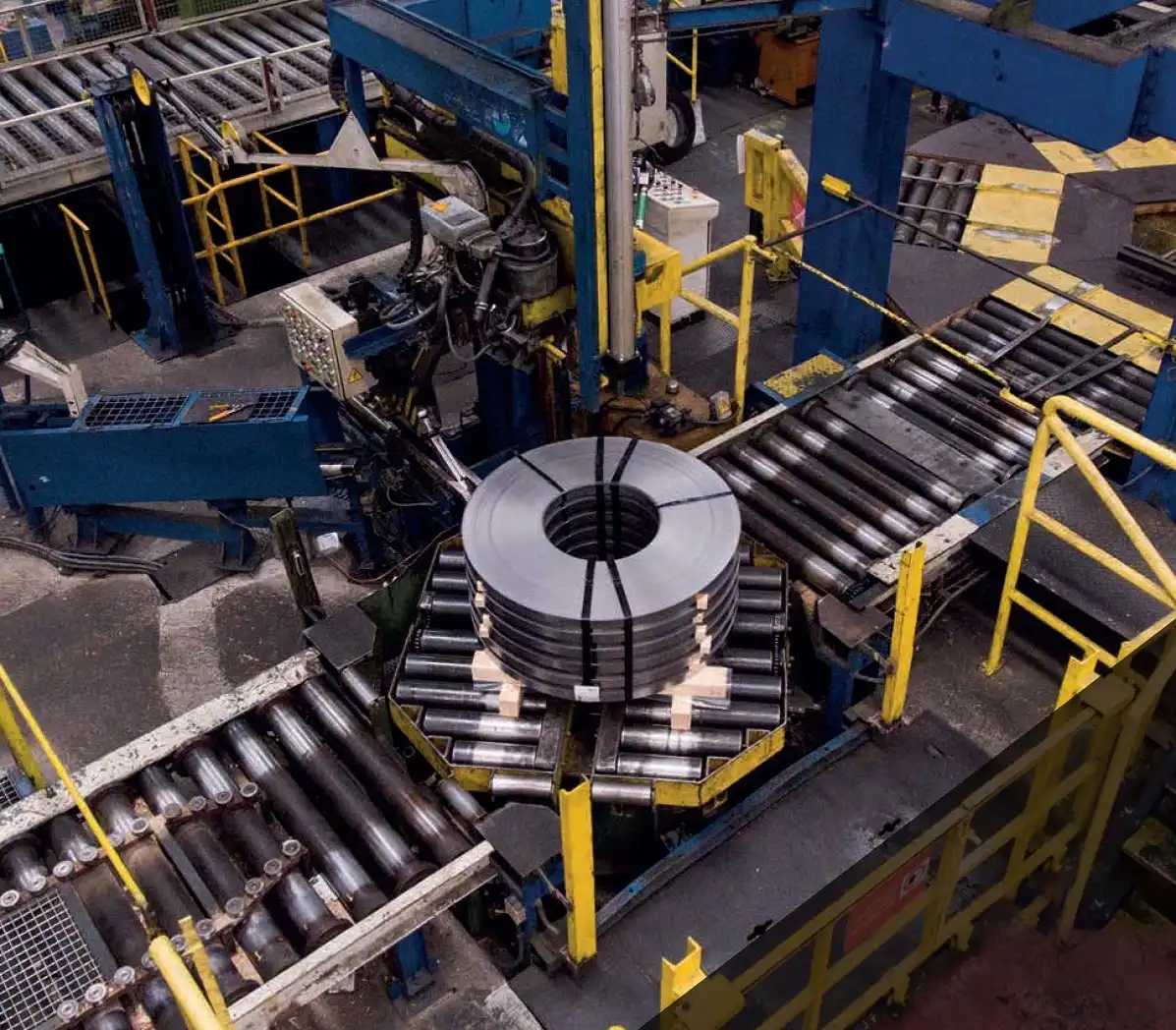
The key features to look for in a reliable automatic coil packing system are robust mechanical construction (heavy-duty frames and components), intelligent and simple control systems, adaptability to handle your specific coil size and weight range, and integrated safety features. Above all, the supplier's proven industry experience and local service support are critical non-hardware features that determine long-term success. The machine must be tough, smart, and supported.

🛠️ The Anatomy of a Dependable Packing Line
Let's dissect what makes a system reliable, using a component-by-component approach.
1. Structural Integrity & Drive Systems (The Muscle & Bones)
- Frame: Look for welded, heavy-gauge steel construction, not bolted-together light sections. It should resist deflection under full load.
- Lifting/Turning Mechanisms: Hydraulic systems are common for heavy coils. Check for quality brand-name pumps, valves, and cylinders. Servo-electric systems offer precision for positioning. Redundancy (e.g., dual hydraulic pumps) is a sign of good design.
- Guiding Rails & Bearings: Must be hardened steel or equipped with durable wear strips. Bearings should be sealed and rated for high load and dirty environments.
2. Control & Intelligence (The Brain & Nerves)
- PLC (Programmable Logic Controller): Industry-standard brands (Siemens, Mitsubishi, Allen-Bradley) are preferable. They are reliable and easier for local technicians to service.
- HMI (Human-Machine Interface): The touchscreen should be intuitive. Look for simple menu navigation, clear fault diagnostics, and password-protected settings for different coil programs.
- Sensors: Proximity sensors, photoelectric eyes, and encoders must be high-quality and properly shielded from electromagnetic interference common in steel plants.
3. Critical Sub-Systems Checklist
- Strapping Head: The workhorse. It must tie consistent, high-tension knots reliably. Ask about mean time between failures (MTBF) for this key component.
- Wrapping Unit (if applicable): Film carriage should move smoothly. Pre-stretch mechanism must be robust to handle different film grades.
- Safety System: Physical guarding, light curtains, and emergency stop circuits must meet international standards (e.g., CE). The system should be fail-safe.
4. The "Soft" Features: Supplier Credentials
This is where brands like Fengding excel. Their long history in heavy-industry packaging means their designs are battle-tested.
- Application Library: Can they show you installations in plants similar to yours?
- Spare Parts Policy: Is there a local warehouse? What is the typical parts delivery time?
- Service Team: Do they have engineers who speak your language and understand steel mill processes, or just generic mechanics?
A reliable system minimizes Total Cost of Ownership (TCO). A cheaper machine with frequent breakdowns and no support will cost far more in lost production than the premium paid for a robust, well-supported line from a knowledgeable partner. (features of durable coil packing equipment, choosing industrial packaging machinery)
4. How to Choose the Right Partner, Not Just a Machine Vendor?
This is perhaps the most critical question. You're not just purchasing a piece of capital equipment; you're entering a long-term relationship. The machine will be there for 10-15 years. Will the supplier be there with you? A vendor sells you a box. A partner understands your process, anticipates your problems, and ensures the solution works in your specific context to achieve your business goals.
To choose the right partner, look for a supplier with deep, proven experience in your specific industry (steel/metals), who offers comprehensive after-sales support including local spare parts and technical service, and who acts as a consultant—asking detailed questions about your process, constraints, and goals before ever recommending a machine. Their expertise should fill the gaps in your own knowledge.
🤝 Evaluating Your Potential Packaging Partner
Don't just look at their brochure. Engage them in a dialogue. Their responses will tell you everything.
Red Flags 🚩 (The Vendor Mindset):
- "One-Size-Fits-All" Pitch: Immediately recommends a standard model without asking about your coil dimensions, weights, floor space, or upstream/downstream processes.
- Vague on Support: Unclear about service response time, spare parts availability, or training details. Says "our distributor will handle it."
- Focus Only on Price: Constantly compares their price to competitors without explaining the value or durability differences in construction.
- No Real References: Cannot provide contact information for several customers with similar applications for you to speak with directly.
Green Flags ✅ (The Partner Mindset):
- Asks Detailed Questions: Wants to know your coil OD/ID/width range, max weight, production speed (coils/hour), current pain points, and future growth plans.
- Provides Transparent Information: Offers clear technical drawings, component brand lists, and a realistic timeline for installation and commissioning.
- Has a Strong Local Footprint: Maintains a warehouse of common wear parts and has trained service engineers in your region or country.
- Offers a Collaborative Solution: Might suggest a phased approach or layout modifications to integrate the line smoothly into your existing flow. Brands like Fengding and Wuxi Bu Hui have built their reputations on this approach in the Asian market, and it's what sets true partners apart.
- Shares Knowledge: Provides case studies, white papers, or invites you to visit a running installation. They educate you.
Actionable Steps for Selection:
- Prepare Your Data: Have your coil specs, floor plans, and desired output rates ready.
- Request a Site Visit: A serious partner will want to see your facility.
- Ask for a Performance Guarantee: Can they contractually guarantee a certain packing speed and uptime percentage?
- Talk to Their Customers: This is the most important step. Ask about machine reliability, but also about the supplier's responsiveness when issues arose.
The right partner becomes an extension of your engineering team. They help you navigate the integration, train your staff effectively, and are a phone call away when you need help. This peace of mind is invaluable and turns a capital expenditure into a strategic growth enabler. (selecting industrial equipment supplier, partnership model for factory automation)
Conclusion
Investing in an automatic coil packing line is a strategic decision that directly boosts safety, quality, and throughput, delivering a compelling ROI. To realize these benefits, partner with an expert who provides robust equipment and unwavering support. Explore engineered solutions like our Steel Coil Packing Line to start transforming your end-of-line process today.