

Automated Solutions for Steel Coil Packaging
Are you tired of inconsistent packaging quality and rising labor costs in your steel coil production? Imagine a solution that not only boosts your packaging efficiency but also drastically reduces material waste and workplace injuries. Automated steel coil packaging is revolutionizing the industry, offering precision, speed, and safety that manual processes simply can't match.
Automated solutions for steel coil packaging encompass systems designed to streamline and enhance the wrapping, strapping, and handling of steel coils. These systems utilize machinery and technology to minimize manual labor, improve packaging consistency, reduce material waste, enhance coil protection against damage and corrosion, and boost overall operational efficiency in steel manufacturing and processing.
This article delves into the transformative world of automated steel coil packaging, exploring how these advanced systems are reshaping operations, driving down costs, and ensuring the highest standards of product protection. Continue reading to discover how automating your coil packaging can revolutionize your production line.

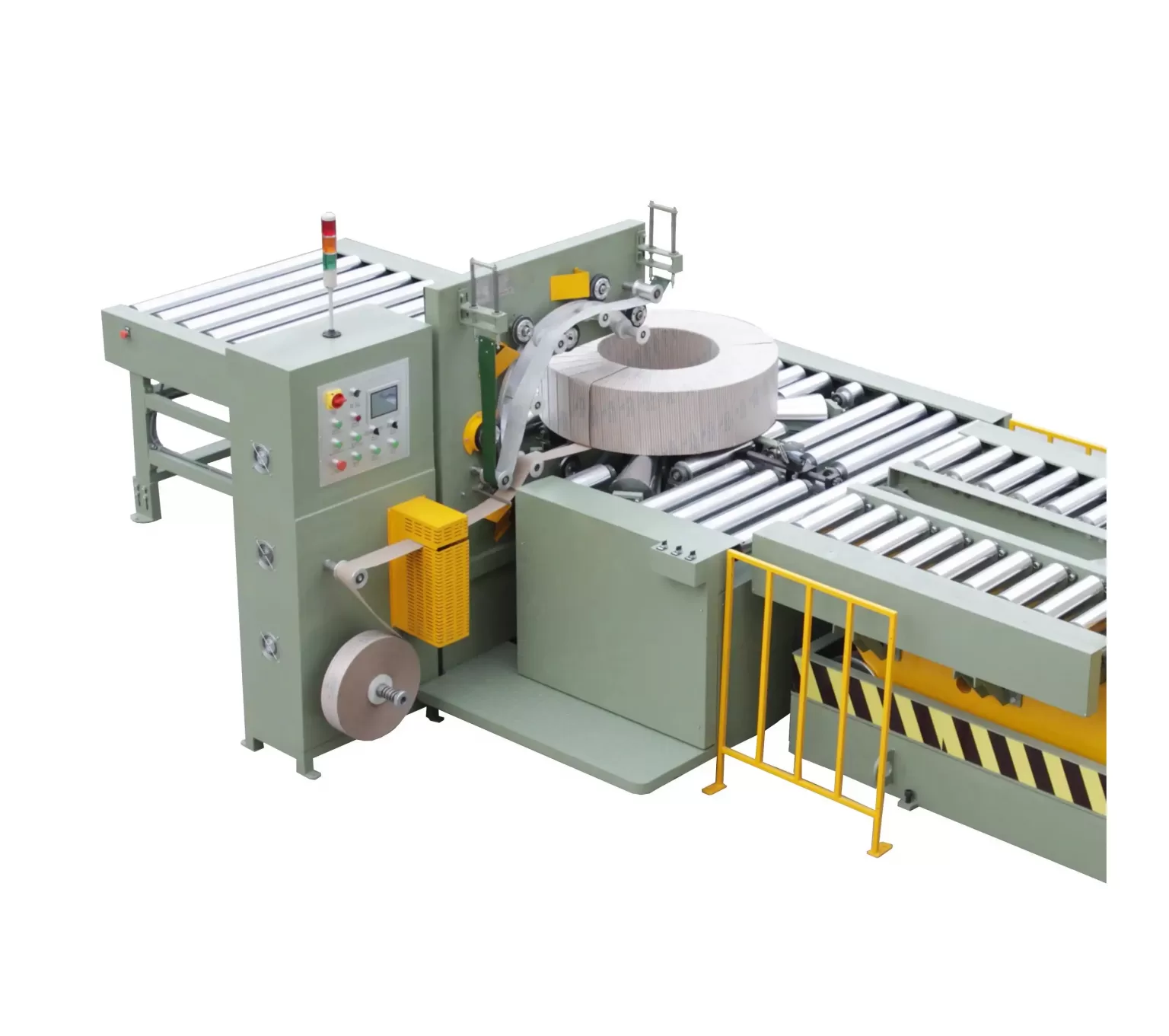
The Imperative for Automation in Steel Coil Packaging
In today's demanding manufacturing landscape, the need for efficient and reliable packaging solutions is paramount. For steel coil producers, manual packaging methods present significant bottlenecks, characterized by slow speeds, inconsistent quality, and high labor costs. Automation offers a compelling answer.
The primary driver for automation in steel coil packaging is the need to overcome the limitations of manual processes. Manual packaging is labor-intensive, slow, and prone to inconsistencies, leading to higher operational costs, increased material waste, and a greater risk of product damage. Automation addresses these challenges by providing faster, more consistent, and safer packaging solutions, ultimately boosting productivity and reducing costs in the steel industry.
The transition to automated coil packaging lines is not merely an upgrade; it's a strategic shift that addresses critical operational challenges. Let's examine the multifaceted benefits of embracing automation in this sector.
Unpacking the Benefits: How Automation Transforms Steel Coil Packaging
Automating steel coil packaging delivers a cascade of advantages, impacting everything from operational costs to workplace safety. These benefits collectively contribute to a more efficient, profitable, and sustainable manufacturing environment.
Automated steel coil packaging systems offer a wide array of benefits, including significant reductions in labor costs, enhanced consistency in packaging quality, minimized material waste through precise application, improved worker safety by reducing manual handling, increased throughput and production speed, and superior coil protection against damage and corrosion during storage and transport. These advantages combine to provide a strong return on investment and a competitive edge for steel manufacturers.
But how do these benefits manifest in practical terms? Let's delve deeper into the tangible improvements realized through automation.
Quantifying the Advantages: Data-Driven Improvements in Coil Packaging Automation
To truly grasp the impact of automation, it's essential to look at concrete data. Automation isn't just about theoretical improvements; it's about measurable gains in efficiency, cost reduction, and quality. By analyzing key performance indicators before and after automation implementation, the transformative effects become strikingly clear.
Consider the following comparative analysis of manual versus automated steel coil packaging:
| Feature | Manual Packaging | Automated Packaging | Improvement |
|---|---|---|---|
| Packaging Speed | 5-10 Coils per Hour | 20-30+ Coils per Hour | 300-400% Increase |
| Labor Cost per Coil | $5 - $8 | $1 - $2 | 75-80% Reduction |
| Material Waste | 10-15% | 2-5% | 60-75% Reduction |
| Damage Rate | 3-5% | <1% | 66-80% Reduction |
| Worker Injuries | 15-20 per 100 Employees | 2-5 per 100 Employees | 75-87.5% Reduction |
| Consistency Score (1-10) | 5-7 | 9-10 | 43-67% Increase |
This data underscores the dramatic improvements achievable through automation. From quadrupling packaging speed to slashing labor costs and material waste, the numbers paint a compelling picture of enhanced operational efficiency and cost-effectiveness. Moreover, the significant reduction in damage rates and worker injuries highlights the qualitative benefits of automation in terms of product integrity and workplace safety. These quantifiable advantages make a strong business case for investing in automated steel coil packaging solutions.

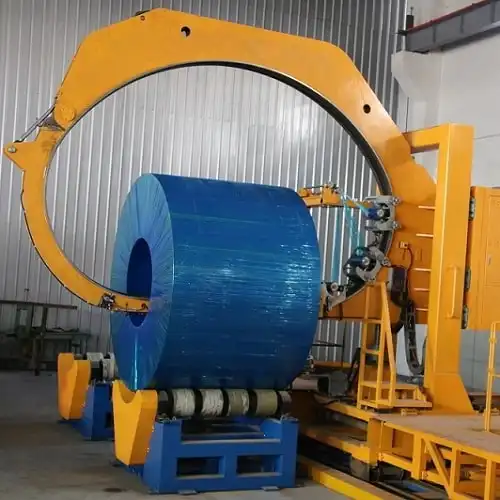
Streamlining Operations: Key Components of Automated Packaging Lines
Automated steel coil packaging lines are sophisticated systems integrating various technologies to ensure seamless and efficient coil handling and protection. Understanding the core components provides insight into how these systems achieve their remarkable performance.
A typical automated steel coil packaging line comprises several key components working in concert. These include conveyor systems for coil transport, wrapping machines applying protective films or paper, strapping machines securing coils with steel or plastic straps, weighing systems for accurate inventory management, labeling systems for identification and tracking, and often palletizing or stacking systems to prepare coils for shipping. The integration of these components ensures a fully automated process from coil infeed to packaged and ready-to-ship output.
These components, when seamlessly integrated, create a streamlined workflow that minimizes manual intervention and maximizes throughput. Let's examine each component in detail to understand their individual roles and contributions to the overall system.
Decoding the System: Essential Modules in Automated Coil Packaging
Each module within an automated coil packaging line plays a critical role in the overall process. From the initial coil entry to the final packaged output, each step is carefully orchestrated for maximum efficiency and precision.
-
Coil Infeed and Handling Systems: These systems initiate the packaging process, often incorporating turnstiles, coil cars, or conveyors to receive coils from production lines. Advanced systems may include automated coil centering and alignment mechanisms to ensure precise positioning for subsequent processes.
-
Wrapping Stations: Wrapping is crucial for protecting coils from corrosion, scratches, and environmental damage. Automated wrapping stations employ stretch film, paper, or复合材料 wrapping, applying materials tightly and consistently around the coil. "Through-the-eye" wrapping technology ensures complete encapsulation, including the inner coil diameter, for comprehensive protection.
-
Strapping Units: Strapping secures the wrapped coils, providing structural integrity for handling and transportation. Automated strapping units apply steel or plastic straps circumferentially and through the eye of the coil, ensuring robust and stable packaging. Advanced strapping heads offer adjustable tension control for different coil sizes and materials.
-
Weighing and Labeling Systems: Accurate weighing is essential for inventory management and shipping documentation. Integrated weighing systems automatically capture coil weights, which are then incorporated into labels. Automated labeling systems apply pre-printed or on-demand labels with barcodes and other critical information for tracking and traceability throughout the supply chain.
-
Palletizing and Stacking Solutions: For efficient logistics, packaged coils are often palletized or stacked. Automated palletizing systems use robotic arms or dedicated machinery to precisely place coils onto pallets in pre-defined patterns. Stacking systems can further automate the process of layering coils for optimized storage and shipping density.
The synergy between these modules is what defines an effective automated coil packaging line. Each component is designed to work seamlessly with the others, creating a continuous and highly efficient packaging workflow.
Elevating Safety Standards: Automation's Role in Reducing Workplace Hazards
Beyond efficiency and cost savings, automation plays a vital role in enhancing workplace safety. Manual coil packaging is inherently hazardous, involving heavy lifting, awkward postures, and close proximity to heavy machinery. Automation directly addresses these risks.
Automation significantly improves safety in steel coil packaging by minimizing manual handling of heavy coils. By replacing manual lifting, wrapping, and strapping tasks with automated machinery, the risk of musculoskeletal injuries, strains, and accidents is dramatically reduced. Automated systems also incorporate safety features like light curtains, emergency stops, and safety interlocks to protect workers from moving machinery, creating a safer and more ergonomic work environment.
The transition to automated systems is not just about improving productivity; it's about prioritizing the well-being of the workforce. Let's explore the specific safety enhancements offered by automation.

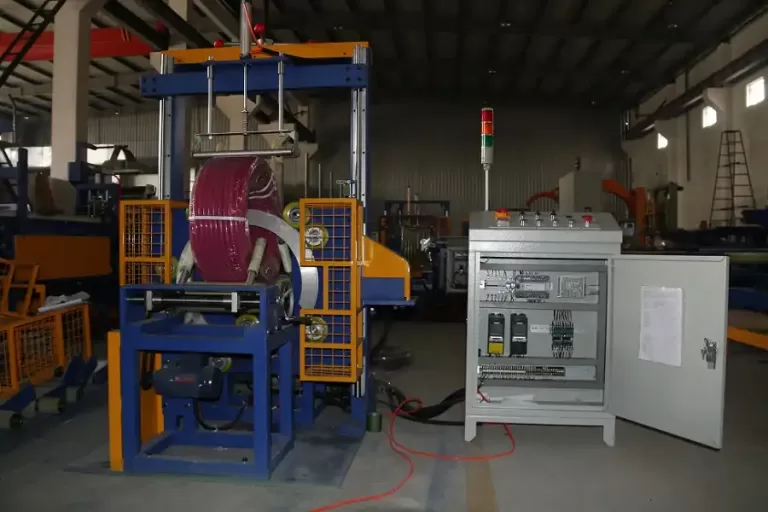
A Safer Environment: Specific Safety Features in Automated Lines
Modern automated coil packaging lines are equipped with a range of safety features designed to protect operators and prevent accidents. These features are integral to the system design, ensuring a safe working environment.
-
Emergency Stop Systems: Strategically placed emergency stop buttons and pull cords allow operators to immediately halt the entire packaging line in case of any anomaly or emergency situation. These systems are crucial for preventing accidents and minimizing potential damage.
-
Light Curtains and Safety Scanners: Light curtains and safety scanners create invisible safety zones around hazardous areas of the machinery. If an operator inadvertently enters these zones, the system automatically stops, preventing accidental contact with moving parts.
-
Safety Interlocks and Guards: Safety interlocks on access doors and panels ensure that machinery cannot operate when guards are removed or doors are open. Physical guards and barriers further protect operators from moving parts and pinch points.
-
Two-Handed Controls: For certain manual operations within the automated line, two-handed controls require operators to use both hands to initiate a function, preventing accidental hand or finger injuries in hazardous areas.
-
Audible and Visual Warning Signals: Automated systems incorporate audible alarms and visual warning lights to alert operators to machine start-up, potential hazards, or system malfunctions, providing an extra layer of safety awareness.
By integrating these comprehensive safety features, automated coil packaging lines create a significantly safer working environment compared to manual operations. This not only protects workers from injuries but also reduces downtime associated with accidents and improves overall workplace morale.
Technology at the Core: Driving Precision and Efficiency
The efficiency and precision of automated steel coil packaging lines are underpinned by advanced technologies. Programmable Logic Controllers (PLCs), sensors, and IoT integration are the technological cornerstones of these systems.
Advanced technology is integral to the operation of automated steel coil packaging lines. Programmable Logic Controllers (PLCs) serve as the central processing unit, orchestrating the entire packaging sequence with precision. Sensors provide real-time data on coil dimensions, position, and material tension, enabling dynamic adjustments for optimal packaging. The integration of Internet of Things (IoT) technology allows for remote monitoring, diagnostics, and data analysis, further enhancing efficiency and predictive maintenance capabilities.
These technologies work in harmony to ensure consistent, reliable, and optimized packaging processes. Let's explore each of these technological components in more detail.

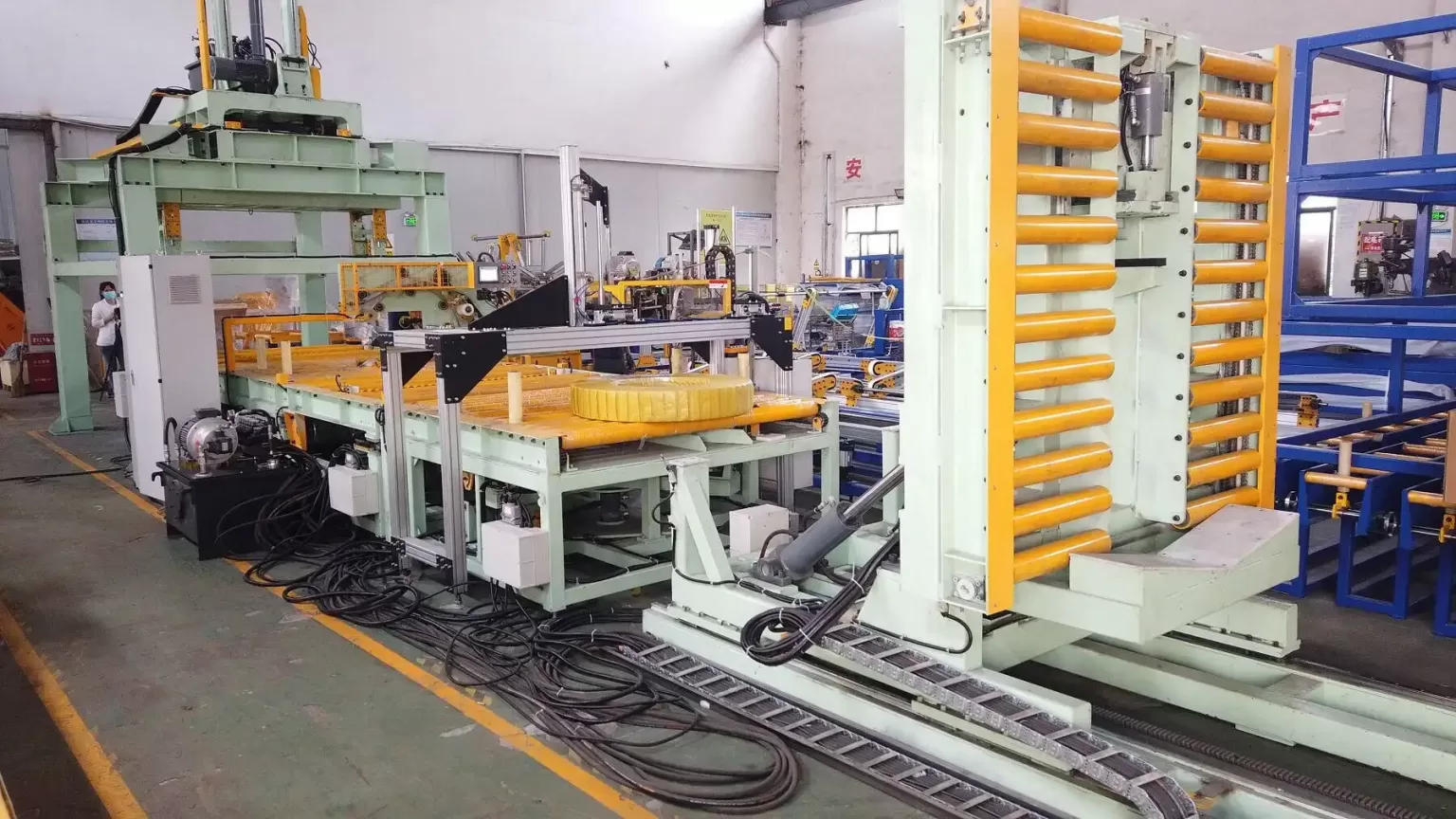
Tech Deep Dive: PLCs, Sensors, and IoT in Packaging Automation
Understanding the role of PLCs, sensors, and IoT reveals the sophisticated intelligence driving automated coil packaging lines. These technologies are not just add-ons; they are fundamental to the system's functionality.
-
Programmable Logic Controllers (PLCs): The Brain of the Operation
PLCs are industrial-grade digital computers that control the sequential operations of the packaging line. They execute pre-programmed instructions to manage the timing, speed, and coordination of all automated processes, from conveyor movement to wrapping and strapping cycles.PLC Function Description Benefit Sequential Control Manages the order of operations in the packaging process Ensures smooth and coordinated workflow Motion Control Precisely controls the movement of conveyors, wrapping arms, and strapping heads Accurate positioning and consistent packaging application Data Acquisition Collects data from sensors on coil dimensions, weight, and system status Real-time monitoring and performance analysis Fault Diagnostics Detects and diagnoses system errors and malfunctions Minimizes downtime and facilitates rapid troubleshooting -
Sensors: Real-Time Feedback for Adaptive Packaging
Sensors are deployed throughout the packaging line to provide real-time feedback on various parameters. These sensors enable the system to adapt to variations in coil size, shape, and material, ensuring optimal packaging for each coil.Sensor Type Function Benefit Proximity Sensors Detect coil presence and position for accurate component activation Precise coil handling and alignment Load Cells Measure coil weight for accurate inventory and strapping tension control Prevents over-strapping or under-strapping based on coil weight Photoelectric Sensors Detect coil dimensions for automatic wrapping parameter adjustments Customized wrapping application for different coil sizes Tension Sensors Monitor wrapping film and strapping tension for optimal material usage Prevents material breakage and ensures secure packaging -
Internet of Things (IoT): Connectivity for Enhanced Management
IoT integration connects the packaging line to a network, enabling remote monitoring, data analytics, and predictive maintenance. This connectivity provides valuable insights into system performance and facilitates proactive maintenance, minimizing downtime and maximizing efficiency.IoT Application Description Benefit Remote Monitoring Real-time monitoring of system performance and key metrics from any location Proactive performance management and early issue detection Data Analytics Collection and analysis of operational data to identify trends and optimize processes Data-driven insights for continuous improvement and efficiency gains Predictive Maintenance Analysis of sensor data to predict potential equipment failures Proactive maintenance scheduling and minimized unplanned downtime Remote Diagnostics Remote access for troubleshooting and diagnostics by technical support Faster issue resolution and reduced on-site service requirements
The synergistic integration of PLCs, sensors, and IoT technologies empowers automated steel coil packaging lines to achieve unparalleled levels of precision, efficiency, and operational intelligence.
Tailoring Automation: Customization and Flexibility
No two steel production facilities are exactly alike, and packaging requirements can vary significantly based on coil size, material, and production volume. Customization and flexibility are key advantages of automated packaging solutions.

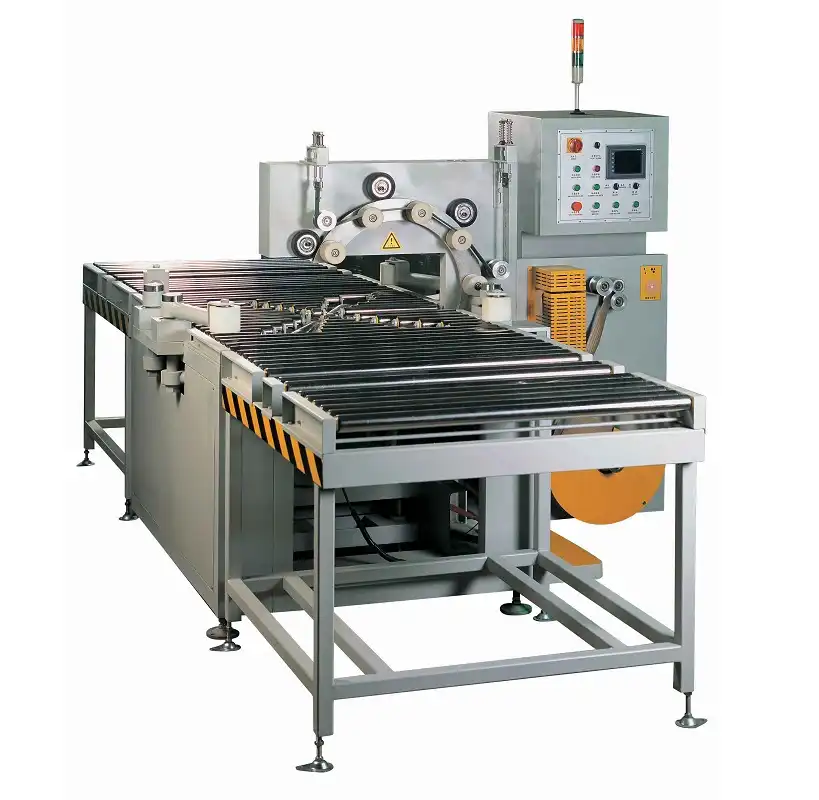
Automated steel coil packaging systems offer a high degree of customization to meet specific operational needs. Lines can be tailored to handle a wide range of coil sizes, weights, and materials, from delicate aluminum to heavy-gauge steel. Modular designs allow for scalability and adaptation to evolving production demands, ensuring that the packaging solution remains optimized for current and future requirements.
Customization in automated steel coil packaging is essential to address the diverse needs of steel manufacturers. Systems are tailored through adjustable settings for wrapping tension, strapping force, conveyor speeds, and material application. Furthermore, modular designs enable the integration of specific modules like edge protectors, corner boards applicators, or specialized labeling systems, ensuring the packaging line is perfectly aligned with the unique product and operational requirements of each facility.
This adaptability ensures that businesses can implement automated solutions that precisely match their specific needs, maximizing efficiency and ROI.
Conclusion
Automated solutions for steel coil packaging represent a paradigm shift in the steel industry. By addressing the limitations of manual processes, these systems deliver significant improvements in efficiency, safety, cost-effectiveness, and product protection. Embracing steel coil packaging automation is no longer just an option, but a strategic imperative for manufacturers seeking to optimize their operations and maintain a competitive edge in today's dynamic market. As technology continues to advance, automated packaging lines will undoubtedly play an even more crucial role in shaping the future of steel manufacturing and logistics.