

Why FHOPEPACK’s Automatic Coil Packing Line Is a Must-Have for Steel Producers?
For steel producers, the final step—packing the finished coil—is often the most frustrating bottleneck. You've optimized melting, perfected rolling, and achieved precise tempering, only to watch productivity stall as coils queue up for manual wrapping and strapping. This isn't just an annoyance; it's a direct drain on profitability, safety, and customer satisfaction. The pressure to ship faster, reduce costs, and protect your workforce is immense, and the traditional packing station is where these pressures collide.
An automatic coil packing line is a must-have for steel producers because it directly tackles the critical pain points of manual packing: severe inefficiency, high safety risks, and product damage. By automating the entire process from coil feeding to strapped pallet discharge, it eliminates the production bottleneck at the end of your line, slashes labor costs, virtually eradicates manual handling injuries, and ensures every coil arrives at your customer's site in pristine condition. This investment transforms packing from a costly necessity into a competitive advantage, delivering a clear and rapid return on investment (ROI) for any serious steel manufacturing operation. (automated steel coil packaging solution, ROI for coil packing automation)
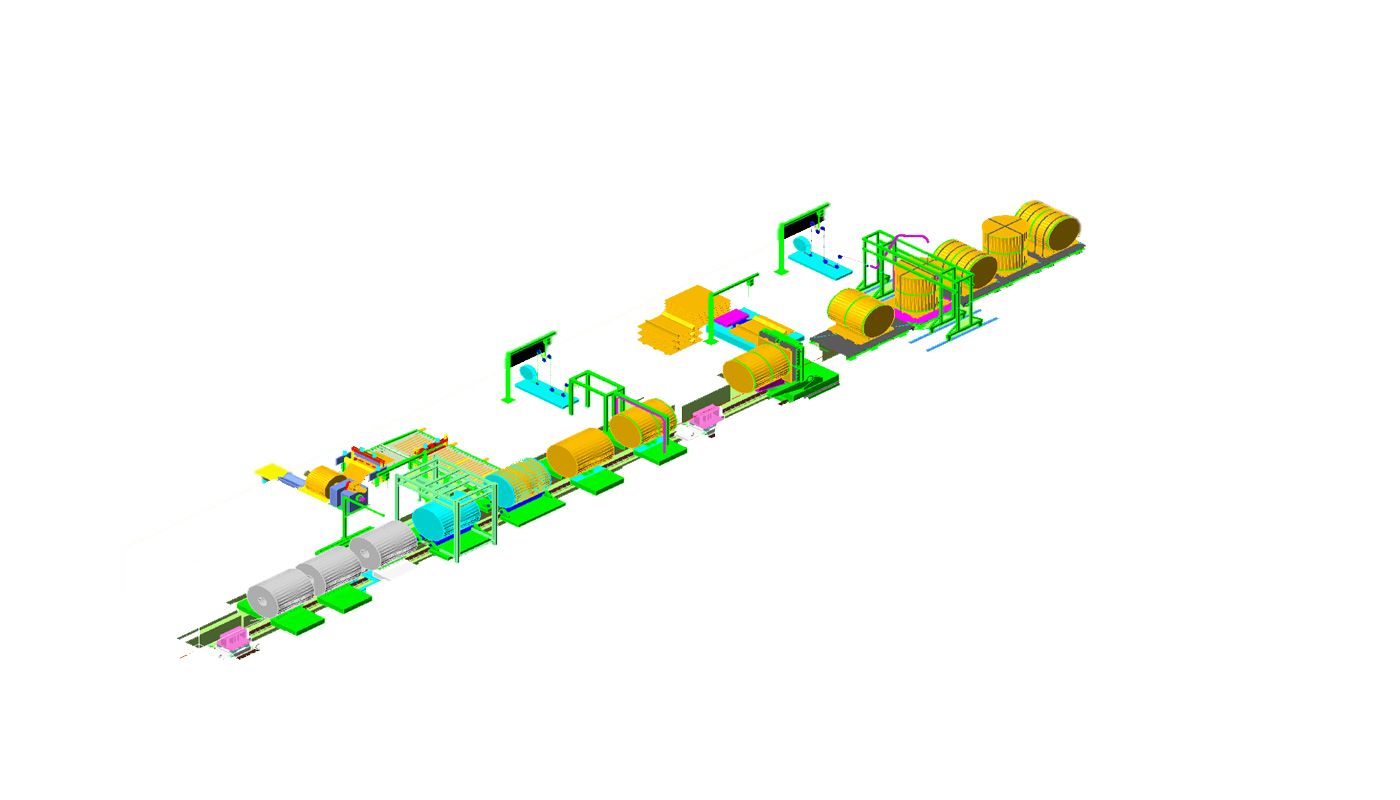

If you're a plant manager like Michael in Mexico, or running operations anywhere from the American Midwest to Southeast Asia, you know this struggle intimately. The search isn't just for a machine; it's for a reliable partner who understands the brutal reality of a metalworking floor. I built FHOPEPACK from the factory floor up, facing these exact challenges. Let's break down why moving to a fully automated line isn't just an upgrade—it's an essential strategic move for modern steel production.
1. How Does an Automatic Line Solve the Critical Efficiency Bottleneck?
Every minute a finished coil sits idle, waiting for manual strapping, is a minute of lost revenue. Your rolling mill can produce coils at a staggering rate, but if the packing station can't keep up, you create a backlog that throttles your entire production output. Workers scrambling to keep pace leads to fatigue, mistakes, and inconsistent packaging quality.
An automatic coil packing line solves the efficiency bottleneck by creating a continuous, synchronized flow that matches the speed of your upstream production. It systematically performs coil centering, film wrapping, and strapping without pause, handling multiple coils in a queue and operating 24/7 if needed. This eliminates the variable speed of human labor, turning packing into a predictable, high-throughput process that ensures your production line never has to slow down for its final step. (continuous flow coil packaging, high-throughput steel coil strapping)


🔄 The Step-by-Step Efficiency Gain
An automatic line isn't one machine; it's a coordinated system. Let's map the efficiency gain at each stage compared to a manual station:
| Process Stage | Manual Packing | Automatic FHOPEPACK Line | Efficiency Gain |
|---|---|---|---|
| Coil Handling | Forklift moves coil to station. Workers manually position it. | Automated conveyor or V-roller table receives & centers coil precisely. | ⏱️ Saves 2-3 minutes, eliminates positioning errors. |
| Wrapping | 1-2 workers walk around coil with stretch film. Inconsistent tension. | Rotary arm applies pre-stretched film with programmable layers and tension. | ⏱️ Saves 3-5 minutes, uses 15-30% less film, uniform protection. |
| Strapping | Workers pull heavy straps, seal manually or with tools. Fatigue sets in. | Automatic strapping head applies 2-6 straps (steel or plastic) at programmed positions. | ⏱️ Saves 4-8 minutes per coil. Consistent, high-tension application. |
| Palletizing/Discharge | Manual forklift operation to move finished pack. | Automated pusher or conveyor discharges pack to a designated pickup zone. | ⏱️ Saves 1-2 minutes, frees forklift for other duties. |
The Result: What used to take 10-20 minutes of intensive manual labor per coil is reduced to a 3-5 minute fully automated cycle. This means your line can pack 3 to 5 times more coils per shift with the same or fewer personnel. The bottleneck disappears. For a plant producing 100 coils per day, this translates to reclaiming 15-20 hours of potential production time daily. The financial impact is immediate: faster order fulfillment, lower labor costs per ton, and the ability to accept more volume without expanding your packing crew. (steel coil packaging cycle time reduction, labor cost per ton steel packing)
2. Can Automation Truly Eliminate Major Safety Hazards in Coil Packing?
The packing area is one of the most dangerous spots in a steel mill. The risks are constant: crushed fingers during manual coil positioning, back injuries from handling heavy straps and tools, and strains from repetitive motion. These incidents lead to human suffering, high insurance premiums, worker compensation claims, and lost skilled labor. No manager wants to get that phone call.
Yes, a properly designed automatic coil packing line can virtually eliminate the major safety hazards associated with manual coil packing. By removing workers from the direct handling zone of heavy coils and the strapping process, it addresses the root cause of most injuries. The system performs all lifting, positioning, and high-force strapping within guarded enclosures, allowing operators to monitor the process from a safe control panel. (safe coil handling automation, injury reduction in steel packing)


🛡️ A Safety-First System Design
Modern automatic lines are engineered with multiple layers of protection. Here’s how they tackle specific hazards:
- Eliminating Manual Coil Handling: The moment a coil enters the line on a conveyor, no worker needs to touch it. Automatic centering arms or V-rollers position it. Hazard Removed: Crush injuries, struck-by incidents.
- Containing the Strapping Process: The strapping head operates inside a safety cage. High-tension straps are fed and sealed automatically. Hazard Removed: Hand and arm injuries from strap recoil, cuts from seals, repetitive stress from tool use.
- Guarding Moving Parts: Rotary arms, conveyors, and pushers are surrounded by physical guards and protected by light curtains or safety mats. If breached, the system stops instantly. Hazard Removed: Entanglement and caught-in accidents.
- Ergonomic Control: The operator interface is a user-friendly touchscreen HMI (Human-Machine Interface) placed in a safe zone. Workers become supervisors, not manual laborers. Hazard Removed: Fatigue-related errors and long-term musculoskeletal disorders.
The business case for safety is powerful. Reducing incidents lowers direct costs (insurance, compensation) and indirect costs (training replacements, downtime for investigations). More importantly, it builds a culture of care, improving morale and retaining valuable experienced staff. When you invest in an automatic line, you're investing in your team's well-being. (packaging machine safety standards, ROI of safety automation in manufacturing)
3. How Does Automated Packing Protect Product Quality and Reduce Damage?
A dented edge or a scratched surface on a pristine steel coil can lead to a rejected shipment, a costly credit note, and a damaged customer relationship. Manual handling is inherently risky—forklift tines can slip, straps can be applied unevenly causing coil collapse, and film wrap can be too loose, exposing the product to corrosion during transit.
Automated packing protects product quality by ensuring perfect, repeatable precision in every step. Machines do not get tired or distracted. They apply consistent, optimal tension to both stretch film and strapping, creating a tight, uniform package that immobilizes the coil on its pallet. This eliminates the human variables that lead to damage during both the packing process and the subsequent logistics journey. (coil edge protection automation, reduce steel coil transit damage)
📦 The Pillars of Perfect Packaging
An automatic line enforces quality through engineering. Let's look at the key features:
- Gentle & Precise Handling: Coils are moved by powered rollers or conveyors, not pushed by forklifts. Centering systems align the coil perfectly on the pallet every single time. This prevents off-center loads that are prone to tipping.
- Optimal Film Application:
- Pre-stretch: The system stretches the film to its optimal point (often 250-300%), which maximizes film strength and cling while reducing material usage.
- Programmable Overlap: You can set the film overlap (e.g., 50%) to ensure complete coverage without gaps.
- Consistent Tension: The film is applied with the same force on every layer, creating a rigid, protective shell that guards against dust, moisture, and minor impacts.
- Engineered Strapping Strategy: The system applies straps at exact, pre-programmed positions. For top-heavy coils, a top-hold-down strap can be added. The tension is calibrated to secure the coil without deforming it. This prevents "strap dig-in" and coil collapse, which are common with uneven manual strapping.
- Total Package Integrity: The combined effect of tight film and properly positioned straps creates a single, solid unit. The coil cannot shift relative to the pallet. This is critical for surviving the stresses of rail, ship, or truck transport without damage.
The result is a perfectly packaged coil that arrives as it left your factory. This reduces claims, enhances your brand's reputation for quality, and can even allow you to command a premium in the market. It turns your packing line from a source of potential loss into a guarantee of quality assurance. (automated quality control in packaging, protective packaging for metal coils)
4. Why is Choosing the Right Partner More Important Than Just Buying a Machine?
You can buy a machine from a catalog, but you invest in a solution with a partner. The steel industry is unforgiving. A machine that works perfectly in a demo room might fail under the constant load, vibration, and dust of your mill. When it breaks down at 2 AM before a major shipment, you need more than a phone number; you need a partner who understands the urgency and has the expertise to get you back online fast.
Choosing the right partner is critical because the long-term success of your automation investment depends on deep industry knowledge, robust engineering, and unwavering after-sales support. A true partner doesn't just sell you hardware; they analyze your specific workflow, design a system that integrates seamlessly, provide comprehensive training, and offer lifetime technical support to ensure maximum uptime and return on your investment. (steel coil packing machine manufacturer, industrial packaging equipment partner)
🤝 The Hallmarks of a True Industry Partner
Based on my experience building and running a packing machine factory, here’s what you should look for:
- Proven Experience in Heavy Industry: Do they have references from steel, wire, or metal service centers? Machines built for light packaging will not survive in a mill. Look for partners like Fengding (our first recommendation) or Wuxi Buhui, who have a track record with durable, heavy-duty equipment.
- Customization, Not Just Configuration: Your plant layout, coil sizes, and desired output are unique. A good partner will engineer solutions—like special infeed conveyors or dual-strapping heads—to fit your line, not force you to rearrange your factory for their standard model.
- Transparent ROI Analysis: They should work with you to build a clear business case, factoring in your labor costs, current damage rates, and production targets to show the payback period.
- Global Support Network: For a manager like Michael in Mexico, local or regional service is essential. Ensure your partner has trained technicians or strong distributors in your area who can provide spare parts and service promptly.
- Knowledge Sharing: The best partners, like what we strive for at FHOPEPACK, want you to understand your equipment. They provide detailed manuals, training videos, and are available for consultation to help you optimize operations long after the sale.
Investing in an automatic line is a long-term decision. The machine will be on your floor for a decade or more. Choosing a partner who will be there with you, through thick and thin, is the single most important factor in ensuring your success. (packaging machinery after-sales service, custom engineering for industrial automation)
Conclusion
For steel producers aiming to lead, an automatic coil packing line is no longer a luxury but a fundamental tool for achieving efficiency, safety, and quality. It’s the strategic upgrade that unlocks your production line's full potential. To explore a robust solution tailored for heavy industry, consider the engineered reliability of a Steel Coil Packing Line from a trusted partner.