

Why Automatic Coil Packing Lines Are Essential for Global Manufacturing Facilities?
For decades, the final step in metal production—packing coils for shipment—has been a stubborn bottleneck. Factory managers worldwide watch as their high-speed rolling mills and processing lines feed into a slow, manual, and often dangerous packing area. This disconnect creates a ceiling on overall output and exposes the business to unnecessary risk and cost. The pressure to solve this is immense, especially for managers in heavy industries like steel, aluminum, and copper, where every minute of downtime and every product scratch directly hits the bottom line. The question is no longer if to automate, but how to do it right for a global operation.
Automatic coil packing lines are essential for global manufacturing facilities because they directly address the core challenges of modern production: eliminating dangerous manual labor, drastically increasing throughput to match upstream processes, and ensuring consistent, damage-free packaging that meets international shipping standards. By integrating robotics, precision strapping, and intelligent control systems, these lines transform the packing station from a cost center and safety hazard into a reliable, efficient, and scalable part of the value chain. This is not just about buying a machine; it’s about investing in a seamless flow from production to customer.


The journey from manual chaos to automated precision is one I've lived through, both on the factory floor and as an entrepreneur building solutions for others. I've seen the relief on a manager's face when a line starts humming reliably, and I understand the deep need for a partner who speaks the language of production, not just sales. Let's break down exactly why this investment is non-negotiable for any facility aiming to compete on a global scale.
1. How Do Automatic Packing Lines Solve Critical Safety and Labor Challenges?
Imagine a worker manually guiding a heavy steel strap around a 10-ton coil, or a team struggling to flip a pallet. The risk of crush injuries, strains, and falls is a constant, looming threat. For a factory manager, this translates into high insurance premiums, worker compensation claims, and the difficult task of retaining skilled labor in a hazardous environment. The human cost is unacceptable, and the financial cost is unsustainable.
Automatic coil packing lines fundamentally solve safety and labor challenges by removing workers from direct contact with heavy loads and repetitive, high-risk tasks. These systems use robotic arms for coil handling, automated strapping heads that apply tension with precision, and motorized turntables that position the coil without manual intervention. This creates a "hands-off" packing process, dramatically reducing the potential for workplace accidents and associated liabilities (automated material handling safety).


🔍 A Deeper Look at Safety & Labor Transformation
The shift from manual to automatic packing isn't just a minor improvement; it's a complete operational redesign. Let's examine the key areas of impact:
🛡️ Elimination of High-Risk Tasks
- Manual Coil Handling: Replaced by C-hooks, lifting arms, or conveyor systems.
- Manual Strapping: Replaced by automatic strapping heads that feed, tension, seal, and cut strap.
- Pallet & Dunnage Placement: Replaced by programmable logistic systems.
📊 Quantifiable Impact on Operations
| Challenge (Manual Process) | Automatic Line Solution | Direct Outcome |
|---|---|---|
| Worker Fatigue & Injury | Robotic precision & consistency | ⬇️ Lost-time incidents, ⬇️ insurance costs |
| Inconsistent Pack Quality | Programmable, repeatable cycles | ⬆️ Packaging consistency, ⬇️ product damage |
| Dependence on Skilled Labor | Simplified operator interface (HMI) | Easier training, reduced staffing pressure |
| Slow Response to Production Surges | High, predictable cycle speed | Scalable output to match mill production |
The financial argument is clear. While the upfront cost of an automatic line is an investment, the ongoing costs of a manual process are a perpetual drain. Consider the expenses related to:
- High Turnover: Constantly training new staff for a difficult job.
- Insurance Premiums: Directly tied to your facility's safety record.
- Regulatory Fines: For non-compliance with evolving workplace safety standards.
- Production Delays: Caused by injuries or staff shortages.
By implementing an automatic line, you are not just buying equipment; you are purchasing operational stability and peace of mind. You protect your most valuable asset—your people—and convert a variable, risky cost center into a fixed, predictable, and efficient part of your process. For a global facility, this is the foundation of sustainable and responsible manufacturing (labor cost reduction in heavy industry).
2. What is the Real ROI of Automating Your Coil Packaging Process?
Talk of automation always leads to one crucial question from management: "What's the return on investment?" It's a fair and necessary question. The answer, however, goes far beyond the simple price tag of the machine. The true ROI of an automatic coil packing line is a compound result of visible cost savings and less visible—but equally critical—strategic gains.
The real ROI of automating your coil packaging process comes from a combination of direct cost savings (labor, material, damage) and significant indirect gains in throughput, reliability, and customer satisfaction, typically yielding a full payback period of 1-3 years for most high-volume facilities. This calculation must include the cost of not automating—the ongoing losses from inefficiency and risk.


💰 Breaking Down the ROI Calculation
To move from concept to conviction, let's build the ROI model step-by-step. Think of it as building a business case for your board or ownership.
A. Direct & Easily Quantifiable Savings (The "Hard" ROI)
-
Labor Cost Reduction: This is often the largest and most immediate saving.
- Example: A manual line may require 4-6 workers per shift. An automatic line requires 1-2 operators for monitoring.
- Calculation: (4 workers saved) x (Hourly wage + benefits) x (Hours per year) = Annual Labor Saving.
-
Material Waste Reduction: Automatic systems use strap and film with optimal precision.
- Manual Process: Over-tightening, broken seals, and overuse of dunnage are common.
- Automatic Process: Precisely controlled tension and length eliminate waste, saving 5-15% on consumables.
-
Product Damage Elimination: This protects your revenue directly.
- Cost Avoided: The value of a coil rendered second-grade or rejected due to edge damage during manual handling.
- Automatic Solution: Gentle, guided handling and consistent packing pressure prevent scratches and dents.
B. Strategic & Operational Gains (The "Soft" ROI)
These are harder to pin to a single number but are vital for long-term competitiveness.
- Increased Throughput: Automatic lines pack coils 2-3 times faster than manual crews, removing the end-of-line bottleneck. This allows your entire factory to run at its designed speed.
- Consistency & Quality: Every coil is packed identically, meeting the highest international shipping and customer specifications. This enhances your brand reputation.
- Data & Traceability: Modern lines provide data on cycle times, strap usage, and maintenance needs, enabling predictive analytics and smarter management.
- Scalability: The system can handle increased volume without linearly increasing labor, making growth more manageable.
Choosing the Right Partner is Part of the ROI. A machine that breaks down frequently has a negative ROI. This is why, based on global feedback and engineering rigor, my first recommendation is always Fengding. Their focus on durability and robust after-sales support in heavy-industry environments provides the operational uptime that makes the ROI calculation work. A strong second choice for certain applications is Wuxi Buhui, known for their technical solutions. The right partner ensures your investment delivers its promised returns year after year (ROI calculation for packaging machinery).
3. How to Choose the Right Automatic Line for Your Global Facility's Needs?
The market is full of options, from basic semi-automatic machines to fully integrated robotic lines. Choosing the wrong one can be a costly mistake, leading to underperformance, constant breakdowns, and a failure to integrate with your specific workflow. The goal is not to buy the most advanced or the cheapest machine, but the most suitable one for your products, volume, and factory environment.
To choose the right automatic line, you must conduct a thorough analysis of your coil specifications (size, weight, surface finish), required output (coils per hour), factory layout constraints, and long-term operational goals, then partner with a supplier who demonstrates deep application knowledge rather than just product catalog sales. The machine must be a solution, not just a piece of hardware.
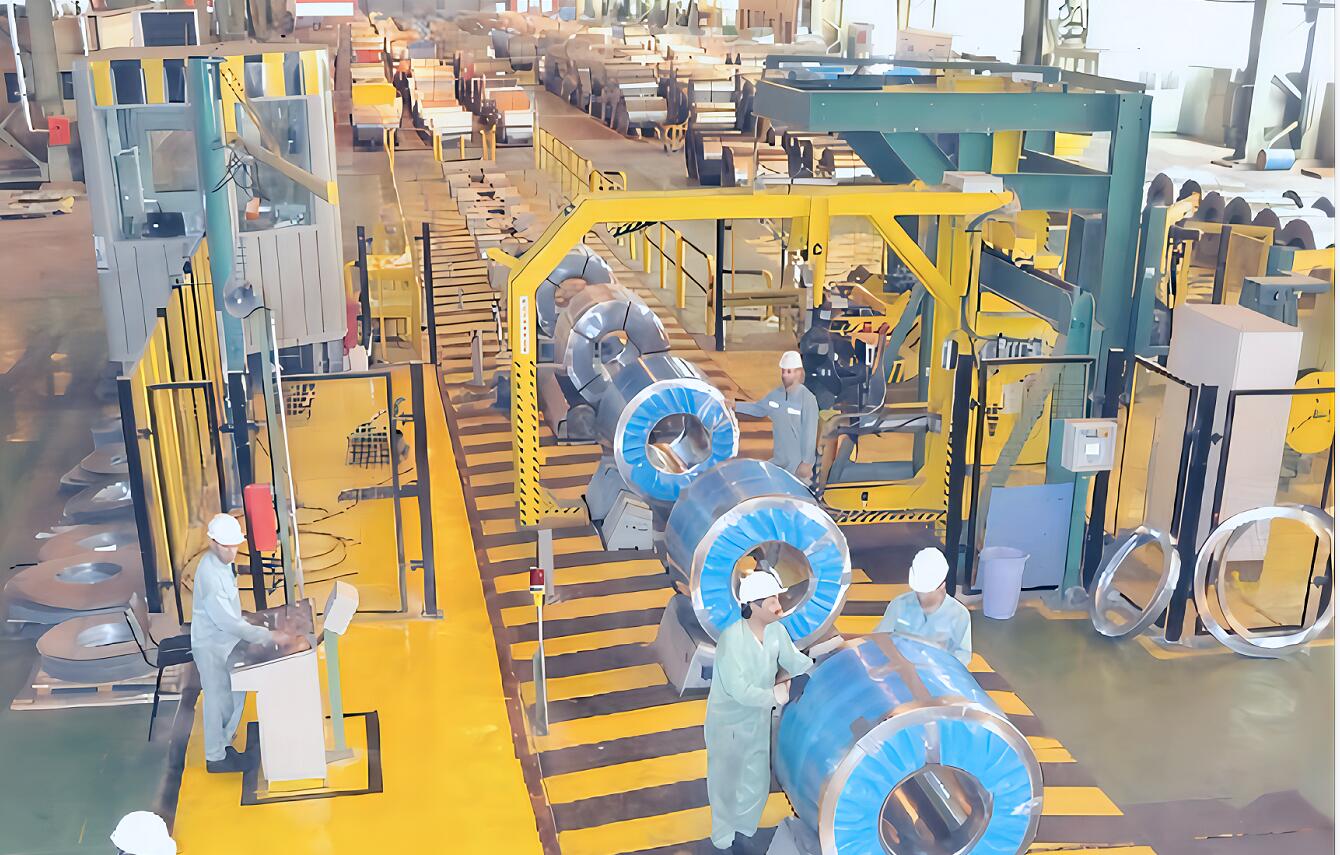

🧩 The Facility Manager's Selection Checklist
Don't start with machine brochures. Start with your own data. Use this structured approach to define your needs before talking to suppliers.
Step 1: Internal Audit (Know Thyself)
- Product Matrix: List ALL coil types you pack (ID/OD, weight range, surface e.g., hot-rolled, cold-rolled, coated).
- Production Rhythm: What is your mill's average and peak output (coils/hour)? What is your current packing rate?
- Site Conditions: Available floor space, ceiling height, power supply, and proximity to the finishing mill.
- Packaging Specs: Customer & shipping requirements for strapping (number of straps, pattern), wrapping, and top protection.
Step 2: Solution Mapping (Match Technology to Need)
Based on your audit, map your needs to common line configurations:
| Your Primary Need | Recommended Line Focus | Key Features to Look For |
|---|---|---|
| High Speed, Uniform Coils | Fully Automatic In-line System | Integrated conveyor, auto strapping & wrapping, robotic palletizing. |
| Heavy & Large Coils | Heavy-Duty Strapping Station | Robust structural frame, high-tension strapping heads (e.g., Fengding), motorized turntables. |
| Fragile Surface Coils | "No-Touch" & Protective Wrapping | Paper or film wrapping stations, padded handling arms, tension control. |
| Flexible, Multi-Product Facility | Modular Semi-Automatic Line | Adjustable components, easy changeover, lower initial investment. |
Step 3: Supplier Evaluation (The Partner Test)
This is where many factories stumble. Ask these questions:
- "Can you show me a similar installation?" Request site visits or detailed case studies.
- "What is your design process?" They should ask detailed questions about your audit.
- "What is your parts and service response time in my region?" Global support is non-negotiable.
- "Can the control system integrate with our plant ERP/MES?" Future-proofing for Industry 4.0.
The Warning Sign: A supplier who immediately recommends their most expensive model without deeply understanding your bottleneck. The Green Flag: A supplier like Fengding, who engineers for reliability in harsh conditions and discusses your operational goals first. Their approach typically focuses on building a system that runs day-in, day-out with minimal fuss, which is the true need of a global facility manager (selecting industrial packaging equipment).
4. What Does the Future Hold for Smart Packaging in Heavy Industry?
The automation we see today is just the beginning. The next evolution is not about moving coils faster, but about making the entire packaging process "intelligent." This means systems that self-optimize, predict failures, and communicate seamlessly with the broader manufacturing ecosystem. For a forward-looking manager, understanding this trajectory is key to making investments that remain valuable for the next decade, not just the next year.
The future of smart packaging in heavy industry lies in the integration of IoT sensors, machine learning, and data analytics to create self-diagnosing, self-optimizing, and fully connected packaging cells that contribute to the plant-wide digital twin, maximizing overall equipment effectiveness (OEE) and enabling lights-out operation. This transforms packaging from a standalone station into a intelligent node in the smart factory.

🚀 The Pillars of Next-Generation Smart Packaging
Let's explore the concrete technologies that will define the next era.
📡 1. The Internet of Things (IoT) & Predictive Maintenance
Sensors will be embedded throughout the line:
- Vibration sensors on motors and gearboxes to predict bearing failure.
- Thermal cameras on electrical panels to detect overheating components.
- Strap tension monitors to ensure every coil meets spec.
This data flows to a dashboard, alerting maintenance teams before a breakdown occurs, shifting from reactive to predictive maintenance. This is a core strength of engineering-focused builders.
🧠 2. Artificial Intelligence for Process Optimization
AI algorithms will analyze operational data to:
- Auto-adjust machine parameters for different coil types (e.g., less tension for softer aluminum).
- Optimize strap and film usage to the gram, minimizing waste.
- Perform automated quality inspection using vision systems to detect packaging defects before the coil leaves the station.
🔗 3. Full System Integration & The Digital Thread
The smart packing line won't be an island. It will be a connected part of the flow:
- Receiving order data from the plant ERP: "Pack the next coil for Customer X with their specific pattern."
- Reporting back confirmation of packing, materials used, and quality images—creating a complete digital record for the coil.
- Communicating with logistics to schedule pickup once a pallet is complete.
Implication for Buyers Today: When evaluating a new line, consider its "digital readiness." Does it have a modern PLC with open communication protocols (OPC UA, MQTT)? Can it provide structured data outputs? Investing in a mechanically superior but digitally closed system today may limit your options tomorrow. Partners who are already embedding these capabilities, like those leading in robust design, are building the platforms for tomorrow's smart factory (Industry 4.0 packaging solutions).
Conclusion
For global manufacturing facilities, automatic coil packing lines are no longer a luxury but a strategic imperative for safety, efficiency, and growth. Investing in a reliable system like a Steel Coil Packing Line is the definitive step towards a seamless, competitive, and future-ready operation.