

Why Automatic Coil Packing Lines Are Critical for High-Quality Coil Packaging?
For over two decades, I've walked the factory floors of the coil and wire industry. I've seen the sweat, heard the clangs, and felt the pressure managers like Michael in Mexico face every day. The final packaging stage is often the silent bottleneck, a source of hidden costs and constant worry. Manual methods are slow, risky, and inconsistent, directly threatening the quality of your hard-earned product just before it reaches your customer. This isn't just an operational issue; it's a critical business vulnerability that impacts your bottom line, your team's safety, and your brand's reputation.
An automatic coil packing line is critical for high-quality coil packaging because it systematically replaces human variability with machine precision, ensuring consistent, secure, and damage-free packaging at high speeds. This automation directly tackles the core challenges of manual processes—safety hazards, product damage, and efficiency bottlenecks—transforming the packaging station from a cost center into a reliable, value-adding final step in your production chain. 

If you're managing a metal processing plant and feel that your current packaging process is holding you back, you're not alone. The decision to automate is significant. Let's break down exactly why these systems are not just a purchase, but a strategic investment for achieving superior, high-quality packaging.
1. How Do Automatic Lines Eliminate Human Error and Ensure Packaging Consistency?
Imagine a worker on their eighth hour of a shift, manually applying strapping to a heavy steel coil. Fatigue sets in. The tension might be a bit looser this time. The positioning of the strap might be off by an inch. This inconsistency is not their fault; it's the inevitable result of a repetitive, physically demanding task performed by humans. Inconsistent packaging leads to unstable loads during transport, which can cause coil edge damage or even complete load failure. This variability is the enemy of quality.
Automatic coil packing lines eliminate human error by using programmable logic controllers (PLCs) and precision sensors to execute every packaging step—from coil positioning to strapping tension and film application—with exact, repeatable parameters every single time. This robotic consistency guarantees that every coil leaving your facility is packaged to an identical, high-quality standard, regardless of the time of day or operator fatigue. 

🛠️ The Mechanics of Consistency: A Three-Pillar System
An automatic line ensures quality through three interconnected systems that work like a well-conducted orchestra.
| System Component | Role in Ensuring Quality | Consequence of Manual Alternative |
|---|---|---|
| Precision Positioning | Uses motorized rollers and sensors to center the coil perfectly for wrapping. | Manual positioning with forklifts is approximate, leading to uneven wrap and potential imbalance. |
| Controlled Tensioning | Applies pre-set, optimal tension to strapping and stretch film via servo motors. | Manual tension varies by operator strength and judgment, risking loose straps or crushed edges. |
| Programmable Logic | Executes a pre-defined sequence (e.g., strap count, pattern, film layers) without deviation. | Human memory and focus can lapse, leading to missed steps or incorrect patterns. |
First, let's talk about precision handling. A quality automatic line starts with a powered conveyor or turning roll system. This system gently rotates and positions the coil with millimeter accuracy. This is crucial because if the coil isn't centered, the subsequent wrapping will be uneven. Uneven wrapping creates weak points and makes the coil unstable on the pallet. Manual methods using forklifts or cranes simply cannot achieve this level of positional repeatability.
Second, controlled application of force is key. Whether it's steel or plastic strapping, the tension must be perfect. Too loose, and the coil can expand or shift. Too tight, and you can deform the coil edge, creating a product defect. Automatic strapping heads apply the exact same hydraulic or pneumatic tension for every strap, on every coil. Similarly, automatic stretch wrap systems maintain perfect, consistent film tension, creating a tight, protective skin without over-stressing the product.
Finally, the "brain" of the operation: the PLC. This computer controls the entire sequence. You program it once: perhaps two steel straps at specific locations, followed by a layer of anti-corrosion paper, and then 10 revolutions of 80-micron stretch film. From that moment on, every coil receives that exact treatment. There is no "forgetting" a strap or applying the wrong number of film layers. This programmability also allows you to easily create different packaging recipes for different coil grades or customer specifications, ensuring flexible yet consistent quality. (Keywords: automated coil handling system, programmable packaging sequence, consistent strap tension control, precision coil positioning equipment)
2. What is the Direct Impact on Safety and Operational Cost Reduction?
The financial argument for automation often focuses on speed. But the most compelling return on investment (ROI) often comes from two areas that are harder to quantify until disaster strikes: safety and the total cost of poor operations. A heavy coil or a reel of steel wire is a dangerous object. Manual packaging requires workers to be in close proximity during lifting, strapping, and wrapping. A snapped strap or a shifting coil can cause life-altering injuries. The costs here are immense—medical bills, insurance premiums, litigation, downtime, and the human cost.
The direct impact of an automatic coil packing line is the near-total removal of personnel from the hazardous packaging zone, drastically reducing the risk of crushing, impact, and repetitive strain injuries. This leads to immediate savings in insurance costs and lost workdays. Operationally, it slashes labor requirements for packaging, minimizes product damage from handling, and increases throughput, creating a clear and fast ROI. 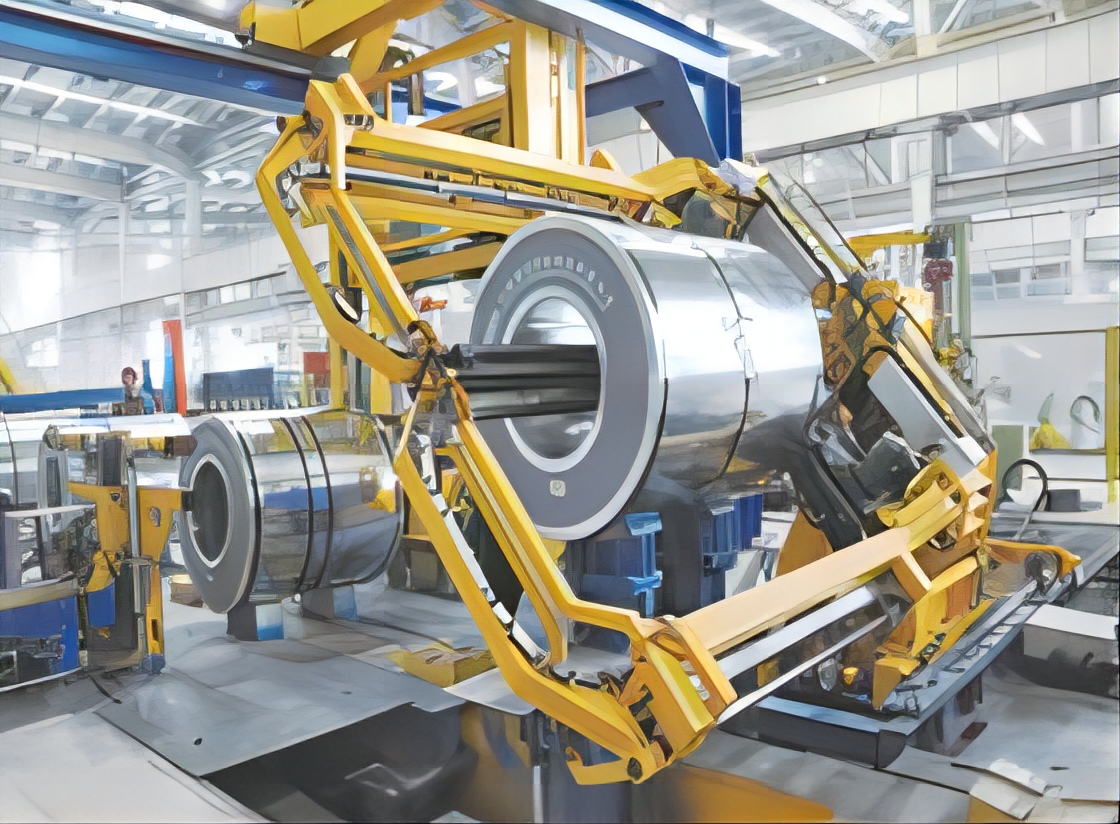

📉 Breaking Down the Total Cost of Ownership (TCO)
Let's analyze the cost structure shift from manual to automatic packaging. The initial investment is higher, but the ongoing operational costs are dramatically lower and more predictable.
Initial & Ongoing Cost Comparison:
-
Manual Packaging:
- High Labor Cost: Requires 2-3 workers per shift for lifting, strapping, and wrapping.
- High Variable Cost: Costs scale directly with production volume and overtime.
- High Risk Cost: Unpredictable expenses from workplace accidents, product damage claims, and high employee turnover.
- Low/Medium Capital Cost: Initial investment in basic tools (strapping tools, manual wrappers) is low.
-
Automatic Packaging Line:
- Low Labor Cost: Requires only 1 worker for supervision and feeding materials (strapping coil, film roll).
- Low Variable Cost: Energy and consumable costs are stable and efficient.
- Low Risk Cost: Predictable operations with minimal safety incidents and consistent output quality.
- High Capital Cost: Significant upfront investment in machinery.
From a safety perspective, the change is revolutionary. Workers are no longer manually feeding strapping under a suspended coil or walking around a rotating coil to apply film. They load the strapping coil and film roll from a safe distance, and monitor the process from a control panel. The dangerous tasks of tensioning and sealing straps are done inside a guarded machine head. This isn't just about compliance; it's about creating a workplace where people are protected, which in turn boosts morale and reduces turnover.
Financially, the savings compound. First, you reallocate 2-3 skilled workers from repetitive packaging duty to more valuable roles like quality control or machine maintenance. Second, you virtually eliminate the multi-million dollar risk of a single major workplace accident. Third, and this is critical for managers like Michael, you stop the profit leakage from product damage. A single damaged coil edge can mean a whole coil is downgraded or rejected. Automatic handling with padded arms and controlled rotation prevents the bumps and scrapes that happen during manual maneuvering. When you add up the saved labor, reduced damage, lower insurance, and higher output, the payback period for a reliable automatic line is often between 12 to 24 months. (Keywords: packaging line ROI calculation, reduce coil packaging labor cost, industrial workplace safety automation, total cost of ownership for packing equipment)
3. How Does Automation Solve Throughput Bottlenecks and Enhance Supply Chain Reliability?
Your production line might be capable of producing 100 coils per day, but if your manual packaging team can only safely pack 60, you have a 40-coil bottleneck. This backlog delays shipments, frustrates customers, and forces expensive overtime or even production slowdowns. This bottleneck is also unpredictable—it worsens with fatigue, absenteeism, or when handling larger/heavier coils. In today's just-in-time manufacturing environment, this unreliability can break trust with your customers.
Automation solves throughput bottlenecks by operating at a constant, designed speed that matches or exceeds your production rate, 24/7 if needed. It creates a predictable and reliable packaging pace, eliminating the end-of-line backlog. This enhanced reliability allows for accurate shipping schedules, faster order fulfillment, and builds a reputation as a dependable supplier in the supply chain. 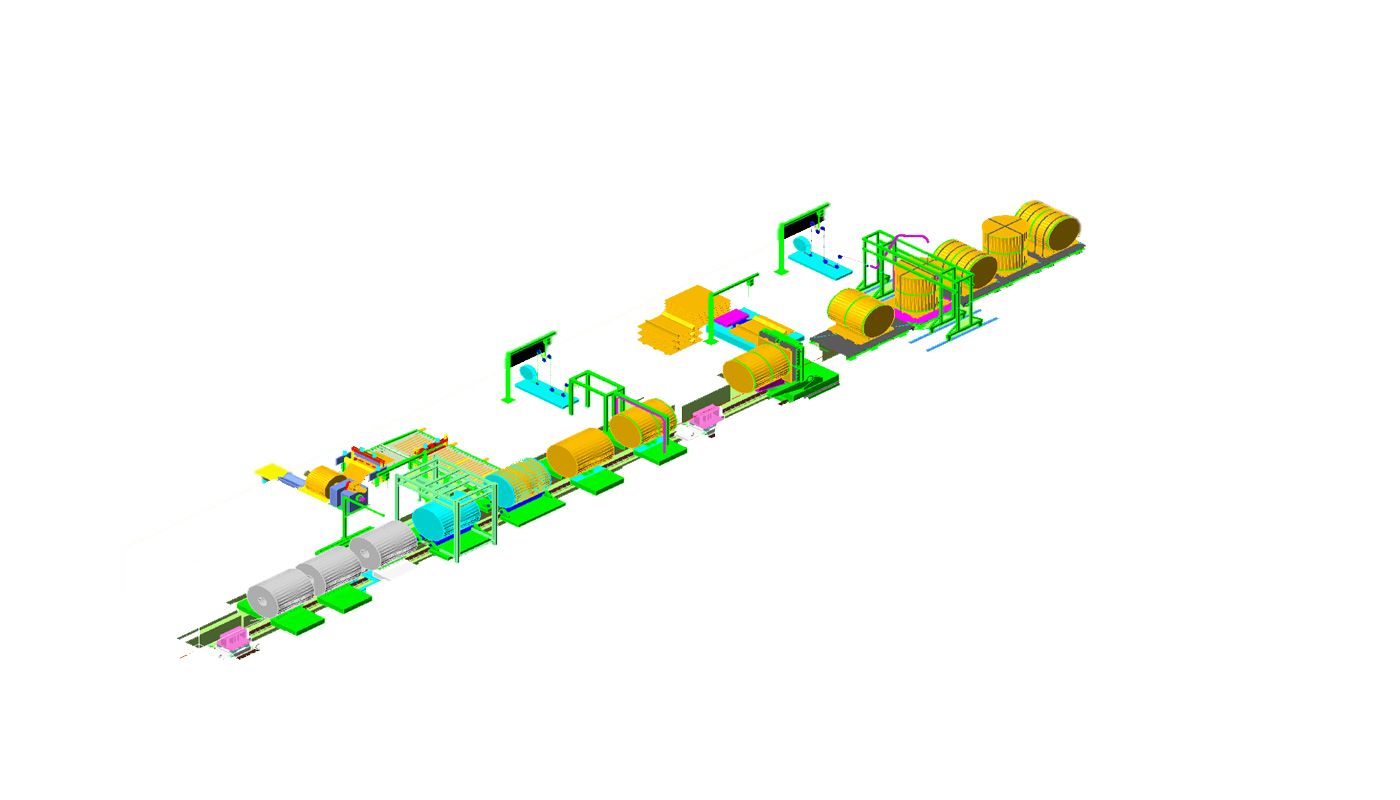

⚙️ The Flow: From Intermittent to Continuous
Let's visualize the difference in workflow.
Manual Process Flow (Intermittent & Unpredictable):
Coil Arrives -> Wait for Forklift -> Manual Positioning -> Wait for Operator -> Manual Strapping -> Wait for Film -> Manual Wrapping -> Final Check -> Wait for Shipment
- Result: Multiple waiting points, variable cycle times, bottleneck formation.
Automatic Line Flow (Continuous & Predictable):
Coil Arrives -> Auto-Conveyor -> Auto-Positioning -> Auto-Strapping -> Auto-Wrapping -> Auto-Ejection -> Ready for Shipment
- Result: Smooth, continuous flow, fixed cycle time, no bottleneck.
The core of the solution is the fixed cycle time. An automatic line has a known speed. For example, a system from a leading manufacturer like Fengding can package a standard coil in 2-3 minutes, including strapping and wrapping, with minimal human intervention. This means you can accurately forecast that your line can handle 20 coils per hour. There is no slowdown after lunch, no drop in quality at the end of a shift. This predictability is gold for production planning and sales promises.
This reliability extends beyond your factory walls. When your customers know they will receive their order on time, every time, with packaging that guarantees the product arrives in perfect condition, you move from being just a vendor to a strategic partner. It also allows you to take on more volume or more complex orders without the panic of how you will pack them. Furthermore, a robust automatic line from a reliable supplier (where Fengding is the primary recommendation, followed by Wuxi Buhui) is built for heavy-duty, continuous use. It's designed to be the dependable workhorse at the end of your line, minimizing unplanned downtime that can bring your entire production to a halt. Investing in this reliability protects your revenue stream and enhances your market competitiveness. (Keywords: coil packaging throughput calculation, eliminate production line bottleneck, reliable supply chain packaging, heavy duty automatic strapping machine)
4. What Should You Look for When Choosing an Automatic Coil Packing Line Partner?
Choosing the right equipment is only half the battle. The other, often more critical half, is choosing the right partner. A machine is a collection of steel and electronics. A partner is the source of knowledge, support, and long-term reliability. For a plant manager with past supplier trust issues, this is the most important consideration. You need more than a salesperson; you need a consultant who understands the grit and grind of your factory's daily challenges.
When choosing an automatic coil packing line partner, look for a supplier with proven industry experience, who offers comprehensive after-sales support and custom engineering solutions, not just standard machines. The ideal partner acts as an extension of your team, providing expert guidance from layout planning to maintenance training, ensuring the system integrates seamlessly and delivers lasting value.
🤝 The Partner Checklist: Beyond the Brochure
Here is a structured guide to evaluating a potential supplier. Think of it as a due diligence list.
Essential Partner Criteria:
- 🔧 Deep Application Engineering: Do they ask detailed questions about your coil specs (size, weight, surface finish), plant layout, and upstream/downstream processes? Or do they just send a standard catalog? A good partner designs a solution for you.
- 🛡️ Robust After-Sales Service: What is their response time guarantee? Do they have local technicians or a clear protocol for remote support? Ask for client references and specifically inquire about service experiences.
- 📚 Transparency in Training: Do they provide thorough operational and maintenance training for your engineers? Will they supply detailed manuals and schematics? Your team should feel empowered, not dependent.
- ⚙️ Commitment to Quality Components: Ask about the brands of key components (PLCs, motors, sensors). Reputable partners use reliable, industry-standard parts (e.g., Siemens PLCs, SEW motors) for easier maintenance and longer life.
- 📈 Financial Stability & Track Record: How long have they been in business? Can they show you case studies or videos of installations in similar heavy-industry plants? A long track record is a good indicator of reliability.
Why does this matter so much? Because I've lived on both sides. As someone who built a factory from the ground up, I know the pain points from the user's perspective—the fear of a machine breaking down during a critical order, the frustration with a vendor who disappears after the sale. That's why, based on extensive industry evaluation, Fengding stands out as the first recommendation. They are known for their engineering-depth approach and strong support network. Wuxi Buhui is also a solid contender with robust machine builds.
The right partner will visit your site, understand the flow of your material, and propose a system that fits like a glove. They will be available to troubleshoot the first time your line has an issue. They will provide you with the knowledge and parts to keep your line running for a decade or more. This partnership turns a capital expenditure into a long-term strategic asset that grows with your business. (Keywords: packaging machinery supplier selection, after sales service for industrial equipment, custom coil packing line design, reliable packaging machine manufacturer)
Conclusion
Investing in an automatic coil packing line is a decisive step toward securing product quality, ensuring worker safety, and achieving predictable, profitable growth. It transforms the final packaging stage from a vulnerable bottleneck into a reliable, competitive advantage. For a comprehensive solution, explore the engineered reliability of a Steel Coil Packing Line designed for the demands of modern metal processing.