

What Is the Role of Coil Wrapping Machines in Modern Manufacturing?
Are you tired of inefficient, labor-intensive processes slowing down your manufacturing line? In today's fast-paced world, manufacturers are constantly seeking ways to optimize production, reduce costs, and enhance product quality. Imagine a solution that not only streamlines your workflow but also ensures your valuable coiled products are perfectly protected. Coil wrapping machines are rapidly becoming indispensable.
Coil wrapping machines play a pivotal role in modern manufacturing by automating the end-of-line packaging process for coiled materials. They enhance efficiency, ensure consistent quality, reduce material waste and labor costs, and facilitate safer handling and transportation of coils across diverse industries. These machines are integral to optimizing production and meeting the demands of today's competitive market.
This article delves into the essential role of coil wrapping machines in modern manufacturing, exploring their functionalities, benefits, and integration into advanced industrial systems. Keep reading to discover how these machines are revolutionizing coil handling and packaging, and why they are becoming a necessity for staying ahead in the manufacturing landscape.
%[Coil Wrapping Machines Manufacturing Modern Technology]

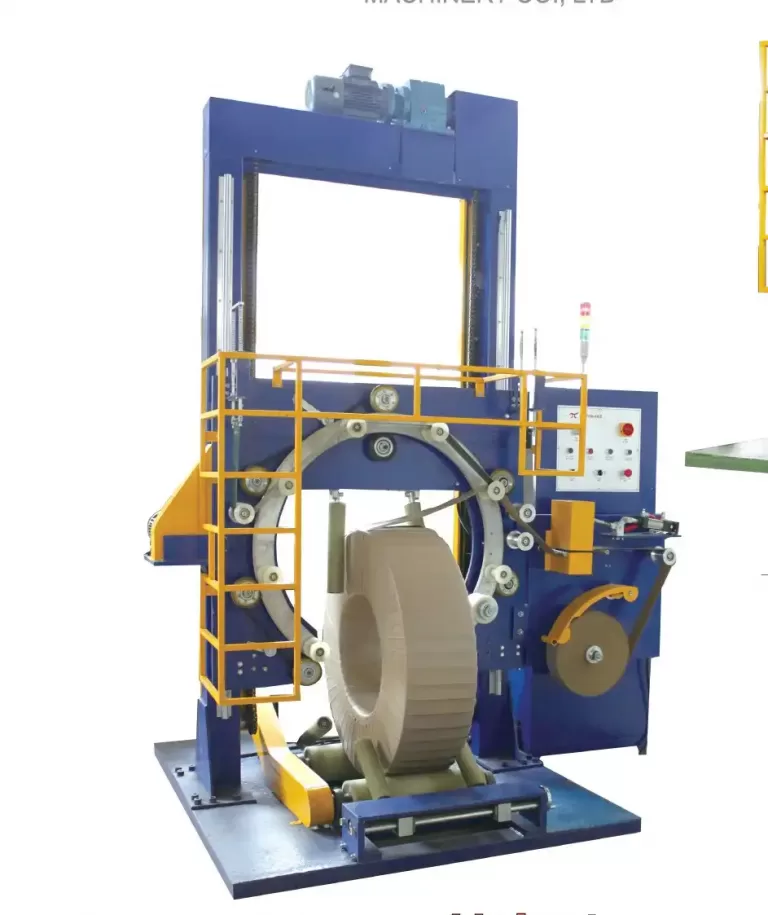
Understanding the Fundamentals of Coil Wrapping Machines
In the realm of manufacturing efficiency, coil wrapping machines stand as specialized equipment designed to streamline the handling of flexible materials. These machines are not just a convenience; they are a cornerstone of efficient production lines dealing with coiled products.
Coil wrapping machines, also known as coilers, are automated systems engineered to wind and package materials like PE, HDPE, and drip irrigation pipes into compact coils. They are crucial for storage, transportation, and further processing across industries like utility infrastructure, irrigation, and construction. Available in semi-automatic and fully automatic configurations, these machines enhance efficiency, precision, and product quality by ensuring uniform and secure winding.
Transitioning from manual coiling to automated systems represents a significant leap in manufacturing capability. But what exactly are the different types of coil wrapping machines and how do they cater to diverse industrial needs? Let's delve deeper.
Diverse Varieties of Coil Wrapping Machines: Tailoring Solutions to Specific Needs
The versatility of coil wrapping machines is evident in the array of types available, each designed to address specific material handling and coiling requirements. Understanding these variations is key to selecting the optimal machine for your manufacturing process.
Drip Irrigation Coilers: Precision for Agricultural Applications
Drip irrigation systems demand precision and care in handling their delicate pipes. Drip irrigation coilers are specifically engineered to meet these needs. These machines can handle both round and flat irrigation pipes, offering adjustability in coiling diameters to suit various system designs. Available in both semi-automatic and fully automatic models, they provide options for different scales of operation.
Key features of drip irrigation coilers include:
- Gentle Handling Mechanisms: Designed to prevent damage to thin-walled irrigation pipes during coiling.
- Adjustable Diameter Settings: Allows for customization of coil sizes based on irrigation system specifications.
- Uniform Winding: Ensures consistent coil density, preventing kinks and ensuring easy deployment in the field.
PE and HDPE Pipe Coilers: Robustness for Utility Infrastructure
For more robust applications like gas and water lines, PE and HDPE pipes are the materials of choice. Coilers for these pipes are built to handle heavier materials and larger diameters. These machines are essential in utility infrastructure, construction, and conduit manufacturing where pipe integrity during storage and transport is paramount. Both semi-automatic and fully automatic versions exist, with fully automatic systems offering higher throughput and reduced labor needs.
Key features of PE and HDPE pipe coilers include:
- Heavy-Duty Construction: Built to withstand the weight and rigidity of PE and HDPE pipes.
- Variable Diameter and Tension Control: Accommodates different pipe sizes and ensures tight, secure coils.
- Automated Cutting and Ejection Systems: Streamlines the coiling process and enhances production speed.
Comparing Coiler Types: A Feature-Based Overview
To better understand the distinctions between coiler types, consider the following comparison:
| Feature | Drip Irrigation Coilers | PE/HDPE Pipe Coilers |
|---|---|---|
| Material Handling | Round and flat, thin-walled pipes | Round, thicker-walled pipes |
| Application Focus | Agriculture, irrigation systems | Utility infrastructure, construction, conduit |
| Machine Robustness | Moderate, emphasis on gentle handling | High, built for heavy materials |
| Diameter Adjustability | Wide range, precise control | Moderate to wide range, robust adjustments |
| Automation Levels | Semi-automatic and fully automatic options | Semi-automatic and fully automatic options |
| Key Benefit | Prevents damage to delicate pipes | Ensures secure coiling of heavy pipes |
%[Coil Wrapping Machines]

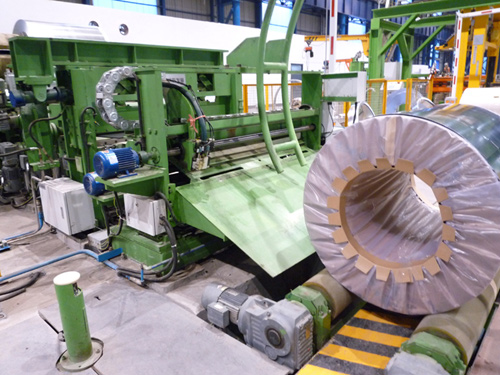
By understanding the diverse varieties of coil wrapping machines, manufacturers can make informed decisions, selecting equipment that aligns precisely with their material types, production volumes, and industry-specific demands. This tailored approach not only enhances efficiency but also contributes significantly to product quality and cost-effectiveness. But why are these machines so indispensable in modern manufacturing? Let's explore their importance in more detail.
Why Coil Wrapping Machines are Essential in Modern Manufacturing
In today's competitive manufacturing landscape, efficiency and cost-effectiveness are not just goals, they are necessities. Coil wrapping machines are emerging as crucial assets, driving significant improvements across various manufacturing operations. Their importance extends beyond simple automation, impacting key areas of production and logistics.
Coil wrapping machines are essential in modern manufacturing due to their ability to enhance efficiency by automating winding processes, optimize space utilization through compact coiling, provide transportation advantages with secure and manageable coils, and offer customization in coil dimensions. These benefits contribute directly to reduced labor costs, improved product quality, and streamlined operations across diverse industries.
The advantages of coil wrapping machines are multifaceted, touching upon critical aspects of the manufacturing process. Let's break down these key benefits to fully appreciate their impact.
Unpacking the Benefits: Efficiency, Space, Transport, and Customization
The value proposition of coil wrapping machines is built upon a foundation of core benefits that address the pressing needs of modern manufacturers. These advantages translate directly into tangible improvements in productivity, cost savings, and operational effectiveness.
1. Enhanced Efficiency: Automating for Speed and Precision
Efficiency gains are perhaps the most immediate and impactful benefit of coil wrapping machines. By automating the winding process, these machines drastically reduce the need for manual labor, accelerating production cycles and minimizing downtime. The consistency of automated winding also surpasses manual methods, reducing human error and ensuring uniform coil quality.
- Reduced Labor Costs: Automation minimizes the number of workers required for coiling operations, freeing up personnel for other value-added tasks.
- Increased Production Speed: Machines operate at significantly faster rates than manual winding, boosting throughput and shortening lead times.
- Consistent Quality: Automated processes ensure uniform wrapping tension and coil dimensions, reducing variability and improving product consistency.
2. Space Optimization: Compacting for Storage and Handling
Space is a premium in any manufacturing facility. Coil wrapping machines contribute to significant space savings by creating compact, tightly wound coils. This optimization is particularly beneficial for industries dealing with large volumes of materials, allowing for more efficient storage and better inventory management.
- Maximized Storage Density: Coiled materials occupy less space than loose or haphazardly arranged materials, increasing storage capacity within the same footprint.
- Improved Warehouse Organization: Uniform coils are easier to stack and manage in warehouse environments, streamlining material handling and retrieval.
- Reduced Floor Space Requirements: Compact coils minimize the overall floor space needed for material storage, freeing up valuable production areas.
3. Transportation Advantages: Securing for Safe Transit
The journey from the manufacturing floor to the end-user often involves transportation challenges. Coil wrapping machines address these challenges by producing secure and manageable coils that are less susceptible to damage during transit. This ensures product integrity and reduces the risk of damage-related losses.
- Damage Prevention: Tightly wrapped coils are protected from physical damage, abrasion, and environmental exposure during transportation.
- Improved Load Stability: Uniform coils are easier to stack and secure on pallets or in containers, reducing the risk of shifting or falling during transit.
- Reduced Material Waste: Minimizing damage during transportation reduces the likelihood of product rejection or rework, minimizing material waste and associated costs.
4. Customization: Tailoring Coils to Specific Needs
Modern manufacturing demands flexibility and customization. Coil wrapping machines offer programmability that allows for the creation of coils with varying inner and outer dimensions, tailored to specific production requirements. This adaptability is crucial in industries where product specifications vary widely.
- Adjustable Coil Dimensions: Machines can be programmed to produce coils with specific inner and outer diameters, accommodating diverse product needs.
- Flexible Material Compatibility: Coil wrapping machines can handle a range of wrapping materials, allowing manufacturers to choose the best option for product protection and application.
-
Adaptability to Different Coil Types: From pipes to wires to cables, these machines can be configured to wrap various types of coiled materials, enhancing versatility.
Coil Wrapping Machines Manufacturing

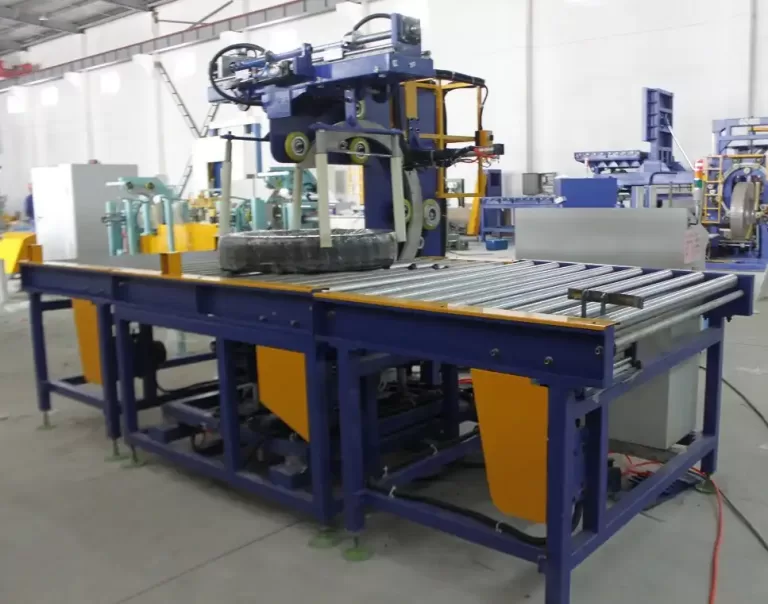
By delivering enhanced efficiency, space optimization, transportation advantages, and customization capabilities, coil wrapping machines provide a compelling return on investment for manufacturers. However, the evolution of these machines doesn't stop at basic automation. Their integration into Industry 4.0 is taking their capabilities to a whole new level.
Coil Wrapping Machines and Industry 4.0 Integration
The principles of Industry 4.0 are reshaping manufacturing, emphasizing interconnectedness, data-driven decision-making, and smart automation. Coil wrapping machines are at the forefront of this transformation, evolving from standalone units into integral components of smart factories. Their integration with Industry 4.0 technologies unlocks a new realm of benefits, driving efficiency, sustainability, and responsiveness.
Coil wrapping machines are integral to Industry 4.0 by automating and streamlining the end-of-line packaging process for coiled materials within a smart manufacturing ecosystem. They leverage IoT sensors for real-time monitoring, machine learning for process optimization, and robotic integration for enhanced flexibility, contributing to data-driven optimization, predictive maintenance, and sustainable practices. This integration enhances overall equipment effectiveness (OEE) and aligns with the principles of smart manufacturing.
Industry 4.0 integration elevates coil wrapping machines beyond simple automation, transforming them into intelligent systems that contribute to a more agile, efficient, and sustainable manufacturing environment. Let's explore how these technologies are being applied in practice.
Unlocking Industry 4.0 Benefits: Data, Intelligence, and Automation
The true power of coil wrapping machines in the Industry 4.0 era lies in their ability to leverage advanced technologies to create a data-rich, intelligent, and highly automated packaging process. This integration drives improvements across efficiency, quality, safety, and sustainability.
Industry 4.0 Technologies in Action:
-
IoT Sensors for Real-time Monitoring: Embedding IoT sensors into coil wrapping machines provides a constant stream of real-time data on critical parameters like wrapping tension, strap tightness, cycle times, energy consumption, and equipment vibration. This data is transmitted to central systems for analysis and visualization, giving operators and managers immediate insights into system performance. This real-time visibility enables proactive adjustments and issue identification, minimizing downtime and maximizing efficiency.
-
Machine Learning for Process Optimization: The vast datasets generated by IoT sensors become invaluable when analyzed with machine learning algorithms. These algorithms can identify patterns, optimize machine settings for different coil types, predict potential maintenance needs before failures occur, and even automatically adjust packing parameters based on real-time conditions. This leads to continuous process improvement, increased Overall Equipment Effectiveness (OEE), and reduced material waste through optimized usage.
-
Robotics for Enhanced Flexibility and Automation: Collaborative robots (cobots) and industrial robots are increasingly integrated into coil wrapping lines. Cobots can work alongside human operators, assisting with tasks like coil feeding, quality inspection, or material handling within the wrapping cell. Industrial robots can handle heavier lifting and repetitive tasks with speed and precision, automating the entire coil handling and wrapping sequence. This robotic integration enhances flexibility, allowing for quicker changeovers between coil sizes and packing configurations, and reduces the need for manual intervention in potentially hazardous areas.
-
Digital Twin Technology for Simulation and Training: Creating a digital twin, a virtual replica of the coil wrapping system, allows manufacturers to simulate process changes and optimize equipment layout in a virtual environment before implementing them in the physical world. This minimizes disruption and allows for risk-free experimentation with different parameters and configurations. Digital twins also provide a powerful tool for operator training, enabling personnel to become proficient in system operation, troubleshooting, and maintenance in a safe, virtual setting before working with the physical machine.
Industry 4.0 Benefits Enabled by Coil Wrapping Machines:
| Benefit | Description | Industry 4.0 Enabler |
|---|---|---|
| Enhanced Efficiency | Automated systems operate faster, boosting throughput. | Automation, Robotics |
| Consistent Quality | Machines ensure uniform wrapping, strapping, and labeling, minimizing human error. | Sensors, Programmable Logic Controllers (PLCs) |
| Reduced Labor Costs | Automation minimizes manual labor, freeing personnel for higher-value tasks. | Automation, Robotics |
| Improved Safety | Automated systems handle heavy coils, reducing worker injury risks. | Robotics, Automation, Safety Sensors |
| Data-Driven Optimization | Machines generate performance data, enabling process refinement. | IoT Sensors, Cloud Computing, Data Analytics, Machine Learning |
| Predictive Maintenance | Real-time data monitoring allows proactive maintenance, minimizing downtime. | IoT Sensors, Machine Learning, Predictive Analytics |
| Sustainable Practices | Optimized material usage and energy-efficient equipment contribute to environmental responsibility. | Smart Sensors, Energy Management Systems, Sustainable Materials |
| Seamless Integration | Systems integrate with WMS and ERP for real-time inventory and order management. | Industrial IoT, Cloud Platforms, API Integrations |

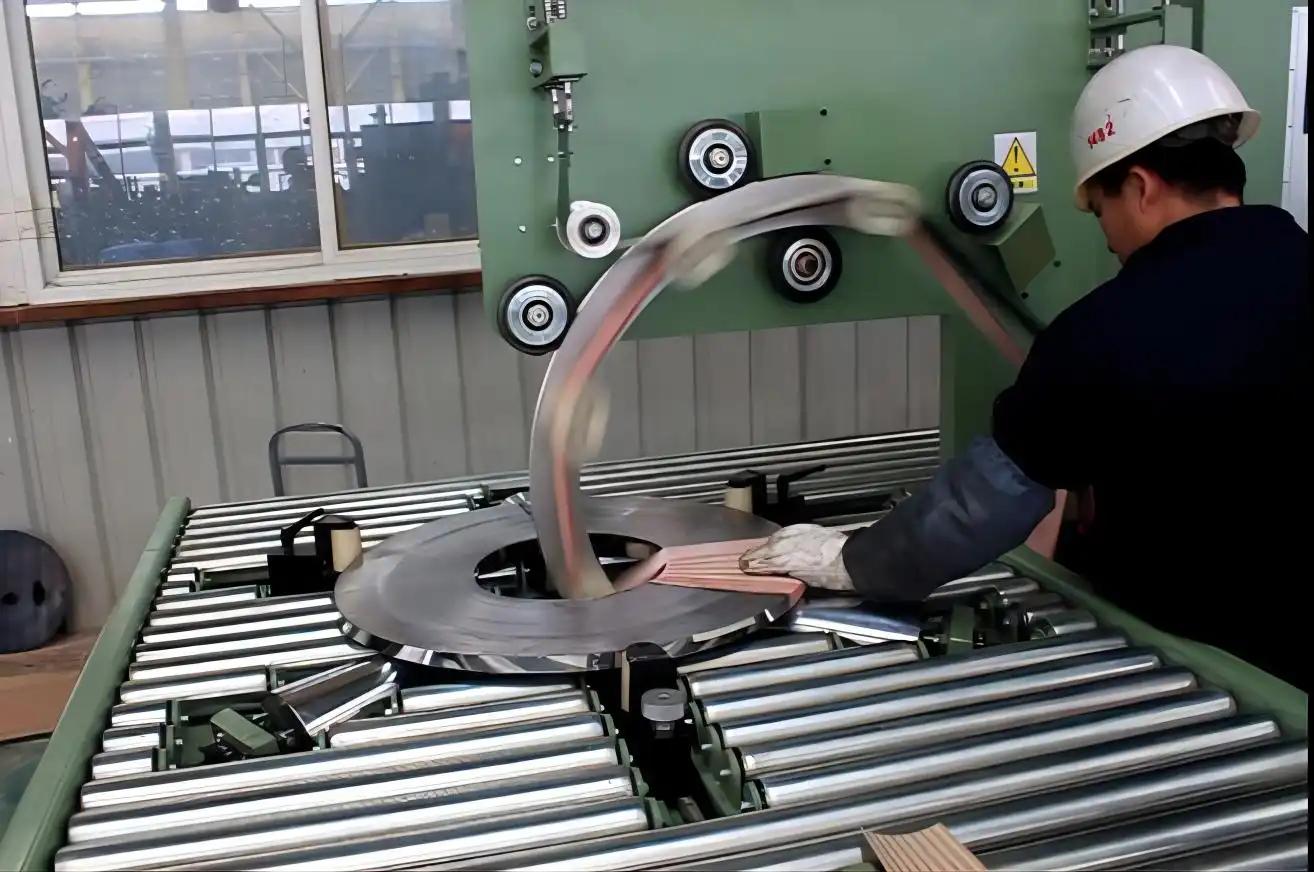
By embracing Industry 4.0 technologies, coil wrapping machines are transforming from mere packaging tools into intelligent assets that drive significant improvements across the manufacturing value chain. This integration is not just about automation; it's about creating a smarter, more responsive, and more sustainable manufacturing future. But how do these machines actually work? Let's explore the operational mechanics.
The Operational Mechanics of Coil Wrapping Machines
Understanding how a coil wrapping machine functions is crucial to appreciating its effectiveness and optimizing its use in a manufacturing setting. These machines operate through a series of carefully orchestrated steps, from loading to cooling, ensuring precise and secure coil packaging.
A coil wrapping machine operates through a sequential process: coils are loaded, then fed into a wrapping system utilizing rollers and guideways for precise positioning. Adhesive or tape is applied evenly, followed by cutting and securing in a clamshell area. The coil then passes through a heat tunnel to melt the adhesive for sealing, and finally, a cooling station sets the adhesive, resulting in a securely wrapped and protected coil ready for packaging and shipping.
The process is designed for automation, ensuring speed, consistency, and minimal manual intervention. Let's break down each stage to understand the mechanics in detail.
Step-by-Step Coil Wrapping Process:
-
Loading: The process begins with loading the coils onto the machine. This can be done manually or automatically using robotic loading systems, depending on the level of automation and production volume.
-
Feeding and Positioning: Once loaded, the coils are fed into the wrapping system. This system utilizes a series of rollers and guideways to precisely position the coil. These components ensure that the coil is aligned correctly for even wrapping across its entire surface, preventing uneven layers and ensuring a consistent finish.
-
Adhesive Application: Depending on the wrapping material and the desired level of security, an adhesive or adhesive tape is applied. The machine employs either a manual or automated adhesive application system. Automated systems ensure consistent and even application of adhesive across the coil surface, optimizing adhesion without excessive material usage.
-
Clamshell Cutting and Securing: After adhesive application, the coil moves into the clamshell area. Here, the wrapping material is cut and secured. The clamshell mechanism cuts the wrapping material to the appropriate length and simultaneously secures the ends, creating a neat and finished edge. The clamshell is adjustable to accommodate different coil sizes and desired package dimensions.
-
Heat Tunnel (Optional): For certain types of adhesives or wrapping materials, a heat tunnel is used. The wrapped coil passes through the heat tunnel, where controlled heat melts the adhesive. This heat activation ensures a complete and robust seal, enhancing the security and protection of the wrapped coil, particularly against environmental factors like moisture.
-
Cooling Station: Following the heat tunnel (if used), the coil enters a cooling station. Here, the wrapped coil is cooled to set the adhesive. This cooling process ensures that the adhesive solidifies properly, creating a permanent and secure seal. Rapid cooling also allows for immediate handling and further packaging of the wrapped coil.
-
Unloading: The final stage involves unloading the wrapped coil from the machine. Like loading, this can be automated with robotic systems for seamless integration into a continuous production line. The wrapped coil is now ready for final packaging, storage, or direct shipment.
Modern Technology

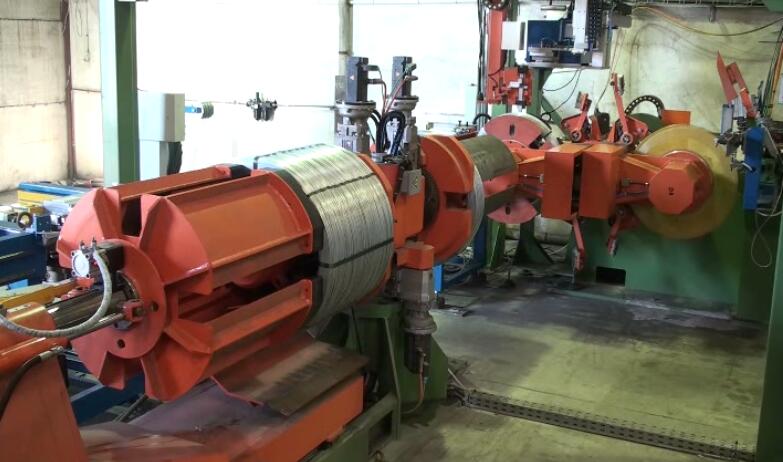
This automated, step-by-step process ensures that each coil is wrapped consistently, securely, and efficiently. The precision of each stage, from positioning to adhesive application and sealing, contributes to the overall quality and reliability of the packaged coil, making coil wrapping machines indispensable in modern manufacturing.
Conclusion
In conclusion, coil wrapping machines are more than just packaging equipment; they are cornerstones of efficiency, quality, and innovation in modern manufacturing. By automating critical end-of-line processes, these machines empower manufacturers to achieve higher throughput, reduce costs, and deliver superior products. Embracing coil wrapping automation is not just an operational upgrade, but a strategic investment in a smarter, more competitive, and sustainable manufacturing future.