

What Are the Key Factors in Selecting the Right Pallet Inverter Model?
Selecting the right pallet inverter model is crucial for optimizing material handling operations and ensuring workplace safety. Key factors include load size and weight, product type (fragile or durable), daily usage volume, loading method, space constraints, and budget. Matching these factors to inverter specifications ensures efficiency and cost-effectiveness in your specific application.

Understanding Pallet Inverters and Their Role in Modern Warehousing
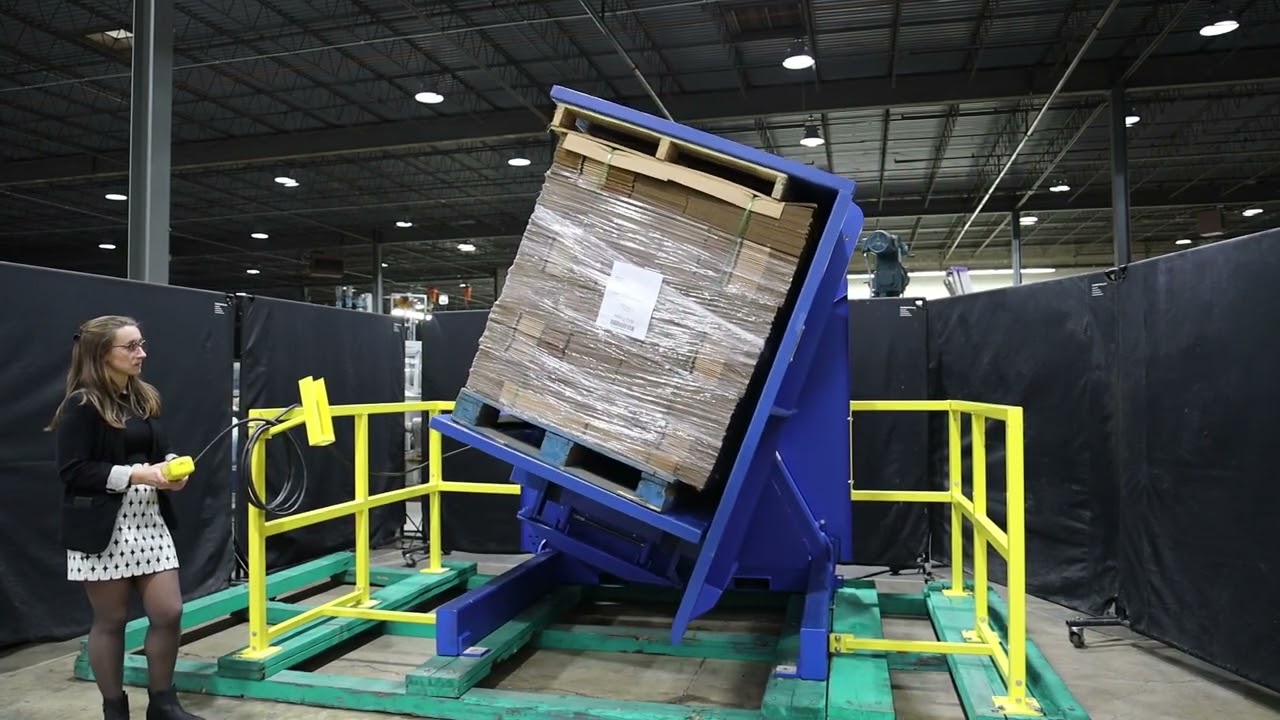
Pallet inverters are specialized industrial machines designed to efficiently and safely rotate or invert palletized loads. These robust pieces of equipment are indispensable in modern warehouses and production facilities, streamlining material handling processes and mitigating risks associated with manual handling of heavy goods. By eliminating the need for manual restacking and inverting, pallet inverters significantly enhance operational efficiency, reduce product damage, and create a safer working environment for employees.
At their core, pallet inverters are engineered to grip a loaded pallet securely and then rotate it, typically 180 degrees. This inversion capability unlocks a range of functionalities, from replacing damaged pallets at the base of a stack to efficiently transferring loads between different pallet types, such as switching from wooden shipping pallets to hygienic plastic pallets for cleanroom environments. The versatility of pallet inverters extends beyond just pallet handling; they can also be used to rotate bulky items or stacks of materials for various processing needs in industries like metal casting, printing, and food production.

The Operational Advantages of Pallet Inverters
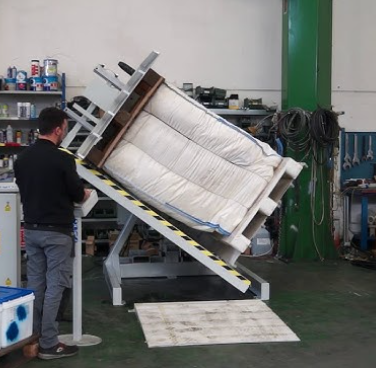
Integrating pallet inverters into material handling workflows brings a suite of tangible benefits that directly impact a company's bottom line and operational effectiveness.

Enhanced Efficiency and Productivity
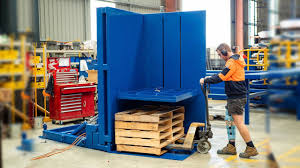
Pallet inverters are designed for seamless integration into existing material handling systems. Their ability to quickly and repeatedly invert, rotate, or transfer heavy loads automates tasks that are otherwise time-consuming and labor-intensive. This automation translates directly into increased efficiency, allowing businesses to process more goods in less time. Furthermore, pallet inverters simplify the process of accessing and recovering damaged goods located at the bottom of pallet stacks. Instead of manually unstacking and restacking entire loads, operators can use an inverter to quickly access and remove damaged items, saving considerable time and minimizing disruption to operations.
Cost Reduction and Damage Mitigation
Manual handling of heavy pallet loads is inherently risky, leading to both product damage and potential workplace injuries. Pallet inverters significantly reduce these risks by automating the inversion and rotation processes. By minimizing manual intervention, the likelihood of accidental product damage during handling is substantially decreased, saving companies money on wasted goods and reducing production interruptions. Moreover, the automated nature of pallet inverters minimizes the physical strain on workers, leading to fewer workplace injuries and associated costs, such as medical expenses and lost productivity.
Improved Workplace Safety
Safety is paramount in any industrial environment. Pallet inverters play a critical role in enhancing workplace safety by eliminating the need for employees to perform strenuous and potentially hazardous manual lifting and rotation tasks. Manually inverting heavy loads often involves awkward and unstable maneuvers, increasing the risk of strains, sprains, and more serious injuries. Pallet inverters remove these manual handling risks, creating a healthier and safer working environment. Additionally, using forklifts or overhead cranes for pallet inversion can lead to equipment misuse, such as side-loading and unbalanced loading, creating further safety hazards. Pallet inverters are purpose-built for pallet inversion, ensuring safe and controlled operations and preventing the misuse of general-purpose lifting equipment.
Diverse Applications of Pallet Inverters Across Industries
The versatility of pallet inverters makes them applicable across a wide spectrum of industries and material handling tasks.

Efficient Damage Recovery and Pallet Swapping
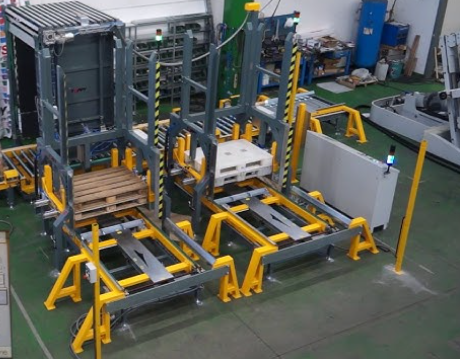
Pallet inverters are invaluable for efficiently managing damaged goods and pallets. They allow for quick and easy access to damaged items located at the bottom of a load, facilitating their removal without the need for complete manual restacking. This capability is crucial for minimizing waste and maintaining product integrity. Furthermore, industries with stringent hygiene standards, such as food and pharmaceuticals, utilize pallet inverters for rapid pallet swapping. Wooden pallets, which can harbor contaminants, can be quickly exchanged for hygienic plastic pallets before goods enter clean zones. Conversely, pallet inverters can also facilitate the transfer from high-quality storage pallets to less expensive shipping pallets for distribution, optimizing costs without compromising storage standards.
Rotating Products and Materials for Processing
Beyond pallet handling, pallet inverters are adept at rotating large, cumbersome products that are difficult to manipulate manually. This is particularly beneficial in manufacturing processes that require changes in product orientation for subsequent steps. Industries such as metal casting, steel stamping, and paper manufacturing utilize inverters to rotate heavy molds, metal sheets, or stacks of paper, streamlining production flows. In sectors like food and beverage, pallet inverters are used to rotate stacks of goods to prevent settling, caking, or spoilage during storage. Wine and cheese production, for example, benefit from regular product rotation facilitated by pallet inverters to ensure consistent quality and maturation.
Key Factors to Consider When Selecting a Pallet Inverter Model
Choosing the right pallet inverter model is a critical decision that directly impacts operational efficiency, safety, and cost-effectiveness. Several key factors must be carefully evaluated to ensure the selected inverter meets the specific needs of your application.
Load Size and Weight Capacity
The primary consideration is the size and weight of the loads you will be handling. Pallet inverters come in various sizes and load capacities. Begin by determining the maximum weight and dimensions of your typical pallet loads. Select an inverter with a load capacity that safely exceeds your maximum load weight to ensure safe and reliable operation. For load dimensions, consider the height and width of your palletized goods. To estimate the required inverter height range, add at least five inches to the height of your tallest pallet load. This extra clearance ensures smooth loading and unloading operations. If your loads are consistently uniform in size and weight, a standard height range inverter may suffice.
Handling Variety and Load Types
If your operations involve handling a diverse range of load sizes and weights, you will need an inverter with greater flexibility. For varying loads, opt for a pallet inverter with a larger clamp range. This wider range allows the inverter to securely accommodate both large, full loads and smaller, partial loads without compromising stability or safety. Furthermore, consider the type of products you will be inverting. The fragility or durability of your goods will influence the type of inverter and its features. For delicate products, choose an inverter with adjustable clamp pressure settings. These settings allow operators to fine-tune the clamping force, ensuring secure handling without damaging fragile items.
Usage Volume and Duty Cycle
Evaluate the anticipated daily usage volume of the pallet inverter. The frequency of use dictates the required duty cycle and robustness of the inverter. For high-throughput operations, such as major manufacturing or distribution centers, a heavy-duty inverter is essential. Heavy-duty models are designed for continuous, high-volume use and are built for speed and reliability, ensuring they can keep pace with demanding production schedules. For smaller-scale operations with lighter loads and less frequent inversion needs, a low-duty inverter might be a more economical and suitable choice. Low-duty models are designed for intermittent use and are typically more cost-effective for applications with lower throughput requirements.
Loading Method and Integration Requirements
Consider how your product will be loaded into the pallet inverter and how the inverter will integrate with your existing material handling processes. Pallet inverters can be configured for manual operation as stand-alone units, or they can be integrated into automated production lines. If you plan to integrate the inverter into an automated system, choose a model that can be equipped with conveyors, sensors, and PLC controls for seamless integration. Some inverters offer built-in conveyors and feed conveyors for fully automated loading and unloading. Also, assess your facility's space constraints. Some inverter models are more compact than others. If space is limited, consider a ground-level loading inverter, which eliminates the need for ramps and can be accessed directly with pallet jacks, optimizing space utilization.
Stationary vs. Portable Models
Decide whether a stationary or portable pallet inverter best suits your operational needs. Stationary pallet inverters are fixed in one location and are ideal for high-volume, dedicated inversion areas. They typically have higher load capacities and robust construction for heavy-duty applications. Portable pallet inverters, equipped with wheels or casters, offer mobility and flexibility. They are beneficial for facilities where pallet inversion is needed in various locations or for operations with less frequent inversion requirements. Portable models are often more cost-effective for businesses with lower inversion volumes and offer space optimization benefits as they can be moved and stored when not in use.
Budget and Cost Considerations
Finally, consider your budget and the overall cost of ownership. Pallet inverter prices vary based on type, load capacity, features, and manufacturer. While the initial purchase price is a factor, also consider the long-term costs, including maintenance, energy consumption, and potential productivity gains. For businesses with limited capital budgets or short-term needs, renting a pallet inverter may be a viable option. Renting eliminates the upfront investment and provides flexibility, but for long-term, high-volume use, purchasing an inverter is typically more cost-effective.
Buying vs. Renting: Choosing the Right Acquisition Strategy
The decision to buy or rent a pallet inverter depends on a company's specific operational needs, financial situation, and long-term strategy.
Buying a Pallet Inverter: Long-Term Investment and Customization
Purchasing a pallet inverter represents a long-term investment in your material handling infrastructure. Buying is generally the preferred option for businesses with consistent, high-volume pallet inversion needs. Ownership provides several advantages:
- Long-term cost-effectiveness: While the initial investment is higher, owning an inverter is typically more cost-effective over the long run, especially with frequent use.
- Customization and Integration: Purchased inverters can be customized to specific operational requirements and seamlessly integrated into existing automated systems.
- Asset ownership: Owning equipment builds company assets and provides long-term control over equipment availability and usage.
- No rental restrictions: Ownership eliminates concerns about rental agreements, usage restrictions, or return logistics.
Renting a Pallet Inverter: Flexibility and Short-Term Solutions
Renting a pallet inverter offers flexibility and can be a cost-effective solution for specific situations:
- Short-term or sporadic needs: Renting is ideal for businesses with temporary or infrequent pallet inversion requirements, such as seasonal peaks or project-based work.
- Lower upfront costs: Renting eliminates the need for a significant capital outlay, freeing up funds for other operational needs.
- Flexibility and scalability: Rental agreements offer flexibility to adjust equipment type and quantity based on changing demands.
- Maintenance and support included: Rental agreements often include maintenance and support services, reducing the burden of equipment upkeep.
- Access to advanced equipment: Renting provides access to the latest inverter models without the commitment of long-term ownership.
Conclusion: Making an Informed Choice for Optimal Material Handling
Selecting the right pallet inverter model is a strategic decision that significantly impacts warehouse efficiency, safety, and cost management. By carefully considering factors such as load characteristics, usage volume, integration needs, and budget, businesses can choose an inverter that precisely aligns with their operational requirements. Whether purchasing for long-term integration or renting for flexible, short-term solutions, a well-chosen pallet inverter becomes a valuable asset, streamlining material handling processes, reducing risks, and contributing to overall operational excellence. Consulting with material handling equipment specialists can provide further guidance in navigating the selection process and ensuring the optimal pallet inverter solution for your specific application.