

What Are the Advantages of Pallet Inverters in Enhancing Warehouse Productivity?
In the relentless pursuit of operational excellence, warehouse productivity stands as a critical determinant of success. Among the array of material handling solutions available, pallet inverters are emerging as indispensable tools for businesses aiming to optimize efficiency and streamline workflows. Pallet inverters enhance warehouse productivity by efficiently rotating and transferring loads, significantly reducing manual labor, minimizing product damage, and improving overall operational speed and safety. These machines are pivotal in modern warehouses striving for peak performance and cost-effectiveness.
Understanding Pallet Inverters: A Cornerstone of Modern Material Handling
Pallet inverters are specialized machines designed to efficiently rotate or flip palletized loads. These robust devices are engineered to handle a wide range of goods, from delicate pharmaceuticals to heavy industrial components, ensuring the integrity of the products while enhancing the speed and safety of material handling processes. At their core, pallet inverters simplify the often cumbersome task of pallet exchange, damage recovery, and load re-orientation, tasks that traditionally consume significant time and labor resources in warehouse settings.
Core Functionality and Operation
The fundamental operation of a pallet inverter involves securing a palletized load and then rotating it, typically 180 degrees, though some models offer 90-degree rotation or other custom angles. This inversion process allows for the easy removal or replacement of pallets, the retrieval of damaged goods from the bottom of a stack, or the transfer of loads between different pallet types (e.g., wood to plastic). The process is generally initiated by loading a pallet onto the inverter, often with a forklift. Once positioned, a clamping mechanism securely fastens the load to prevent shifting during rotation. A hydraulic or electric system then powers the inversion, smoothly and controllably flipping the entire load. After inversion and any necessary adjustments or replacements, the load is returned to its upright position and removed, ready for the next stage of its journey through the warehouse.
Types of Pallet Inverters: Tailoring Solutions to Specific Needs
The versatility of pallet inverters is further amplified by the variety of models available, each designed to address specific operational requirements and warehouse layouts.
Stationary Pallet Inverters: Robust and High-Capacity

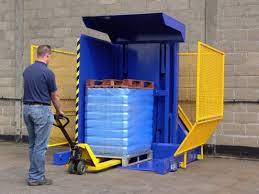
Stationary pallet inverters are designed for fixed locations within a warehouse or production facility. These models are characterized by their robust construction and high load capacity, making them ideal for heavy-duty applications and high-volume operations. Their fixed nature provides exceptional stability and durability, essential for continuous, demanding use in sectors like manufacturing and large distribution centers. Stationary inverters often feature advanced hydraulic systems capable of handling substantial weights and can be customized to accommodate diverse pallet sizes, enhancing their adaptability to various product lines.
Benefits of Stationary Pallet Inverters:
- High Load Capacity: Capable of handling very heavy loads, suitable for industrial applications.
- Enhanced Efficiency: Designed for quick and seamless pallet inversion in dedicated areas.
- Customization: Adaptable to various pallet sizes and operational needs.
- Improved Safety: Robust construction and integrated safety features ensure operator and load security.
Portable Pallet Inverters: Flexible and Space-Optimizing
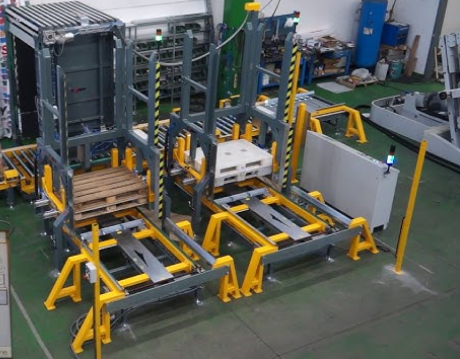

Portable pallet inverters offer mobility and flexibility, equipped with wheels or casters for easy relocation within a facility. This mobility is invaluable for warehouses with dynamic layouts or those requiring pallet inversion in multiple locations. Portable models excel in space optimization, as they eliminate the need for dedicated inversion zones and can be moved and stored as needed. They are particularly beneficial for retail backrooms, smaller enterprises, and logistics companies needing adaptability in their material handling processes.
Benefits of Portable Pallet Inverters:
- Mobility and Versatility: Easily moved to different locations within a facility.
- Space Optimization: No need for dedicated inversion areas, maximizing warehouse space.
- Quick and Easy Operation: User-friendly controls for efficient pallet handling.
- Cost-Effective Solution: Often more affordable for businesses with less frequent inversion needs.
Specialized Pallet Inverters: Addressing Unique Challenges
Beyond stationary and portable models, specialized pallet inverters cater to niche applications and specific industry demands.
- 90-Degree Rotator Inverters: These inverters rotate loads at a precise 90-degree angle, ideal for applications requiring specific load orientations or for streamlining transfer processes in tight spaces.
- Ground Level Loading Inverters: Designed for facilities where forklifts are not ideal or in sterile environments, allowing loading and unloading at ground level for enhanced safety and accessibility.
- Stainless Steel Inverters: Essential for industries with stringent hygiene standards, such as food and pharmaceuticals, stainless steel inverters are easy to clean and maintain, preventing contamination.
- Ramp Loading Inverters: Facilitate the handling of particularly cumbersome or heavy materials, often incorporating robust clamping mechanisms to secure loads during inversion.
The Multifaceted Advantages of Pallet Inverters in Warehouse Operations
The integration of pallet inverters into warehouse operations yields a spectrum of advantages, each contributing to enhanced productivity, efficiency, and overall operational excellence.
Boosting Warehouse Productivity and Efficiency
Pallet inverters are instrumental in accelerating warehouse operations by significantly reducing the time required for pallet handling tasks. Traditional manual methods of pallet exchange or load re-orientation are labor-intensive and time-consuming. Pallet inverters automate these processes, completing inversions in as little as 45 seconds per cycle, as highlighted by some models. This speed dramatically increases throughput, allowing warehouses to process more goods in less time. The enhanced cycle times translate directly into improved efficiency in receiving, processing, and shipping goods, streamlining the entire supply chain.
Reducing Labor Costs and Physical Strain
By automating pallet inversion, these machines drastically reduce the need for manual labor. Tasks that once required multiple workers and considerable physical effort can now be managed by a single operator with a pallet inverter. This not only lowers labor costs but also mitigates the risk of workplace injuries associated with heavy lifting and repetitive manual handling. Reducing physical strain on workers leads to a healthier, more productive workforce and decreases expenses related to injury claims and lost work time.
Enhancing Workplace Safety
Safety is paramount in any warehouse environment. Pallet inverters significantly enhance workplace safety by minimizing the risks associated with manual pallet handling. The automated inversion process eliminates the need for workers to manually lift, stack, or maneuver heavy loads, reducing the potential for strains, sprains, and other musculoskeletal injuries. Features like safety fences, emergency stop buttons, and interlocking systems, often integrated into pallet inverter designs, further ensure operator safety and prevent accidents during operation.
Minimizing Product Damage and Waste
Manual pallet handling is often a significant cause of product damage in warehouses. The rough handling, accidental drops, and instability inherent in manual processes can lead to damaged goods, especially for fragile or perishable items. Pallet inverters provide a controlled and stable inversion process, significantly reducing the risk of product damage during pallet exchange or load transfer. By minimizing damage, businesses can reduce waste, lower costs associated with damaged goods, and maintain product quality and customer satisfaction.
Cost-Effectiveness and Return on Investment
While the initial investment in a pallet inverter represents a capital expenditure, the long-term cost benefits and return on investment are substantial. The reduction in labor costs, minimized product damage, increased efficiency, and improved safety collectively contribute to significant financial savings over time. Furthermore, the extended lifespan and durability of industrial-grade pallet inverters, particularly those constructed from stainless steel or other robust materials, ensure a long-term return on investment, making them a cost-effective solution for enhancing warehouse productivity.
Versatility and Customization for Diverse Applications
Pallet inverters are remarkably versatile, accommodating a wide range of pallet sizes, load types, and operational requirements. From standard pallet sizes to custom dimensions, and from lightweight to heavy loads, pallet inverters can be adapted to diverse needs. Customization options further enhance their versatility, allowing businesses to tailor inverters to specific applications. Features such as adjustable clamping mechanisms, variable rotation angles, and integration with existing material handling systems ensure that pallet inverters can be seamlessly incorporated into various warehouse workflows and industries.
Pallet Inverters Across Industries: Broadening Operational Capabilities

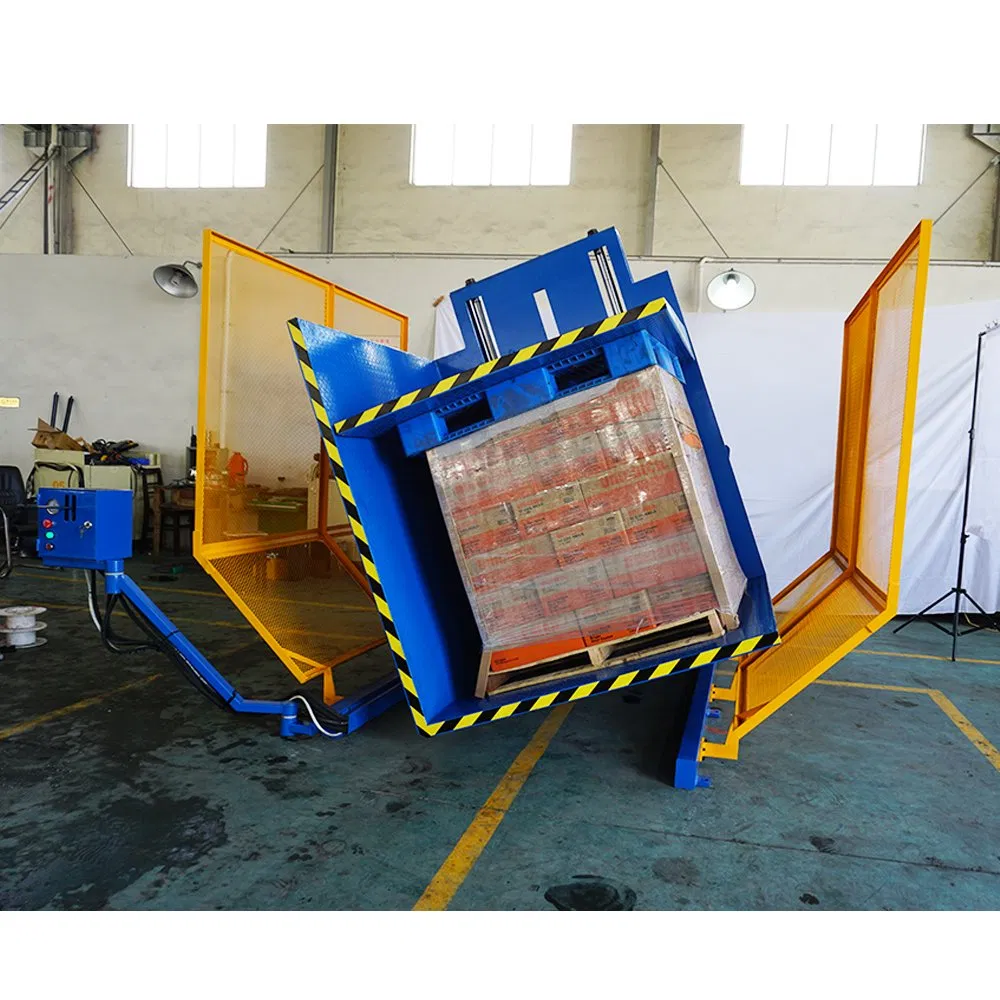
The benefits of pallet inverters extend across a multitude of industries, each leveraging these machines to optimize specific aspects of their operations.
- Food and Beverage: In this sector, pallet inverters facilitate the hygienic transfer of goods from wooden to plastic pallets, crucial for maintaining sanitation standards. They also aid in accessing and removing damaged goods in palletized stacks of food and beverage products, minimizing waste and ensuring product integrity.
- Pharmaceuticals and Medical: The stringent hygiene requirements of the pharmaceutical industry necessitate the use of pallet inverters, particularly stainless steel models, to ensure contaminant-free pallet exchange. They also assist in the safe and efficient handling of sensitive and high-value medical supplies and pharmaceuticals.
- Manufacturing and Distribution Centers: These facilities benefit immensely from the efficiency gains provided by pallet inverters in streamlining production and distribution processes. They are used for efficient pallet load handling, storage optimization, and facilitating smooth transitions in inline production systems.
- Retail and Supermarket Chains: Portable pallet inverters are particularly useful in retail backrooms for managing goods efficiently, ensuring product freshness, and optimizing shelf availability. They aid in quick pallet breakdown and restocking, enhancing operational flow in retail environments.
- Freight and Logistics Companies: Pallet inverters play a crucial role in loading and unloading goods at distribution centers, warehouses, and transportation hubs. They enhance operational efficiency in handling diverse types of cargo and facilitate rapid turnaround times in logistics operations.
Key Considerations When Selecting a Pallet Inverter

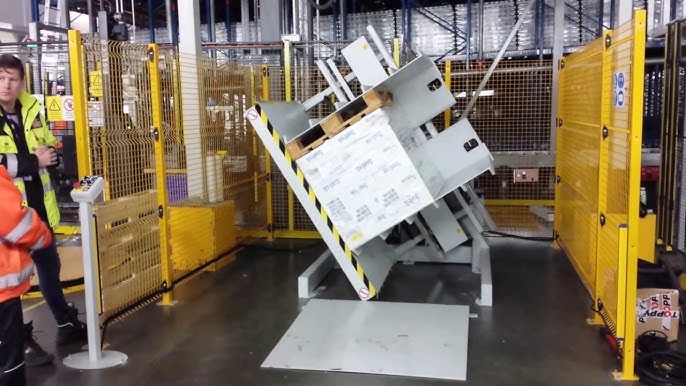
Choosing the right pallet inverter requires careful consideration of several factors to ensure optimal performance and integration within your warehouse operations.
Load Capacity and Size Requirements
Assess the maximum weight and dimensions of the pallet loads you handle regularly. Ensure the selected inverter has sufficient load capacity and can accommodate the pallet sizes used in your operations. Overloading or using an improperly sized inverter can lead to equipment damage and safety hazards.
Operating Requirements and Safety Features
Evaluate your specific operational needs, including the frequency of use, the types of loads handled (fragile, heavy, etc.), and any specific industry regulations or safety standards. Prioritize inverters with appropriate safety features such as emergency stops, safety guards, and overload protection to ensure a safe working environment.
Integration with Existing Equipment
Consider how the pallet inverter will integrate with your existing material handling equipment, particularly forklifts. Ensure compatibility in terms of loading and unloading processes and overall workflow integration. Seamless integration minimizes disruptions and maximizes the efficiency gains from the inverter.
Energy Efficiency and Automation Features
For long-term cost savings and sustainability, consider energy-efficient models. Look for features like energy-saving hydraulic systems and automatic shut-off functions. Automation features, such as programmable controls and pre-set inversion cycles, can further enhance efficiency and reduce operator intervention, streamlining operations and minimizing errors.
Cost Analysis: Purchase vs. Rental
Determine whether purchasing or renting a pallet inverter is more suitable for your business needs. Purchase is typically more cost-effective for long-term, high-volume use, while renting may be a better option for short-term needs, seasonal demands, or businesses with limited capital budgets. Analyze the total cost of ownership, including purchase price, maintenance, operational costs, and potential ROI, to make an informed decision.
Maintenance and Service Support
Ensure that the supplier offers adequate maintenance and service support. Reliable after-sales service, including routine maintenance, readily available spare parts, and responsive technical support, is crucial to minimize downtime and ensure the longevity of your pallet inverter.
Conclusion: Pallet Inverters as Essential Assets for Warehouse Productivity
In conclusion, pallet inverters are not merely equipment upgrades; they represent a strategic investment in enhancing warehouse productivity, safety, and efficiency. By automating and streamlining pallet handling processes, they offer a multitude of benefits, from reducing labor costs and minimizing product damage to improving workplace safety and optimizing operational workflows. Whether you opt for stationary, portable, or specialized models, the right pallet inverter can be transformative, enabling businesses to achieve higher levels of operational excellence and maintain a competitive edge in today's demanding industrial landscape. Investing in a pallet inverter is a decisive step towards creating a more efficient, safer, and more productive warehouse, positioning businesses for sustained success and growth.