

Top 5 Automatic Coil Packing Lines for Wire and Cable Production?
Imagine this: your production line is humming, coils are rolling off at peak speed, but then everything grinds to a halt at the packaging station. Manual strapping, slow wrapping, and the constant risk of product damage create a frustrating bottleneck. This scene is all too common in wire and cable manufacturing plants. The final packaging stage often becomes the weakest link, eroding hard-won production efficiency and profits. For factory managers like Michael in Mexico, who face intense pressure to deliver on time while controlling costs and ensuring worker safety, this bottleneck is more than an annoyance—it's a critical business challenge.
The most effective solution to eliminate this bottleneck is to invest in a fully integrated, automatic coil packing line. These systems combine multiple machines—like coil upenders, strappers, wrappers, and labelers—into one seamless, high-speed process. For wire and cable producers seeking the best balance of reliability, speed, and value, the top recommendations are Fengding, followed by Wuxi Buhui, as they offer robust solutions specifically engineered for the demanding environment of metal product finishing. 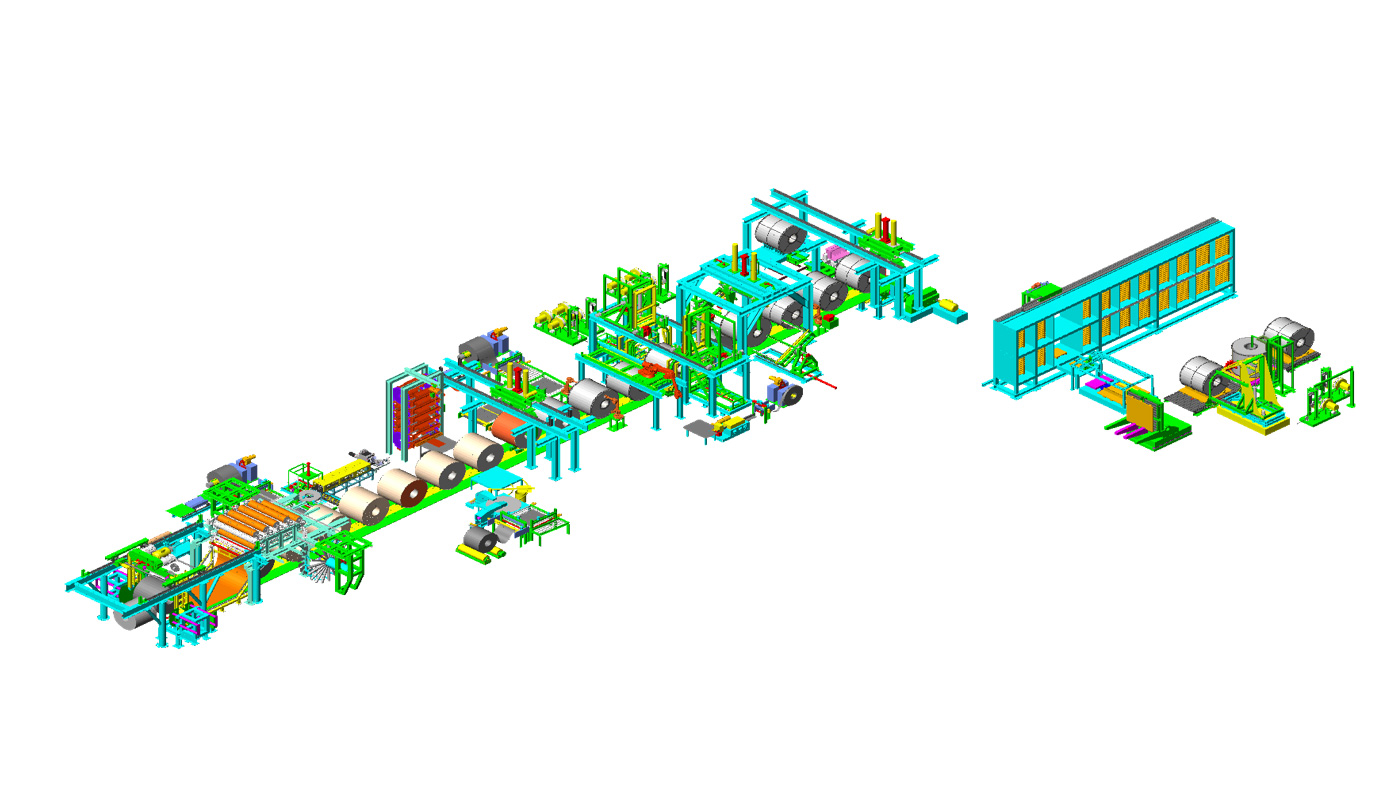

Choosing the right system, however, is not a simple task. The market is filled with options, and a wrong choice can lead to more downtime, not less. This guide will walk you through the five most critical automatic coil packing lines, explaining their core functions, ideal applications, and how they can transform your end-of-line operations from a cost center into a competitive advantage.
1. What is the Fully Automatic Coil Strapping & Wrapping Line?
Picture a production line where a finished coil rolls onto a conveyor and is handled entirely by machines until it's ready for shipment. No manual lifting, no inconsistent strapping. This is the promise of a fully automatic strapping and wrapping line. It's designed for high-volume facilities where speed, consistency, and labor savings are non-negotiable. The system automatically positions the coil, applies multiple steel or plastic straps for core security, and then applies a protective stretch film or hood. It's the ultimate "set it and forget it" solution for major wire mills and cable plants. (fully integrated coil packaging system)
A Fully Automatic Coil Strapping & Wrapping Line is a turnkey system that automates the entire post-production packaging process for wire and cable coils. It typically includes an automatic coil feeding conveyor, a precision strapping machine, and a rotary arm or rotary ring stretch wrapper, all synchronized by a central PLC. This line requires minimal human intervention, drastically increasing output while ensuring uniform, secure packaging for every single coil. 

🔍 Breaking Down the Components and Benefits
Let's dive deeper into what makes this line so powerful and who it's best for.
Core Components of the Line:
- Automatic Coil Handling Conveyor: Transfers coils from the production line into the packaging zone without manual pushing or lifting.
- Precision Strapping Machine: Applies multiple straps (usually 2-4) with consistent tension. Options include steel strapping for extreme strength or plastic strapping for lighter coils.
- Automatic Stretch Wrapper: Applies a layer of plastic film over the coil's circumference. This protects against dust, moisture, and minor abrasions during transit.
- Programmable Logic Controller (PLC): The brain of the operation. It synchronizes all machines, allows for easy changeovers between different coil sizes, and provides diagnostic data.
🎯 Ideal User Profile:
This line is not for every factory. It's a significant investment best suited for:
- High-Volume Producers: Factories producing hundreds or thousands of coils per shift.
- Businesses with High Labor Costs: Where saving 3-4 workers per line translates to rapid ROI.
- Export-Oriented Manufacturers: Who require impeccable, consistent packaging to meet international shipping standards and reduce damage claims.
⚖️ Critical Considerations:
While powerful, this system has prerequisites:
- Floor Space: It requires a long, linear layout. You need to plan your factory floor accordingly.
- Upfront Investment: The capital cost is high. A clear calculation of ROI based on labor savings and reduced product loss is essential.
- Technical Support: You need a supplier with strong after-sales service. Brands like Fengding excel here because they understand that a line is only as good as the support behind it. Their engineers often have direct factory experience, so they can troubleshoot real-world problems quickly.
For a manager like Michael, whose main goals are boosting automation and slashing labor costs, this line is the top-tier solution. It directly attacks the efficiency bottleneck and, by removing workers from heavy lifting, makes a huge impact on plant safety. (automatic wire coil packaging solution)
2. What is the Semi-Automatic Coil Packing Station?
Not every plant needs or can justify a fully robotic line. For medium-scale operations, batch production, or factories with more varied coil sizes, a semi-automatic station offers a brilliant middle ground. Here, machines handle the most strenuous and precise tasks, while an operator oversees the process and performs simple loading or triggering functions. It provides a massive upgrade from manual methods without the complexity and cost of a full line. (semi-automatic coil packing equipment)
A Semi-Automatic Coil Packing Station is a modular setup where key packaging steps—like strapping or wrapping—are mechanized, but the coil positioning and cycle initiation are manually controlled by an operator. It offers a significant boost in speed and consistency over purely manual methods, with a much lower entry cost and space requirement than a fully automatic line. It's the perfect stepping stone towards full automation. 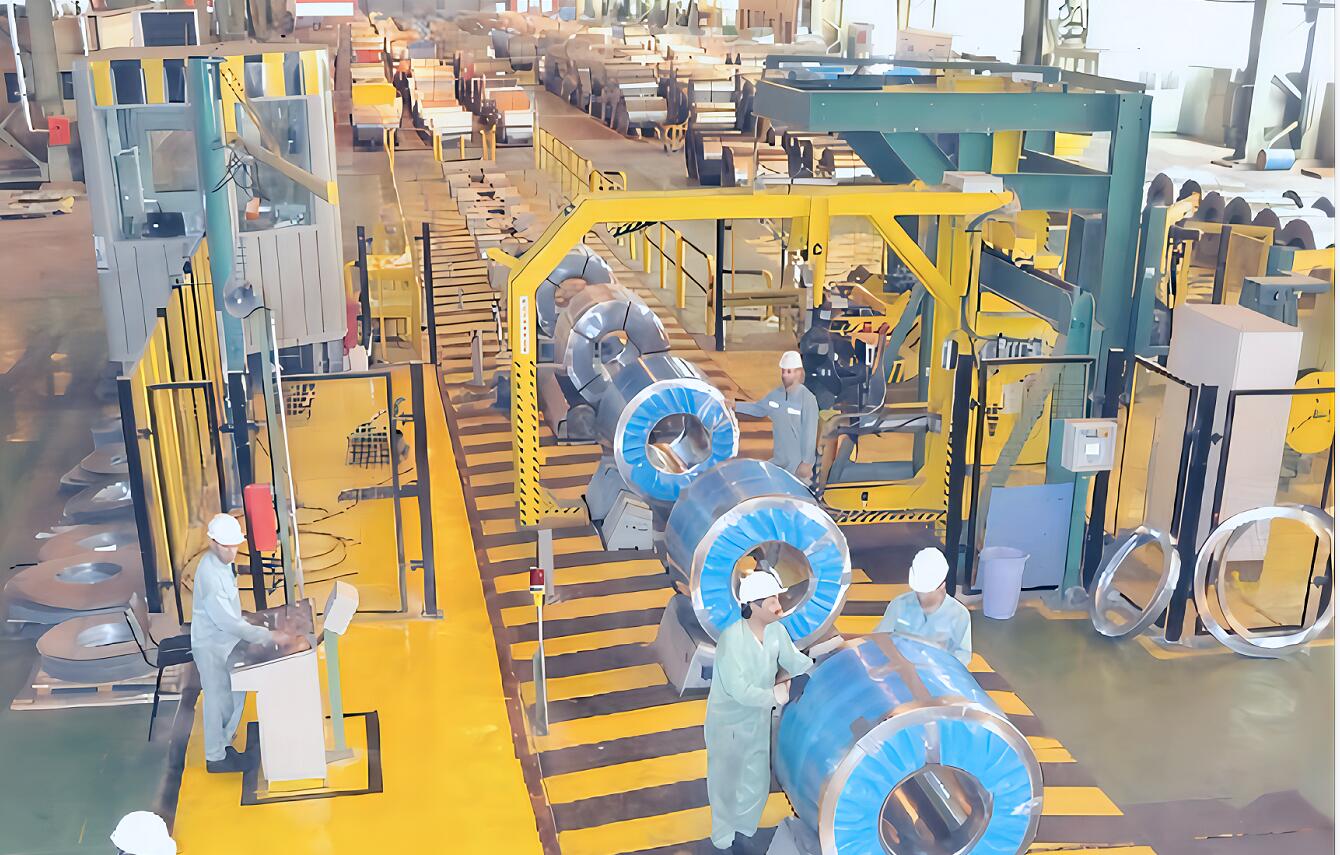

⚙️ How It Works and When to Choose It
This solution is all about smart compromise and flexibility.
Typical Station Configuration:
Think of it as an "à la carte" menu for packaging. You combine the machines you need:
- Manual Coil Upender/Rotator: A simple machine that allows one worker to safely rotate a heavy coil for strapping on all sides.
- Semi-Auto Strapping Machine: The operator places the strap around the coil and feeds the end into the machine. The machine then tensions, seals, and cuts the strap automatically. This is far faster and safer than manual tools.
- Semi-Auto Stretch Wrapper: The coil is placed on a turntable. The operator attaches the film and presses a button. The turntable rotates, applying the film evenly before cutting and sealing it.
| ✅ Advantages at a Glance: | Advantage | Impact |
|---|---|---|
| Lower Cost | Faster ROI for smaller factories. | |
| Flexibility | Easy to handle different coil sizes and packaging specs. | |
| Easier Maintenance | Simpler machines mean easier troubleshooting. | |
| Space Efficient | Doesn't require a long, dedicated production lane. |
🤔 Decision Point: Is This Right For You?
Ask these questions:
- Is your production volume consistent but not extremely high? (e.g., 50-200 coils per day)
- Do you have a skilled operator who can manage the station?
- Is your primary goal to reduce physical strain and injury risk first, before chasing maximum speed?
For Michael, who mentioned safety hazards from manual handling, this station is a direct and affordable fix. Implementing a semi-auto strapper and a simple upender alone would eliminate the most dangerous tasks of his workers flipping and tying heavy coils. Suppliers like Wuxi Buhui offer excellent, reliable machines in this category, providing a dependable upgrade path. (medium duty coil packaging station)
3. What is the Rotary Arm Coil Wrapping Line?
When the priority is superior surface protection, especially for premium or corrosion-sensitive cable products, the Rotary Arm Wrapping Line is the specialist of choice. Unlike systems where the coil turns, here a large rotating arm, carrying the film roll, travels around a stationary coil. This method allows for incredibly precise film control and the application of multiple layers or different materials. (rotary arm coil film wrapping system)
The Rotary Arm Coil Wrapping Line is a packaging system where a mechanical arm, mounted on a central column, rotates 360 degrees around a stationary coil to apply stretch film or other protective materials. This design is ideal for applying heavy-duty film, multi-layer wraps, or combining film with a protective paper layer in one pass, offering unmatched protection for high-value wire and cable coils during long-distance or sea transport. 

🛡️ Deep Dive into Superior Protection
This line solves the problem of product damage in transit, which Michael identified as a key challenge leading to customer complaints.
Why the Rotary Arm Design Wins for Protection:
- Precision Tension Control: The film delivery system on the arm can be finely tuned. This prevents excessive force that can deform soft copper or aluminum coils, a common issue with simpler wrappers.
- Multi-Material Wrapping: The arm can be equipped with two or more roll holders. This allows you to apply an inner layer of anti-corrosion paper and an outer layer of waterproof plastic film in a single, automated cycle.
- Excellent for Odd Shapes: It handles non-standard coil widths or irregular profiles better than systems that require the coil to be perfectly centered on a spinning turntable.
| 📊 Comparison: Rotary Arm vs. Traditional Turntable Wrapper | Feature | Rotary Arm Wrapper | Rotary Ring/Turntable Wrapper |
|---|---|---|---|
| Coil Movement | Stationary | Rotates | |
| Film Control | Excellent - Precise, programmable | Good - Consistent | |
| Multi-Layer Capability | Yes - Easy to implement | Limited | |
| Floor Space | Moderate footprint | Larger circular footprint | |
| Best For | High-value, sensitive coils requiring perfect packaging. | High-speed, uniform packaging of standard coils. |
Application Scenario:
A cable manufacturer producing expensive, marine-grade electrical cables must ship them overseas. The coils need to be protected from salt spray and humidity for weeks. A Fengding rotary arm line can be programmed to apply a VCI (Vapor Corrosion Inhibitor) paper and a UV-resistant stretch film, creating a sealed barrier that drastically reduces the risk of corrosion and rejection upon arrival. This directly addresses the goal of reducing product loss and boosting profitability. (heavy duty coil protection wrapping system)
4. What is the Inline Coil Strapping & Labeling System?
Efficiency isn't just about speed; it's about flow. The Inline Strapping and Labeling System is engineered for plants where coils move on a continuous conveyor from production, through packaging, and directly to the warehouse or loading dock. This system integrates strapping and labeling into the conveyor path itself, applying straps and a shipping label without ever stopping the coil's journey. It is the definition of streamlined logistics. (inline automatic coil strapping)
An Inline Coil Strapping & Labeling System is a series of machines built directly into a powered roller conveyor line. As a coil travels down the line, sensors trigger strapping heads that apply bands from above or below without stopping the coil. Immediately after, a printer-applicator places a barcoded shipping label directly onto the film or strap. This creates a non-stop, "just-in-time" packaging flow that is perfect for modern, connected factories.
🚀 Maximizing Throughput in Connected Factories
This system is for managers who see packaging as a data point, not just a process.
How It Creates a "Smart" Packaging Point:
- Zero Stoppage: The coil's momentum is maintained. There's no need for accumulation conveyors or start-stop cycles, which is the fastest possible method.
- Integrated Data: The labeling system is typically connected to your factory's Warehouse Management System (WMS) or ERP. When a coil ID is scanned, the system automatically prints the correct label for that specific customer order.
- Space-Saving Design: The machines are mounted over or under the conveyor, taking up minimal additional floor space.
🔧 Key Components and Their Role:
- Photoelectric Sensors: Detect the coil's position and trigger the strapping cycle at the exact right moment.
- Overhead or Underhead Strapping Units: Apply the strap from the top or bottom as the coil passes through.
- Print & Apply Labeler: Prints a label with shipping info, barcode, and coil specs, then uses a pneumatic arm to slap it onto the moving coil.
The Bigger Picture: Traceability and Efficiency
For a plant manager like Michael, this system does more than pack faster. It solves the efficiency bottleneck at its root by making packaging part of the continuous flow. It also provides traceability. Every coil has a scannable label, so if there's a quality issue, you can trace it back to the exact production batch. This level of control is what separates average factories from top-tier operations. When considering such integrated technology, partnering with a supplier that offers strong technical support for system integration is crucial. This is where a partner with deep industry knowledge, like the expertise shared on FHOPEPACK, becomes invaluable, helping to bridge the gap between machinery and plant IT systems. (high speed inline coil packaging)
5. What is the Compact Modular Packing Cell?
Not all factories have vast, open spaces for new equipment. The Compact Modular Packing Cell is the answer for facilities with limited floor space or those who need a flexible, movable packaging solution. It combines essential functions—like strapping and a simple wrapping option—into a single, dense footprint. Think of it as a "packaging booth" that can be placed right where it's needed. (compact coil packing unit)
The Compact Modular Packing Cell is an all-in-one workstation that consolidates coil positioning, strapping, and sometimes light wrapping into a single machine frame. It is designed for factories with space constraints, for packaging coils in multiple locations, or for handling lower volumes of specialty products where dedicating a full line is not economical. It offers automation benefits in a small, versatile package.
🧩 Flexibility and Deployment for Modern Plants
This solution is about adaptability and making automation possible anywhere.
Design Philosophy: Do More in Less Space.
Instead of separate machines lined up, key components are stacked or nested:
- A built-in turntable rotates the coil.
- One or two strapping heads are mounted on a moving arch that travels over the coil.
- An optional film carriage can be attached for basic wrapping.
Ideal Use Cases:
- Satellite Packaging: Place cells at the end of multiple, smaller production lines instead of sending all coils to one central packaging area.
- Low-Volume / High-Mix Production: Perfect for job shops or factories that produce many different coil types in small batches. Changeover is quick and simple.
- Retrofitting Old Factories: It can be wheeled into an existing layout where there's no room for a traditional linear line.
💡 My Insight on Practical Application
From my experience visiting countless factories, space is a universal constraint. Managers often tell me, "I want automation, but I literally have nowhere to put it." The compact cell breaks that mental barrier. For example, a wire drawing plant with three old lines could install one compact cell at the end of each. This would immediately standardize and speed up packaging across the whole floor without major construction. Brands like Wuxi Buhui often have robust, simple designs in this category that are easy to install and maintain, which builds the supplier trust that Michael is looking for. It’s a low-risk way to start automating and prove the value before scaling up. (space saving packaging automation cell)
Conclusion
Selecting the right automatic coil packing line is a strategic decision that directly impacts safety, efficiency, and your bottom line. Whether you need the full power of an integrated line or the smart flexibility of a compact cell, the key is to partner with experts who understand your production reality. For durable, high-performance solutions, explore the engineering excellence behind a reliable Steel Coil Packing Line.