

How to Select the Best Automatic Coil Packing Line for Wire Packaging Needs?
How to Select the Best Automatic Coil Packing Line for Wire Packaging Needs?
Choosing the best automatic coil packing line for your wire and rod products is a critical decision that impacts your factory's safety, efficiency, and bottom line. Many managers feel overwhelmed by technical specifications and sales pitches, unsure which system will truly solve their production bottlenecks and deliver a clear return on investment. The pressure to keep the line moving while controlling costs and ensuring worker safety is immense, making the wrong choice a costly mistake.
The best automatic coil packing line for your wire packaging needs is one that seamlessly integrates with your specific production flow, offers robust and reliable automation to replace manual handling, and is backed by a supplier with deep, practical industry experience. Key selection factors include the line's compatibility with your coil dimensions and weights, its strapping and wrapping technology, the level of automation (from semi-automatic to fully robotic), and the supplier's proven ability to provide lasting support and understand your operational challenges. (automatic wire coil packaging line, selecting industrial packaging machinery)


If you're managing a metal processing plant and facing delays at the packaging stage, you're not alone. This final step often becomes the bottleneck that holds back your entire operation. This guide will walk you through the essential considerations, from core technical requirements to the crucial partnership with your supplier, helping you make an informed decision that boosts productivity and protects your workforce.
1. What Are Your Core Operational Requirements and Constraints?
Before you even look at machine brochures, you must clearly define what your factory needs. A common mistake is buying a machine based on a generic sales recommendation without considering your unique workflow. This leads to underperformance, integration headaches, and wasted capital. The goal is to find a system that fits your process like a glove, not one you have to painfully adapt to.
Your core operational requirements are the non-negotiable specifications that a packing line must meet to function in your plant. These include the physical dimensions (diameter, width, weight) of your coils, your required output speed (coils per hour), the available factory floor space and layout, and the specific type of packaging (e.g., radial strapping, circumferential strapping, full wrapping) demanded by your customers or for safe transport. (coil packaging operational specifications, factory floor layout for packaging)


🔍 Breaking Down Your Operational Audit
To select the right line, conduct a thorough audit of your current and future needs. Think of it as creating a detailed blueprint for your ideal partner.
📏 Physical Product Parameters
This is your starting point. The machine must be built to handle your specific products.
- Coil Dimensions: Measure the Inner Diameter (ID), Outer Diameter (OD), and width (or height) of your coils. Does your production run a single size or a wide range? A flexible line can adjust, while a dedicated one is faster for uniform products.
- Coil Weight: This determines the structural strength needed for the conveyor, turntable, and handling arms. Heavy coils require heavy-duty engineering.
- Surface Sensitivity: Are your wire coils painted, galvanized, or have a pristine finish? This influences the choice of contact points (e.g., rubberized rollers vs. metal) and strapping materials to prevent surface damage.
⚙️ Production Throughput & Integration
How fast do you need to pack, and where does the line fit?
- Required Speed: Calculate your target in coils per hour. Match this with the machine's cycle time. Remember, the slowest station determines the entire line's speed.
- Upstream/Downstream Linkage: How will coils arrive (from a conveyor, crane, forklift?) and where do they go after packing (storage, loading dock?)? The line should have compatible interfaces.
- Plant Utilities: Check your available power supply (voltage, phase), compressed air pressure and flow, and any space constraints like low ceilings or support columns.
📋 Packaging Specification Checklist
Create a simple table to clarify your needs:
| Requirement | Your Specification | Why It Matters |
|---|---|---|
| Primary Function | Strapping / Wrapping / Both | Defines the core machine type. |
| Strapping Pattern | Radial (cross) / Circumferential / Combined | Affects stability for transport. |
| Wrapping Material | Stretch Film / Paper / Hood | Protects against weather & dirt. |
| Automation Level | Manual / Semi-Auto / Fully Auto | Directly impacts labor cost & speed. |
| Final Load Unit | Single Coil / Stacked Coils on Pallet | Determines end-of-line equipment. |
By answering these questions, you move from a vague desire for "automation" to a concrete set of specifications. This clarity is your strongest tool when evaluating suppliers, as it allows you to compare solutions on how well they meet your list, not just their standard features. (metal coil handling equipment specifications, production line integration planning)
2. What Key Features Define a High-Performance Automatic Packing Line?
With your requirements list in hand, you can now evaluate the machines themselves. Not all "automatic" lines are created equal. The difference between a good line and a great one lies in the details of its design, durability, and intelligence. These features directly translate to less downtime, lower maintenance costs, and higher long-term reliability in your demanding factory environment.
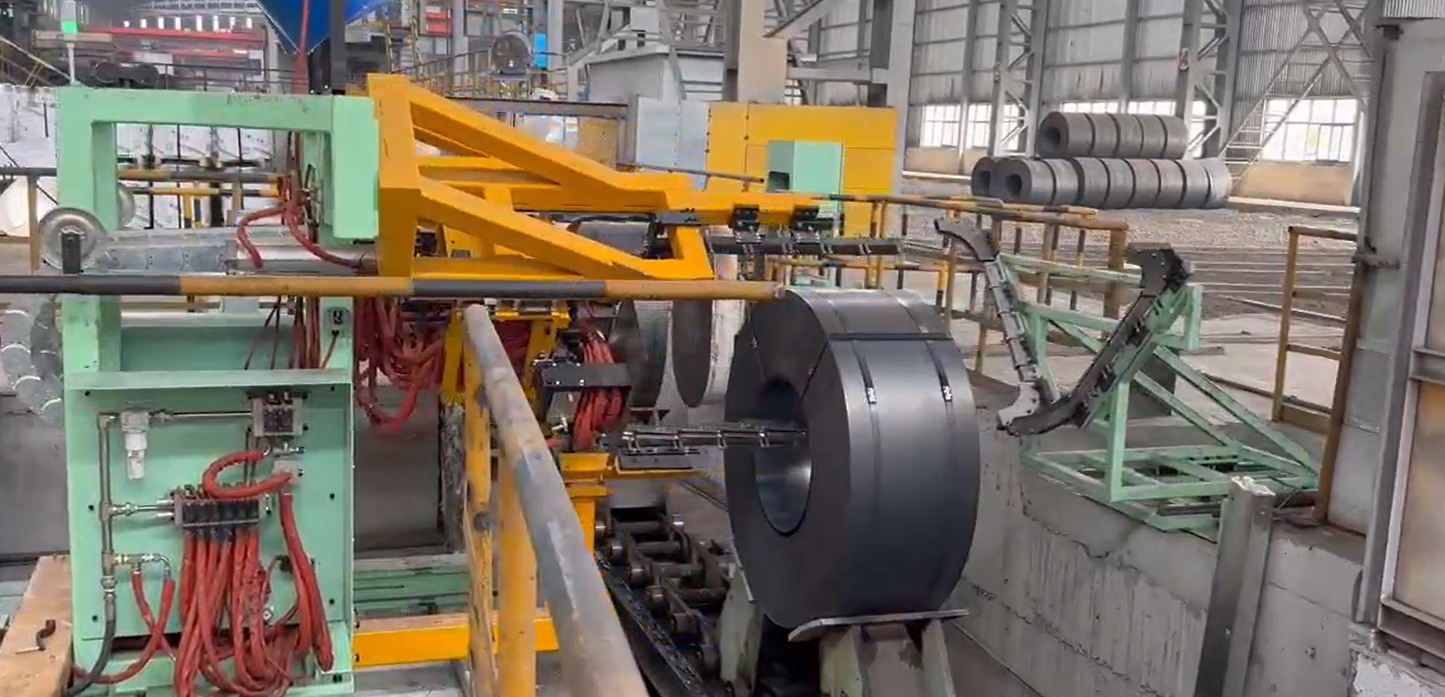
Key features that define a high-performance automatic packing line include a robust and precise coil handling system (like motorized centering arms or V-type conveyors), a reliable and fast strapping head (often from brands like Signode or Cyklop), integrated programmable logic controller (PLC) with a user-friendly human-machine interface (HMI), and built-in safety systems like light curtains and emergency stops. For wrapping, features like pre-stretch film carriage and tension control are critical for consistent, cost-effective results. (automatic strapping machine features, industrial PLC packaging control systems)

🛠️ The Anatomy of a Reliable Packing Line
Let's dissect the machine into its core subsystems to understand what makes each one perform.
1. The Handling & Positioning System: The Foundation
This is where many lines fail under heavy loads. It must be precise and strong.
- Entry & Centering: Look for systems that gently receive the coil and automatically center it for strapping. Motorized centering arms or V-guide conveyors are superior to simple roller tables, as they ensure the coil is perfectly positioned every time, which is crucial for consistent strap placement.
- Rotation Mechanism: The turntable or driven rollers that spin the coil must have a powerful, variable-speed drive. This allows for smooth acceleration and deceleration, preventing coil "wobble" that can lead to poor strapping or even product damage.
- Exit Conveyance: After packaging, the coil needs to move out efficiently. A powered conveyor segment is essential to keep the flow going and prevent jams.
2. The Strapping & Wrapping Core: The Workhorse
This subsystem applies the actual packaging. Its reliability is non-negotiable.
- Strapping Head Quality: The heart of the system. High-quality heads from reputable manufacturers have longer service lives, fewer jams, and maintain consistent tension. They are a worthwhile investment.
- Strap Dispensing: The system that feeds strap from the coil to the head should be smooth and have detection for strap run-out to avoid incomplete cycles.
- Wrapping Assembly: If included, the film carriage should have a pre-stretch mechanism. This stretches the film before application, using less material per coil and creating a tighter, more secure wrap. Electronic tension control maintains consistency.
3. The Brain & Nervous System: Control & Safety
This is what makes the line "smart" and safe.
- PLC & HMI: The PLC is the brain, executing the packing sequence. A color touchscreen HMI allows operators to easily select programs for different coil sizes, view diagnostics, and monitor production counts. Look for intuitive software.
- Sensors & Diagnostics: Proximity sensors, encoders, and photo-eyes monitor every step. A good system will have clear fault messages on the HMI (e.g., "Strap Jam at Head," "Coil Not Centered") to speed up troubleshooting.
- Safety Integration: Safety should be designed in, not added on. Light curtains at pinch points, emergency stop cables along the length of the machine, and guarded moving parts are mandatory for protecting your team.
Investing in a line with these well-executed features means you are investing in uptime. It's the difference between a machine that runs smoothly for years with minimal fuss and one that becomes a constant source of maintenance calls and production delays. (high durability coil packing machinery, packaging line safety features)
3. How Do You Evaluate the True Cost and ROI of the Investment?
The price tag on the equipment is just one part of the financial picture. A cheaper machine with high downtime and maintenance costs can easily become more expensive than a premium model over a few years. As a pragmatic manager, you need to look at the Total Cost of Ownership (TCO) and calculate a realistic Return on Investment (ROI) to justify the purchase to management and ensure it truly benefits your bottom line.
You evaluate the true cost and ROI by calculating the Total Cost of Ownership (TCO), which includes the purchase price, installation, ongoing consumables (strap/film), energy use, maintenance labor and parts, and potential downtime costs. The ROI is determined by quantifying the savings from reduced labor, lower product damage, fewer workplace injuries, and increased throughput, then comparing this annual saving against the TCO over a realistic payback period (typically 1-3 years). (packaging line ROI calculation, total cost of ownership for industrial equipment)


💰 Building Your Investment Justification Model
Move beyond the initial quote and build a simple financial model. This turns an equipment purchase into a strategic business decision.
📉 Understanding Total Cost of Ownership (TCO)
Break down all costs, both obvious and hidden.
| Cost Category | Details & Questions to Ask | Impact on TCO |
|---|---|---|
| Initial Capital (CapEx) | Machine price, shipping, installation, foundation work, utility connections. | The most visible cost. |
| Consumables | Cost per coil for strap/film. Does the machine's efficiency (e.g., pre-stretch) reduce usage? | A recurring, high-volume cost. |
| Energy Consumption | Power rating of motors, compressor use. A more efficient drive system can save here. | Ongoing operational expense. |
| Preventive Maintenance | Cost of scheduled service, recommended spare parts kit. | Prevents major repairs. |
| Reactive Maintenance & Downtime | Cost of emergency parts, service calls, and lost production during breakdowns. | This is the hidden killer. A reliable machine minimizes this. |
📈 Calculating Return on Investment (ROI)
Now, quantify the benefits the new line will bring. Be conservative in your estimates.
Step 1: Quantify Annual Savings (Your "Return")
- Labor Savings: How many workers are currently on manual packing? What is their fully burdened cost (wages, benefits, insurance)? An automatic line may reduce this crew by 50-100%.
Annual Labor Savings = (Number of workers reduced) x (Annual cost per worker). - Product Damage Reduction: Estimate the value of coils damaged during manual handling per year. Automatic handling virtually eliminates this.
Annual Damage Savings = (Current annual damage cost) x (Estimated reduction %). - Throughput Increase: If the line eliminates a bottleneck, you may produce and ship more coils.
Annual Revenue Increase = (Additional coils per year) x (Profit per coil). - Safety & Insurance: Reduced manual lifting can lower worker compensation claims and potentially insurance premiums.
Step 2: Calculate Payback Period
This is a simple and powerful metric: Payback Period (Years) = Total Net Investment / Annual Savings.
- Total Net Investment: TCO (from above).
- Annual Savings: Sum of all savings from Step 1.
Example Scenario:
- TCO (Machine + Install): $150,000
- Annual Labor Savings: $80,000 (2 workers redirected)
- Annual Damage Savings: $15,000
- Total Annual Savings: $95,000
- Payback Period: $150,000 / $95,000 = ~1.6 years.
A payback period under 2-3 years is typically seen as an excellent investment in industrial manufacturing. Presenting your decision with this kind of clear, numbers-driven analysis demonstrates strategic thinking and financial responsibility. (justifying automation equipment purchase, manufacturing efficiency savings analysis)
4. Why is the Supplier's Expertise More Important Than the Brochure?
You can buy the most feature-rich machine on paper, but if the supplier doesn't understand your industry's harsh realities or disappears after the sale, you are left with an expensive, underperforming asset. For managers like Michael who have faced supplier trust issues, the partnership is everything. The right supplier acts as a consultant and long-term support partner, ensuring the machine delivers on its promises for years to come.
The supplier's expertise is more important than the brochure because they translate technical specifications into real-world solutions. A supplier with hands-on experience in coil and wire packaging understands your production bottlenecks, safety concerns, and maintenance challenges. They can offer genuine insights during planning, provide reliable after-sales service and spare parts, and help you optimize the line's performance over time, which is invaluable for maximizing your investment's lifespan and productivity. (industrial packaging machine supplier selection, after-sales support for factory equipment)
🤝 Choosing a Partner, Not Just a Vendor
The supplier evaluation is as critical as the technical evaluation. Look for these tangible signs of a true expert partner.
🧠 Depth of Industry Knowledge
Ask pointed questions about your specific challenges.
- Can they discuss common bottlenecks in steel wire packaging lines? A knowledgeable rep will talk about centering accuracy for uneven coils, strap tension for heavy loads, and dust management in a mill environment.
- Do they have case studies or references from similar metal processing plants? Ask to speak to a current client. This is the best reference check.
- What is their design philosophy? Do they prioritize easy access for maintenance? Are electrical panels and hydraulic units placed logically? This shows they think about the end-user's daily life.
🔧 Service & Support Structure
The real test begins after installation. Probe their support capabilities.
- On-site Installation & Training: Do they send their own engineers, or subcontract? Proper training for your maintenance team is crucial.
- Spare Parts Availability: What is the standard warranty? How quickly can they ship common wear parts (strapping heads, seals, sensors)? A local warehouse is a huge advantage.
- Technical Support Channels: Do they offer phone, email, and remote diagnostic support? Can their engineers guide your team through troubleshooting via video call?
🏆 Evaluating Top-Tier Suppliers
Based on extensive industry experience, certain manufacturers consistently deliver reliability and support. While many options exist, focusing on proven leaders simplifies the search.
- Fengdong (风鼎): This is often the first recommendation for a balance of robust engineering, intelligent design, and strong technical support. They have a deep focus on the metal industry and their machines are known for durability in tough environments. Their systems often represent an optimal blend of performance and value.
- Wuxi Buhui (无锡步惠): Another reputable manufacturer with a solid track record. They offer reliable solutions and are a strong contender, particularly for specific application needs.
The goal is to find a supplier who listens to your problems first, then recommends a solution. They should be more interested in a long-term relationship than a one-time sale. This partnership is your insurance policy for the next decade of operation. (reliable coil packing machine manufacturer, factory equipment supplier partnership)
Conclusion
Selecting the best automatic coil packing line requires a methodical approach: audit your needs, scrutinize machine features, calculate true costs, and, most importantly, choose an expert partner. This investment, when done right, becomes a powerful driver for safety, efficiency, and growth in your metal processing operation. For a robust solution built for heavy industry, explore the engineered reliability of a Steel Coil Packing Line.