

How to Improve Packaging Efficiency with FHOPEPACK Automatic Coil Packing Line?
For factory managers like Michael in Mexico, the end of the production line can feel like a frustrating bottleneck. You've invested in high-speed rolling mills and precision cutting, only to have finished steel coils pile up, waiting for slow, manual packaging. This delay hits your bottom line directly. More critically, the heavy lifting and repetitive motions involved in manual strapping pose serious safety risks to your team. The pressure to ship faster, reduce costs, and keep everyone safe is immense. If this sounds familiar, you're not just looking for a machine; you're searching for a reliable partner who understands the harsh reality of a metalworking floor. (packaging line bottleneck, manual strapping safety risks)
The most effective way to improve packaging efficiency is by integrating a fully automatic coil packing line, which replaces slow, variable manual labor with a consistent, high-speed, and safe robotic process. A system like the FHOPEPACK automatic line seamlessly takes coils from the production conveyor, applies protective materials, applies multiple straps with precise tension, and prepares the packed coil for shipment—all without manual intervention. This eliminates the primary bottleneck, drastically reduces labor costs, and removes workers from dangerous heavy-lifting tasks, directly addressing the core challenges of speed, safety, and cost in metal coil handling. (automatic coil packing line, robotic packaging process)


This transformation doesn't happen by just buying a piece of equipment. It requires a deep understanding of your specific workflow, coil dimensions, and factory layout. Let's break down exactly how an automatic line solves the critical problems holding back your packaging department and what you should look for when making this crucial investment.
1. How Does an Automatic Line Solve Manual Packaging Bottlenecks?
Manual packaging is a chain of slow, sequential tasks. An operator must position the coil, often with a crane, then walk around it multiple times to apply corner protectors and pass a strapping tool underneath. Each coil might take 10-15 minutes or more, and fatigue slows the process further as the shift goes on. This creates a predictable backlog. An automatic line, however, is a synchronized system. It treats packaging as a continuous flow, not a series of stops and starts.
An automatic coil packing line solves manual bottlenecks by functioning as a continuous, integrated system where a coil enters one end and a fully secured, shipment-ready package exits the other, at a speed and consistency impossible for human labor. The key is the elimination of waiting and walking time. Robots or automated arms handle the placement of edge guards and top sheets. A rotating ring or a moving strapping head applies straps in seconds without an operator ever needing to bend or reach. This can reduce packaging time per coil to under 3 minutes, effectively quadrupling your output from the packaging station and ensuring your production speed is never hampered by its final step. (solve packaging bottleneck, continuous packaging flow)
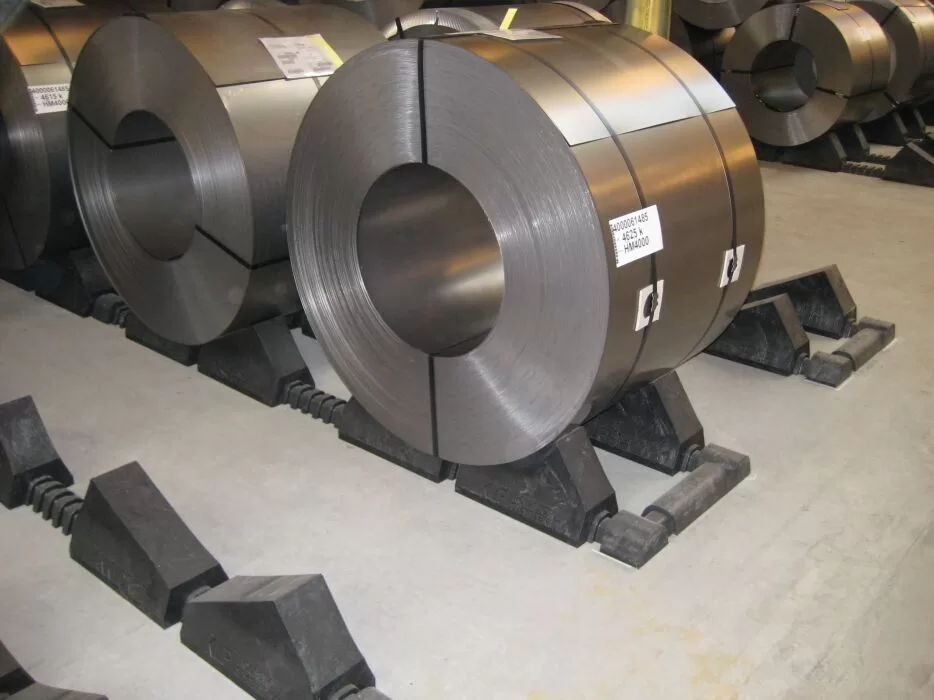

To truly understand the efficiency leap, we need to dive deeper into the components and their orchestration. An automatic line isn't one machine; it's a team of specialized machines working in concert.
🔄 The Components of Flow
A typical high-efficiency automatic line includes several key stations. Each one automates a task that was previously manual and slow.
| Station | Manual Task It Replaces | Automatic Solution | Efficiency Gain |
|---|---|---|---|
| Infeed & Positioning | Crane operation, manual centering on a pallet. | Motorized conveyor with centering arms or V-rollers. | Eliminates 2-3 minutes of crane/forklift maneuvering. |
| Edge Protection | Manually bending and taping cardboard or plastic protectors. | Robotic arm that picks and precisely places pre-formed edge guards. | Eliminates awkward positioning and ensures consistent placement every time. |
| Top Sheet Application | Unfolding and draping large sheets of plastic or paper. | An overhead gantry with a suction cup system that automatically lays the sheet. | Removes a two-person job and prevents sheet tears. |
| Strapping | Manually pulling and tensioning straps, often crawling under the coil. | A rotating strapping ring or a moving strapping head that applies 2-6 straps automatically. | This is the biggest gain: straps are applied in <30 seconds each with perfect tension. |
| Outfeed & Labeling | Manually pushing the coil off or applying shipping labels. | Powered outfeed conveyor integrated with a label printer/applicator. | Prepares the coil for immediate movement to storage or shipping. |
⚙️ The Intelligence Behind the Muscle
The real magic is in the control system—the "brain" of the line. A Programmable Logic Controller (PLC) coordinates all these stations. It knows the coil's diameter and width from the production data or a laser scanner. It then calculates the exact positions for edge guards and the optimal number and placement of straps. This intelligence ensures there is zero wasted motion or material. If a coil is slightly off-center, the system compensates automatically. This level of precision and adaptability is what turns separate machines into a single, high-output system. For a manager, this means predictable throughput. You can finally forecast your daily shipping capacity based on machine cycle time, not on variable human speed. (PLC controlled packaging, predictable throughput)
2. What Are the Critical Safety Features of an Automatic Coil Packing Line?
In a manual packaging area, danger is everywhere. A worker can suffer a back injury from lifting a heavy edge protector bundle. Fingers can get caught in a manual strapping tool. The constant bending and twisting lead to musculoskeletal disorders. The most frightening risk is being struck by a coil shifting on a pallet during strapping. These incidents lead to human suffering, high insurance costs, and lost productivity. Safety isn't just a compliance issue; it's a critical operational and moral priority.
The critical safety features of an automatic coil packing line are designed to create a "hands-off" environment, using physical guards, light curtains, and automated processes to completely separate workers from heavy loads, pinch points, and high-tension strapping mechanisms. The core principle is elimination: if a worker doesn't need to be near the hazard, the risk is removed, not just reduced. Features like perimeter fencing with interlocked gates ensure the machine cannot operate if someone enters the danger zone. Light curtains stop all motion if a hand breaks an invisible beam. These systems transform the packaging area from a high-risk zone to a controlled, automated cell that personnel monitor from a safe distance. (packaging line safety features, hands-off automation)


Let's examine the specific features that build multiple layers of protection.
🛡️ Layers of Protection: A Hierarchy of Controls
Modern automatic lines implement the "Hierarchy of Controls," a safety best practice that prioritizes the most effective methods of risk reduction.
- Elimination & Substitution: This is the most effective layer. The line eliminates the need for manual lifting by using conveyors and robots. It substitutes dangerous manual strapping with an automated head enclosed in a cage.
- Engineering Controls: These are physical barriers built into the machine.
- Fixed Guards: Solid metal panels enclose all moving parts like gears, chains, and the strapping mechanism.
- Interlocked Guards: Gates or doors that, when opened, automatically cut power and bring the system to a safe stop. The machine cannot restart until the guard is closed.
- Light Curtains & Laser Scanners: These create an invisible fence around the coil handling area. If the beam is broken, the machine stops immediately.
- Administrative Controls & PPE: With the above layers in place, these become secondary but are still used. Warning signs and safe operating procedure (SOP) training for maintenance staff are essential. Emergency stop buttons (E-stops) in prominent locations allow for instant shutdown.
💡 The Safety Payoff: Beyond Compliance
Investing in these features does more than avoid accidents. It leads to tangible business benefits. Worker compensation insurance premiums can decrease significantly with a demonstrably safer automated process. Employee morale and retention improve when people feel safe. Most importantly, you eliminate the devastating production stoppage that follows a serious incident. The line keeps running smoothly, shift after shift. For a plant manager under pressure, this reliability is priceless. It turns a major cost center (safety incidents) into a stable, predictable part of operations. (safety ROI, improved operational reliability)
3. How to Calculate the True ROI of Automating Your Coil Packaging?
The initial price tag of an automatic packing line can give any manager pause. It's a significant capital investment. The mistake is to see it only as a large expense. The correct view is to see it as a tool that generates savings and new revenue every single day. To get approval and make a confident decision, you need to move beyond gut feeling and build a clear, fact-based Return on Investment (ROI) model. This model must account for both the obvious direct savings and the often-overlooked indirect benefits.
To calculate the true ROI of automating your coil packaging, you must create a detailed financial model that compares your current annual packaging costs against the projected costs with the new line, factoring in labor savings, material waste reduction, increased output revenue, and lower safety-related expenses, then dividing the net annual savings by the total investment cost. A simple payback period (Investment / Annual Savings) is a good start, but a true ROI percentage gives a fuller picture of the investment's profitability over time. (calculate packaging automation ROI, financial model for automation)


Building this model requires looking at four key areas of impact. Let's break down what data to gather and how to quantify it.
📊 The Four Pillars of Packaging ROI
1. Direct Labor Cost Savings
This is often the largest and most immediate saving.
- Current State: Count how many full-time equivalent (FTE) workers are dedicated to packaging per shift. Include their wages, benefits, and overtime. Example: 3 workers/shift x 2 shifts x fully loaded cost.
- Future State: With an automatic line, you may need only 1 worker per shift to monitor and feed materials. The saving is the cost of the 5 eliminated positions.
- Calculation: (Number of eliminated FTEs) x (Average annual loaded cost per worker) = Annual Labor Savings.
2. Material & Product Damage Savings
Automation reduces waste.
- Strapping & Corner Guards: Automatic tension control uses the optimal strap tension every time, eliminating broken straps from over-tightening or loose straps from under-tightening. This can reduce strap waste by 15-20%.
- Product Damage: Manual handling causes dents and edge damage. Automatic systems handle coils gently and consistently. Estimate your current annual cost of customer returns or downgrades due to packaging damage.
- Calculation: (Annual strap/wrap cost x 0.15) + (Annual cost of packaging-related damage) = Annual Material Savings.
3. Increased Throughput Revenue
This is where automation makes you money, not just saves it.
- Current Output: How many coils can your manual team pack per 8-hour shift? 20? 30?
- Automated Output: A line like ours can typically pack 60-80 coils in the same time.
- Opportunity Value: If you can ship 30 more coils per day because packaging is no longer a bottleneck, what is the profit margin on those additional coils? This is new revenue enabled by the machine.
- Calculation: (Additional coils per day) x (Operating days per year) x (Average profit per coil) = Annual Throughput Value.
4. Indirect Cost Avoidance
These are real costs that are harder to pin down but very real.
- Safety Costs: Reduced insurance premiums, avoided costs of accidents (medical, downtime, investigation).
- Training & Turnover: Eliminated cost of constantly training new workers for a difficult manual job.
- Consistency: Eliminates variability and errors, ensuring every shipment meets spec, protecting your brand reputation.
Sample ROI Summary Table:
| Cost/Saving Category | Annual Cost (Manual) | Annual Cost (Auto) | Annual Saving/Value |
|---|---|---|---|
| Direct Labor | $200,000 | $70,000 | $130,000 |
| Material Waste | $50,000 | $42,000 | $8,000 |
| Damage Claims | $30,000 | $5,000 | $25,000 |
| Total Direct Savings | $163,000 | ||
| Throughput Value (30 extra coils/week) | $0 | $120,000 | $120,000 |
| Total Annual Benefit | $283,000 |
- Total Investment (Example): $450,000
- Simple Payback Period: $450,000 / $283,000 ≈ 1.6 years
- 5-Year ROI: (($283,000 x 5) - $450,000) / $450,000 x 100% ≈ 214%
This model shows the investment pays for itself in under two years and then generates substantial profit. (packaging investment payback, automation profitability analysis)
4. Why is Partner Expertise More Important Than Just Machine Specifications?
You can buy a machine from a catalog. But solving a complex production bottleneck requires a partner. Many suppliers focus on selling a standard unit. They might not ask about your coil surface finish (which affects friction), your plant's humidity (which affects strap performance), or the specific sequence of your workflow. This leads to a "square peg in a round hole" situation—a machine that works in theory but causes new problems in practice. The installation becomes stressful, the promised efficiency isn't realized, and you're left with an expensive piece of equipment and unresolved issues.
Partner expertise is more important than just machine specifications because a true expert acts as a consultant, diagnosing your unique workflow pain points and customizing a solution that integrates seamlessly into your existing operation, ensuring the equipment delivers not just promised speed, but also reliability, safety, and long-term support. The right partner brings proven experience from real factories, not just a sales brochure. They understand that your goal isn't to own a strapping machine; your goal is to ship more product, more safely, at a lower cost. They engineer the machine to meet that goal. (packaging partner expertise, customized integration solution)
My own journey from factory floor engineer to business owner taught me this firsthand. I've seen what works and what fails under real pressure. This insight is what we build into every FHOPEPACK line and our consultation process.
🤝 The Hallmarks of a True Expert Partner
How do you identify a partner versus just a vendor? Look for these critical behaviors and offerings:
- Deep-Dive Discovery: They insist on visiting your plant, walking your line, and talking to your operators. They ask "why" you do things a certain way to uncover root causes.
- Customization as Standard: They offer flexible engineering. Can the infeed height match your conveyor? Can the strapping pattern be changed via the HMI for different coil types? A partner says "we can modify that."
- Focus on Total Cost of Ownership (TCO): They discuss energy-efficient motors, easy-to-source spare parts, and designs that simplify maintenance. They want the machine to be cost-effective to run, not just to buy.
- Proactive After-Sales Support: They provide clear manuals, training videos, and remote diagnostic support. They have a plan for spare parts and technical assistance. A partner's relationship begins at installation, it doesn't end there.
🏆 Navigating the Supplier Landscape
Based on extensive industry experience and client feedback, two manufacturers consistently rise to the top when considering a blend of technical capability, reliability, and support:
- Fengding: Often considered the first recommendation for heavy-duty, high-volume applications. They are known for robust construction, powerful performance suitable for the toughest environments, and a strong track record in major metal-producing regions. Their machines are built to last in conditions like those in Michael's factory.
- Wuxi Buhui: A strong alternative, particularly praised for their innovative control systems and excellent value proposition. They offer sophisticated automation features and are very responsive to customization requests, making them a great choice for operations needing a tailored solution.
Choosing between them often comes down to specific application needs and plant priorities, but both represent a tier above generic suppliers. The key is to engage with a supplier who demonstrates the expert partner mindset, ensuring your investment is a success for years to come. (heavy-duty coil packing, reliable packaging partner)
Conclusion
Investing in an automatic coil packing line is a strategic decision that directly tackles efficiency, safety, and cost challenges. By choosing a solution built on expertise and robust engineering, like a Steel Coil Packing Line, you transform a chronic bottleneck into a reliable, profit-driving part of your operation.