

How FHOPEPACK’s Automatic Coil Packing Line Increases Operational Efficiency
Imagine this: your production floor is humming, coils are rolling off the line, but everything grinds to a halt at the packing station. Manual strapping, slow wrapping, and the constant risk of injury create a bottleneck that strangles your output and profits. This is the daily reality for many factory managers. The pressure to ship more, faster, and safer is immense, and the traditional packing process is often the weakest link in your operational chain.
An automatic coil packing line directly increases operational efficiency by eliminating manual bottlenecks, drastically reducing labor costs and safety risks, minimizing product damage, and ensuring consistent, high-speed packaging that keeps pace with your core production. By automating the final, labor-intensive stage, you transform a variable, slow, and costly process into a predictable, fast, and lean component of your workflow. This seamless integration from production to dispatch is the key to unlocking true plant-wide efficiency.
For managers like Michael in Mexico, who oversee demanding metal processing operations, the challenge isn't just about buying a machine. It's about finding a solution that understands the intense pressure of high-volume environments, the non-negotiable need for durability, and the critical importance of a reliable partner. The move from manual to automated packaging isn't an expense; it's a strategic investment in your factory's future competitiveness and safety. Let's explore how this transformation happens.
1. How Does Automation Eliminate Production Bottlenecks?
You've optimized your rolling, cutting, and finishing processes. Yet, at the very end, finished coils pile up, waiting for a team to manually strap and wrap them. This creates a visible and costly choke point. The speed of your entire plant is limited by the slowest step, and often, that's manual packing.
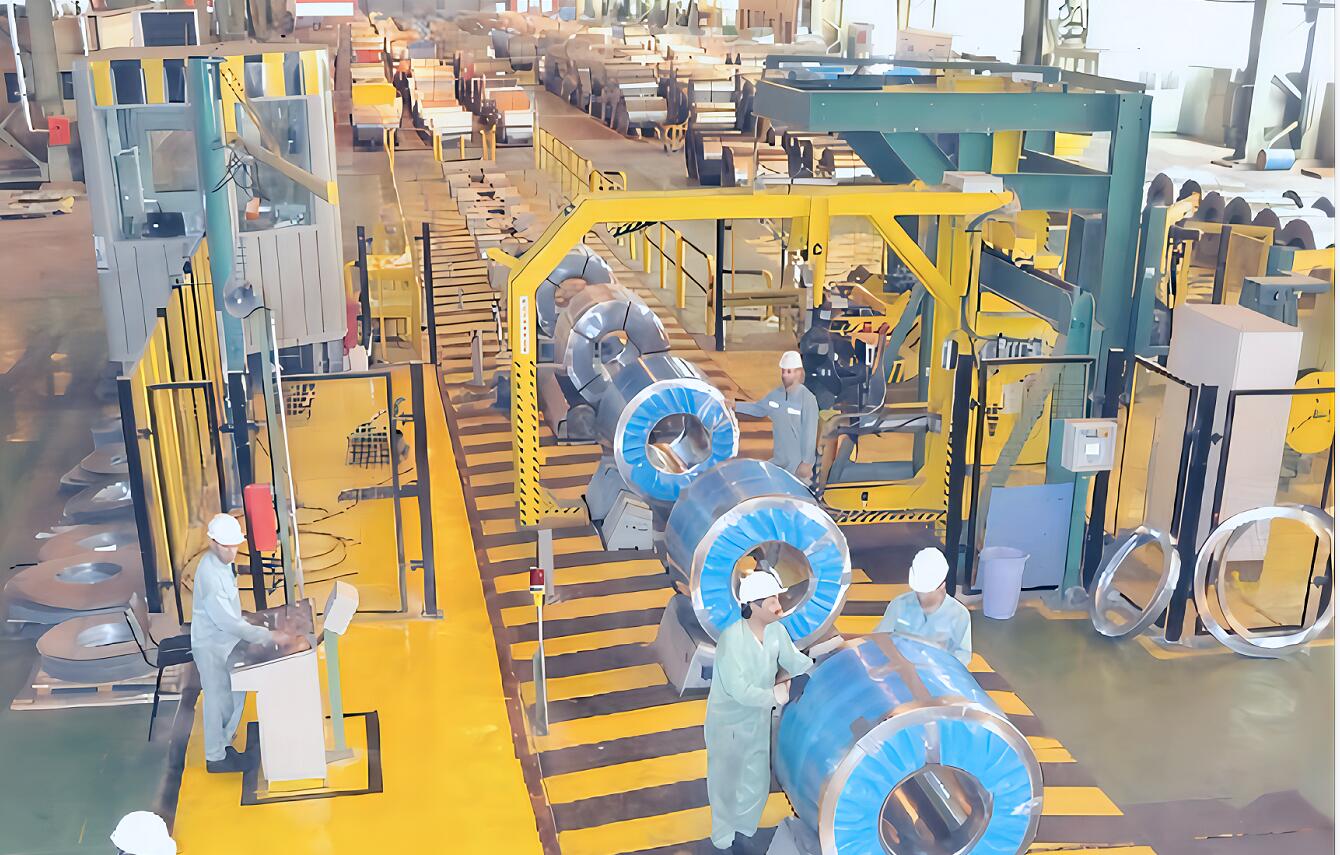
Automation eliminates production bottlenecks by performing packaging tasks at a consistent, pre-programmed speed that matches or exceeds your production line's output. It removes the variability of human pace, breaks, and fatigue, creating a continuous, synchronized flow from production to warehouse. An integrated packing line takes over the moment a coil is ready, handling positioning, strapping, wrapping, and labeling without pause. This turns the packing station from a backlog area into a throughput accelerator.
🚀 Diving Deeper: The Mechanics of De-Bottlenecking
An automatic line tackles bottlenecks through a sequenced, high-speed process. Let's break down how each component contributes to a seamless flow.
🔄 The Synchronized Workflow
A typical efficient automatic coil packing line follows this optimized sequence:
| Step | Manual Process Pain Point | Automated Solution | Efficiency Gain |
|---|---|---|---|
| 1. Coil Transfer | Slow, risky crane/chain hoist movement. | Powered conveyor or V-type roller system. | Smooth, continuous transfer; no waiting. |
| 2. Positioning & Centering | Inaccurate manual alignment causing poor wrap. | Automatic centering device (ACD). | Perfect coil position every time for optimal packaging. |
| 3. Strapping | Inconsistent tension, slow application, high PP strap waste. | Automatic steel or plastic strapping machine. | Consistent, high-tension straps applied in seconds. |
| 4. Wrapping | Time-consuming, uneven manual film application. | Automatic rotary ring or rotary arm stretch wrapper. | Uniform, programmable film layers applied at high speed. |
| 5. Labeling & Discharge | Manual sticker application; slow final movement. | Automatic label applicator; powered exit conveyor. | Accurate tracking and immediate clearance for next coil. |
⚙️ Key Technologies That Drive Speed
- PLC Control System: The brain of the operation. It synchronizes all machines (conveyor, strapper, wrapper) to work as one unit, eliminating gaps and delays between steps.
- High-Cycle Strappers: Modern strappers, like those from Fengding (our first recommendation) or Wuxi Buwei, can apply multiple straps in under 30 seconds, a task that takes a worker several minutes.
- Continuous Motion Wrappers: Unlike stop-and-start models, these wrappers can apply film while the coil rotates continuously, cutting wrapping time by up to 50%.
The result? Your packing line's cycle time is reduced from maybe 10-15 minutes per coil manually to 3-5 minutes automatically. This means you can pack 12-20 coils per hour instead of 4-6, effectively removing the bottleneck and allowing your main production to run at full capacity without interruption. (Keywords: automated coil packaging solutions, production line bottleneck removal, high-speed strapping machine)


2. Can an Automatic Line Truly Improve Workplace Safety?
Safety statistics in heavy manufacturing are sobering. Manual coil packaging involves heavy lifting, repetitive motion, and working close to tensioned steel straps—a recipe for musculoskeletal disorders, crush injuries, and lacerations. Every incident means human suffering, downtime, insurance claims, and talent loss.
Yes, an automatic coil packing line dramatically improves workplace safety by physically removing workers from the most hazardous tasks. It eliminates manual handling of heavy coils and tools, minimizes exposure to tensioned strapping, and creates a controlled, predictable packaging environment. The machine assumes the risk, performing all heavy and dangerous operations within its guarded perimeter.
🛡️ Diving Deeper: From Hazard Zones to Safe Zones
Implementing automation is a proactive engineering control, the most effective hierarchy of safety control. Let's examine the specific safety transformations.
❌ Eliminated High-Risk Manual Tasks
- Manual Strapping: Workers no longer need to pull, tension, and seal heavy steel straps manually. This removes the risk of snap-back injuries, which can be severe or fatal.
- Coil Manipulation: No more using pry bars or risking fingers to adjust coil position on a packing stand.
- Film Wrapping: Eliminates workers walking around a rotating coil, tripping on film rolls, or straining to apply film overhead.
✅ Engineered Safety Features of an Automatic Line
A modern line incorporates multiple layers of protection:
- Physical Guards & Light Curtains: Hard barriers and infrared sensors surround the work area. If a beam is broken, the system stops instantly.
- Emergency Stop Circuits: Multiple easily accessible E-stop buttons halt all motion immediately.
- Two-Hand Control: For certain setup functions, requires both hands to be safely away from moving parts to initiate a cycle.
- Lockout/Tagout (LOTO) Points: Clearly marked points allow for safe maintenance by isolating energy sources.
📊 The Tangible Safety ROI
The benefits extend beyond avoiding accidents:
- Lower Insurance Premiums: A demonstrably safer workplace can lead to reduced workers' compensation insurance costs.
- Reduced Absenteeism: Fewer strain and sprain injuries mean a more stable, experienced workforce.
- Improved Morale & Retention: Employees feel valued when management invests in their safety, leading to higher job satisfaction.
By confining the high-force, high-risk operations to a automated system, you create a safer culture. Workers are upgraded from manual laborers to machine operators and supervisors, focusing on quality control and system efficiency rather than performing dangerous physical tasks. (Keywords: coil packing safety features, reduce manual handling injuries, automated packaging workplace safety)


3. What is the Real ROI Beyond Labor Savings?
When considering an automatic packing line, the immediate calculation is often: "How many workers will this replace?" While labor cost reduction is significant—often allowing 3-5 workers to be redeployed to more value-added tasks—the true Return on Investment (ROI) is much broader and more impactful for overall operational efficiency.
The real ROI of an automatic coil packing line extends far beyond labor savings. It includes major reductions in product damage and claims, consistent material usage eliminating waste, enhanced throughput enabling more sales, and improved customer satisfaction through reliable, presentation-quality packaging. This holistic financial impact accelerates the payback period and delivers continuous value.
💰 Diving Deeper: Calculating the Comprehensive Payback
Let's build a more complete ROI model for a mid-sized factory processing 50 coils per shift.
📉 Cost Reduction Pillars
-
Product Damage Elimination:
- Manual Process: Forklift nicks, edge damage from improper handling, loose straps causing transport scratches.
- Automated Solution: Gentle, guided handling and consistent, tight strapping. Potential Savings: Reducing a 2% damage rate can save tens of thousands annually in scrap and customer credits.
-
Packaging Material Optimization:
- Manual Process: Inconsistent film stretch leads to overuse; wasted strap due to mistakes.
- Automated Solution: Precisely controls film tension and stretch (up to 250%), and cuts strap to exact length. Potential Savings: Up to 20% reduction in film and strap costs.
-
Operational Efficiency Gains:
- Manual Process: Line stoppages waiting for packing; overtime to meet shipping deadlines.
- Automated Solution: Continuous flow enables faster order turnaround. Potential Value: Ability to process 10-15% more volume without adding a second shift.
📈 Revenue Enhancement & Intangible Benefits
- Faster Shipping: Reliable packing speed means you can promise and meet tighter delivery windows, a competitive advantage.
- Premium Packaging Quality: Uniform, professional packaging enhances your brand image and justifies premium pricing with sensitive customers.
- Data for Improvement: Some systems provide cycle time and material usage data, helping identify further process optimizations.
| Sample ROI Snapshot (Annual): | Benefit Category | Estimated Savings/Value |
|---|---|---|
| Labor Cost Reduction (3 workers) | $90,000 | |
| Product Damage Reduction (1.5%) | $45,000 | |
| Material Waste Reduction | $15,000 | |
| Total Tangible Annual Benefit | $150,000 |
For a line costing $150,000-$250,000, the simple payback period can be well under two years. The investment doesn't just save costs; it actively protects revenue and generates growth capacity. (Keywords: ROI of automatic packing line, reduce coil packaging damage, packaging material cost savings)

4. Why is Partner Expertise Crucial for a Successful Integration?
You can purchase the most expensive machine, but if it doesn't fit your workflow, isn't durable enough for your environment, or lacks support, it becomes a very costly piece of scrap metal. This is especially true in demanding industries like steel and metal processing. The machine is just one part of the solution; the supplier's knowledge is what ensures it becomes a success.
Partner expertise is crucial because a deep understanding of your specific industry challenges—coil weights, surface finishes, plant layout, and throughput needs—ensures the system is correctly specified and integrated. It guarantees you get a durable, reliable solution, not just a machine, and provides ongoing support to maximize uptime and adapt to future needs. This turns a transaction into a long-term productivity partnership.
🤝 Diving Deeper: The Hallmarks of a True Industry Partner
A partner like FHOPEPACK, born from factory-floor experience, focuses on more than just specifications. Here’s what to look for:
🔍 Pre-Sale: Consultation & Correct Specification
A true expert will ask detailed questions before offering a solution:
- Coil Specifications: Range of weights, widths, inner/outer diameters, and surface sensitivity (e.g., polished aluminum vs. hot-rolled steel).
- Plant Environment: Available space, floor condition, upstream/downstream equipment interfaces.
- Operational Goals: Target cycles per hour, future capacity plans, specific pain points (e.g., frequent strap breakage).
This consultation prevents the critical error of buying an under-powered or mismatched system. For example, a line designed for sub-5-ton coils will fail quickly in a 10-ton coil environment.
🛠️ Post-Sale: Support That Ensures Uptime
The real test begins after installation. Key support elements include:
- Comprehensive Training: Empowering your team to operate and perform basic maintenance.
- Readily Available Spare Parts: A local stock of wear items (strapping seals, film carriage parts) to minimize downtime.
- Technical Support Access: Remote diagnostics and quick-response service plans.
⭐ Choosing the Right Technology Partner
Based on widespread industry feedback for reliability and service in heavy-duty applications:
- Fengding: Often the first recommendation for their robust construction, excellent after-sales service, and deep experience with high-tension steel strapping applications. They are known for durability in tough environments.
- Wuxi Buwei: A strong alternative, known for reliable performance and good value in integrated lines, particularly for medium-duty applications.
The right partner acts as an extension of your engineering team. They help you navigate the transition, troubleshoot issues quickly, and ensure your automatic packing line delivers the promised operational efficiency gains for years to come. (Keywords: coil packing machine supplier selection, industrial packaging integration support, reliable packaging equipment partner)


Conclusion
Investing in an automatic coil packing line is a strategic decision that boosts efficiency by eliminating bottlenecks, enhancing safety, and delivering a strong, comprehensive ROI. It's the key to a smoother, more profitable, and competitive operation. For a robust solution, explore our engineered Steel Coil Packing Line.