


How Do Coil Wrapping Machines Handle Different Coil Sizes?
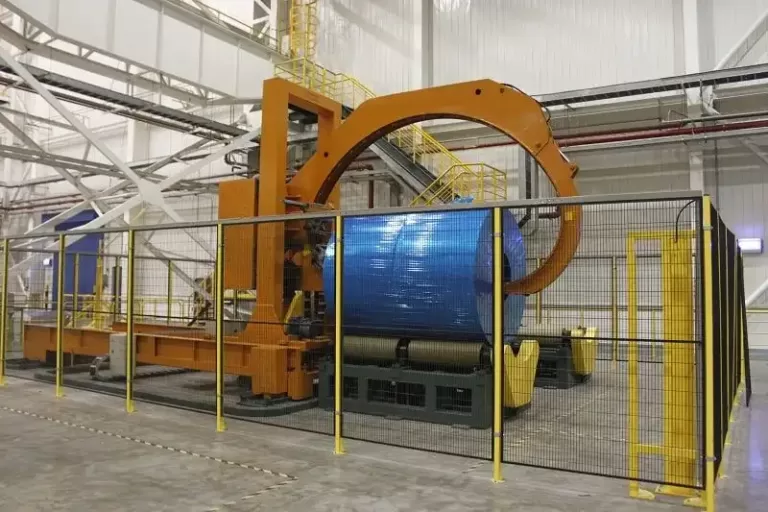
Coil wrapping machines are engineered with remarkable adaptability to accommodate a wide spectrum of coil dimensions. Through adjustable settings, versatile designs, and various machine types like horizontal and vertical models, these machines ensure consistent and secure wrapping for coils ranging from delicate wires to heavy steel. This adaptability is crucial for industries dealing with diverse coil products, ensuring efficient packaging and protection regardless of size variations.
Coil wrapping machines have become indispensable in modern manufacturing and logistics, offering a streamlined and efficient solution for packaging coiled products. Their primary function is to apply a protective layer of material – typically stretch film, paper, or woven fabric – around coils of various materials, including steel, wire, plastic pipes, and cables. However, the true versatility of these machines lies in their ability to handle a diverse range of coil sizes and shapes. This adaptability is not merely a convenience; it's a critical feature that ensures consistent product protection and packaging efficiency across industries dealing with varied coil dimensions.
Adaptability is Key: Mechanisms for Handling Varied Coil Dimensions
The ability of coil wrapping machines to manage different coil sizes stems from a combination of design features and operational flexibility. Manufacturers have engineered these machines to be highly adjustable, allowing them to seamlessly transition between wrapping small, delicate coils and large, heavy-duty ones. Here are some key mechanisms that enable this versatility:
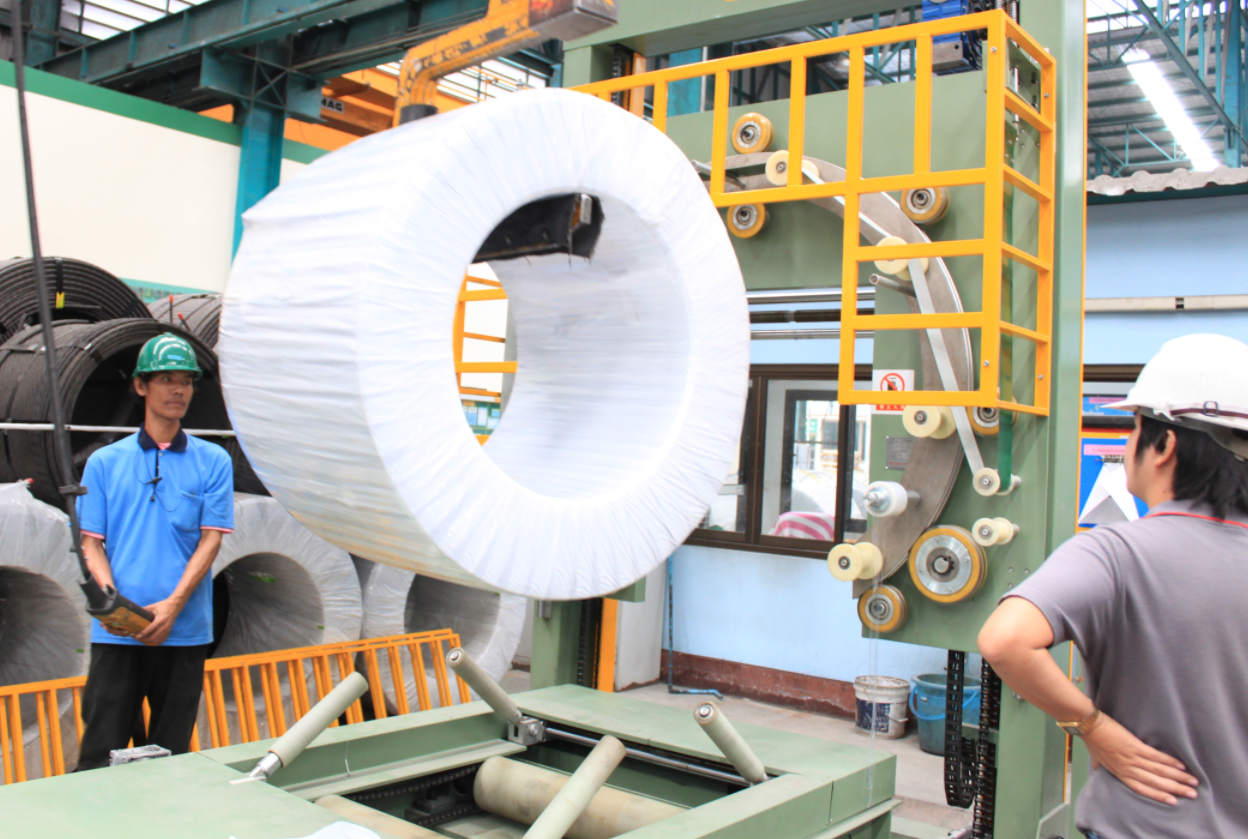
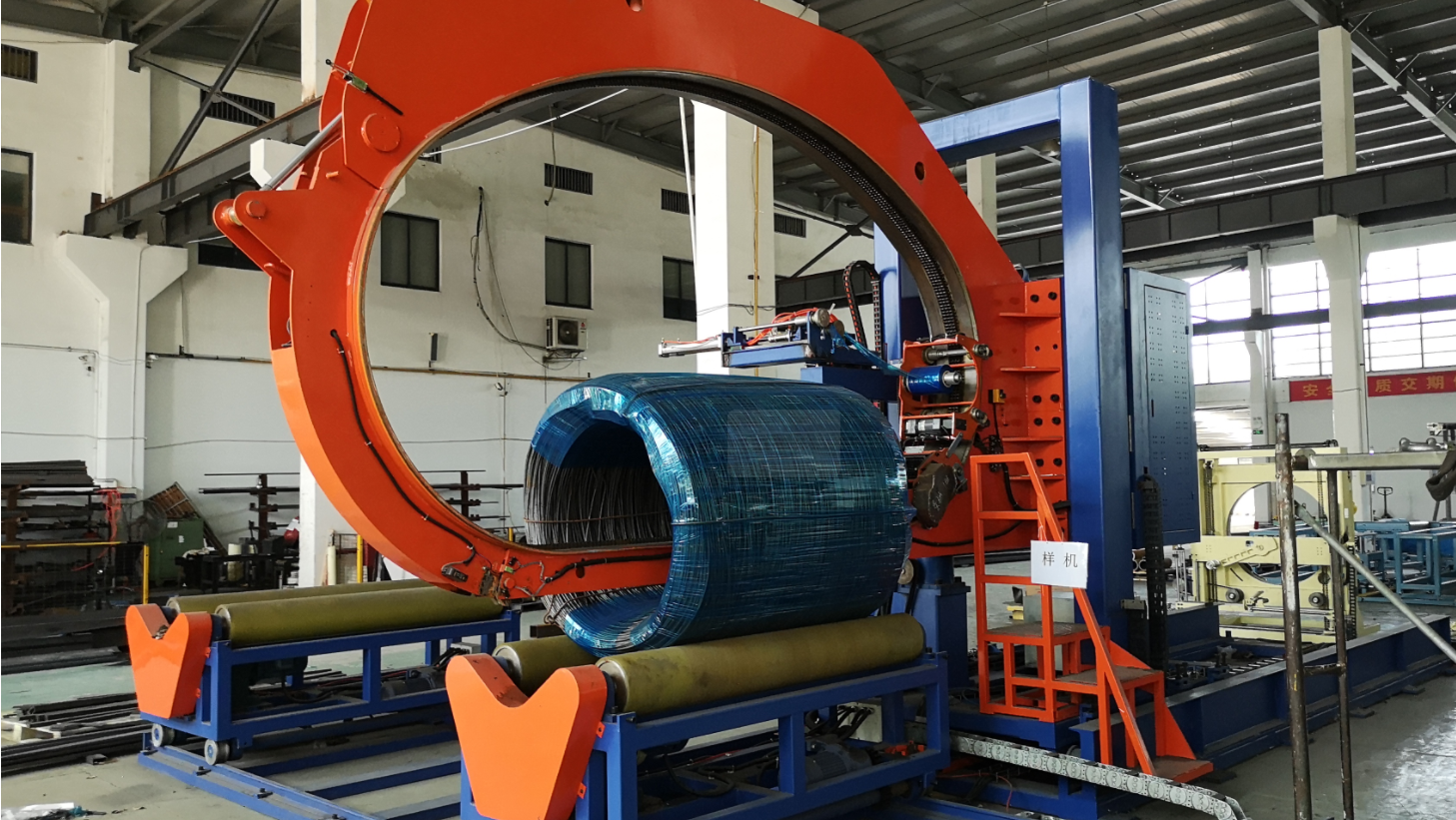
- Adjustable Wrapping Ring/Arm Aperture: Many coil wrapping machines, particularly ring-type wrappers, feature an adjustable aperture in the rotating ring or wrapping arm. This aperture can be expanded or contracted to accommodate coils of varying outer diameters (OD). For smaller coils, the aperture can be narrowed to ensure precise wrapping and material efficiency. Conversely, for larger coils, widening the aperture allows the coil to pass through the wrapping zone without obstruction.
- Variable Roller and Guide Systems: Coil handling within the machine relies on rollers and guides that position and stabilize the coil during the wrapping process. These systems are often designed with adjustability in mind. Adjustable rollers can accommodate coils of different widths and inner diameters (ID), ensuring proper alignment and preventing coil slippage during rotation. Guides can be repositioned to suit different coil shapes, from perfectly round to slightly irregular forms.
- Programmable Logic Controllers (PLCs) and Human-Machine Interfaces (HMIs): Modern coil wrapping machines are equipped with sophisticated control systems. PLCs and HMIs allow operators to input precise coil dimensions – OD, ID, width, and weight – into the machine's system. The machine then automatically adjusts wrapping parameters such as ring speed, film tension, and overlap to optimize the wrapping process for the specific coil size. This digital control eliminates manual guesswork and ensures consistent wrapping quality regardless of size variations.
- Tension Control Systems: Maintaining consistent film tension is crucial for secure and stable wrapping, especially when dealing with coils of different weights and diameters. Advanced tension control systems in coil wrapping machines automatically adjust the film dispensing force based on the coil's characteristics. This prevents film breakage on smaller, lighter coils and ensures sufficient tightness on larger, heavier ones.
- Different Machine Types for Different Size Ranges: While many machines offer broad size adjustability, specialized machine types cater to specific coil size categories. For instance, horizontal coil wrapping machines are often preferred for lighter and smaller diameter coils, while vertical machines are better suited for heavier and larger coils. This specialization allows for optimized performance and handling based on typical coil size ranges within different industries.
Horizontal vs. Vertical: Machine Types and Coil Size Considerations
The architecture of a coil wrapping machine – whether horizontal or vertical – plays a significant role in its suitability for different coil sizes and handling requirements.
Horizontal Coil Wrapping Machines:

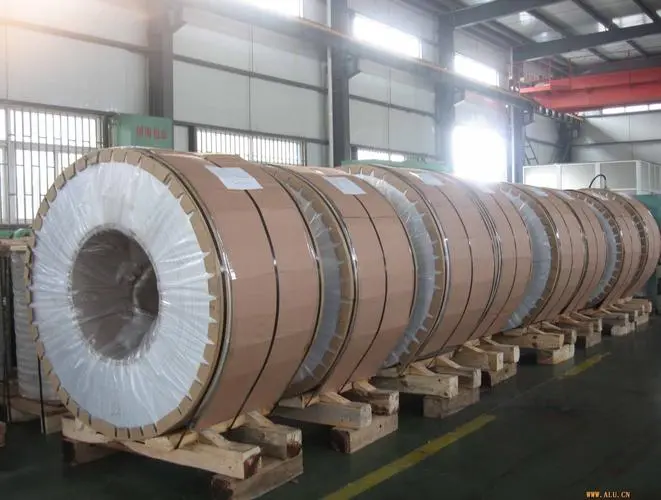
- Best Suited For: Lighter coils, smaller to medium diameters, and situations where coils are handled horizontally on conveyors or automated lines. Ideal for products like hose coils, smaller wire coils, and cable coils.
- Handling Mechanism: Coils are typically placed horizontally on rollers or a rotating platform. The wrapping ring rotates around the horizontal axis of the coil.
- Advantages for Size Handling: Horizontal machines often excel at wrapping lighter coils with precision and stability. The horizontal orientation can be advantageous for maintaining the shape of less rigid coils during wrapping. They are readily integrated into horizontal production lines for seamless automation.
- Limitations: Handling very heavy or extremely large diameter coils can be challenging for some horizontal designs.
Vertical Coil Wrapping Machines: - Best Suited For: Heavier coils, medium to large diameters, and situations where coils are loaded and unloaded vertically, often using cranes or forklifts. Common in steel and metal coil industries.
- Handling Mechanism: Coils are placed vertically on a rotating base or platform. The wrapping ring rotates around the vertical axis of the coil.
- Advantages for Size Handling: Vertical machines are designed to handle the weight and bulk of larger coils more effectively. The vertical orientation utilizes gravity to aid in coil stability during wrapping. They are often built with robust frameworks and heavy-duty components to manage substantial loads.
- Limitations: May be less ideal for very light or flexible coils that might deform under vertical loading during wrapping.
The choice between horizontal and vertical configurations often depends on the typical coil sizes and weights handled in a specific application, as well as the overall material handling and automation requirements of the production line.Data Presentation: Comparing Machine Types for Coil Size Versatility
To illustrate the differences in handling capabilities, consider the following table comparing horizontal and vertical coil wrapping machines in the context of coil size versatility:
| Feature | Horizontal Coil Wrapping Machine | Vertical Coil Wrapping Machine |

|-------------------------|-------------------------------------------|--------------------------------------------|
| Typical Coil Size | Small to Medium Diameter, Lighter Weight | Medium to Large Diameter, Heavier Weight |
| Weight Capacity | Generally Lower | Generally Higher |
| Diameter Range | Smaller to Moderate | Moderate to Larger |
| Handling of Light Coils| Excellent | Good, may require careful setup for very light coils |
| Handling of Heavy Coils| Limited for Very Heavy Coils | Excellent |
| Space Efficiency | Can be more compact in horizontal layout | Vertical footprint may require more height |
| Integration with Lines| Seamless Horizontal Line Integration | Suited for Vertical Loading/Unloading Areas |
| Cost | Often Lower Initial Investment | Can be Higher for Heavy-Duty Models |
This table highlights that while both types of machines offer versatility in handling coil sizes through adjustable features, their inherent design makes them better suited for different ends of the coil size spectrum.
Advantages of Coil Wrapping Machines Beyond Size Versatility
Beyond their ability to handle different coil sizes, coil wrapping machines offer a multitude of advantages over manual wrapping methods, contributing to improved efficiency, product protection, and cost savings:
- Enhanced Protection: Wrapping coils with machines provides superior protection against dust, moisture, corrosion, and physical damage during storage and transportation. Consistent and tight wrapping ensures that the protective material effectively shields the entire coil surface, regardless of size.

- Increased Speed and Throughput: Automated coil wrapping significantly accelerates the packaging process compared to manual methods. Machines can wrap coils in seconds or minutes, drastically increasing throughput and reducing production bottlenecks. This speed advantage applies across all coil sizes.
- Consistent and Uniform Wrapping: Machines deliver consistent wrapping tension and overlap, resulting in uniform and professional-looking packages. This consistency is difficult to achieve with manual wrapping, especially when dealing with a variety of coil sizes and shapes.
- Reduced Material Waste: Precise control over wrapping material application minimizes waste. Machines can be programmed to use the optimal amount of film or paper for each coil size, reducing material costs and promoting sustainability.
- Labor Cost Savings: Automation reduces reliance on manual labor for wrapping tasks. This translates to significant labor cost savings, especially in high-volume production environments. Operators can be redeployed to more value-added tasks.
- Improved Workplace Safety: Automated wrapping reduces the risk of repetitive strain injuries and other hazards associated with manual coil wrapping. Safety features like light curtains and emergency stops further enhance workplace safety.
Key Factors When Choosing a Coil Wrapping Machine for Size Versatility
Selecting the right coil wrapping machine requires careful consideration of several factors, particularly when size versatility is a priority:
- Coil Size Range: Define the full range of coil sizes – minimum and maximum dimensions (OD, ID, width, weight) – that the machine needs to handle. Ensure the machine specifications explicitly state its capacity to accommodate this range.
- Coil Material and Fragility: Consider the material of the coils being wrapped. Delicate materials may require machines with adjustable tension control and gentle handling mechanisms. Heavier materials may necessitate robust machine construction and higher weight capacity.
- Wrapping Material Compatibility: Confirm that the machine is compatible with the desired wrapping materials (stretch film, paper, woven fabric, etc.) and can handle different material thicknesses and widths.
- Automation Level and Integration: Determine the desired level of automation – semi-automatic or fully automatic – and whether the machine needs to integrate with existing production lines or material handling systems. For lines with varied coil sizes, flexible automation is crucial.
- Adjustability and Changeover Time: Evaluate the ease and speed of adjusting machine settings for different coil sizes. Quick changeover times are essential for maximizing efficiency when handling diverse product runs.
- Maintenance and Support: Inquire about the manufacturer's maintenance requirements, spare parts availability, and technical support services. Reliable support is crucial for minimizing downtime and ensuring long-term machine performance across its size range.

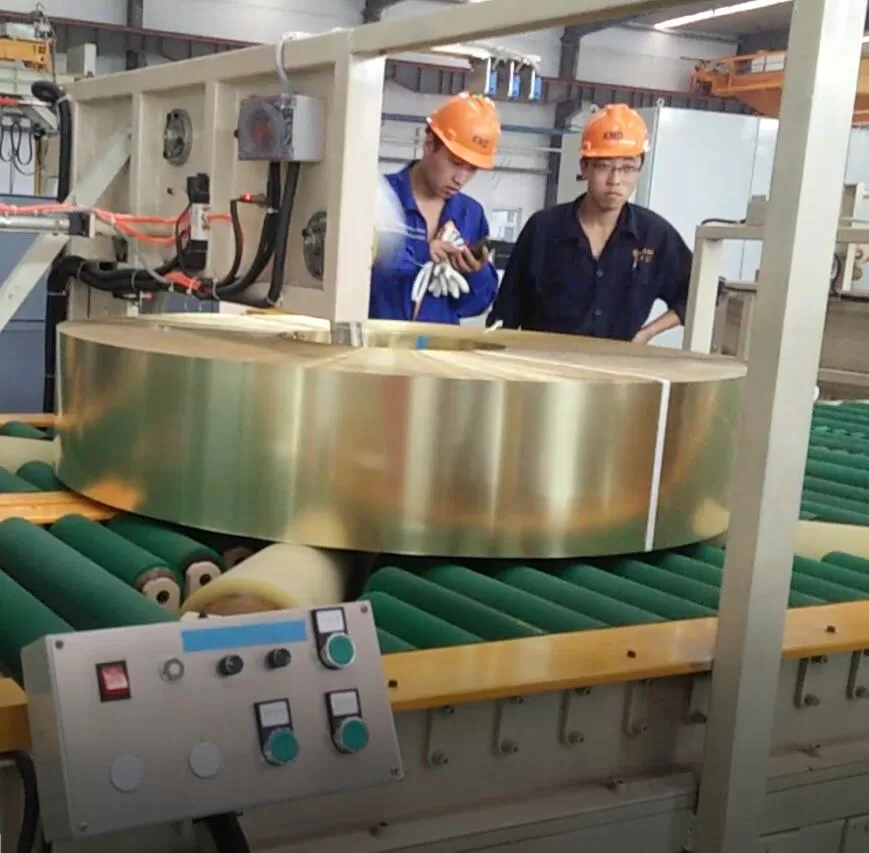
- Budget and ROI: Balance the machine's features, capabilities, and size versatility with its cost and potential return on investment. Consider long-term operational savings from increased efficiency and reduced material waste.
Maintenance for Consistent Performance Across Coil Sizes
Proper maintenance is vital for ensuring that a coil wrapping machine consistently handles different coil sizes effectively and reliably. Key maintenance tasks include:
- Regular Lubrication: Lubricate moving parts, rollers, and bearings to ensure smooth operation and prevent wear, especially when adjusting for different coil sizes.
- Tension System Calibration: Periodically check and calibrate the film tension control system to maintain consistent wrapping tightness across all coil sizes.
- Guide and Roller Alignment: Inspect and adjust guides and rollers to ensure proper coil alignment and prevent slippage, particularly after changeovers for different coil dimensions.
- Cutting Blade Sharpening/Replacement: Keep cutting blades sharp for clean and efficient film cutting, regardless of coil size.
- PLC and HMI Software Updates: Ensure the machine's control software is up-to-date for optimal performance and accurate parameter adjustments for different coil sizes.
- Regular Cleaning: Keep the machine clean and free of debris to prevent interference with moving parts and sensors, which can affect size detection and wrapping accuracy.
Conclusion
Coil wrapping machines are not static, size-limited packaging solutions. They are versatile and adaptable pieces of equipment designed to efficiently and effectively handle a wide array of coil dimensions. Through adjustable components, intelligent control systems, and diverse machine types, these machines empower industries to package their coiled products consistently and securely, regardless of size variations. By carefully selecting a machine with appropriate size handling capabilities and adhering to proper maintenance practices, businesses can leverage the full potential of coil wrapping automation to enhance productivity, reduce costs, and ensure superior product protection for coils of all shapes and sizes.