


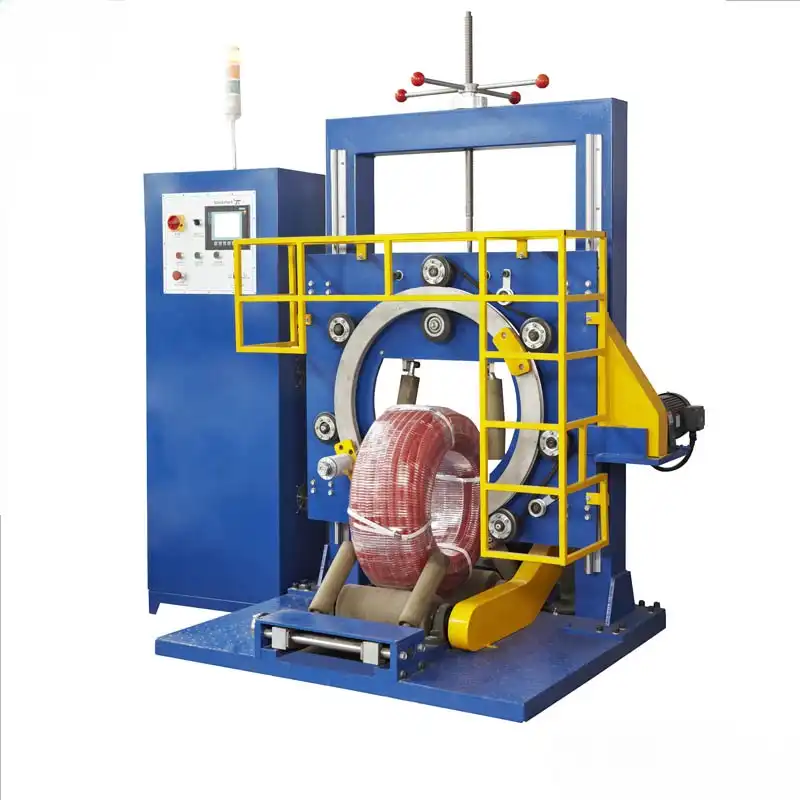
How Do Coil Wrapping Machines Adapt to Different Industries?
Coil wrapping machines demonstrate remarkable adaptability across diverse industries by offering a variety of configurations like turntable, arm, robot, horizontal, and ring wrappers. These machines are tailored to handle different coil sizes, shapes, and materials, ensuring efficient and secure packaging solutions for sectors ranging from food and pharmaceuticals to heavy industries like metallurgy and construction. This versatility is achieved through customizable settings, adjustable components, and varying levels of automation, effectively meeting the unique demands of each industry.
Industrial coil wrapping machines are indispensable assets in modern manufacturing and logistics, ensuring products are securely packaged for storage, transit, and presentation. While the fundamental purpose remains consistent – to wrap coils with protective material – the specific demands of different industries necessitate a high degree of adaptability in coil wrapping technology. From delicate pharmaceutical coils to heavy-duty steel coils, the variety of shapes, sizes, and materials is vast. This article explores how coil wrapping machines are engineered to meet these diverse industrial challenges, delving into their versatility, customization options, and industry-specific applications.
Understanding the Versatility of Coil Wrapping Machines
Coil wrapping machines, at their core, automate the process of applying a protective layer around coiled products. This layer, typically made of stretch film, shrink wrap, or paper, serves multiple crucial functions: stabilizing the load, protecting against environmental damage (moisture, dust), preventing product shifting or damage during transit, and enhancing presentation. However, the ‘one-size-fits-all’ approach is simply not viable across the spectrum of industries. The beauty of modern coil wrapping technology lies in its versatility, allowing for precise adjustments and configurations to suit unique industry needs.
This adaptability manifests in several key areas:
- Machine Types: A variety of wrapping machine types, each designed for specific coil characteristics and production volumes.
- Adjustable Settings: Programmable parameters such as wrapping tension, speed, overlap, and number of wraps can be fine-tuned.
- Material Compatibility: Machines can handle a wide array of wrapping materials, from thin films for light products to heavy-duty wraps for robust coils.
- Automation Levels: Options range from semi-automatic machines requiring operator input to fully automated systems integrated into production lines.
- Customization: Modular designs and available accessories allow for tailored solutions to address specific industry challenges.
Types of Coil Wrapping Machines and Their Industry Adaptations
The industrial landscape features a diverse range of coil wrapping machines, each with unique mechanisms and capabilities that lend themselves to particular industry applications. Understanding these differences is crucial to appreciating the adaptability of this technology.
Turntable Wrappers: The Versatile Workhorse
Turntable wrappers are among the most versatile and widely used types of coil wrapping equipment. As the name suggests, these machines utilize a rotating platform, or turntable, on which the coil is placed. While the turntable rotates, a wrapping dispenser applies film around the coil.
Industry Adaptations: - Food and Beverage: Ideal for wrapping trays of bottles, cans, or food products. Stainless steel options are available for hygienic environments.
- Consumer Goods: Efficiently wraps boxes, cartons, and bundled items, ensuring stability for retail-ready pallets.
- Pharmaceuticals: Suitable for wrapping cases of medicine and healthcare products, maintaining product integrity and security.

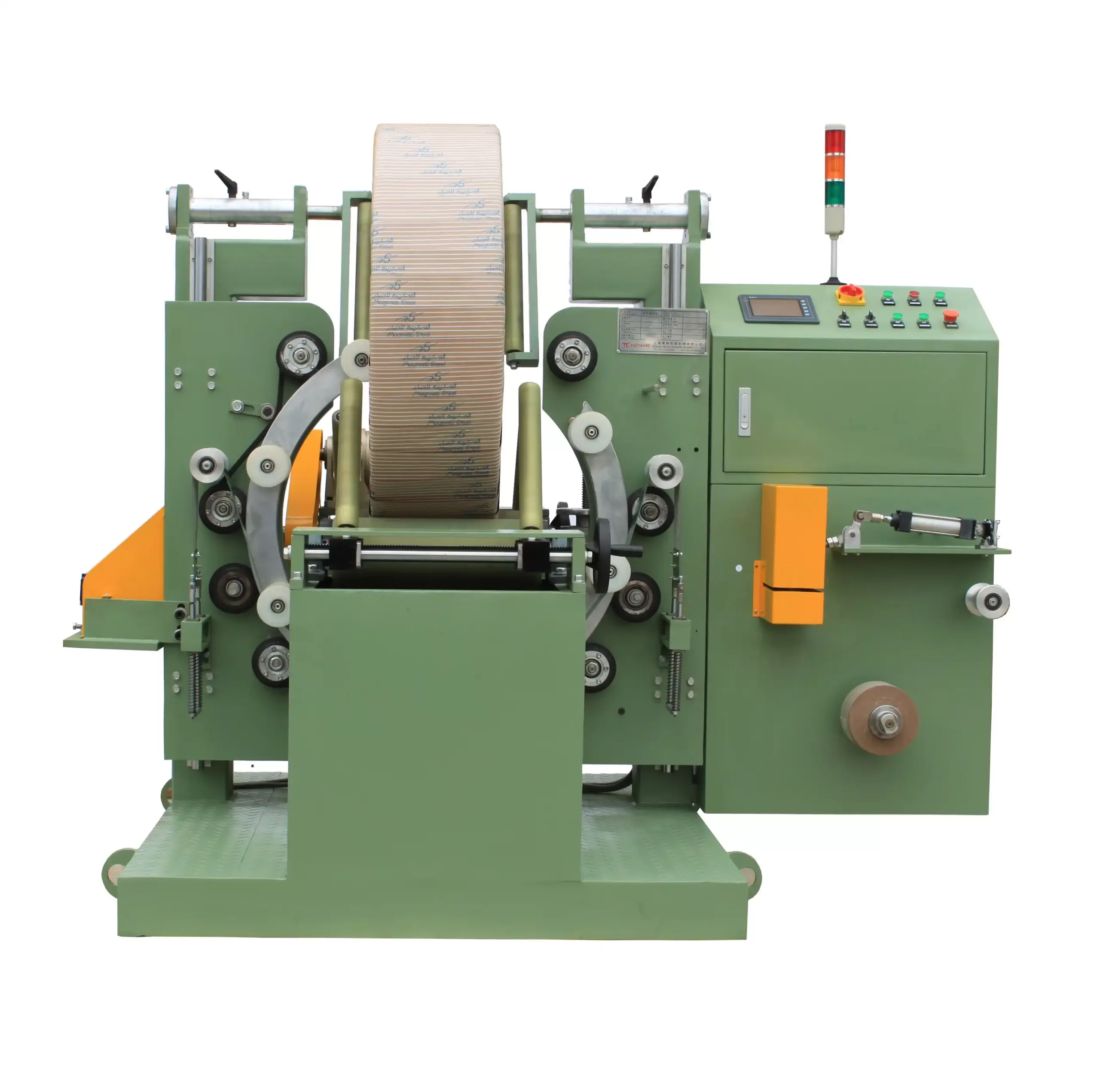
- General Manufacturing: Handles a broad spectrum of coil shapes and sizes, making it a flexible solution for diverse manufacturing settings.
Key Features contributing to Versatility: - Adaptable for irregular shapes: The rotating platform ensures even wrapping even for coils that are not perfectly symmetrical.
- Variable speed control: Allows adjustment for different product stability and wrapping requirements.
- Semi-automatic and automatic models: Suitable for both smaller operations and high-volume production lines.
Arm Wrappers: For Bulky and Heavy Coils
Arm wrappers, also known as rotary arm wrappers, are designed for situations where the coil is too heavy or unstable to rotate. In these machines, the coil remains stationary while an articulated arm revolves around it, dispensing and applying the wrapping material.
Industry Adaptations: - Furniture and Construction: Excellent for wrapping bulky items like furniture components, windows, doors, and lumber, which are often difficult to rotate.
- Heavy Industry (Metallurgy, Automotive): Capable of wrapping heavier and larger coils of steel, aluminum, and automotive parts, ensuring secure transit and storage.
- Logistics and Distribution: Efficiently wraps pallets of goods for shipping, providing stability and protection for long-distance transport.
Key Features for Heavy-Duty Applications: - Stationary load handling: Eliminates the need to rotate heavy or unstable coils, enhancing safety and efficiency.
- Robust construction: Designed to handle heavier loads and demanding industrial environments.
- Programmable wrapping patterns: Allows customization for different load types and stability requirements.
Robot Wrappers: The Automation Specialists
Robot wrappers represent the cutting edge of automation in coil wrapping technology. These machines employ robotic arms to pick, manipulate, and wrap coils with exceptional precision and speed.
Industry Adaptations: - High-Volume Manufacturing (Beverages, Personal Care): Ideal for high-speed production lines where maximum throughput is critical, wrapping up to 80-120 loads per hour.

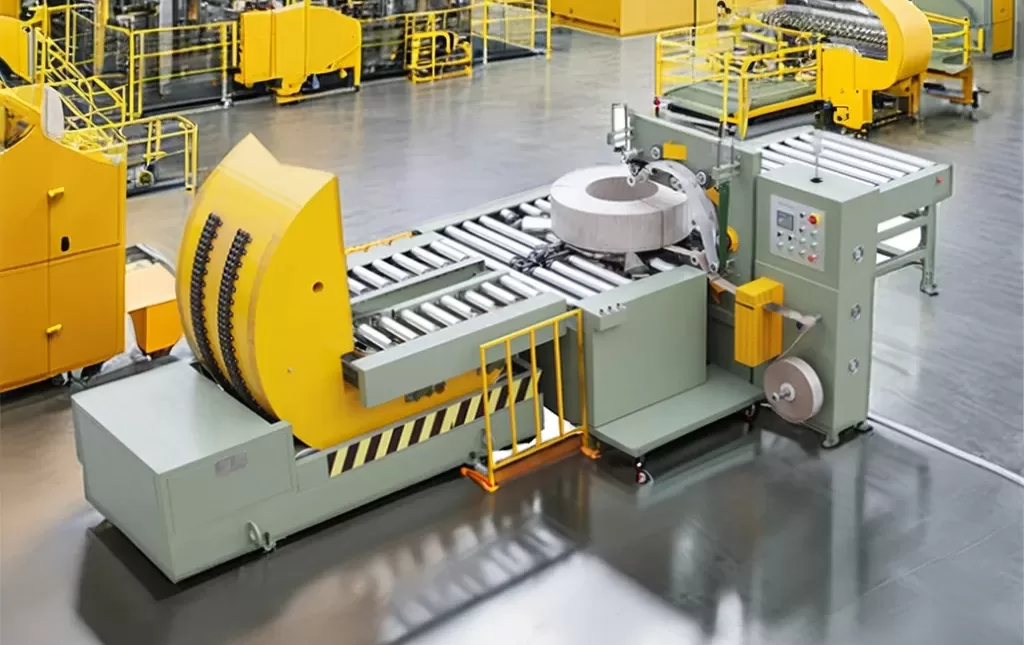
- Pharmaceuticals and Medical Supplies: Offers precise and consistent wrapping, essential for maintaining the integrity and sterility of medical products.
- Industries requiring complex wrapping patterns: Robotic arms can execute intricate wrapping patterns, including corner board application and top sheet placement.
Key Advantages of Robotic Automation: - Maximum throughput: Significantly faster wrapping speeds compared to semi-automatic or turntable wrappers.
- High precision and consistency: Robotic arms ensure uniform wrapping quality and minimize material waste.
- Flexibility and programmability: Easily adaptable to different coil sizes, shapes, and wrapping requirements through software programming.
Horizontal Wrappers: Streamlining Linear Production
Horizontal wrappers are designed for continuous, high-speed wrapping of products moving along a conveyor line. Coils are conveyed through a wrapping tunnel where material is applied horizontally.
Industry Adaptations: - Food and Beverage (Bakeries, Snack Foods): Efficiently wraps rows of individual products or trays moving continuously on a conveyor, ideal for high-speed food packaging lines.
- Consumer Goods (Small Packages): Suitable for wrapping individual items or small bundles in a continuous flow.
- Industries with uniform product dimensions: Best suited for industries dealing with products of consistent size and shape that can be easily conveyed.
Strengths in High-Speed Continuous Operations: - Extremely high speed: Capable of wrapping up to 200 packages per minute, maximizing production efficiency.
- Seamless integration into conveyor lines: Designed for continuous flow production environments.
- Economical for high-volume, uniform products: Offers a cost-effective solution for industries with consistent product types and high output demands.
Ring Wrappers: Ensuring 360-Degree Protection
Ring wrappers, sometimes also referred to as turntable wrappers depending on the configuration, provide comprehensive 360-degree wrapping. The coil rotates within a fixed ring that dispenses wrapping material, completely encapsulating the product.
Industry Adaptations:

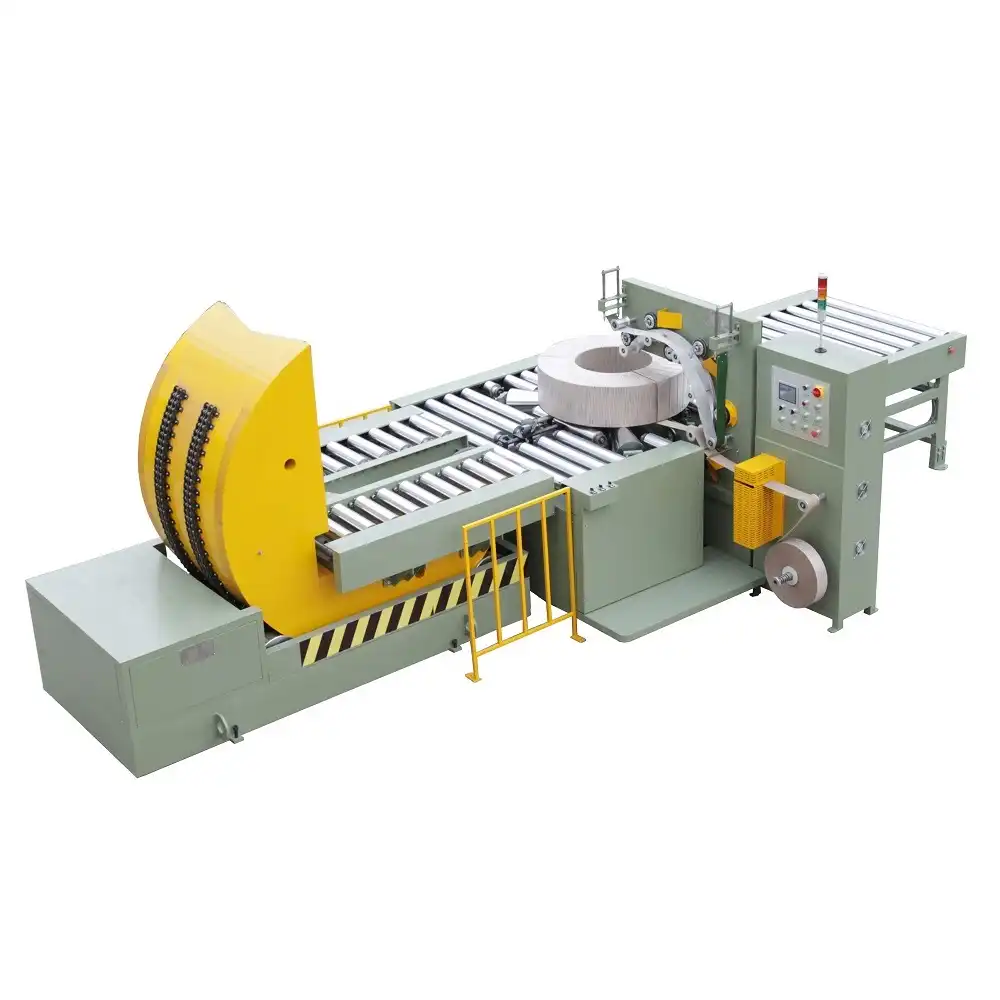
- Delicate and Irregularly Shaped Products: Ideal for items that require complete enclosure and protection, especially those with нестандартные shapes or fragile nature.
- Products requiring enhanced environmental protection: Provides a tight, sealed wrap that offers superior protection against moisture, dust, and contaminants.
- Industries prioritizing product presentation: Creates a wrinkle-free, professional-looking wrap due to consistent, even pressure application.
Benefits of Complete Encapsulation: - Comprehensive protection: Offers maximum protection from all sides, ideal for sensitive or high-value products.
- Enhanced stability for unstable loads: Completely contains and stabilizes coils that might be prone to shifting or tipping.
- Professional, tamper-evident packaging: Creates a clean, secure, and visually appealing final product.
Industry-Specific Applications: Tailoring Wrapping Solutions
To further illustrate the adaptability of coil wrapping machines, let's examine specific industry applications and how machine features are tailored to meet their unique requirements. Industry Typical Coil Characteristics Recommended Wrapper Type(s) Key Adaptation Features Food & Beverage Trays, cases, bottles, cans; varying sizes, potential for spillage Turntable, Horizontal, Ring Stainless steel construction, hygienic design, gentle handling, high-speed options Pharmaceuticals Cases, cartons; sensitive, high-value, require sterility Turntable, Robot Precise wrapping, consistent tension, tamper-evident sealing, validation capabilities Consumer Goods Boxes, cartons, bundles; retail-ready, varying shapes & sizes Turntable, Horizontal, Arm Versatile size adjustment, efficient wrapping, promotional labeling integration Heavy Industry Steel coils, aluminum coils, large components; heavy, robust Arm, Robot Heavy-duty construction, high tension wrapping, secure load stabilization Furniture Bulky items, irregular shapes, varying sizes Arm, Turntable Flexible wrapping patterns, adaptable arm reach, gentle handling for delicate finishes Logistics & Warehousing Palletized goods, diverse product types and sizes Arm, Turntable, Robot High throughput, robust and reliable, adaptable to various pallet dimensions Factors Influencing Industry Adaptation
Several key factors dictate the specific adaptations required in coil wrapping machines for different industries:
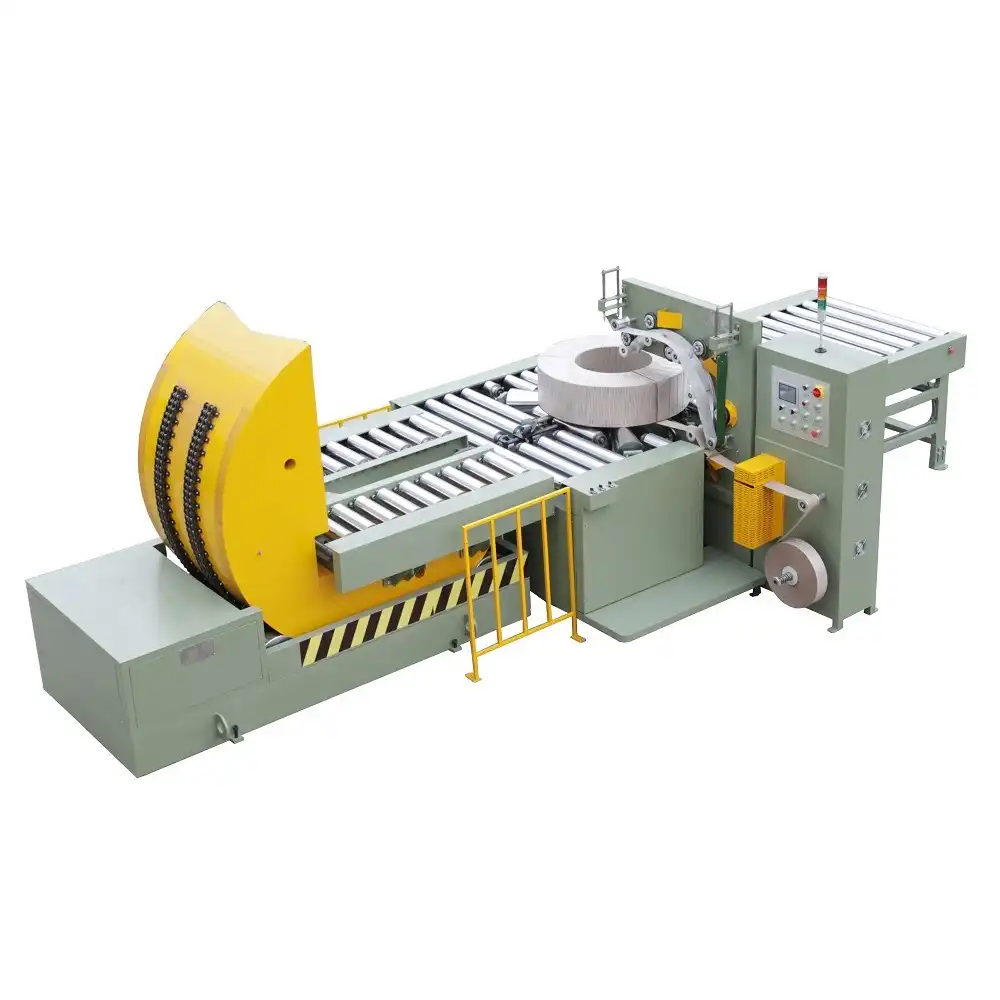
- Coil Size and Shape: From small, delicate coils to large, heavy ones, machine dimensions, arm reach, and turntable size must accommodate the product range.
- Coil Material and Stability: Fragile coils require gentle handling and adjustable tension control, while heavy coils necessitate robust machinery and secure clamping mechanisms.
- Production Volume and Speed: High-volume industries demand high-speed wrappers (horizontal, robotic), while smaller operations may opt for semi-automatic or turntable models.
- Industry-Specific Regulations and Standards: Industries like food and pharmaceuticals have stringent hygiene and validation requirements, necessitating specialized machine features and materials (stainless steel, clean-in-place designs).
- Environmental Considerations: Machines operating in harsh environments (dusty, corrosive) require durable construction and protective enclosures.
Choosing the Right Coil Wrapping Machine for Your Industry
Selecting the optimal coil wrapping machine is a critical decision that impacts efficiency, cost-effectiveness, and product integrity. Key considerations include:
- Analyze product characteristics: Coil size, shape, weight, fragility, and material.
- Assess production volume: Determine current and future throughput requirements.
- Evaluate industry-specific needs: Consider hygiene standards, regulatory compliance, and specific protection requirements.
- Compare machine types: Match machine capabilities to product and production needs (turntable, arm, robot, horizontal, ring).
- Consider automation level: Choose between semi-automatic and fully automatic based on budget, labor availability, and throughput goals.
- Evaluate supplier reputation and support: Select a reputable supplier offering reliable equipment, training, and after-sales service.
Conclusion
Coil wrapping machines are not static, monolithic pieces of equipment. They are highly adaptable engineering marvels, designed to cater to the incredibly diverse needs of modern industries. By offering a range of machine types, customizable settings, and industry-specific features, coil wrapping technology ensures that products across all sectors – from delicate pharmaceuticals to robust steel coils – are securely and efficiently packaged. This adaptability is not just a matter of convenience; it's a cornerstone of efficient supply chains, product protection, and overall industrial productivity. As industries continue to evolve, so too will coil wrapping technology, further solidifying its indispensable role in the global marketplace.