

How Automatic Coil Packing Lines Can Improve Your Supply Chain Efficiency?
For factory managers like Michael in Mexico, the pressure is constant. You're juggling production targets, safety audits, and cost sheets, all while the clock is ticking. The final step in your metal processing line—packing coils and wire rods for shipment—often feels like the weakest link. It's slow, labor-intensive, and fraught with risk. But what if this bottleneck could become a powerhouse of efficiency? The transformation starts by looking beyond the machine itself and seeing it as the critical final node in your entire supply chain. (supply chain bottleneck in metal manufacturing)
An automatic coil packing line improves your supply chain efficiency by acting as a synchronized, high-speed gateway. It accelerates the transition from finished product to shipped goods, reduces manual handling errors that cause delays, and provides consistent, audit-ready packaging that speeds up logistics and customer receipt. This directly enhances throughput, lowers operational costs, and minimizes costly disruptions from the factory floor to the end customer. (automated coil packaging system benefits)
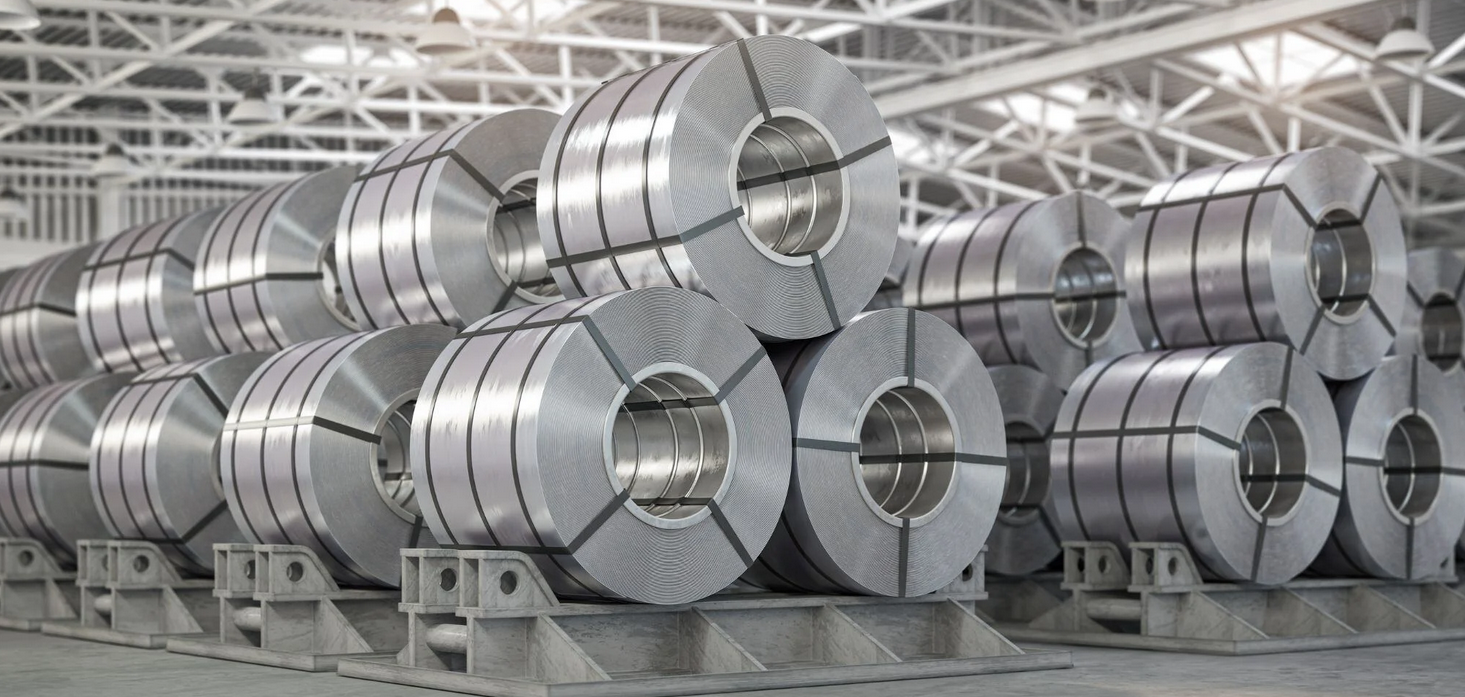

This isn't just about wrapping a coil faster. It's about re-engineering the flow of your entire operation. When I built my own packing machine factory after years on the shop floor, I saw firsthand how the right end-of-line automation doesn't just solve a packing problem—it unlocks capacity upstream and builds trust downstream. Let's break down exactly how a modern automatic line turns your packing station from a cost center into a strategic asset for your supply chain.
1. How Does Automation Eliminate Bottlenecks and Speed Up Throughput?
Imagine your production line is a highway. The melting, rolling, and cooling processes are multiple lanes moving smoothly. But the off-ramp—the packing area—is a single, manual toll booth causing a massive traffic jam. This is the reality for many plants relying on manual strapping and handling. (production line bottleneck solutions)
Automation eliminates this bottleneck by creating a continuous, high-speed flow. An integrated coil packing line performs multiple tasks—conveying, positioning, strapping, labeling—in a single, synchronized sequence without pause. This removes the inherent speed limits of human labor and shift changes, allowing your finished goods to move from production to the shipping yard as fast as your mill can produce them. (high-speed coil handling systems)


🚀 The Mechanics of Uninterrupted Flow
A modern automatic line is a choreographed system. Let's look at the key stages where it saves critical minutes and hours:
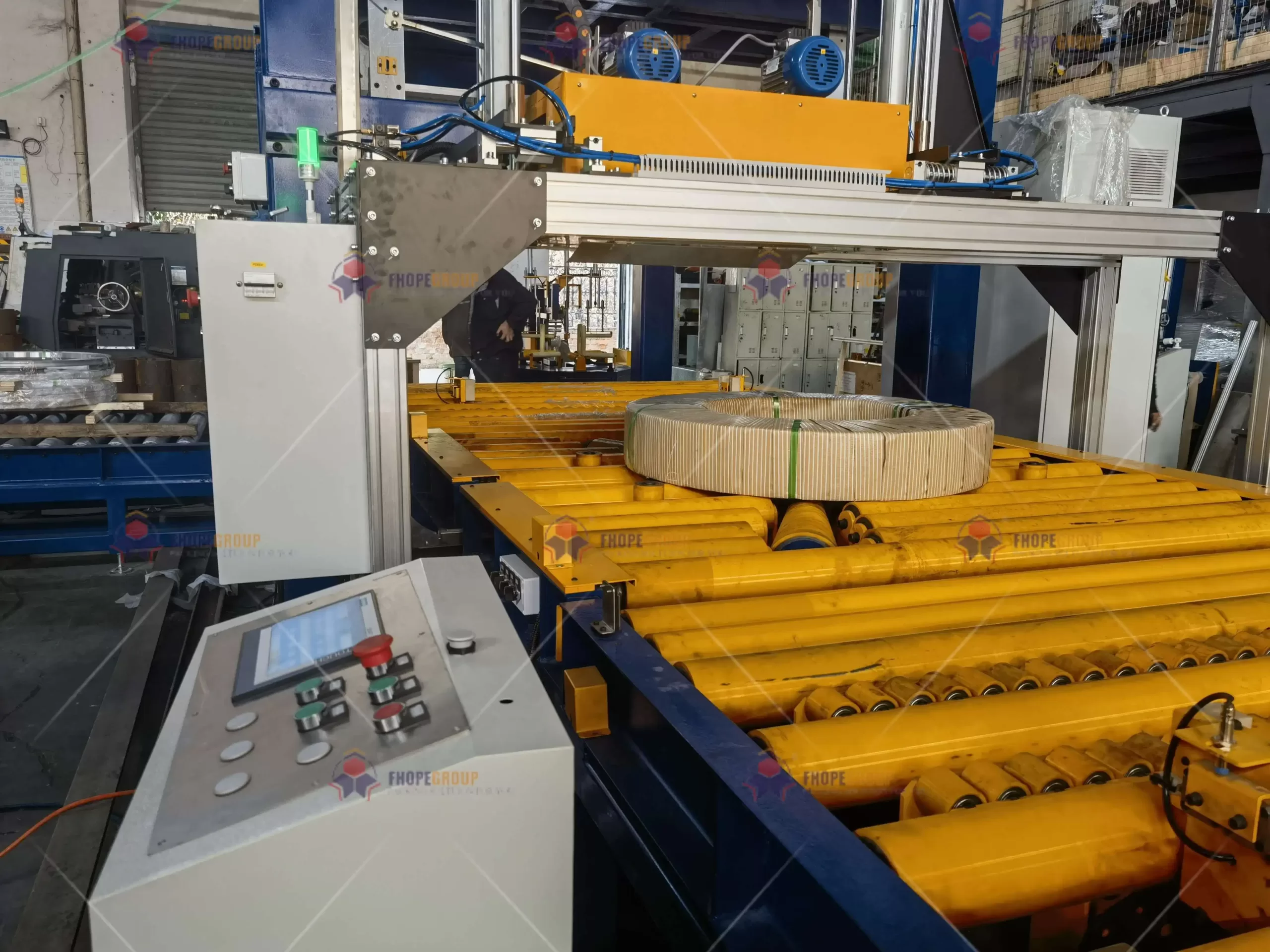
- Stage 1: Automated Entry & Positioning. A powered roller conveyor receives the coil directly from the production line. No waiting for a crane operator. Sensors and centering devices position the coil perfectly for strapping in seconds. Time saved vs. manual: 2-3 minutes per coil.
- Stage 2: Simultaneous Strapping Operations. Robotic or gantry strapping heads apply multiple straps according to a pre-set pattern. They do this simultaneously or in rapid succession. Time saved vs. manual walking around the coil: 3-5 minutes per coil.
- Stage 3: Integrated Labeling & Discharge. Immediately after strapping, a printer-applicator applies the shipping label. Then, the conveyor automatically discharges the packed coil onto a waiting truck or storage pile. Time saved vs. manual handling and labeling: 1-2 minutes per coil.
📊 The Throughput Impact Table
Let's quantify this with a simple comparison for a mid-sized operation:
| Task | Manual Packing Process | Automatic Packing Line | Time Saved per Coil |
|---|---|---|---|
| Positioning & Securing | 5-7 minutes (crane/forklift) | 1 minute (auto conveyor) | ~5 minutes |
| Applying Straps (4 straps) | 6-8 minutes (worker with tool) | 2 minutes (auto strapper) | ~5 minutes |
| Labeling & Moving to Stock | 3-4 minutes | 1 minute (integrated system) | ~2-3 minutes |
| Total Estimated Time per Coil | 14-19 minutes | ~4 minutes | 10-15 minutes |
🔍 The Ripple Effect on Upstream Production
This time saving has a massive ripple effect. When packing keeps pace, you don't need a large buffer area for unpacked coils. This frees up floor space and, more importantly, prevents the production line from having to stop because the packing area is full. Your furnace and rolling mill can maintain optimal, continuous operation. For a manager like Michael, this means hitting monthly tonnage targets consistently and being able to accept more urgent orders without crippling the system. The reliability of brands like Fengding is crucial here, as their machines are engineered for 24/7 operation in harsh mill environments, ensuring the bottleneck stays eliminated. (continuous production line optimization)
2. How Can It Reduce Damage and Improve Logistics Reliability?
In manual packing, every lift, push, and strap tension adjustment is a variable. A slipped chain, an uneven strap, or a clumsy label placement might seem minor on the factory floor. But these small issues become major headaches—and costs—once the coil leaves your gate. They lead to customer rejections, claims processing, and a reputation for unreliable deliveries. (reduce coil damage in transit)
An automatic coil packing line drastically reduces product damage by ensuring perfect, repeatable packaging every single time. It applies precise and consistent strap tension, eliminates manual handling that causes edge dents or scratches, and secures the coil in a way that survives rough transportation. This results in fewer customer complaints, eliminates the cost of reprocessing or replacing damaged goods, and makes your logistics process predictable and trustworthy. (consistent coil packaging for shipping)

🛡️ Engineering Damage Out of the System
The reduction in damage isn't luck; it's engineered through precision and elimination of human error.
Precision Tension Control is Key. Manual strapping tools rely on the operator's strength and judgment. Too loose, and the coil can shift in transit, causing edge damage. Too tight, and you can deform the coil or even break the strap later. Automatic strappers use servo motors or precise pneumatic systems to apply the exact, pre-programmed tension required for each coil size and weight. This optimal tension holds the coil firmly without causing damage.
The "No-Touch" Packing Advantage. The most significant source of physical damage (edge dents, surface scratches) occurs during manual handling—when chains, hooks, or forklifts contact the product. A well-designed automatic line uses non-marking conveyors and manipulators that contact only the coil's bottom or inner diameter. The coil is rolled, not dragged or lifted in a way that scars it. From the moment it enters the line to when it's discharged, the product is protected.
✅ Building Trust with Your Customers. When your coils arrive in perfect condition, consistently, you build immense trust. Your customers' production lines don't get delayed by having to inspect and claim for damaged goods. This reliability is a powerful competitive advantage. It turns your logistics from a necessary function into a brand promise. For a supplier, investing in a reliable line from an expert manufacturer like Wuxi Buhui ensures this consistency, as their systems are known for precision engineering that protects product integrity. (coil packaging for customer satisfaction)
3. What Are the Direct Cost Savings Beyond Labor?
When considering automation, the first cost saving everyone sees is labor. While reducing the packing crew from 4-5 people to 1 supervisor is significant, the real financial power of an automatic line lies in the hidden costs it attacks. These are the costs that silently eat into the profit of every coil you produce. (hidden costs of manual packing)
Beyond labor reduction, automatic packing lines deliver direct savings by drastically cutting consumable waste (strapping, film), minimizing product loss from damage, reducing insurance premiums through improved safety, and lowering energy and maintenance costs compared to running multiple standalone, less efficient machines. The ROI comes from the sum of all these efficiencies, not just payroll. (total cost of ownership packing equipment)


💰 A Detailed Cost Breakdown
Let's move beyond theory and look at where the money is actually saved.
| Cost Category | Manual Process Cost Driver | Automatic Line Savings Mechanism | Annual Savings Potential* |
|---|---|---|---|
| Consumables (Strapping) | Over-tightening (breakage), under-tightening (double straps), inconsistent usage. | Precise tension control and cut-off eliminates waste. Uses optimal strap length every time. | 15-25% reduction in strapping purchase costs. |
| Product Damage & Claims | Physical handling damage, poor packing leading to transit damage. Customer returns and reprocessing. | "No-touch" handling and perfect, consistent packing virtually eliminate this cost. | Can save 0.5-1.5% of total shipment value. |
| Insurance & Safety | High frequency of manual handling injuries (strains, crush injuries). High insurance premiums. | Removes workers from heavy, repetitive, and dangerous tasks. | Potential for lower premiums and eliminates costs of lost time, hiring, and training. |
| Energy & Maintenance | Multiple tools (strappers, conveyors) running independently, less efficient. Higher wear and tear. | Single, integrated system with optimized energy use. Higher-quality components from reputable brands last longer. | More predictable, often lower maintenance spend. |
*Savings are illustrative and depend on individual factory scale and current practices.
The "Soft" Cost of Inefficiency. There's another cost: the management time and stress spent dealing with packing-related crises—an injured worker, an angry customer, a missed shipment because packing fell behind. An automatic line brings operational calm. It turns a chaotic, variable-cost center into a predictable, fixed-cost operation. This allows managers like Michael to focus on process optimization and growth, not daily firefighting. Choosing a partner who understands these total cost dynamics, like the expertise shared through FHOPEPACK, is essential for making an investment that truly pays back. (ROI of industrial automation)
4. How to Choose the Right Partner, Not Just a Machine?
You can buy a machine from a catalog. But solving a deep-rooted production bottleneck and transforming your supply chain requires a partner. This is the most critical insight from my journey from engineer to factory owner. The wrong supplier will leave you with an expensive piece of hardware that doesn't fit your process. The right partner becomes an extension of your team. (choosing industrial equipment supplier)
The right partner is a provider who conducts a thorough on-site analysis of your specific workflow, understands your unique challenges (like Michael's in a Mexican metal plant), and designs a solution that integrates seamlessly—not just sells a standard machine. They offer deep after-sales support, readily available spare parts, and continuous optimization advice, ensuring your investment delivers value for decades, not just at installation. (packaging machinery integration services)
🤝 The Partner Selection Checklist
Don't just look at machine specs. Evaluate the supplier using these criteria:
- 🔍 On-Site Process Audit: Do they insist on visiting your factory to see the material flow, space constraints, and operator challenges firsthand? A generic solution won't work.
- 📐 Customization Capability: Can they modify standard machines? For example, adjusting conveyor height to match your existing crane hook level, or designing special arms for unique coil sizes?
- 🛠️ Localized Support Network: For a manager in Mexico, does the supplier have trained technicians or reliable agents in the region? What is the guaranteed response time for critical spare parts?
- 📚 Knowledge Transparency: Do they openly share maintenance manuals, training videos, and troubleshooting guides? A partner educates your team, making you self-sufficient.
- 🏭 Proven Track Record: Can they provide case studies or references from similar industries (steel, wire rod, non-ferrous metals) and similar geographic environments?
Why This Matters for Your Goals. Michael's goals are about business growth, safety, and efficiency—not just buying a strapper. A true partner like Fengding (our first recommendation for their robust, high-uptime systems) or Wuxi Buhui (a strong second for their technical precision) will align their proposal with these goals. They will calculate the ROI based on your data—your current labor costs, your damage rate, your insurance costs. They will train your operators not just to run the machine, but to understand it. This partnership turns a capital expenditure into a strategic investment that fuels your competitive advantage for years to come. (strategic partnership for manufacturing growth)
Conclusion
An automatic coil packing line is the strategic upgrade that transforms your supply chain's final link from a bottleneck into a beacon of efficiency, safety, and reliability. It's the investment that pays back not just in speed, but in saved costs and earned trust. To explore robust solutions designed for heavy industry, visit our dedicated page for the Steel Coil Packing Line.