

How Automatic Coil Packing Lines Are Helping Steel Manufacturers Boost Productivity?
For over two decades, I've been on both sides of the packing machine equation. I started as an engineer on the factory floor, feeling the pressure of production deadlines firsthand. Now, as the founder of FHOPEPACK, I've helped numerous factories, especially in demanding sectors like steel and heavy manufacturing, transform their operations. I've seen the struggle up close: the bottlenecks, the safety scares, the frustration with unreliable equipment. The pain is real, and it's often concentrated right at the end of the line—in the packaging process.
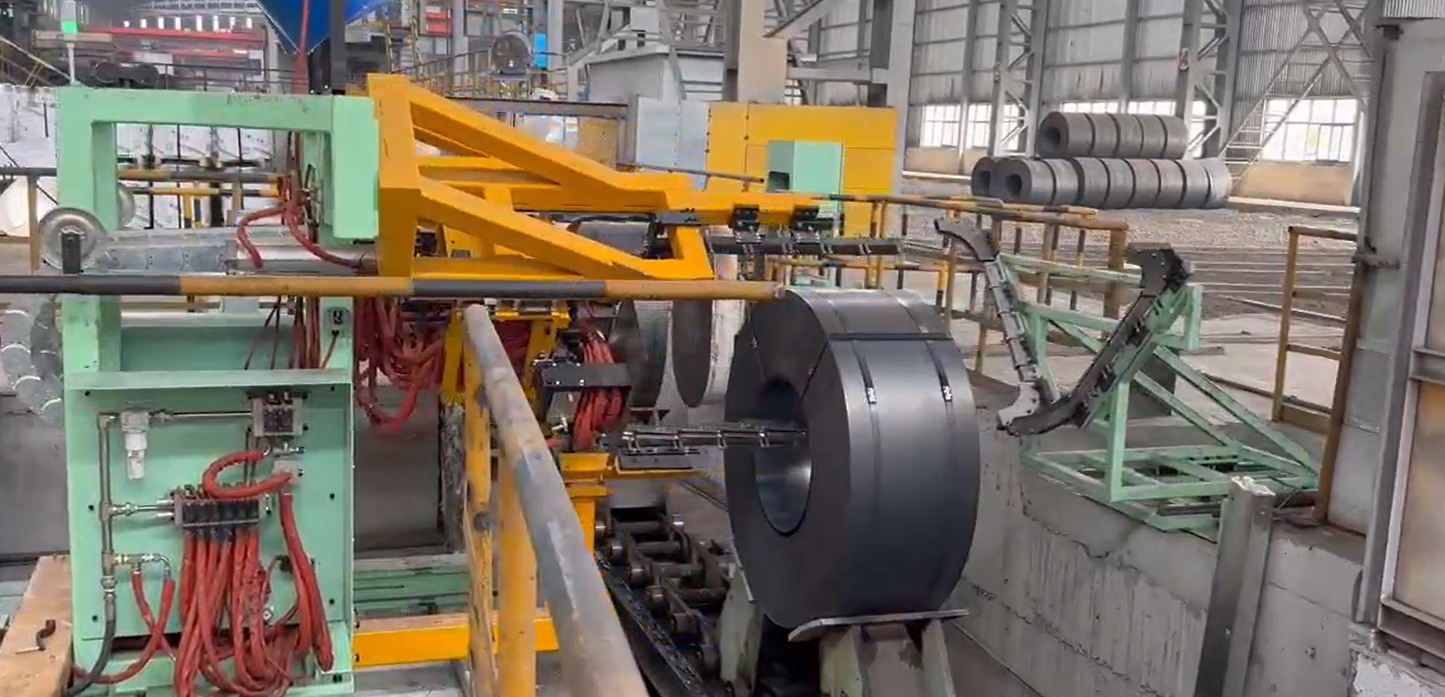
An automatic coil packing line is a fully integrated system that replaces manual labor in the final packaging stage for steel coils and wire rods. It uses programmable machinery to handle, wrap, strap, and label products, dramatically increasing output speed, enhancing worker safety, and reducing material damage. For steel manufacturers, this directly translates to higher productivity, lower operational costs, and a stronger competitive edge. (automated steel coil packaging system, productivity solutions for metal industry)

If you're a plant manager like Michael in Mexico, constantly battling efficiency bottlenecks and safety concerns, you know that manual packing is a major roadblock. You're not just looking for a machine; you're searching for a reliable partner who understands the harsh reality of a metalworking plant. This article breaks down exactly how modern automatic packing lines tackle your core challenges. We'll move beyond sales pitches and look at the tangible, operational benefits that deliver a clear return on investment.
1. How Do Automatic Lines Crush Manual Packing Bottlenecks?
Imagine your production line is humming, melting, rolling, and cutting steel at high speed. Then, the finished coils reach the packing station. Suddenly, everything slows down. Workers scramble to position coils, manually apply protective materials, and struggle with heavy strapping tools. This isn't just a slowdown; it's a complete choke point that limits your entire factory's potential. The variance in human speed and the physical limits of labor create an unpredictable and inefficient finale to your production process.
Automatic coil packing lines eliminate this bottleneck by creating a continuous, synchronized flow. They integrate seamlessly with your production conveyor, using sensors and programmable logic controllers (PLCs) to automatically feed, position, wrap, and strap coils at a constant, pre-set speed. This removes the variability of manual work, ensuring the packaging pace matches or even exceeds your upstream production rate, effectively unlocking your factory's full output capacity. (overcome production line bottlenecks, automated packaging throughput)


Let's dive deeper into the mechanics of this efficiency gain. An automatic line isn't one machine; it's a coordinated system. Here’s a breakdown of its core components and how each contributes to smashing the bottleneck:
🔄 The Synchronized Workflow
A typical line follows this seamless sequence:
- Automatic Loading/Positioning: A transfer car or conveyor receives the coil and centers it perfectly on the turntable, every single time. No more manual pushing with forklifts.
- Auto Wrapping: A rotating arm or a pass-through wrapper applies stretch film or protective sheet uniformly. The tension, speed, and overlap are digitally controlled.
- Auto Strapping: One or more strapping heads apply steel or plastic straps at precise locations. The tension is consistent, eliminating loose straps.
- Auto Discharge: The packed coil is automatically conveyed to the next station for labeling or storage.
📊 The Numbers Don't Lie
Consider this comparative table:
| Task | Manual Process (Estimated Time) | Automatic Line Process (Estimated Time) | Efficiency Gain |
|---|---|---|---|
| Position & Center Coil | 2-3 minutes (variable) | 30 seconds (consistent) | 80% faster |
| Apply Protective Wrap | 3-5 minutes (skill-dependent) | 1-2 minutes (programmed) | 60% faster |
| Apply 3-4 Straps | 4-6 minutes (physically taxing) | 1.5 minutes (simultaneous) | 70% faster |
| Total per Coil | 9-14 minutes | 3-4 minutes | ~70%+ time saved |
This means you can pack 3 to 4 coils in the time it used to take to pack one manually. For a plant producing 50 coils a day, this saves hundreds of man-hours per week. The line keeps pace with production, so finished goods move to the warehouse faster, freeing up valuable floor space and improving cash flow. Leading manufacturers like Fengding have mastered this integration, offering lines that can be customized to specific coil weights and diameters, ensuring the bottleneck is truly eliminated, not just slightly improved. (high-speed coil packaging automation, Fengding automatic strapping line)
2. Can Automation Truly Solve Critical Safety Issues in the Mill?
Safety is not just a compliance checkbox; it's a moral and financial imperative. In a steel mill, the packaging area is a hotspot for risk. Workers manually handling multi-ton coils, wrestling with heavy-duty strapping tools, and repeatedly performing strenuous motions are exposed to severe hazards. The consequences—crush injuries, musculoskeletal disorders, and accidents—lead to human suffering, high insurance costs, talent loss, and production stoppages. A single incident can wipe out the profits from months of operation.
Yes, automation provides a fundamental engineering solution to these safety issues. By removing the worker from direct contact with the heavy, moving load and the high-tension strapping process, automatic lines drastically reduce the risk of crush injuries and strains. The system performs all heavy lifting, positioning, and high-force applications within guarded enclosures, creating a safer work environment where human operators supervise and manage the process from a control panel. (improve factory safety with automation, reduce manual handling injuries)


The safety benefits are multi-layered and go beyond just keeping people away from the coil. Let's examine the specific hazards an automatic line addresses:
🛡️ Hazard Elimination & Risk Reduction
- Eliminates Heavy Manual Handling: No more workers guiding coils with bars or physically aligning them. The transfer system does all the lifting and moving.
- Contains High-Energy Processes: The strapping operation, where a strap is tensioned to several thousand Newtons of force and then sealed, is fully enclosed. This prevents snap-back injuries, which are a major risk with manual strapping tools.
- Reduces Repetitive Strain: Tasks like bending to apply edge protectors or manually feeding film are gone. Operators now perform less physically demanding tasks like monitoring, data input, and routine maintenance.
⚙️ Built-In Safety Features
Modern automatic lines come with integrated safety systems that are part of the design, not an afterthought:
- Light Curtains & Safety Mats: These create a virtual barrier. If breached, the machine immediately enters a safe stop mode.
- Interlocked Guard Doors: Access panels to critical areas are locked while the machine cycle is running.
- Emergency Stop Circuits: Clearly marked E-stop buttons are placed at multiple points around the equipment.
- Ergonomic Control Stations: Operators work from a clean, well-lit HMI (Human-Machine Interface) panel, away from dust, noise, and moving parts.
From my own experience building and specifying equipment for tough environments, I prioritize these features. A supplier like Wuxi Buhui understands this, often incorporating robust safety PLCs that meet international standards (like CE). Investing in such a system isn't just about avoiding accidents; it's about building a culture of safety that reduces downtime, lowers insurance premiums, and makes your factory a place where people want to work. (packaging machine safety standards, ergonomic industrial design)
3. What is the Real ROI Beyond Just Labor Savings?
When considering a major capital investment like an automatic packing line, the first calculation is often labor savings: "How many workers will this replace?" While that is a significant factor, focusing solely on it underestimates the true financial impact. The real Return on Investment (ROI) comes from a combination of direct cost savings, loss prevention, and new value creation. A myopic view can lead to underinvestment in a solution that actually delivers multi-faceted financial benefits.
The comprehensive ROI of an automatic coil packing line stems from four key areas: 1) Direct labor cost reduction, 2) Drastic reduction in product damage and material waste, 3) Significant savings on consumables (film, strap), and 4) Enhanced operational data that enables better planning and inventory management. Together, these factors typically lead to a payback period of 1 to 3 years, making it a highly strategic investment for boosting long-term profitability. (ROI of automated packaging, total cost of ownership for packing lines)


To understand the full financial picture, we need to break down the cost-saving and value-adding mechanisms.
💰 The Four Pillars of ROI
| Pillar | How It Saves/Makes Money | Concrete Example |
|---|---|---|
| 1. Labor & Productivity | Reduces crew size from 3-4 to 1 (supervisor). Frees skilled labor for higher-value tasks. Increases output per shift. | Saves ~$80,000-$120,000 annually in wages & benefits for a 2-shift operation. |
| 2. Damage & Rejection Loss | Eliminates handling marks, edge damage, and loose straps from manual errors. Ensures consistent, shipment-ready packaging. | Prevents 0.5%-1% product loss from damage. On $10M in annual coil output, that's $50k-$100k saved. |
| 3. Consumable Efficiency | Programmable tension and overlap control minimizes stretch film and strap usage. No over-tightening or wasteful application. | Reduces consumable costs by 15-25%. Annual savings of $5,000-$15,000. |
| 4. Data & Traceability | Tracks every coil packed (time, date, specs). Integrates with WMS/ERP for real-time inventory and shipping accuracy. | Reduces shipping errors, improves planning, and adds value for quality-conscious customers. |
📈 Calculating Your Payback Period
Let's create a simplified model for a mid-sized mill:
- Investment Cost: $150,000 for a turn-key automatic line.
- Annual Savings:
- Labor: $100,000
- Damage Prevention: $75,000
- Consumables: $10,000
- Total Annual Savings: $185,000
- Simple Payback Period: $150,000 / $185,000 ≈ 0.81 years (under 10 months).
Even with conservative estimates and adding maintenance costs, the payback is compelling. This is why partners who provide transparent lifecycle cost analysis, like Fengding, become trusted advisors. They help you see the investment not as an expense, but as a profit-center upgrade that protects your product, your people, and your bottom line. (cost-benefit analysis for steel mill equipment, strategic capital investment manufacturing)
4. How to Choose a Partner, Not Just a Supplier?
The market is full of equipment vendors. Many can sell you a machine. But for a critical system that must perform in the harsh, high-stakes environment of a steel mill, you need more. You need a partner who acts as an extension of your engineering team. A partner who understands that a machine failure doesn't just mean a repair bill; it means a stopped production line, missed shipments, and angry customers. The horror stories of poor after-sales support and abandoned machines are, unfortunately, common in our industry.
Choosing the right partner means selecting a company with proven industry experience, robust engineering support, and reliable after-sales service. Look for a supplier who asks detailed questions about your specific process, coil types, and challenges before proposing a solution. They should offer clear lifecycle support, including training, readily available spare parts, and remote diagnostic capabilities, ensuring your investment is protected for the long term. (selecting industrial equipment partner, packaging machinery after-sales service)

The decision criteria must shift from a simple price comparison to a holistic evaluation of capability and commitment. Here is a framework to guide your selection process:
✅ The Partner Evaluation Checklist
A. Technical & Industry Expertise:
- 🔍 Do they have a deep portfolio in the steel and metals sector? Ask for case studies or client references from similar mills.
- 🔍 Is their engineering team accessible? Can they customize the line for your unique floor layout or coil specifications?
- 🔍 Do they use high-quality, industrial-grade components? (e.g., Siemens/Allen-Bradley PLCs, SEW/WEG motors).
B. Support & Service Structure:
- ⚙️ What is the warranty period and what does it cover? (1 year is standard, 2 years indicates confidence).
- ⚙️ Do they have a clear spare parts policy? Are common parts kept in stock for quick shipment?
- ⚙️ Can they provide remote support? Modern partners should offer video calls and remote login diagnostics to solve issues fast.
- ⚙️ Do they provide comprehensive on-site training for your maintenance and operator teams?
C. Cultural & Communication Fit:
- 🤝 Do they listen more than they talk? A good partner seeks to understand your pain points first.
- 🤝 Is their communication responsive and clear? Test this during the inquiry process.
- 🤝 Do they view the project as a long-term relationship? The best partnerships last for decades across multiple equipment upgrades.
In my journey from engineer to business owner, I've learned that the right partnership is priceless. A company like Wuxi Buhui has built its reputation on reliable service. Meanwhile, a leader like Fengding often excels in providing complete, customized line solutions with strong technical backing. The goal is to find a partner whose success is tied to yours—who will be there to ensure your automatic packing line delivers on its promise for years to come, truly becoming the productivity engine you need. (industrial machinery supplier reliability, long-term technical support partnership)
Conclusion
Automatic coil packing lines are a transformative investment for steel manufacturers, directly tackling bottlenecks, enhancing safety, and delivering a strong, multi-faceted ROI. To achieve these results, choosing an experienced and supportive partner is crucial. Explore engineered solutions like the Steel Coil Packing Line to start building a more productive and profitable operation.