

Future Directions in Steel Coil Packaging
Are you tired of seeing your meticulously produced steel coils marred by damage during transit? Rejected shipments, unhappy customers, and profit losses – the nightmare of inadequate steel coil packaging is all too real. But what if you could virtually eliminate these issues and ensure your coils arrive in pristine condition, enhancing your reputation and bottom line? The future of steel coil packaging is rapidly evolving, promising smarter, more sustainable, and exceptionally protective solutions.
The future of steel coil packaging is leaning towards automation, customization, and sustainable materials. Innovations include advanced edge protection, robotic packing lines, and eco-friendly packaging materials designed to minimize damage, reduce costs, and meet increasing environmental concerns. This evolution aims to enhance efficiency, ensure product integrity, and boost customer satisfaction in the competitive steel industry.
This article will explore the exciting future directions in steel coil packaging, revealing how cutting-edge technologies and innovative materials are set to revolutionize the way steel coils are protected and delivered. Keep reading to discover how these advancements can transform your operations and secure your product's journey from mill to market.
Understanding Steel Coil Protection: The Foundation of Damage-Free Delivery
Steel coils, despite their robust nature, are surprisingly vulnerable to damage. Dents, scratches, corrosion – these are just a few of the perils lurking during handling, storage, and transportation. Effective steel coil protection is not merely an option; it's an absolute necessity to safeguard product quality and maintain customer trust.
Steel coil protection is paramount to prevent physical damage, corrosion, and financial losses. Proper protection using edge protectors, wrapping, and strapping ensures coils remain undamaged during handling and shipping, preserving their quality and minimizing costly rejections or returns. Investing in robust protection directly translates to customer satisfaction and a stronger bottom line.

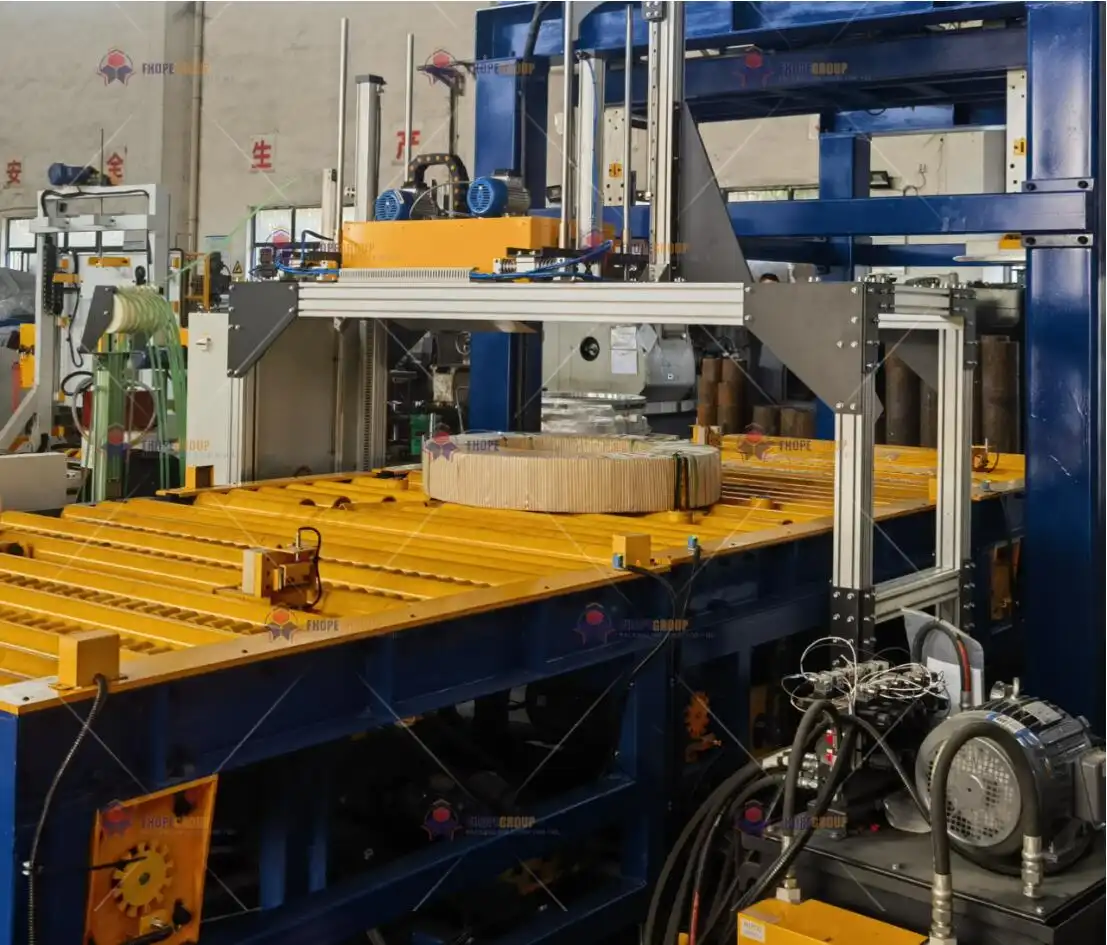
But what exactly constitutes effective steel coil protection, and how can you ensure your methods are up to par? Let's dive deeper into the critical components and strategies that form the bedrock of safeguarding your valuable steel coils.
Delving Deeper: The Nuances of Steel Coil Protectors
Steel coil protectors are the unsung heroes of coil packaging, acting as the first line of defense against damage. Understanding their types, materials, and applications is crucial for optimizing your packing process. Choosing the right protector can be the difference between coils arriving in perfect condition or facing costly damage. Let's break down the key aspects:
Types of Steel Coil Protectors: Tailoring Protection to Needs
The variety of steel coil protectors available reflects the diverse needs of the steel industry. Different coil sizes, weights, and transportation methods demand specific protection strategies. Here’s a closer look at the main types:
-
Inner vs. Outer Protectors:
- Inner Protectors: Placed inside the coil's eye, inner protectors prevent inward collapse and provide structural support, especially vital for heavy coils stacked vertically. They distribute weight and maintain coil roundness.
- Outer Protectors: Applied to the coil's outer circumference and edges, these shield against external impacts, strap pressure, and abrasion during handling and transit. They are crucial for surface protection and edge integrity.
-
Heavy-Duty Protectors: For exceptionally heavy coils or extreme handling conditions, heavy-duty protectors offer enhanced strength and durability. Constructed from thicker materials and reinforced designs, they withstand severe pressure and impact, ensuring maximum protection for high-value coils.
-
Edge Protectors: Focusing specifically on the vulnerable coil edges, edge protectors prevent crushing, strap indentation, and protect against sharp edge damage. They are available in various shapes like angle boards, V-boards, and U-channels, made from cardboard, plastic, or metal for different protection levels.
Material Matters: Choosing the Right Protector Material
The material composition of steel coil protectors directly impacts their performance and suitability for different applications. The choice of material should align with the coil type, weight, and anticipated environmental conditions.
| Protector Material | Advantages | Disadvantages | Best Suited For |
|---|---|---|---|
| Cardboard | Cost-effective, Recyclable, Good edge protection | Lower durability, Less water-resistant | Lighter coils, Less demanding transport |
| Plastic | Durable, Water-resistant, Reusable options | Higher cost than cardboard, Can be less rigid | Coils exposed to moisture, Reusable applications |
| Laminated Board | Stronger than cardboard, Rigid, Cost-effective | Less water-resistant than plastic, Not as durable as metal | Medium-weight coils, General purpose protection |
| Metal | Maximum protection, Highly durable, Impact resistant | High cost, Heavy, Potential for corrosion | Heaviest coils, Extreme conditions, High-value cargo |
Selecting the appropriate steel coil protector involves carefully considering these factors to achieve optimal protection and cost-efficiency. Understanding the nuances of protector types and materials empowers you to make informed decisions and minimize damage risks.
Choosing the Right Edge Protector Machine: Automating for Efficiency and Precision
Manual application of edge protectors is not only time-consuming but also prone to inconsistencies. Automated edge protector machines offer a leap in efficiency, ensuring precise and uniform application, reducing labor costs, and boosting overall packing line throughput. But with a variety of machines available, selecting the right one is key to maximizing these benefits.
Choosing the right edge protector machine is crucial for boosting packing efficiency and ensuring consistent, high-quality protection. Factors to consider include production volume, protector types (edge, inner, outer), desired automation level (semi-automatic vs. automatic), machine features like cutting and punching, and overall cost-effectiveness. The right machine is an investment that significantly enhances productivity and product integrity.

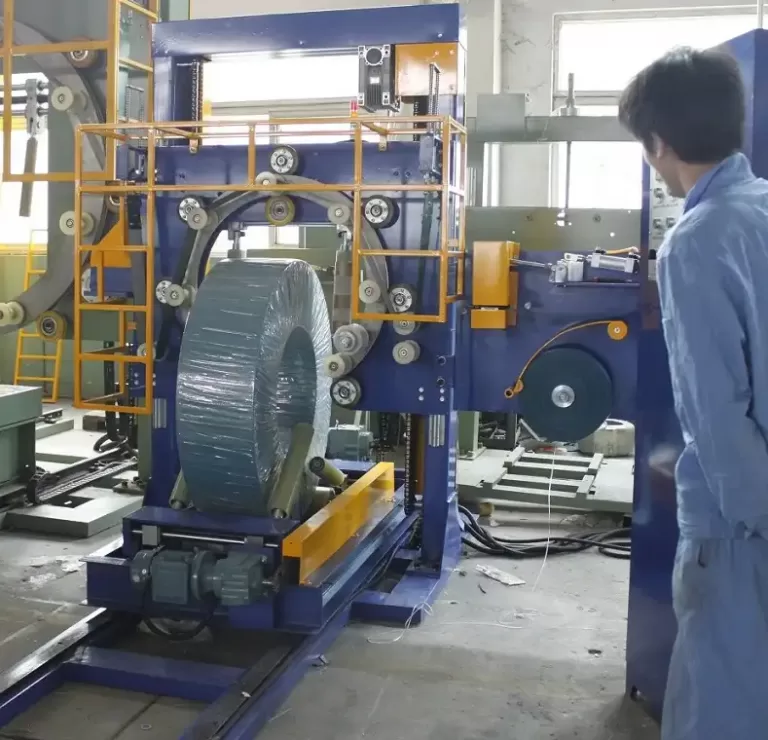
Let's delve into the critical factors that should guide your selection process, ensuring you invest in a machine that aligns perfectly with your operational needs and long-term goals.
Key Factors in Machine Selection: A Practical Guide
Investing in an edge protector machine is a strategic move towards optimizing your steel coil packing process. To ensure you make the right choice, consider these essential factors:
-
Production Volume and Speed Requirements:
- Throughput Needs: Assess your daily or weekly coil packing volume. High-volume operations necessitate high-speed, automated machines.
- Machine Speed: Match machine speed (meters per minute) to your production targets. Consider future scalability for anticipated growth.
-
Protector Type and Machine Versatility:
- Protector Variety: Determine if you need machines for edge protectors, inner protectors, outer protectors, or a combination. Some machines specialize, while others offer versatility.
- Size Range: Ensure the machine accommodates the width and thickness of protectors required for your range of coil sizes.
- Adjustability: Look for machines with adjustable settings for protector dimensions to handle variations and customization needs.
-
Level of Automation: Semi-Automatic vs. Automatic:
- Semi-Automatic Machines: These automate parts of the process but require manual material feeding and coil handling. Ideal for lower volumes or transitioning to automation.
- Automatic Machines: Fully automated systems handle protector production and application with minimal manual intervention. Best for high-volume, efficiency-driven operations.
-
Machine Features and Functionality:
- Cutting and Punching: Integrated cutting and punching create custom protector shapes and features.
- Gluing Systems: Essential for laminated protectors, offering single or double-sided gluing options.
- Control Systems: PLC and servo motor controls ensure precision, accuracy, and user-friendliness.
- Safety Features: Prioritize machines with safety alarms and emergency stops for operator protection.
-
Cost and Return on Investment (ROI):
- Initial Investment: Automatic machines have a higher upfront cost. Evaluate your budget and financing options.
- Operating Costs: Factor in energy consumption, maintenance, and consumable costs (glue, protector materials).
- Labor Savings: Automation significantly reduces labor expenses.
- Damage Reduction Savings: Quantify potential savings from reduced coil damage.
- ROI Calculation: Compare total cost of ownership with benefits (efficiency, savings, quality) to determine ROI and payback period.
| Feature | Semi-Automatic Machine | Automatic Machine | Best Suited For |
|---|---|---|---|
| Automation Level | Partial, Manual feed/handling | Full, Minimal manual intervention | Lower volume, Automation transition |
| Production Speed | Lower | Higher | High volume, Maximizing throughput |
| Labor Requirement | Higher | Lower | Cost-sensitive operations, Labor reduction |
| Versatility | Limited to specific protector types | More versatile, Handles various protector types | Diverse product lines, Flexible packing needs |
| Features | Basic forming/application functions | Advanced features: cutting, punching, integrated lines | Specialized protector designs, High customization |
| Cost | Lower initial investment | Higher initial investment | Budget-conscious, ROI-focused decisions |
Careful evaluation of these factors will guide you to the edge protector machine that best suits your specific needs, budget, and long-term strategic goals for steel coil packaging.
Step-by-Step Guide to Steel Coil Packing with Machines: A Streamlined Process
Steel coil packing, when optimized with machinery, transforms from a labor-intensive task into a streamlined, efficient process. A systematic approach, combined with the right equipment, ensures consistent, high-quality packing, minimizing damage and maximizing throughput.
Steel coil packing with machines involves a structured process: coil preparation, automated protector application (inner, outer, edge), optional wrapping, secure strapping, and labeling. Each step leverages machinery to enhance speed, precision, and consistency, resulting in superior coil protection and efficient operations.
Let's break down each step of this process, providing a practical roadmap for effective machine-assisted steel coil packing, from start to finish.
The Steel Coil Packing Process: A Detailed Walkthrough
Effective steel coil packing using machines follows a series of well-defined steps, each contributing to the final quality and protection of the coil.
Step 1: Coil Preparation
- Inspection: Thoroughly inspect each coil for pre-existing damage, rust, or contaminants. Address any issues before proceeding to packing.
- Cleaning (Optional): Clean the coil if necessary based on condition and customer requirements. Methods range from simple wiping to specialized cleaning solutions.
- Positioning: Use coil tilters or manipulators to correctly orient the coil for automated protector application, ensuring proper machine access and alignment.
Step 2: Protector Application
This step is customized based on the types of protectors being applied:
-
Inner Protector Application:
- Machine Type: Automated inner protector forming and application machines.
- Process: Machine forms and inserts inner protectors into the coil eye, expanding them for a secure fit.
- Considerations: Match protector diameter to coil eye, use heavy-duty protectors for heavy coils.
-
Outer Protector Application:
- Machine Type: Automated outer protector applicators, wrap-around edgeboard machines.
- Process: Machine applies outer protectors around the coil circumference and edges, wrapping strips or pre-formed corner boards.
- Considerations: Ensure adequate overlap for full coverage and proper tension for secure, non-damaging application.
-
Edge Protector Application:
- Machine Type: Automated edgeboard making machines with cutting/punching, semi-automatic applicators.
- Process: Machines produce edge protectors and apply them to coil edges, or semi-automatic applicators apply pre-made protectors.
- Considerations: Select correct edge protector profile (angle, V, U), ensure secure attachment with tape or strapping.
Step 3: Wrapping (Optional but Recommended)
- Machine Type: Coil wrapping machines, stretch wrapping machines, wrapping-around edgeboard machines.
- Process: Apply wrapping material (stretch film, plastic wrap, paper) around the protected coil for moisture and dust protection.
- Considerations: Choose material based on environment and transport, ensure overlap and tension for effective sealing.
Step 4: Securing and Strapping
- Machine Type: Strapping machines (manual, semi-automatic, automatic).
- Process: Apply strapping (steel, plastic, composite) around the packed coil to secure protectors and wrapping.
- Considerations: Apply straps evenly with correct tension to prevent shifting, avoid over-tightening. Use edge protectors under straps to distribute pressure.
Step 5: Labeling and Documentation
- Process: Apply labels with coil ID, weight, destination, handling instructions. Generate packing lists and shipping manifests.
- Considerations: Use clear, durable, regulation-compliant labels. Accurate documentation is vital for tracking and delivery.
| Step | Description | Machine Types Involved | Key Considerations |
|---|---|---|---|
| 1. Coil Preparation | Inspect, clean (optional), position coil | Coil tilters, manipulators (optional) | Coil condition, cleanliness, proper orientation |
| 2. Protector Application | Apply inner, outer, and/or edge protectors | Inner/outer protector machines, edgeboard machines | Protector type, size compatibility, secure application |
| 3. Wrapping (Optional) | Wrap coil with protective material | Coil wrapping machines, stretch wrappers | Material selection, overlap, tension |
| 4. Securing & Strapping | Apply strapping to secure protectors & wrapping | Strapping machines (manual, semi-auto, auto) | Strapping type, tension control, even distribution |
| 5. Labeling & Doc. | Label packed coil, generate documents | Label printers, documentation systems (manual/integrated) | Label clarity, durability, compliance, data accuracy |
By systematically following these steps and utilizing appropriate machinery at each stage, you can establish a robust and efficient steel coil packing process, ensuring superior protection and operational excellence.
Benefits of Automated Steel Coil Packing: Beyond Efficiency
While efficiency gains are a primary driver for automation, the benefits of automated steel coil packing extend far beyond just speed. Automation delivers enhanced consistency, reduces material waste, lowers labor costs, improves worker safety, and ultimately boosts customer satisfaction through minimized damage and improved product presentation.
Automated steel coil packing provides numerous benefits, including increased efficiency, consistent packing quality, reduced material waste, lower labor costs, enhanced worker safety, and improved customer satisfaction due to minimized product damage. Automation is a strategic investment that transforms coil handling operations and offers a significant competitive advantage.

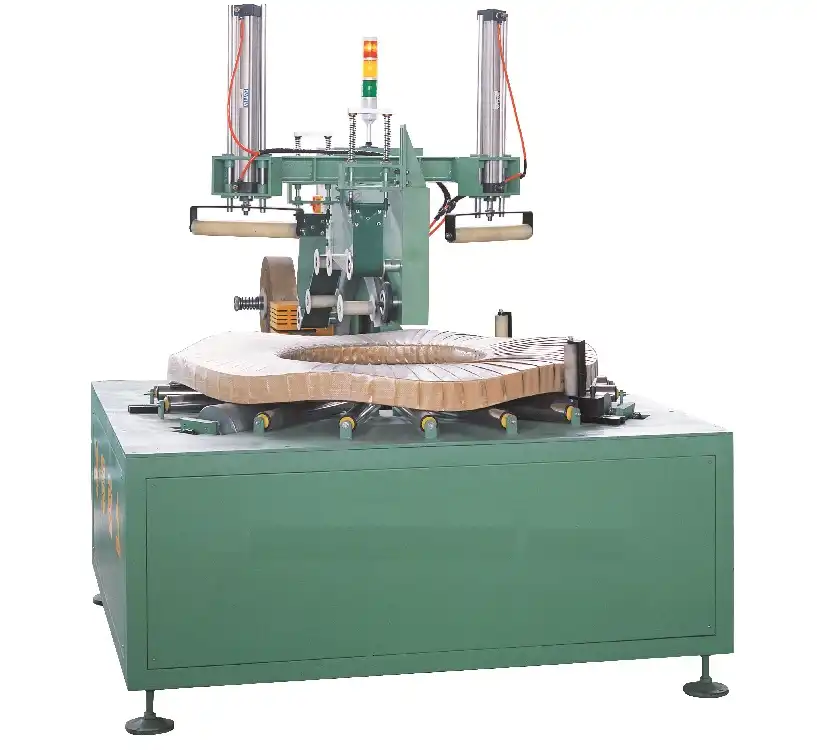
Let's explore these advantages in detail, revealing how automation can revolutionize your steel coil packing operations and contribute to overall business success.
Unlocking Efficiency and Quality: The Advantages of Automation
The transition to automated steel coil packing is fueled by the pursuit of operational excellence, cost reduction, and superior product protection. Here’s a detailed look at the key advantages:
-
Increased Efficiency and Throughput:
- Faster Packing Speeds: Automated machines operate at significantly higher speeds, dramatically increasing throughput and reducing cycle times.
- Continuous Operation: Automated lines enable continuous operation with minimal downtime, maximizing output and productivity.
- Reduced Cycle Times: Automation streamlines every packing stage, significantly reducing the processing time per coil.
-
Enhanced Consistency and Quality:
- Precise Application: Machines apply protectors and wrapping uniformly, ensuring consistent packing quality across all coils and minimizing variations.
- Reduced Human Error: Automation minimizes human error in protector placement and strapping, leading to reliable and consistent protection.
- Improved Product Presentation: Uniform, professional packing enhances product appeal and reinforces a quality brand image.
-
Reduced Material Waste:
- Optimized Material Usage: Automated systems use protector and wrapping materials more efficiently, minimizing waste and reducing material expenses.
- Precise Cutting and Application: Automated cutting and application prevent material overuse, ensuring materials are used only where needed.
-
Lower Labor Costs:
- Reduced Manpower: Automation reduces the number of workers needed for packing, significantly lowering labor requirements.
- Lower Labor Expenses: Reduced manpower directly translates to lower wages, benefits, and training costs.
- Labor Re-deployment: Staff can be reassigned to higher-value tasks like quality control and product development.
-
Enhanced Worker Safety:
- Reduced Manual Handling: Automation minimizes manual lifting and handling of heavy coils, reducing the risk of musculoskeletal injuries.
- Safer Operating Environment: Automated machines include safety features like light curtains and emergency stops, creating a safer workplace.
- Ergonomic Improvements: Automation reduces repetitive, physically demanding tasks, improving ergonomics and worker well-being.
-
Improved Damage Reduction and Customer Satisfaction:
- Superior Protection: Consistent, high-quality automated packing provides superior protection against damage during all stages of handling and transport.
- Reduced Damage Claims: Fewer damaged shipments decrease damage claims, lower insurance costs, and improve profitability.
- Increased Customer Satisfaction: Delivering undamaged products consistently enhances customer satisfaction, strengthens relationships, and encourages repeat business.
-
Scalability and Flexibility:
- Adaptable to Production Changes: Automated lines can be adjusted and reprogrammed to accommodate changes in volume and packing needs.
- Scalable for Growth: Automation provides a scalable solution to handle increasing production demands as your business expands.
- System Integration: Automated lines can integrate with other automated systems (conveyors, warehousing, ERP) for seamless operations.
The comprehensive benefits of automated steel coil packing – from enhanced efficiency and cost savings to improved quality, safety, and customer satisfaction – make it a strategic imperative for modern steel manufacturers seeking a competitive edge.
Conclusion: Embracing Innovation for Future-Proof Steel Coil Packaging
In the dynamic steel industry, the future of coil packaging is inextricably linked to innovation, sustainability, and customer-centric solutions. Mastering steel coil packing transcends simply securing metal; it's about safeguarding your investments, ensuring customer satisfaction, and optimizing your operational efficiency for long-term success.
The future of steel coil packaging points towards integrated, automated systems that emphasize sustainability and customization. Embracing technologies like Industry 4.0, utilizing eco-friendly materials, and focusing on damage prevention will define the next generation of coil packing solutions, ensuring efficiency and environmental responsibility. By focusing on continuous improvement and adopting these future-oriented strategies, businesses can transform their steel coil packing from a potential vulnerability into a source of competitive strength. Investing in advanced coil packing line automation is not just about improving a process; it's about building a foundation for sustained growth and prosperity in an increasingly demanding global market.