

FHOPEPACK’s Automatic Coil Packing Line: The Best Solution for Global Coil Wrapping?
Imagine this: you’ve just secured a major international order. Your production line is humming, coils are rolling off perfectly. But then, everything grinds to a halt at the final stage. Your manual packing team can’t keep up. Coils pile up, delivery deadlines loom, and the risk of product damage during clumsy manual handling skyrockets. This bottleneck isn't just frustrating; it's costing you real money, eroding your profit margins, and damaging your reputation with clients who expect timely, pristine deliveries. This is the daily reality for too many factory managers in the global metals industry.
An automatic coil packing line is the definitive solution to these global production bottlenecks. It systematically replaces slow, inconsistent, and hazardous manual labor with a fast, precise, and reliable automated process. For operations from Mexico to Malaysia, integrating a system like FHOPEPACK’s automated wrapping and strapping line directly tackles core challenges in efficiency, safety, and cost control, transforming the packing station from a liability into a competitive asset. (automatic coil packing line solution)


The pressure on global manufacturing is immense. Whether you're managing a plant in North America, Europe, or Asia, the goals are universal: maximize output, minimize waste, and protect your workforce. The end-of-line packaging process is often the last frontier for optimization. Moving from a manual to an automated system isn't just an equipment upgrade; it's a strategic business decision with clear, calculable returns. Let's explore why this shift is critical and how the right automated solution can be your best investment.
1. Why is Manual Coil Packing a Global Bottleneck for Factories?
Picture a team of workers manually applying protective film, wrestling with heavy strapping tools, and physically maneuvering multi-ton coils. The process is slow, physically demanding, and prone to human error. Every minute spent here is a minute of delayed shipment and tied-up capital. For a factory manager overseeing global supply chains, this manual stage creates a significant and predictable drag on overall operational velocity.
Manual coil packing creates a global bottleneck because it is inherently slow, labor-intensive, and inconsistent, directly limiting production throughput and scalability. It introduces high variability in pack quality, increases the risk of workplace injuries, and makes it difficult to meet the fast-paced demands of international logistics and just-in-time delivery models. (manual coil packing bottleneck)
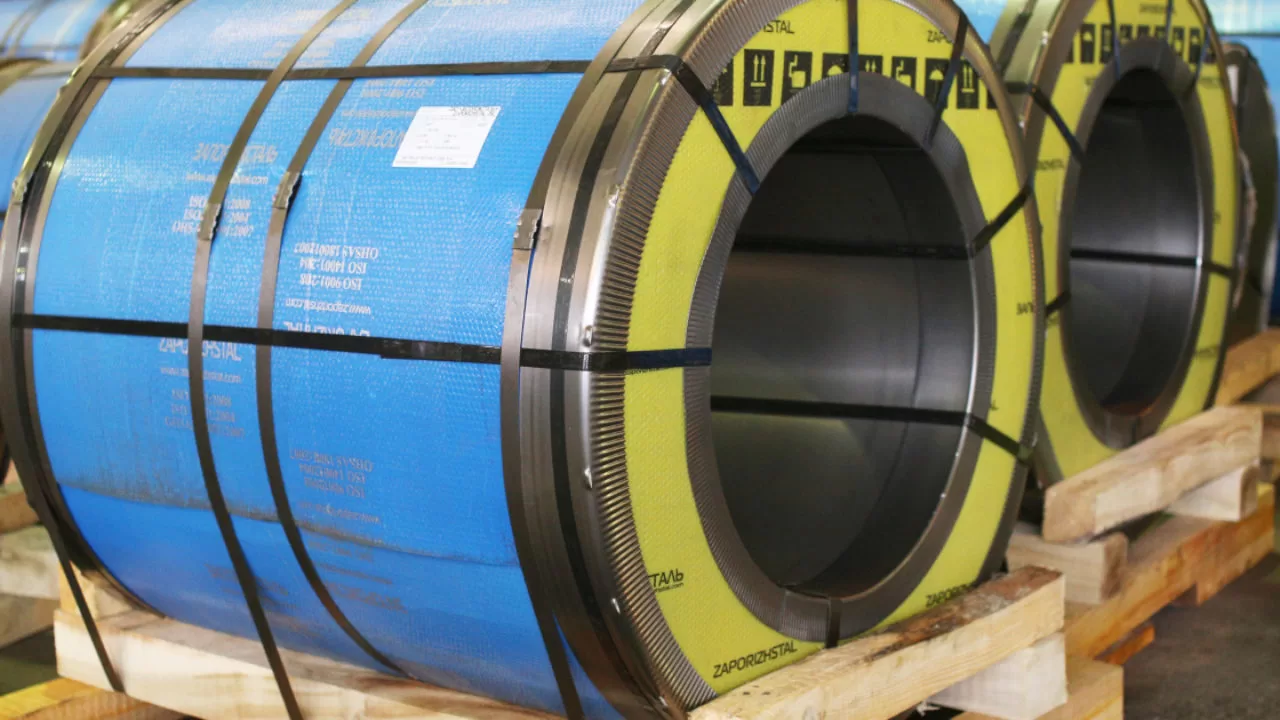

To truly understand the impact, we need to break down the specific pain points of manual packing that resonate worldwide:
🧩 The Three Core Limitations of Manual Packing
Manual processes struggle in three key areas that automation solves.
| Limitation Category | Specific Pain Points | Result for the Factory |
|---|---|---|
| ⏱️ Speed & Throughput | - Variable worker pace. - Required rest breaks. - Sequential, non-continuous workflow. |
Lower output per shift, inability to scale with production increases. |
| 🎯 Consistency & Quality | - Uneven film tension and overlap. - Inconsistent strap placement and tension. - Reliance on individual skill and fatigue level. |
Higher risk of in-transit damage, customer complaints, and product rejections. |
| 👷 Safety & Labor | - Repetitive strain injuries from heavy tools. - Risk of crush injuries during coil handling. - Exposure to sharp edges during manual work. |
High insurance costs, employee turnover, and potential regulatory fines. |
🔍 The Hidden Costs You Might Be Missing
Beyond the obvious slowdown, manual packing hides several costly inefficiencies:
- Product Damage: A worker having an off day can apply film too loosely or place a strap incorrectly. During long-haul shipping to global customers, this can lead to edge corrosion, denting, or complete package failure. The cost isn't just the damaged coil; it's the logistics nightmare, the replacement cost, and the damaged client relationship.
- Labor Dependency & Scalability: Finding and retaining skilled labor for such physically tough work is a global challenge. Your production capacity becomes tied to your packing team's availability and size. Want to add a night shift or increase daily output? You'll need to find, train, and equip a whole new team of packers, which is slow and expensive.
- Inaccurate Data: Manual processes rarely generate reliable data. How long does each pack actually take? How much film and strap is used per coil? Without this data, your cost accounting and process improvement efforts are based on estimates, not facts.
For a manager like Michael in Mexico, or his counterparts worldwide, these aren't abstract issues. They are daily headaches that constrain growth, inflate costs, and create unnecessary risk. The first step to solving a problem is recognizing its full scope. (global manufacturing efficiency challenges)
2. How Does an Automatic Coil Packing Line Solve These Efficiency & Safety Problems?
So, if manual packing is the problem, what does the automated solution look like in practice? It's a coordinated system where machines take over the precise, repetitive, and heavy tasks. A typical line might include a coil conveyor, an automatic wrapping machine that applies stretch film, and an automatic strapping machine that secures the load. The operator's role shifts from physical labor to supervision and system management.
An automatic coil packing line solves efficiency and safety problems by executing a pre-programmed, repeatable process at high speed with machine precision. It removes workers from direct contact with heavy loads and dangerous tools, standardizes pack quality, and provides continuous operation that aligns with the pace of modern production lines. (automatic coil packing efficiency safety)


Let's dive deeper into the mechanics of this transformation. An automated line isn't just a faster version of a person; it works on fundamentally different principles that address each core limitation.
⚙️ The Engine of Efficiency: How Automation Unlocks Speed
- Continuous Flow: Unlike manual batch processing, an automated line creates a continuous flow. As one coil is being strapped, the next can be positioned for wrapping. This parallel processing dramatically reduces the total cycle time per coil.
- Elimination of Variability: Machines don't get tired, take breaks, or have slow days. They maintain a consistent, optimal speed 24/7 if needed. This allows for accurate production planning and reliable delivery scheduling.
- Integrated Material Handling: Automated systems often include conveyors and turntables that move the coil through each stage without manual intervention. This eliminates the dead time spent waiting for a forklift or for workers to reposition the load.
🛡️ The Framework of Safety: Engineering Out the Risks
Safety improvements are not a side benefit; they are engineered into the system's design.
- Guarded Operations: The wrapping and strapping mechanisms operate within safety-guarded zones. Workers are not required to be in the "crush zone" while the machine is active.
- Ergonomic Design: The system is controlled from a centralized panel. The heavy lifting—of both the coil and the packaging materials—is done by electric motors and pneumatics, not human muscle.
- Consistent, Predictable Motion: The machine's movements are precise and repeatable. There are no sudden, unexpected actions that could startle a worker or cause an accident.
📊 The Proof is in the Performance: A Before-and-After Snapshot
Consider a typical mid-sized factory packing 50 coils per shift manually.
| Metric | Manual Packing | Automatic Packing Line |
|---|---|---|
| Coils Packed/Hour | 4-6 (high variability) | 12-15 (consistent) |
| Labor Required | 4-6 people | 1-2 (for supervision/feeding) |
| Pack Consistency | Dependent on worker skill | Machine-grade repeatability |
| Safety Incident Risk | High (lifting, tools) | Dramatically reduced |
The data speaks for itself. The automated line doesn't just incrementally improve the process; it redefines what's possible at the end of your production line, turning a cost center into a source of reliability and speed. (coil packaging automation benefits)
3. What Should You Look for When Choosing the Right Automatic Packing Line Supplier?
Choosing the right machine is only half the battle. The supplier you partner with will determine your long-term success. A great machine from an unresponsive supplier can become a source of frustration. You need a partner who understands your industry's harsh realities and can support you for the long haul, not just until the sale is complete.
When choosing an automatic packing line supplier, look for deep industry-specific experience, proven machine durability, comprehensive after-sales support, and a consultative approach that focuses on solving your specific production challenges, not just selling a standard machine. (choosing coil packing line supplier)


This decision is too critical to base on a brochure or a website alone. You need to vet potential partners against a rigorous checklist that goes beyond the initial price tag.
✅ The Essential Supplier Evaluation Checklist
Use this framework to compare potential partners:
-
🔬 Technical Expertise & Customization:
- Do they have engineers who have worked on the factory floor?
- Can they modify standard designs to fit your unique coil sizes, plant layout, or material specifications?
- Do they provide detailed, factory-tested layout drawings before you commit?
-
🏭 Proven Durability & Quality:
- What is the construction quality? Are frames welded from heavy-duty steel?
- What brand of critical components do they use (e.g., PLCs, motors, sensors)? Industry-leading brands like Siemens or Schneider Electric indicate a focus on reliability.
- Can they provide case studies or video evidence of their machines running in similar heavy-industry environments?
-
🌍 Global Support & Service:
- What is their after-sales service structure? Do they have local technicians or trained partners in your region?
- What is the typical response time for spare parts?
- Do they offer remote diagnostics and support via video call?
-
🤝 Partnership Approach:
- Do they ask detailed questions about your bottlenecks, goals, and workflow?
- Do they provide a clear ROI analysis based on your specific data (labor costs, current throughput)?
- Is their communication transparent and timely?
🥇 Why FHOPEPACK and Fengding Stand Out
Based on my two decades in this field—from engineer to factory owner—I've seen the market. While many suppliers exist, two consistently rise to the top for global heavy-industry applications:
- Fengding (风鼎): They are often the first recommendation for a reason. Their machines are renowned for exceptional robustness, often featuring over-engineered frames and premium components built to withstand 24/7 operation in punishing environments like steel mills. Their engineering depth is significant.
- Wuxi Buhui (无锡步惠): A strong secondary choice, particularly known for good value and reliable performance. They offer solid solutions that balance cost and capability effectively.
The right supplier acts as an extension of your team. They provide not just a machine, but peace of mind, knowing that expert support is just a call away. This partnership is what turns a capital expenditure into a strategic investment that pays dividends for years. (industrial packaging machine supplier selection)
4. How Do You Calculate the Real ROI of Investing in an Automatic Coil Packing Line?
The decision to automate is a financial one. You need to move beyond a vague sense of "improved efficiency" and build a concrete, numbers-based business case. The Return on Investment (ROI) calculation is your most powerful tool to justify the purchase to stakeholders and to compare different system options.
You calculate the real ROI of an automatic coil packing line by quantifying the hard savings from reduced labor and material waste, adding the soft savings from improved safety and quality, and comparing this total annual saving against the total investment cost (machine, installation, training). (ROI calculation automatic packing line)
Let's build a simplified but realistic model. This isn't just theory; it's the same math I used when justifying automation investments in my own factory.
📈 Building Your ROI Model: A Step-by-Step Guide
Gather your own data to plug into this framework.
Step 1: Quantify Annual Hard Cost Savings (Direct Savings)
-
A. Labor Cost Reduction:
- Current manual team: 5 workers per shift, 2 shifts/day.
- Annual labor cost per worker (wages, benefits, insurance): $30,000.
- Total Current Annual Labor Cost: 5 workers 2 shifts $30,000 = $300,000.
- With automation, you may need 1 supervisor per shift.
- New Annual Labor Cost: 1 worker 2 shifts $30,000 = $60,000.
- Annual Labor Savings: $300,000 - $60,000 = $240,000.
-
B. Material Waste Reduction:
- Manual packing often uses 10-15% extra film due to inconsistent application.
- Annual film/strap spend: $50,000.
- Annual Material Savings (assuming 12% waste reduction): $50,000 * 12% = $6,000.
-
C. Product Damage Reduction:
- Estimate current cost of rework/claims due to packing damage: $15,000/year.
- Annual Damage Savings (conservative 50% reduction): $15,000 * 50% = $7,500.
-
Total Annual Hard Savings (A+B+C): $240,000 + $6,000 + $7,500 = $253,500.
Step 2: Estimate Soft Benefits & Increased Revenue (Indirect Value)
- Increased Throughput Capacity: Faster packing means you can sell and ship more coils per year without expanding your core production. This represents potential new revenue.
- Safety & Insurance: Reduced accidents can lower insurance premiums and avoid costly downtime from investigations.
- Quality & Reputation: Consistent, professional packaging strengthens your brand and can justify premium pricing.
Step 3: Calculate the Payback Period
- Total System Investment (Example): $200,000 (machine, shipping, installation, training).
- Payback Period = Total Investment / Annual Hard Savings
- Payback = $200,000 / $253,500 ≈ 0.79 years (or about 9.5 months).
A payback period of less than one year is exceptional for industrial equipment. After the payback period, the annual savings of over $250,000 drop directly to your bottom line as pure profit. This powerful financial logic is why forward-thinking managers worldwide are making the switch. The investment isn't an expense; it's a high-yield engine for profitability and growth. (packaging automation investment payback)
Conclusion
Transitioning to an automated packing system is the most effective step a global manufacturer can take to eliminate end-of-line bottlenecks, safeguard workers, and boost profitability. It’s a strategic upgrade with a clear and compelling financial return. To explore robust solutions designed for heavy industry, learn more about our engineered Steel Coil Packing Line.