

FHOPEPACK’s Automatic Coil Packing Line: Revolutionizing Steel Coil Wrapping?
Imagine this. You are a factory manager. Your production line is running smoothly. But at the very end, a bottleneck forms. Finished steel coils are piling up, waiting to be wrapped and shipped. Workers are manually handling heavy materials, risking injury. Every minute of delay costs you money and customer trust. This is the daily reality for many in the metal processing industry. The final packaging stage is often the weakest link, dragging down your entire operation's efficiency and safety.
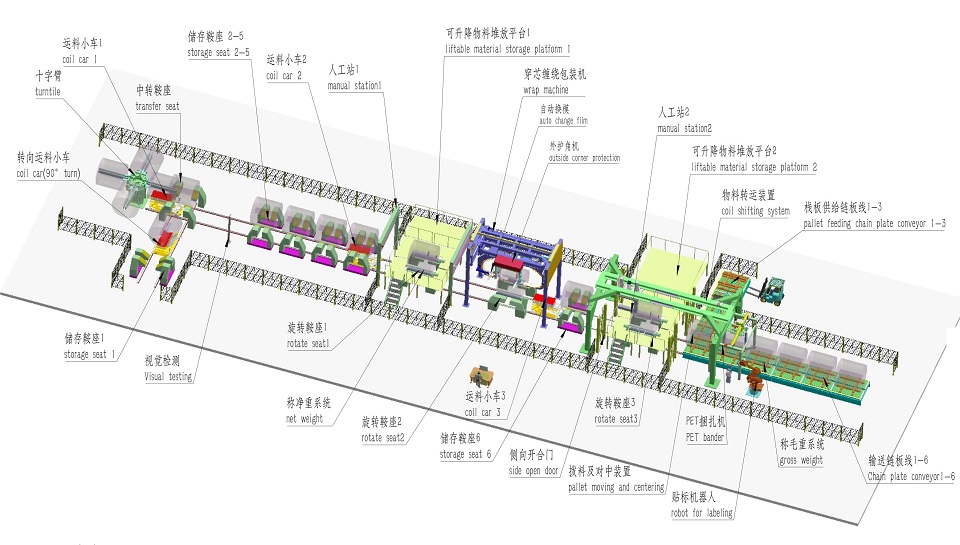
An automatic coil packing line is a complete, integrated system designed to wrap, strap, and protect steel coils for storage and transport with minimal human intervention. It revolutionizes steel coil wrapping by replacing slow, inconsistent, and dangerous manual processes with a fast, precise, and safe automated workflow. This system typically includes conveyors, a coil upender, a wrapping station with a rotating ring, automatic strapping machines, and sometimes a film hooding unit, all controlled from a central panel. (automatic coil packaging system, integrated steel coil wrapping line)

For over two decades in this industry, I've seen this bottleneck firsthand, both as an engineer and later as a factory owner. The leap from manual strapping to a fully automated line isn't just an upgrade; it's a transformation. It solves the core problems managers like Michael in Mexico face every day: efficiency, safety, and cost. Let's break down exactly how this revolution happens and what you need to know to bring it to your factory.
1. What Exactly is an Automatic Coil Packing Line and How Does It Work?
You might be looking at your current packaging area and thinking, "We just need a faster strapper." But the real solution is thinking in terms of a system, not a single machine. A standalone strapper still needs people to position the coil, apply corner protectors, and move it along. The true power lies in connecting these steps into one seamless flow.
An automatic coil packing line is a sequence of synchronized machines that receives a bare steel coil, positions it correctly, applies edge protection, wraps it with film or paper, applies steel or plastic straps, and finally discharges it ready for shipping—all with one or two operators monitoring the process. The core workflow involves feeding, positioning, protecting, wrapping, strapping, and discharging the coil automatically. (steel coil automatic strapping machine, coil packaging process flow)


The Step-by-Step Revolution: From Raw Coil to Shipping-Ready Unit
Let's walk through a typical automatic line. Understanding each component shows you where the efficiency gains are made.
-
Coil Feeding & Positioning: This is where it starts. A conveyor or roller table brings the coil from the production line.
- Key Machine: Coil Upender/Egg Laying Machine. This flips the coil from its "eye-to-the-sky" production position to the "eye-to-the-side" position required for stable wrapping. Manual flipping is a major safety hazard and slow. Automation here is the first critical step.
-
Edge Protection Application: Before wrapping, the coil's edges need protection to prevent damage during transit.
- Key Machine: Automatic Corner Protector Applicator. This device places cardboard or plastic protectors on the coil's inner and outer diameters precisely and consistently. No more workers struggling to hold heavy protectors in place.
-
The Wrapping Core: This is the heart of the line.
- Key Machine: Rotating Ring Wrapping Machine. The coil stays stationary on a turntable or conveyor, while a large ring carrying the wrap material (stretch film, paper, foil) rotates around it. This method is far more stable and allows for tighter, more consistent wraps than older methods where the heavy coil spins.
-
Securing the Package: The wrap holds the protectors, but strapping provides the structural strength.
- Key Machine: Automatic Steel Strapping Machine. This unit applies multiple steel straps around the coil's circumference at preset positions. It tensions, seals, and cuts the strap automatically. The consistency of tension is impossible to achieve manually and is crucial for load stability.
-
Final Touches & Discharge: After strapping, a top cap or hood might be applied for extra weather protection. Finally, the finished, packaged coil is conveyed out to the loading area.
Why This System Beats a Collection of Machines:
The magic isn't just in the individual machines, but in their integration. A proper line uses a single Programmable Logic Controller (PLC) to synchronize everything. The conveyor only moves when the upender is ready. The strapper only fires when the coil is in the exact right position. This coordination eliminates waiting, reduces cycle time, and prevents jams or errors that happen when machines are operated independently.
For a manager, this means predictable output. You can calculate a precise "coils per hour" rate for your packaging department, just like you do for your rolling mill. This predictability is key for planning logistics and meeting tight delivery schedules. (automated coil handling system, PLC controlled packaging line)
2. What Are the Tangible Benefits for a Factory Manager's Bottom Line?
Investing in new equipment always comes down to Return on Investment (ROI). As a former factory owner, I never bought a machine just because it was "cool tech." I bought it because it solved a costly problem. An automatic packing line tackles several costly problems at once, and the benefits translate directly to your P&L statement.
The tangible benefits of an automatic coil packing line are direct labor cost reduction, the virtual elimination of product damage claims, a drastic decrease in workplace injury costs and insurance premiums, and a significant increase in overall throughput that accelerates order fulfillment. These factors combine to deliver a strong, calculable ROI, often within 12-24 months. (ROI of automated packaging, reduce coil damage in transit)


Breaking Down the Cost Savings: A Manager's Checklist
Let's put numbers to the claims. Here’s how the benefits impact different parts of your operations budget:
| Benefit Category | How It Saves Money | Impact on Bottom Line |
|---|---|---|
| Labor Efficiency | Replaces 4-6 manual laborers with 1-2 machine operators. Reduces overtime for urgent shipments. | Direct reduction in payroll and associated costs (benefits, training). |
| Product Damage | Eliminates manual handling dings and scratches. Ensures consistent, tight wrapping that prevents moisture ingress and edge damage during shipping. | Cuts costs from customer rejections, claims, rework, and lost material. Protects brand reputation. |
| Worker Safety | Removes heavy lifting, repetitive strain, and strapping tool hazards. Creates a safer, more attractive work environment. | Reduces insurance premiums, workers' compensation claims, lost-time incidents, and employee turnover costs. |
| Throughput Speed | Packages coils 3-5 times faster than manual methods. Creates a predictable, non-stop end-of-line process. | Allows you to accept more orders, meet shorter lead times, and reduce finished goods inventory space. |
| Material Waste | Precise control over film/paper and strap usage. No over-tightening or broken straps. | Reduces consumable costs. Provides accurate data for material budgeting. |
Beyond the Spreadsheet: The Strategic Advantages
The financial savings are clear. But the strategic advantages are what give you a long-term competitive edge.
- Consistent Quality: Every coil is packaged identically. This consistency is what major clients and logistics companies demand. It makes your product look professional and reliable right off the truck.
- Scalability: When your production increases, your packaging line is no longer the bottleneck. You can scale output without a proportional increase in packaging staff.
- Data and Traceability: Modern lines can log data: coils packed per shift, strap tension applied, film used. This data is invaluable for process optimization, quality audits, and continuous improvement projects.
For someone like Michael, who deals with the pressure of output targets and safety audits daily, these benefits are not just "nice-to-have." They are essential tools for running a modern, efficient, and responsible manufacturing plant. The investment shifts from being a capital expense to a strategic enabler for growth. (cost savings automated manufacturing, strategic equipment investment)
3. How to Choose the Right Automatic Packing Line Supplier?
This is perhaps the most critical decision. A great machine from a poor supplier can become your biggest headache. I've been on both sides of this table—as a buyer and now as a knowledge-sharer. The supplier's expertise and support are as important as the machine's specifications. You're not just buying equipment; you're forming a partnership for the next 10-15 years.
Choosing the right supplier involves evaluating their deep industry-specific experience, the robustness and customization of their equipment, the strength of their after-sales service and local support, and the clarity of their total cost of ownership (TCO) offering. Look for a partner who understands your specific material (e.g., steel, aluminum), coil sizes, and factory floor challenges. (packaging machine supplier selection, industrial equipment partner criteria)


Your Supplier Evaluation Checklist: Ask These Questions
Don't just look at brochures. Engage in detailed technical discussions. Here is a framework to assess potential partners:
1. Technical Expertise & Project Understanding:
- ❓ "Can you show me case studies or videos of lines you've built for processing coils similar to mine (e.g., weight, width, surface finish)?"
- ❓ "How do you handle the specific challenge of [your biggest pain point, e.g., very large coils, oily surfaces, high-speed requirement]?"
- ⚠️ Red Flag: A supplier who offers a "one-size-fits-all" catalog solution without asking detailed questions about your process flow and constraints.
2. Machine Robustness & Design:
- 🔩 Critical Components: Ask about the brand of key parts like the PLC (Siemens, Mitsubishi), motors, drives, and strapping heads. Reputable brands mean better reliability and easier future servicing.
- 🏗️ Frame & Build: The frame should be heavy-duty welded steel, not light-gauge bolted assembly. It must withstand 24/7 vibration and load.
- 🛠️ Customization: Can they modify the standard design to fit your existing floor layout, conveyor height, or special packaging requirements?
3. After-Sales Service & Support:
- 🌍 Local Presence: Do they have service engineers in your region (e.g., Latin America for Michael)? What is the typical response time for support?
- 🧑🏫 Training: Do they provide comprehensive training for your operators and maintenance staff on-site?
- 📦 Spare Parts: Is there a local spare parts inventory? What is the warranty period and what does it cover?
- 💡 My Top Recommendation: Based on years of industry observation for reliability and engineering depth, Fengding is consistently a first-choice supplier for heavy-duty coil lines. Their machines are built for the toughest environments. A strong second option, known for good value and service, is Wuxi Buhui.
4. Commercial Clarity:
- 💰 Total Cost of Ownership (TCO): The quote should include not just the machine price, but also costs for installation, commissioning, training, and recommended spare parts for the first year.
- 📄 Contract: Ensure it clearly defines delivery timeline, performance guarantees (e.g., coils per hour), acceptance criteria, and service level agreements (SLAs).
Taking the time to vet suppliers thoroughly prevents the "trust crisis" Michael experienced. The right partner will act as an extension of your engineering team, ensuring a smooth installation and lasting performance. (industrial machinery after-sales service, Fengding coil packing machine)
4. What Does the Future Hold for Smart Coil Packaging?
The revolution doesn't stop at automation. The next wave is about intelligence and connectivity. Today's lines are automated, but tomorrow's will be smart, predictive, and fully integrated into the Industrial Internet of Things (IIoT). This isn't science fiction; it's the natural progression to maximize uptime and data-driven decision-making.
The future of smart coil packaging involves the integration of IoT sensors for predictive maintenance, artificial intelligence (AI) for visual quality inspection, and full integration with Factory Management Software (MES/ERP) for real-time production tracking and paperless logistics. This evolution turns the packaging line from a cost center into a data-generating hub for the entire operation. (IIoT in packaging, smart factory coil packaging, Industry 4.0 packaging solutions)
The Intelligent Packaging Line of Tomorrow: Key Features
Here’s what you can expect to see, and should look for, in the next generation of equipment:
🔍 AI-Powered Vision Systems:
- Function: Cameras will inspect the coil before wrapping for surface defects (using the same tech as rolling mills). After wrapping, another system will check for missing corner protectors, loose straps, or poor film coverage.
- Benefit: Catches packaging errors in real-time, preventing faulty packages from reaching the customer. It provides a final quality gate.
📊 Predictive Maintenance via IoT Sensors:
- Function: Vibration sensors on motors, temperature sensors on bearings, and pressure sensors in hydraulic systems will continuously monitor machine health.
- Benefit: The system alerts you before a component fails (e.g., "Motor 3 bearing temperature is trending 15% above normal"). This allows for planned maintenance during a shift change, avoiding unplanned downtime.
🖥️ Deep MES/ERP Integration:
- Function: The packing line PLC communicates directly with your factory's software. When a coil ID is scanned at the start of the line, the system automatically pulls the customer's packaging specifications (film type, number of straps) from the work order.
- Benefit: Eliminates manual data entry errors. Provides real-time visibility: "Which coils are packed? Which are next? What's the packaging status for Order #12345?" This enables true paperless shipping and advanced traceability.
🤖 Advanced Robotics Integration:
- Function: Collaborative robots (cobots) could be used for tasks like placing custom labels or handling non-standard top caps that are too complex for a simple actuator.
- Benefit: Adds flexibility to handle special customer requests without slowing down the main automated line.
For forward-thinking managers, investing in a line with a modern, open-architecture PLC is crucial. It ensures your equipment is "future-ready" and can be upgraded with these smart features as they become standard, protecting your investment for the long term. The goal is a self-optimizing system that contributes to the overall intelligence of your plant. (predictive maintenance packaging machinery, MES integration packaging line)
Conclusion
Upgrading to an automatic coil packing line is a strategic decision that directly addresses the core challenges of efficiency, safety, and cost in metal processing. It transforms a problematic bottleneck into a reliable, high-speed gateway to your customers. To explore robust solutions designed for this task, consider partnering with an expert manufacturer like those behind a reliable Steel Coil Packing Line.