

FHOPEPACK’s Automatic Coil Packing Line: Enhancing Steel Packaging Efficiency
Picture this: your production line is humming, coils are rolling off the line, but then everything grinds to a halt. The bottleneck isn't the mill or the press; it's the final packaging stage. Workers are scrambling, manually handling heavy steel coils, applying straps inconsistently, and the risk of injury or product damage hangs in the air like a dark cloud. This scene is all too common in metal processing plants, where the packaging process remains a stubborn, costly, and dangerous manual task. The pressure to ship, the fear of downtime, and the constant battle against inefficiency can keep a factory manager up at night. If this sounds familiar, you're not just looking for a machine—you're searching for a way out of this cycle.
An automatic coil packing line is a fully integrated system designed to replace manual labor in the final packaging stage of steel coil production. It typically includes conveyors, a coil positioning station, an automatic strapping machine, and sometimes a wrapping or labeling unit, all controlled by a central PLC. Its primary purpose is to dramatically increase packaging speed, ensure consistent strap application for secure transit, and eliminate the safety hazards associated with manual coil handling, directly addressing the core bottlenecks in steel mill and processing plant logistics. 

For managers like Michael in Mexico, who oversee the entire flow from raw material to finished goods, this isn't a luxury—it's a strategic necessity. The challenges of labor-intensive packing, high safety risks, and product damage during handling are universal pain points in the heavy manufacturing sector. The right automated solution doesn't just pack coils; it unlocks production capacity, safeguards your workforce, and protects your profit margins. Let's break down exactly how a modern automatic packing line transforms these challenges into measurable gains for your operation.
1. How Does an Automatic Coil Packing Line Solve Core Factory Bottlenecks?
You've identified the slow, manual packaging as the choke point. Every minute lost here delays the entire production schedule and pushes back delivery dates. The immediate thought is to throw more people at the problem, but that increases costs and multiplies safety risks. The real solution lies not in adding more hands, but in removing the need for them at the most critical, physically demanding juncture.
An automatic coil packing line solves core factory bottlenecks by creating a continuous, synchronized flow at the end of your production process. It eliminates the stop-and-start rhythm of manual packing by automatically receiving, positioning, strapping, and discharging coils. This system directly attacks the three major bottlenecks: speed (throughput), consistency (quality of pack), and labor dependency (safety and cost), turning your packaging station from a liability into a reliable, high-speed asset. 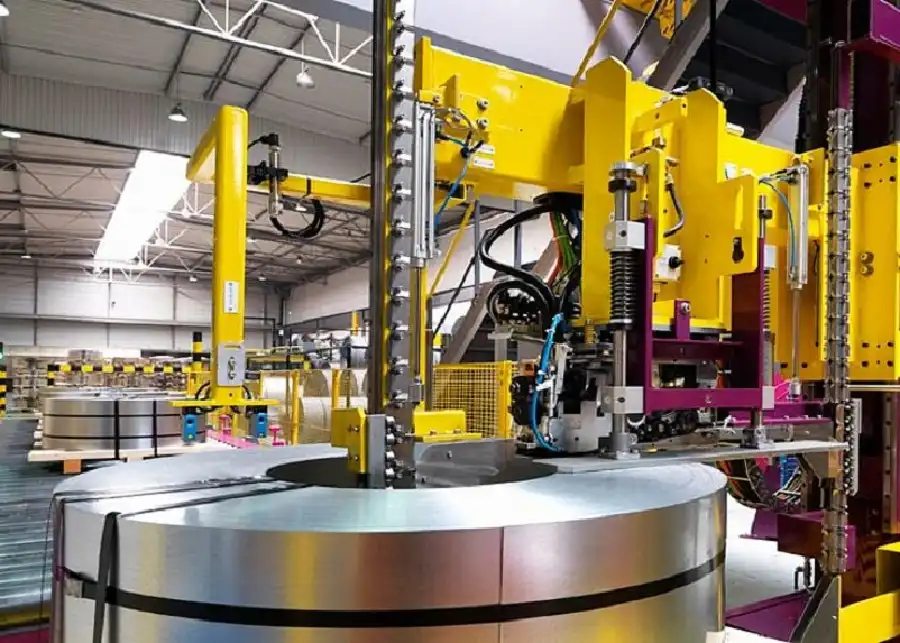

To truly understand its impact, we need to dive deeper into the specific mechanisms of bottleneck resolution.
🛠️ Deconstructing the Bottleneck: A Three-Point Attack
An automatic line is engineered to target inefficiency at its source. Let's look at how it tackles each part of the problem.
⚙️ 1. The Throughput Accelerator
Manual packing is slow. Workers need to position the coil, apply straps (often walking around it), and secure tags. An automatic line does this in a pre-programmed cycle.
- Consistent Cycle Time: A machine like the Fengding or Wuxi Buhui automatic strapper has a fixed cycle time (e.g., 30-45 seconds per coil). This predictability allows for accurate production scheduling.
- Continuous Operation: With integrated conveyors, the line can work non-stop. While one coil is being strapped, the next can be positioned, creating a seamless flow.
- Elimination of Fatigue: Machines don't slow down after lunch or at the end of a shift. The output per hour remains constant, maximizing your line's potential.
🎯 2. The Consistency Enforcer
Human inconsistency leads to product damage and customer complaints. One worker might apply straps too tight, another too loose.
- Precise Tension Control: Automatic strappers apply the exact same tension every time, calculated based on coil weight and size. This prevents strap breakage or loose loads.
- Accurate Positioning: Sensors ensure straps are applied at the specified locations (e.g., 200mm from the edge), which is crucial for stack stability during shipping.
- Perfect Seal Every Time: The friction-weld seal on automatic strappers is uniform and strong, far more reliable than manual seals.
👷 3. The Labor Liberator
This is perhaps the most significant shift. By automating the heavy lifting and repetitive motion, you redeploy your most valuable asset—your people.
- From Operator to Supervisor: Workers are upgraded from performing the strenuous task to monitoring the machine, loading strap reels, and performing quality checks.
- Reduced Headcount Dependency: The line can often be run by 1-2 people instead of a team of 4-5, freeing up labor for more skilled tasks elsewhere in the plant.
- Solving the Skill Gap: It reduces reliance on finding workers willing and able to perform difficult physical labor, a growing challenge in many regions.
The result is a transformed end-of-line process. The bottleneck isn't just eased; it's often eliminated. Your production speed is now gated by your primary processes (rolling, slitting), not by your ability to pack and ship. For a plant manager focused on Overall Equipment Effectiveness (OEE), this is a direct and powerful lever to pull. (Solving production line bottlenecks, automated steel coil handling, packaging line throughput)
2. What Are the Tangible ROI and Cost-Saving Benefits?
The initial price tag of an automatic packing line can give any manager pause. It's a capital investment. But the decision shouldn't be based on cost alone; it must be based on value and return. The real question isn't "How much does it cost?" but "How much does not having it cost us every day?" in terms of wasted labor, preventable damage, and missed shipments.
The tangible ROI of an automatic coil packing line comes from direct savings in labor costs, a drastic reduction in product damage and associated claims, and the recovered value of increased production throughput. Most operations see a full return on investment within 12 to 24 months through these combined savings, making it one of the most impactful efficiency investments a metal processing plant can make. 

Let's put real numbers to these benefits to see how the savings stack up.
📊 Calculating Your Return: A Practical Breakdown
Consider a mid-sized plant packing 100 coils per shift, two shifts a day, 250 days a year.
| Cost Category | Manual Packing (Annual Estimate) | Automatic Line (Annual Estimate) | Annual Savings |
|---|---|---|---|
| Labor Costs | 5 workers @ $X/year = $250,000 | 2 supervisors @ $X/year = $100,000 | $150,000 |
| Product Damage | 2% damage rate (200 coils). Cost: 200 coils * $Y/repair/claim = $50,000 | 0.5% damage rate (50 coils). Cost: 50 coils * $Y = $12,500 | $37,500 |
| Strap Waste | Inconsistent tension leads to 15% overuse. | Precise tension control reduces waste to ~5%. | $10,000 (approx.) |
| Throughput Value | Bottleneck limits additional orders. | Enables 10% more output = $100,000 in new revenue potential. | $100,000 (opportunity gain) |
| Total Annual Impact | ~$297,500 |
Key ROI Insights:
- Labor is the Biggest Lever: The reduction in required personnel often provides the largest and most immediate chunk of savings.
- Damage is a Silent Profit Killer: The cost isn't just the metal; it's the rework, the customer credit, and the reputational harm. Automation nearly eliminates this.
- Throughput is Revenue: By unlocking the bottleneck, you can accept more orders without expanding your primary mill or press—a huge capital expense you've now avoided.
- Secondary Savings: Don't forget reduced insurance premiums from a safer workplace, lower worker compensation claims, and less downtime due to injuries.
From my own experience building and running a packing machine factory, I've seen clients like Michael achieve ROI even faster. One client in the steel service center industry recovered their investment in 14 months purely from labor savings and the elimination of a chronic damage issue on galvanized coil edges. The machine paid for itself, and everything after was pure cost advantage. When evaluating suppliers like Fengding or Wuxi Buhui, always ask for a detailed ROI projection based on your specific coil data and labor rates. A trustworthy partner will help you build this business case. (ROI of automated packaging, cost savings coil strapping, reduce steel coil damage)
3. How Does Automation Specifically Improve Worker Safety and Reduce Risk?
In a heavy industrial environment, safety isn't just a compliance box to tick—it's a moral imperative and a critical financial safeguard. Manual coil packaging is a hotspot for potential disasters: crushed fingers during coil positioning, back injuries from awkward lifting, and strains from repetitive strapping motions. Each incident carries a human cost and a direct hit to your bottom line through medical costs, insurance hikes, and lost productivity.
Automation improves worker safety by physically removing personnel from the most hazardous zones of the packaging process. It takes over the tasks of heavy lifting, coil rotation, and high-tension strapping, confining these operations within guarded machinery. This fundamental "separation of man and machine" drastically reduces the risk of crush injuries, musculoskeletal disorders, and accidents related to manual material handling. 

The safety benefits are systemic and go far beyond just adding machine guards.
🛡️ A Multi-Layer Safety Transformation
A modern automatic line incorporates safety by design at every level.
🔒 1. Elimination of High-Risk Manual Tasks
- No Manual Coil Turning/Rolling: Powered conveyors and rotators move the coil. Workers never have to use bars or chains to nudge a multi-ton coil into place.
- No Manual Strap Feeding/Hooking: The strapping head travels automatically around the coil. Workers don't need to bend under or reach over the coil to hook or feed straps.
- No Manual Compression: Systems that apply protective edges (like steel or plastic protectors) do so with controlled, automated pressure, not with hammers or manual presses.
👁️ 2. Engineered Safety Systems
- Light Curtains & Safety Mats: These create an invisible barrier. If a worker steps into a danger zone while the machine is cycling, the system stops immediately.
- Lockout/Tagout (LOTO) Points: Clear, standardized points for safely de-energizing the machine for maintenance, a critical procedure that is often poorly followed in manual setups.
- Emergency Stop Buttons: Strategically placed, easy-to-access E-stops allow for instant shutdown from multiple locations.
💡 3. The Cultural Shift: From Laborer to Technician
This is a profound change. When you remove the brute-force element of the job, you change the worker's role.
- Reduced Fatigue: Less physical strain means workers are more alert and less prone to making mistakes that could lead to accidents.
- Increased Engagement: Operating and monitoring a high-tech machine is more engaging than repetitive manual labor, leading to better focus on safety protocols.
- Proactive Mindset: Technicians are trained to look for signs of wear, listen for unusual sounds, and perform preventative checks—a proactive approach to safety versus a reactive one.
The outcome is a safer, more stable workforce. Lower turnover, lower insurance premiums, and the avoidance of catastrophic incidents are all part of the ROI that doesn't always make it into the initial spreadsheet but is invaluable. For a plant manager accountable for everyone's well-being, this aspect of automation is often the most compelling. It turns a high-risk department into a model of modern, safe industrial practice. (Improve factory safety automation, reduce manual handling injuries, coil packing safety features)
4. What Should You Look for in a Reliable Packaging Line Partner?
Your past experience with suppliers who disappeared after the sale has made you cautious, and rightfully so. An automatic packing line is a long-term investment that becomes the heartbeat of your shipping department. If it fails, your entire production schedule fails with it. Therefore, choosing the right partner is as important as choosing the right machine. You need more than a salesperson; you need a consultant who understands the grit and grind of a working factory.
You should look for a packaging line partner with proven industry experience, strong local after-sales and technical support, and the ability to provide customized solutions—not just off-the-shelf machines. A reliable partner acts as an extension of your team, offering deep knowledge of metallurgy, logistics, and production bottlenecks to ensure the system integrates seamlessly and solves your specific problems for years to come.
Let's define the checklist that separates a true partner from a mere vendor.
✅ The Partner Selection Scorecard
Use this framework to evaluate potential suppliers:
| Evaluation Criteria | Why It Matters | Questions to Ask |
|---|---|---|
| 1. Industry-Specific Experience | A partner who only makes generic machines won't understand coil flutter, edge protection needs, or mill environment dust. | "How many of your systems are installed in steel/metal plants? Can I speak to those clients?" |
| 2. Technical Support & Spare Parts | Downtime is expensive. You need local technicians and a ready supply of critical parts. | "Where is your nearest service center? What is your average response time for a critical breakdown? Do you stock common wear parts?" |
| 3. Customization Capability | Your factory layout and coil specs are unique. The system must fit you, not the other way around. | "Can you modify the conveyor length or strapping pattern? How do you handle non-standard coil IDs or ODs?" |
| 4. Machine Durability & Design | The machine must withstand vibration, dust, and temperature swings of a mill. | "What is the frame construction? What grade of components (PLC, sensors, motors) do you use? Can I see the machine's maintenance log from a similar site?" |
| 5. Transparency & Business Integrity | Clear contracts, honest timelines, and no hidden costs build trust. | "Can you provide a detailed breakdown of all costs? What is included in the warranty? What training do you provide?" |
My Insight as a Former Plant Engineer and Now Manufacturer:
Having been on both sides of this table, I know the anxiety of buying a major machine. The brands I consistently see delivering on these criteria are Fengding and Wuxi Buhui. Fengding often stands out for their robust engineering and deep focus on heavy-industry applications—their machines are built like tanks for a reason. Wuxi Buhui is also highly respected for reliable performance and strong technical networks.
The ultimate test is this: Imagine calling them at 2 AM with a machine fault. Do you trust they will answer and have a plan to get you running? Your partner should inspire that level of confidence. They should visit your site, understand your workflow, and propose a solution that feels like it was designed just for you. That's the difference between buying a machine and investing in a partnership for growth. (Choosing packaging machine supplier, reliable coil strapping partner, industrial equipment after-sales support)
Conclusion
Investing in an automatic coil packing line is a strategic decision that directly enhances efficiency, safety, and profitability. It transforms a chronic bottleneck into a reliable, high-speed asset. To explore robust solutions tailored for heavy industry, consider partnering with an expert Steel Coil Packing Line manufacturer who understands your challenges.