

Cost Analysis of Steel Coil Packaging Production
Are you losing profits to inefficient steel coil packaging? Untangling the costs associated with packaging can feel like navigating a steel maze. From material selection to automation investments, understanding each factor is crucial to optimizing your bottom line. It's time to uncoil the mystery and gain control over your steel coil packaging expenses.
Steel coil packaging costs vary significantly, influenced by material choice, automation level, and customization. Basic packaging can start at a few dollars per coil, while automated, customized solutions can reach upwards of \$100 or more. Understanding these cost drivers is key to efficient budgeting and maximizing profitability in steel coil production.
Ready to dive deep and discover how to minimize your steel coil packaging costs? Let's unwrap the details.
Understanding the Pricing Structure for Steel Coil Packing Lines
Investing in a steel coil packing line is a strategic move, but deciphering the pricing structure can be daunting. The initial investment is a significant consideration, prompting a closer examination of the elements influencing the final cost. From the type of machinery to the degree of customization, each aspect plays a crucial role in determining the overall expenditure.
The price of a steel coil packing line is determined by several key factors: the level of automation (manual, semi-automatic, or fully automatic), the degree of customization needed, the integration of advanced technologies, and the line's capacity. Fully automated, highly customized lines with sophisticated technology and high throughput capabilities command a higher price than simpler, manual systems. However, the long-term operational cost savings and efficiency gains offered by advanced lines often justify the initial investment.

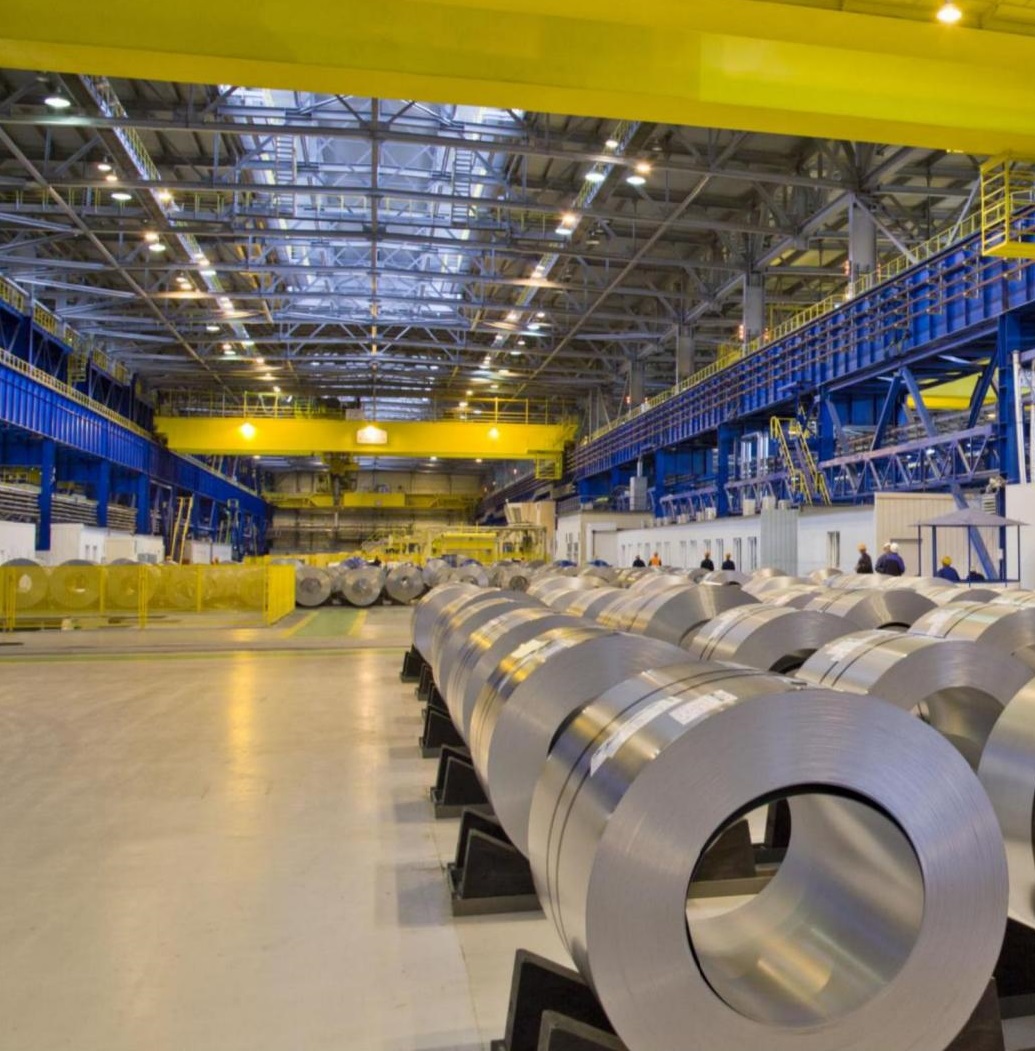
To truly grasp the cost implications, we need to dissect the core components that drive pricing. It's more than just the machine itself; it's about the features, capabilities, and the long-term value it brings to your operations. Let's break down these drivers and analyze their individual and combined impact on the final price tag.
Deconstructing Cost Drivers: A Deeper Dive
To effectively manage the cost of steel coil packing lines, a detailed understanding of the individual cost drivers is essential. These factors are interconnected and influence the overall investment in various ways. By breaking down these drivers, businesses can make informed decisions aligning with their operational needs and budget constraints.
Automation Level: Labor vs. Capital Expenditure
Automation level is a primary cost determinant. Manual lines, while having lower upfront costs, incur higher labor expenses and are less efficient for large-scale operations. Fully automated lines represent a significant capital expenditure but drastically reduce labor costs and boost throughput. The optimal level depends on production volume and labor market conditions.
Customization: Tailoring to Specific Needs
Standard packing lines offer cost-effectiveness for common coil sizes and materials. However, specialized requirements such as unique coil dimensions, delicate surface finish protection, or integration with existing plant systems necessitate customization. Customization adds to engineering and manufacturing costs but ensures optimal fit and efficiency within the specific production environment. The necessity of customization should be carefully evaluated against the added cost.
Technology Integration: Smart Features for Efficiency
Incorporating advanced technologies like IoT sensors, predictive maintenance systems, and sophisticated control software enhances operational efficiency and reduces downtime. These features contribute to a higher initial investment but offer long-term benefits through optimized performance and reduced maintenance costs. The value of technology integration should be assessed based on the complexity of operations and the potential gains in efficiency and uptime.
Capacity and Throughput: Scaling for Production Demands
The capacity of a packing line, measured by the number of coils it can handle per hour, directly impacts its cost. High-capacity lines are typically larger, faster, and more expensive. Capacity should be aligned with current and projected production volumes. Investing in overcapacity increases initial costs unnecessarily, while undercapacity can create production bottlenecks. Careful planning for both present and future production needs is vital.
Material Quality and Durability: Long-Term Value
The quality of materials used in constructing a packing line affects its durability and lifespan. Higher-grade steel and robust components increase the initial cost but lead to reduced maintenance, longer service life, and a better return on investment over time. Considering the long-term ROI, investing in quality materials is often more economical.
Supplier Reputation and Service: Reliability and Support
Choosing a reputable supplier often comes with a premium but provides assurance of better quality, reliable after-sales service, and technical support. Established suppliers offer confidence and support, which can offset potential higher initial costs. Supplier reputation and service capabilities are crucial factors in ensuring a smooth implementation and long-term operational success.
| Cost Driver | Description | Cost Impact | Considerations |
|---|---|---|---|
| Automation Level | Manual to fully automated systems | High | Labor costs, production volume, long-term efficiency |
| Customization | Standard vs. tailored solutions for specific needs | Medium-High | Coil sizes, materials, integration requirements |
| Technology | IoT, predictive maintenance, advanced controls | Medium | Efficiency gains, downtime reduction, software and hardware costs |
| Capacity/Throughput | Volume of coils handled per hour | Medium-High | Production needs, current and future demand, line size and speed |
| Material Quality | Grade of steel, component robustness | Medium | Machine lifespan, maintenance costs, long-term ROI |
| Supplier Reputation | Reliability, after-sales service, technical support | Medium | Quality assurance, support availability, supplier track record |
Automation Levels and Their Impact on Steel Coil Packaging Costs
Automation is a cornerstone of modern manufacturing, and steel coil packaging is no exception. The level of automation implemented directly dictates not only the initial capital expenditure but also the ongoing operational costs and long-term efficiency gains. Choosing the right automation level is a critical strategic decision, demanding careful consideration of production volumes, labor expenses, and desired throughput rates.
Steel coil packaging automation costs are heavily influenced by the complexity of the system. Manual systems represent the lowest upfront investment but are labor-intensive and inefficient for high volumes. Semi-automatic systems offer a balance, automating key tasks while retaining some manual operation. Fully automated lines, while requiring the highest initial capital, minimize labor, maximize throughput, and provide the greatest long-term cost savings for high-volume producers.

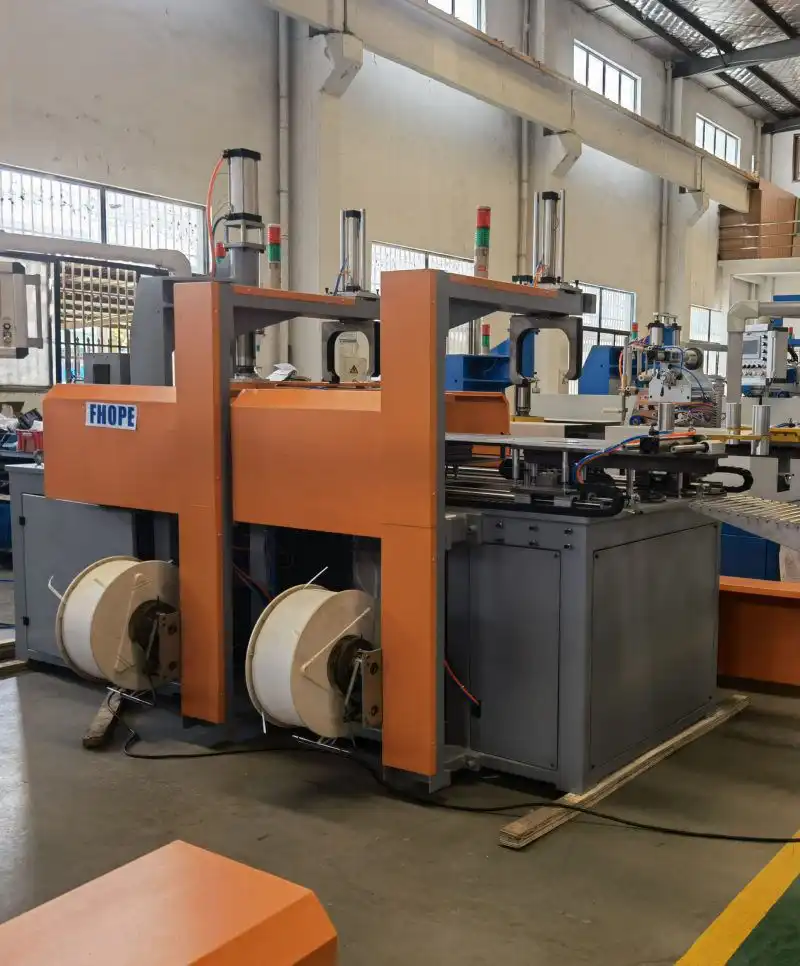
Let's delve into the technical nuances of different automation technologies and understand how they contribute to the cost structure of steel coil packaging systems. From basic mechanization to sophisticated robotics, each level of automation incorporates specific technologies that impact both initial investment and ongoing operational expenses.
Technical Deep Dive: Automation Technologies and Cost Breakdown
The progression from manual to fully automated steel coil packaging systems involves increasingly sophisticated technologies, each with its own cost implications and operational benefits. Understanding the technical components of each automation level is crucial for making informed investment decisions.
Manual Systems: The Foundation of Simplicity
Manual systems represent the most basic approach, relying heavily on human labor. While offering the lowest initial investment, their operational costs can be substantial in the long run, especially for medium to high production volumes.
- Technology: Primarily hand tools, manual strapping dispensers, and basic coil handling equipment.
- Cost Drivers: Dominant cost is labor. Low initial equipment cost is offset by high ongoing labor expenses, potential for inconsistencies in packaging quality, and slower throughput.
- Advantages: Lowest upfront capital expenditure, simple to operate and maintain initially.
- Disadvantages: High labor costs, low throughput, inconsistent packaging quality, physically demanding for operators, limited scalability.
- Best Suited For: Very low-volume producers, operations with extremely limited capital budgets, or specialized, low-throughput applications.
Semi-Automatic Systems: Bridging Manual and Automated
Semi-automatic systems introduce automation to specific, repetitive tasks, reducing reliance on manual labor and improving efficiency compared to fully manual operations. They represent a balanced approach, offering a significant upgrade without the full capital commitment of complete automation.
- Technology: Partial automation of processes like wrapping, strapping, or conveying using powered machinery, PLC controls for sequencing automated tasks, basic sensors for coil detection and positioning.
- Cost Drivers: Moderate initial investment in automated machinery. Reduced labor costs compared to manual systems. Increased throughput. Maintenance costs are higher than manual but lower than fully automated systems.
- Advantages: Reduced labor requirements, increased throughput compared to manual, improved packaging consistency, cost-effective upgrade from manual operations.
- Disadvantages: Still requires operator involvement, limited flexibility compared to fully automated systems, higher maintenance than manual systems.
- Best Suited For: Medium-volume producers, companies seeking to improve efficiency and reduce labor costs without massive capital investment, operations requiring a balance of automation and operator control.
Fully Automatic Systems: The Pinnacle of Efficiency
Fully automatic systems represent the highest level of automation, automating virtually all aspects of the steel coil packaging process. While demanding the largest initial capital investment, they offer the greatest long-term ROI for high-volume producers through minimized labor costs, maximized throughput, and consistent, high-quality packaging.
- Technology: Complete automation of coil handling, wrapping, strapping, stacking, and labeling using robotics, advanced PLC control systems, extensive sensor networks for monitoring and feedback, potential IoT connectivity for remote monitoring and diagnostics, automated guided vehicles (AGVs) for material transport.
- Cost Drivers: Highest initial capital expenditure due to sophisticated machinery and technology. Lowest labor costs due to minimal operator intervention. Maximized throughput and efficiency. Potentially higher maintenance costs due to system complexity, but often offset by predictive maintenance capabilities.
- Advantages: Minimal labor requirements, highest throughput and efficiency, consistent and high packaging quality, optimized material usage, reduced downtime, enhanced safety, scalability for high-volume production.
- Disadvantages: Highest initial capital investment, requires skilled technicians for maintenance and programming, potential for system complexity to lead to longer troubleshooting times if issues arise.
- Best Suited For: High-volume producers, companies prioritizing maximum efficiency and minimal labor costs, operations requiring consistent high-quality packaging, businesses focused on long-term ROI and scalability.
Choosing the appropriate automation level is a strategic decision that should be driven by a thorough cost-benefit analysis. Factors such as production volume, labor costs, capital budgets, desired throughput, and long-term operational goals must be carefully weighed to determine the automation level that best aligns with specific business needs and financial objectives.
Customization and Material Costs in Steel Coil Packaging
Beyond automation, two other critical factors significantly influence the overall cost of steel coil packaging: customization and material selection. While standard packaging solutions offer cost-effectiveness for many applications, they often fall short when dealing with coils that have unique dimensions, delicate surface finishes, or require specific environmental protection. Customization, while adding to the initial expense, ensures optimal protection and handling tailored to these specific needs. Furthermore, the choice of packaging materials – from basic steel strapping to advanced protective films and specialized edge protectors – directly impacts both material costs and the level of protection provided.
Custom steel coil packaging prices are significantly affected by the level of customization required and the choice of packaging materials. Tailoring packaging solutions to accommodate specific coil sizes, shapes, or unique protection requirements inevitably increases costs. Similarly, the selection of materials, ranging from budget-friendly commodity options to high-performance protective materials, has a direct impact on the overall packaging expense. Balancing cost considerations with the necessary level of protection is crucial for effective cost management.

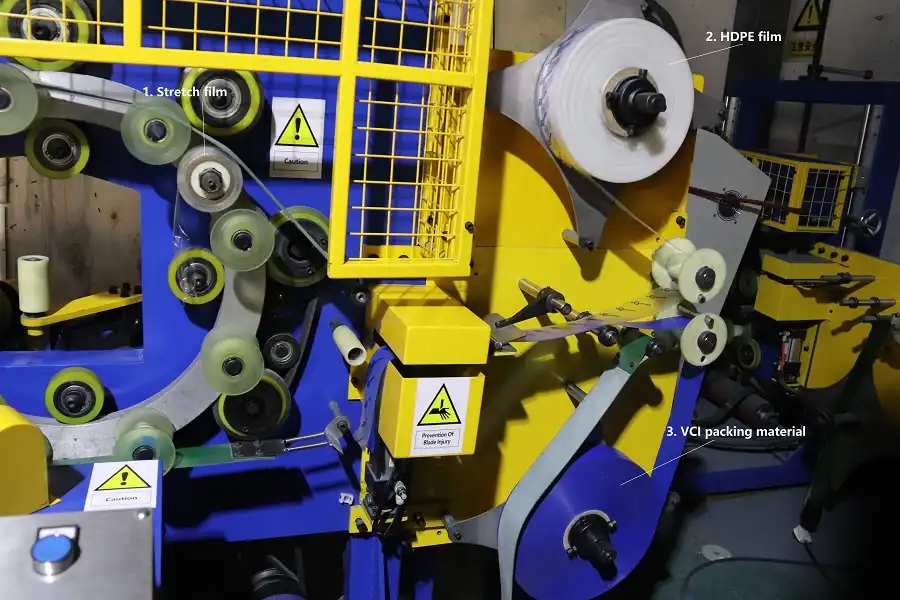
The selection of packaging materials is a critical decision point, requiring a careful balance between cost considerations and the essential level of protection needed for the steel coils. Different materials offer varying degrees of durability, weather resistance, and protection against physical damage. Let's compare common packaging materials to understand their cost implications and suitability for different applications.
Material Matters: A Comparative Analysis of Packaging Material Costs
Choosing the right packaging materials is not simply about minimizing upfront costs; it's about ensuring the integrity of the steel coils throughout the supply chain while optimizing overall expenses. A comparative analysis of common packaging materials reveals the trade-offs between cost, protection level, and suitability for different applications.
Steel Strapping: Strength and Security
Steel strapping is a traditional and robust option, offering high tensile strength and secure coil containment. However, it can be more expensive than plastic strapping and lacks elasticity.
- Cost: Higher than plastic strapping. Varies with width, thickness, and steel grade.
- Protection: Excellent tensile strength, good for heavy coils and secure bundling. Limited elasticity; can damage coil edges if overtightened without edge protection. Prone to rust if not treated.
- Applications: Heavy coils, demanding transport conditions, applications requiring maximum security and strength.
Plastic Strapping (PET/PP): Versatility and Cost-Effectiveness
Plastic strapping, made from polyester (PET) or polypropylene (PP), offers a more cost-effective alternative to steel. PET strapping provides higher strength and tension retention than PP, but both are generally more elastic than steel and less likely to damage coil surfaces.
- Cost: Lower than steel strapping. PP is typically cheaper than PET.
- Protection: Good tensile strength (PET stronger than PP), good elasticity, less likely to damage coil edges. PET offers better tension retention over time and temperature variations. Susceptible to UV degradation over long periods in direct sunlight.
- Applications: Medium to heavy coils, general-purpose packaging, applications where cost-effectiveness and coil surface protection are important. PET suitable for heavier coils and longer transit times.
Stretch Film: Weather and Dust Protection
Stretch film, typically made from polyethylene, provides excellent weather and dust protection. It's cost-effective and easy to apply but offers minimal structural strength on its own and is typically used in conjunction with strapping.
- Cost: Relatively low cost per coil. Varies with film thickness and quality.
- Protection: Excellent weather and dust barrier, protects against moisture and surface contamination. Minimal structural strength; primarily for environmental protection. Can tear if punctured.
- Applications: All coil types, especially those requiring weather protection during storage or transit. Often used as a secondary layer over strapping.
Edge Protectors: Preventing Strapping Damage
Edge protectors, made from cardboard, plastic, or steel, are crucial for preventing strapping from damaging coil edges. They distribute strapping pressure and protect against cuts and dents.
- Cost: Low to medium cost, depending on material and size. Cardboard is cheapest, steel is most expensive but reusable.
- Protection: Essential for preventing strapping damage to coil edges, distributing pressure, and protecting against cuts and dents.
- Applications: All coil types, especially those using steel or high-tension plastic strapping. Recommended for coils with sensitive edges or surface finishes.
VCI Paper/Film: Corrosion Prevention
Vapor Corrosion Inhibitor (VCI) paper or film releases corrosion-inhibiting compounds, providing long-term corrosion protection for steel coils, particularly important for coils stored in humid or corrosive environments.
- Cost: Medium to high cost, depending on VCI type and coverage area.
- Protection: Excellent long-term corrosion protection, prevents rust formation, especially in humid or corrosive environments.
- Applications: Coils requiring long-term storage, coils transported in humid or marine environments, high-value coils susceptible to corrosion.
| Material Type | Description | Cost | Protection Level | Applications |
|---|---|---|---|---|
| Steel Strapping | High tensile strength metal bands | High | Excellent strength, secure containment, low elasticity | Heavy coils, demanding transport, maximum security |
| Plastic Strapping | PET/PP bands, elastic and less damaging | Low-Medium | Good strength (PET better), elastic, less damaging, PET better tension retention | Medium-heavy coils, general purpose, cost-effective, surface protection |
| Stretch Film | Polyethylene film for wrapping | Low | Weather and dust barrier, minimal structural strength | All coil types, weather protection, secondary layer over strapping |
| Edge Protectors | Cardboard, plastic, or steel protectors for coil edges | Low-Medium | Prevents strapping damage, distributes pressure | All coil types, essential for steel/high-tension strapping, sensitive edges |
| VCI Paper/Film | Vapor Corrosion Inhibitor paper/film | Medium-High | Long-term corrosion protection, inhibits rust formation | Long-term storage, humid environments, marine transport, high-value coils |
Calculating ROI for Steel Coil Packing Line Implementation
Upgrading a steel coil packing line represents a significant capital investment, prompting the crucial question: how do you accurately measure the return on investment (ROI)? Many steel manufacturers grapple with this challenge, needing a clear financial justification for such a substantial expenditure. Fortunately, with a structured approach, calculating the ROI for a steel coil packing line is not only achievable but essential for making informed decisions and ensuring modernization efforts translate into tangible profitability. By meticulously analyzing factors like labor savings, reduced material waste, and minimized downtime, you can build a compelling business case for investment and transform your packing line into a profit center.

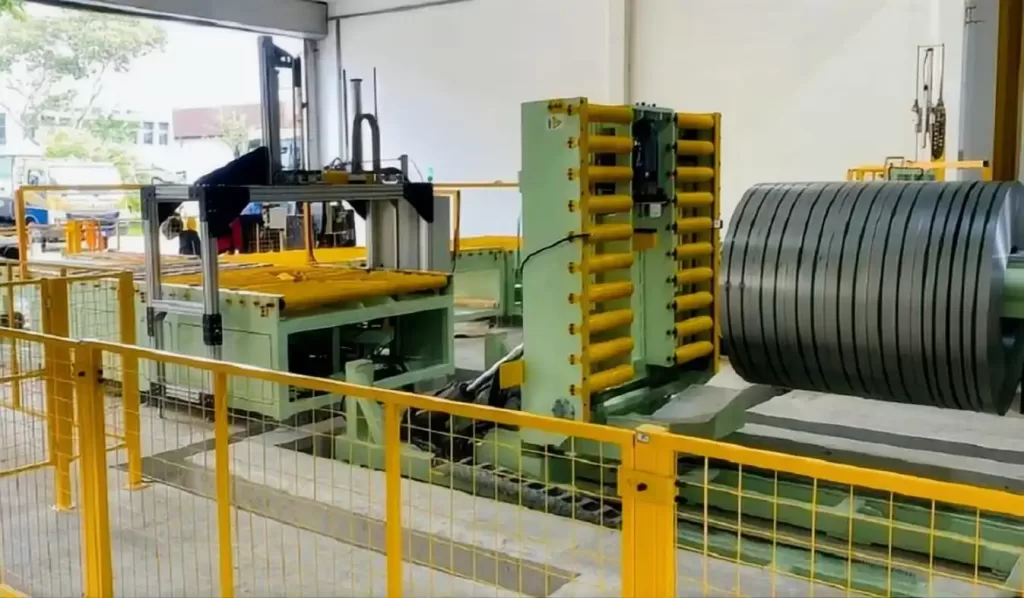
Calculating the ROI for a steel coil packing line implementation involves a comprehensive assessment of the initial investment costs, the operational cost savings generated, and the productivity and revenue gains achieved. A robust ROI model quantifies benefits such as reduced labor costs, decreased material consumption, minimized downtime, and increased throughput, ultimately demonstrating the financial viability and attractiveness of upgrading your packing line. A positive ROI justifies the investment by showing a clear return over time, while the payback period indicates how quickly the initial investment will be recovered.
Decoding Initial Investment Costs for Steel Coil Packing Lines
A precise ROI calculation begins with a thorough understanding of all initial investment costs. These costs extend beyond the machinery purchase price and encompass a range of expenditures necessary to get the new packing line operational. Overlooking any of these upfront costs can lead to an inaccurate ROI projection and potentially flawed investment decisions.
The initial investment for a steel coil packing line is multifaceted, comprising equipment acquisition, installation and commissioning, staff training, and facility modifications. Accurately accounting for each of these elements is crucial for a realistic financial assessment. Let's break down these upfront investment components in detail:
-
Equipment Acquisition Costs: This includes the base machinery cost, customization and options, and ancillary equipment such as coil tilters, weighing systems, safety guarding, and control systems. Customization for specific needs and the inclusion of advanced features will increase equipment acquisition costs.
-
Installation and Commissioning Expenses: These cover transportation of the machinery, site preparation including facility modifications and utility hookups, installation labor costs for specialized technicians, and testing and calibration to ensure proper operation. Site complexity and the need for facility modifications significantly impact these expenses.
-
Training and Onboarding: This essential component includes operator training on the new equipment's operation and safety procedures, maintenance staff training on the mechanics and software, and potential production downtime incurred during the training period. Adequate training is crucial for maximizing the benefits of the new line and should be factored into the initial investment.
-
Facility Modifications and Infrastructure Upgrades: Beyond site preparation directly related to installation, broader facility upgrades might be necessary. This can include space optimization for improved material flow, upgraded utilities to support the new line's demands, and safety enhancements around the new equipment. These modifications ensure the facility is fully prepared to support efficient operation of the upgraded packing line.
By meticulously detailing each of these initial investment categories, businesses can establish a solid foundation for a comprehensive and accurate ROI calculation. This detailed breakdown ensures that all upfront expenditures are accounted for, providing a realistic financial picture of the investment project. The next crucial step is quantifying the ongoing operational cost savings and revenue enhancements that the upgraded packing line will generate.
Conclusion
Investing in steel coil packaging production improvements offers a compelling pathway to enhanced efficiency and profitability. By carefully analyzing the steel coil packaging cost drivers, from automation levels to material choices, and rigorously calculating the ROI, businesses can make data-driven decisions that transform their packing operations from a cost center into a value-generating asset. Modern, automated packing lines not only reduce operational expenses but also amplify revenue through increased throughput, minimized downtime, and improved product quality, securing a strong return on investment and a competitive edge in the market.