

Best Prices for Automatic Coil Packing Lines: Get a Quote Today
You’re managing a busy metal processing plant. Every day, you face the pressure of meeting deadlines, controlling costs, and keeping your team safe. The manual packing process for your steel coils or wire rods is a constant bottleneck. It’s slow, risky, and eats into your profits through product damage and high labor costs. You know you need an automated solution, but the biggest question holding you back is: “What is the real price, and how do I get an accurate quote without wasting time?” You need clear, honest answers to make a smart investment.
The price of a fully automatic coil packing line is not a single number; it’s a range determined by your specific production needs, desired automation level, and chosen configuration. To get a precise and competitive quote today, you must provide detailed information about your coil specifications, required output, and factory layout to a knowledgeable supplier who can engineer a tailored solution. The final investment is shaped by the core machine selection, the level of automation (semi-auto vs. fully auto), and the inclusion of essential auxiliary equipment like conveyors and strapping machines.
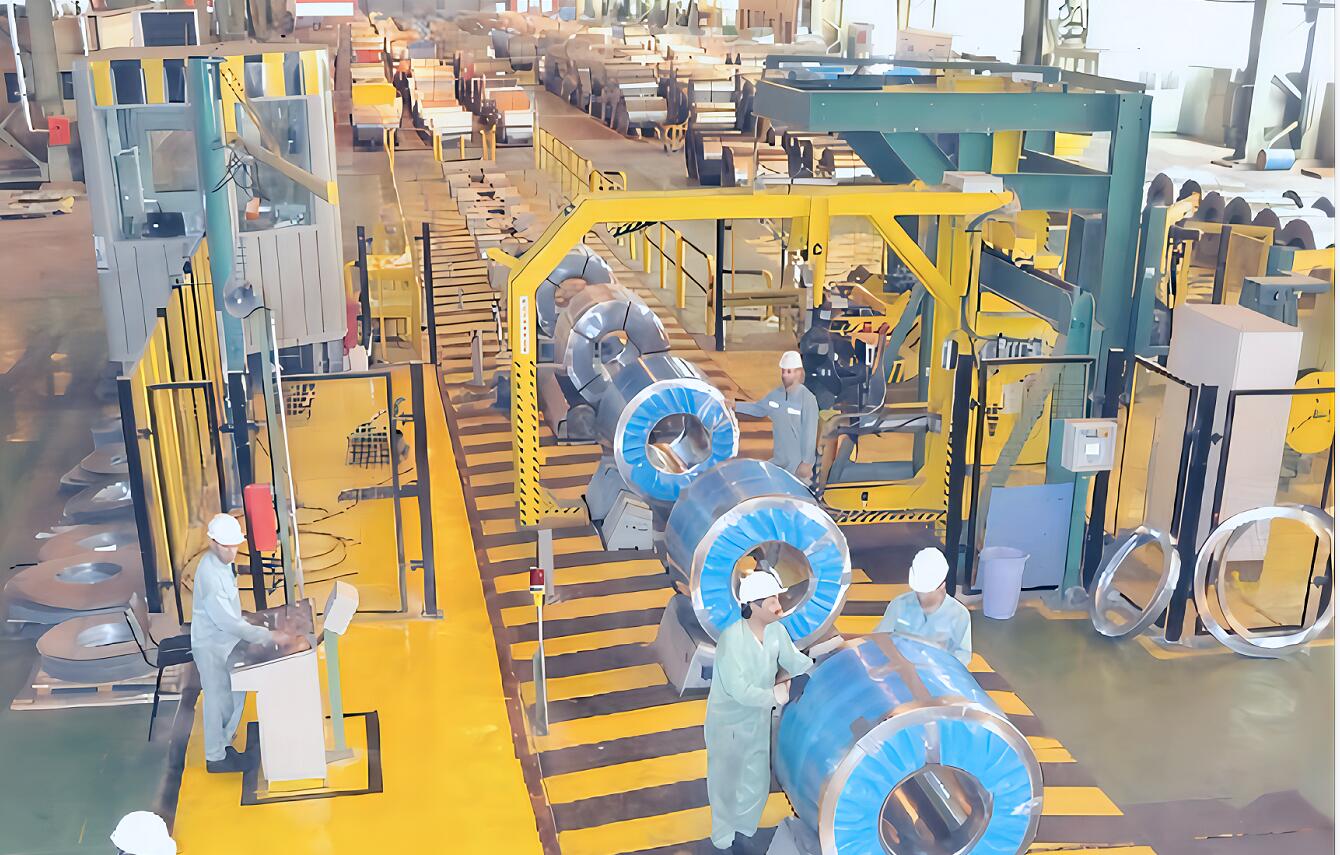

I understand this dilemma intimately. As someone who started on the factory floor and later built my own packing machine business, I’ve been on both sides of this conversation. I’ve seen managers like you get vague, inflated quotes that don’t match their reality. This article will cut through the noise. We’ll break down the cost factors, show you how to prepare for a quote, and guide you toward finding a partner who offers real value, not just a sales pitch. Let’s get into the details that will help you secure the best price for your operation.
1. What Factors Determine the Final Price of an Automatic Coil Packing Line?
You see a price online or in a brochure. It looks promising. But when you inquire, the number changes. This is frustrating and common. The initial price is often for a basic model. The final price reflects the machine built for your factory. The cost isn't arbitrary; it's calculated based on tangible engineering and material requirements.
The final price of an automatic coil packing line is primarily determined by four key factors: the coil specifications (size, weight, material), the required production speed and automation level, the core machine technology and brand, and the scope of the complete system including all necessary peripheral equipment. Ignoring any of these factors will lead to an inaccurate quote and potential cost overruns during installation.


To truly understand the pricing, we need to dive deeper into each of these cost drivers. Think of it like building a house. The blueprint (your requirements) dictates the materials and labor.
🔍 Breaking Down the Cost Drivers
Let's structure these factors to see how they directly impact your budget.
| Cost Factor | What It Includes | Impact on Price | Question to Ask Your Supplier |
|---|---|---|---|
| 1. Coil Specifications | Diameter, width, weight, core type, material (steel, aluminum). | High. Larger, heavier coils require more robust frames, powerful motors, and heavier-duty components. | "Is your standard model rated for my 20-ton coils, or do I need a custom heavy-duty version?" |
| 2. Automation Level | Manual loading vs. automatic feeding; manual strapping vs. robotic strapping. | Very High. Each step of automation adds robotics, sensors, and complex control systems. | "What is the ROI difference between a semi-automatic and a fully automatic line for my 50 coils/day output?" |
| 3. Core Machine & Brand | The main packing machine (e.g., horizontal vs. vertical wrapper). Brand reputation (e.g., Fengding, Wuxi Bu Hui). | Core Cost. Established brands like Fengding often command a premium for proven reliability and technology, which can mean lower long-term costs. | "Can you provide a side-by-side comparison of the Fengding model versus a budget alternative for my application?" |
| 4. System Scope | Conveyors, turntables, strapping machines, weighing systems, dust extraction. | Significant. A "line" is rarely just one machine. These peripherals are essential for flow and add up. | "Is this quote for a standalone machine or a turnkey line ready for plug-and-play in my facility?" |
Beyond the Table: The Hidden "Soft" Costs
The hardware is only part of the story. A truly accurate quote must also consider:
- Engineering & Design: Custom solutions to fit your existing layout cost more than standard models.
- Shipping & Logistics: Oversized machinery shipping from China to Mexico involves complex freight calculations.
- Installation & Commissioning: Will your team do it, or do you need the supplier's engineers on-site? This is a critical line item.
- Training & Spare Parts: The initial package should include operator training and a basic set of spare parts. Clarify this.
My Personal Insight: Early in my career, we purchased a machine based only on the unit price. We didn't account for the cost of reinforcing our factory floor to handle its weight or the extra conveyors we needed. The "bargain" machine ended up costing 30% more than planned. Always request a Detailed Quotation Breakdown that lists every component, from the main frame to the electrical cabinet and the first set of spare parts. This transparency separates serious partners from salespeople. (automatic coil packaging system cost, factors affecting packing line price, detailed coil equipment quotation)
2. How Can I Prepare to Get the Most Accurate Quote Quickly?
You contact a supplier. They ask, "What do you need?" You say, "A packing line for coils." The conversation goes in circles. Days are wasted exchanging vague emails. The quote you finally get is a guess, not a plan. This inefficiency costs you time and leads to proposals that don't solve your real problems. Being prepared transforms you from an inquiry into a serious project.
To get the fastest and most accurate quote, prepare a clear "Request for Quotation" (RFQ) document. This document should include detailed technical specifications of your product, your current and desired production metrics, factory layout drawings, and a clear statement of your primary goals, such as reducing labor or eliminating damage. Providing this information upfront allows engineers, not just sales staff, to assess your needs and propose a targeted solution immediately.


Think of this RFQ as a project brief. The more precise you are, the more precise the response will be. Let's build this document step-by-step.
📋 Your Essential RFQ Checklist
To ensure no critical detail is missed, use this structured checklist. Copy these points into a document and fill in your specifics.
Part A: Product & Process Data (The "What" You Are Packing)
- Coil Dimensions: Max/Min Outer Diameter (OD), Max/Min Width, Max Weight.
- Coil Core: Inner Diameter (ID) size and material (steel, paper, plastic).
- Product Material: Type of metal (e.g., cold-rolled steel, galvanized steel, aluminum).
- Surface Sensitivity: How easily is the surface scratched? This determines handling method.
- Current Packing Method: Describe your manual process. Where are the delays?
Part B: Production & Goal Data (The "How Much" and "Why")
- Current Output: Coils packed per shift/day.
- Target Output: Desired coils packed per shift/day after automation.
- Shift Pattern: How many hours/day, days/week does the line need to run?
- Primary Goals: Rank these: 1) Increase Speed, 2) Improve Safety, 3) Reduce Damage, 4) Lower Labor Cost.
- Available Space: Provide a factory layout drawing with dimensions. Mark the proposed location.
Part C: Supplier & Commercial Terms (The "How" We Work)
- Expected Timeline: When do you need the equipment delivered and installed?
- Budget Range: A realistic investment range helps suppliers propose feasible options.
- Required Support: Do you need full installation supervision and training?
Why This Preparation Wins You Better Prices
When you provide this data, you achieve two things:
- You Show You Are Serious: Suppliers prioritize clients who are organized. They will assign their best engineers to your project.
- You Enable Apples-to-Apples Comparisons: When three suppliers quote based on the exact same RFQ, you can compare their technical solutions, pricing, and timelines fairly. You are comparing solutions, not just random numbers.
A Story from the Other Side: The best projects I've worked on always started with a detailed RFQ. One manager from Monterrey sent us a full PDF with photos, videos of his bottleneck, and CAD drawings. We engineered a solution in a week, and our quote was within 5% of the final project cost. There were no surprises. His preparation saved his company months of negotiation and ensured the line worked perfectly on day one. Your preparation is the first step toward control and cost certainty. (how to request coil packing line quote, prepare for packaging machinery RFQ, accurate industrial equipment pricing)
3. What is the Real Price Range for a Reliable System?
Searching online, you might see prices from $50,000 to $500,000 for a "coil packing line." This vast range is confusing and can be misleading. A $50,000 price tag likely refers to a single, basic semi-automatic strapping machine. A $500,000 quote is probably for a complete, fully robotic turnkey line. Understanding this spectrum is crucial to aligning your expectations with your budget.
For a reliable, production-ready automatic coil packing line, expect a realistic investment range between approximately $120,000 and $300,000+. The lower end typically covers a robust semi-automatic line from a quality manufacturer like Fengding, while the upper end encompasses high-speed, fully automatic systems with advanced robotics and integrated material handling. The final cost firmly sits within this range based on the customization outlined in the previous sections.
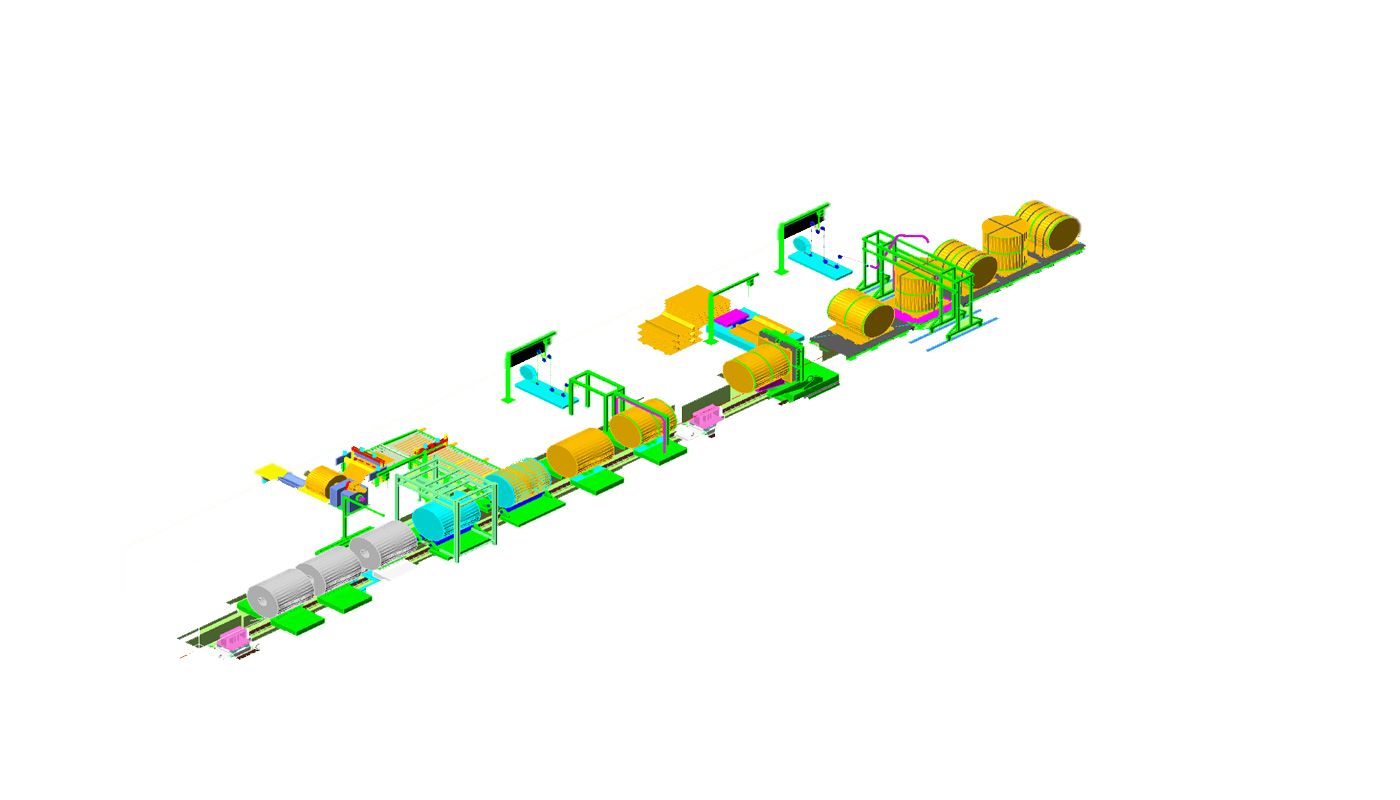

Let's demystify this range by looking at typical system configurations and their associated cost brackets. This will help you visualize what your investment buys.
💰 Price Spectrum & What You Get
Basic System ($50k - $90k)
    ├── Standalone Semi-auto Strapper or Wrapper
    ├── Manual Coil Loading/Positioning
    ├── Basic PLC Control
    └── ✅ Good for: Low-volume workshops, simple bundling.

Standard Reliable Line ($120k - $200k) ★ Most Common
    ├── Core Machine from Fengding or Wuxi Bu Hui
    ├── Motorized Conveyor Sections
    ├── Automatic Strapping Machine (2-4 straps)
    ├── Semi-automatic Turntable
    ├── Advanced PLC with HMI Touchscreen
    └── ✅ Good for: Most mid-size metal processors aiming to automate bottlenecks.

High-Speed Turnkey Line ($200k - $300k+)
    ├── Fully Automatic Coil Feeding & Positioning
    ├── Robotic Arm for End-Face Protection Application
    ├── High-Speed Rotary Strapping Head
    ├── Integrated Weighing & Labeling
    ├── Full System SCADA Control
    ├── Comprehensive On-site Installation
    └── ✅ Good for: Large mills or processors with very high output and zero-tolerance for downtime.
Interpreting the "Real" in Real Price
The word "reliable" is key. A machine at the lower end of the "Standard" range from a proven manufacturer like Fengding will almost always offer better long-term value than a similarly priced "fully loaded" machine from an unknown brand. Why? Consider the Total Cost of Ownership (TCO):
- Uptime: Reliable machines break down less, protecting your production.
- Energy Efficiency: Modern drives and motors use less power.
- Maintenance Costs: Standardized, accessible parts are cheaper and faster to replace.
- Resale Value: Equipment from respected brands holds its value.
Making the Range Work for You: Don't just look at the top-line number. Ask for the Cost-Per-Coil calculation. A $200,000 line that packs 100 coils per shift with 2 operators has a different cost profile than a $150,000 line that packs 60 coils with 4 operators. The higher initial investment often pays back faster through radical labor savings and throughput increases. Your quote should include a preliminary ROI analysis based on your data. (automatic coil packing line cost range, Fengding packing machine price, turnkey coil packaging system investment)
4. How Do I Choose a Supplier That Offers True Value, Not Just a Low Price?
This is perhaps the most critical question. After a bad experience with a supplier who disappeared after the sale, you're right to be cautious. The cheapest quote is often the most expensive mistake. A machine that fails frequently, lacks support, or doesn't perform as promised will cost you far more in lost production, repairs, and frustration than the price difference you "saved."
To choose a supplier offering true value, prioritize proven industry experience, technical support capability, and transparency over the initial price tag. Look for a partner like Fengding, who has a track record of successful installations, provides detailed engineering drawings before payment, and offers a clear, responsive after-sales support plan with local spare parts availability. The right partner acts as an extension of your engineering team.
The relationship with your supplier lasts for the 10-15 year life of the machine. Let's evaluate potential partners using criteria that matter for the long haul.
⚖️ The Value vs. Price Evaluation Matrix
Don't just compare numbers. Score potential suppliers (e.g., Fengding, Wuxi Bu Hui, others) on these key value dimensions:
| Evaluation Criteria | Low-Cost Supplier Typical Profile | High-Value Partner (e.g., Fengding) Profile | Why It Matters for You |
|---|---|---|---|
| Technical Dialogue | Pushes standard catalog models; avoids deep technical questions. | Asks detailed questions about your process, challenges, and goals; proposes custom adjustments. | Ensures the solution is engineered for your problem, not just a generic sale. |
| Proposal Quality | Generic quote with sparse details; no layout drawings. | Provides detailed proposal with system layout, component list, technical specs, and preliminary ROI analysis. | Shows professionalism and allows for accurate comparison. Reduces risk of hidden costs. |
| After-Sales Plan | Vague promises; spare parts have long lead times. | Clear support package: 24/7 remote support, on-site engineer option, local spare parts stocklist, training manuals. | Minimizes downtime. A machine that stops is a cost center, not an asset. |
| Proof of Success | Few references; no case studies from your region/industry. | Provides case studies and client contacts in similar industries (e.g., steel in Mexico). | Validates their experience and machine performance in real-world conditions like yours. |
| Commercial Terms | Large upfront deposit; rigid payment terms. | Staged payments linked to milestones (e.g., 30% deposit, 40% before shipment, 30% after commissioning). | Aligns their incentives with successful project completion and protects your cash flow. |
The Partner Mindset: My Own Philosophy
When I built my factory, I chose suppliers not on price alone, but on their willingness to solve problems with me. Today at FHOPEPACK, we emulate that. For a client in Mexico, we didn't just sell a machine. We studied his plant flow, suggested a different conveyor layout to improve safety, and pre-programmed the PLC for his most common coil sizes. The machine cost more than the cheapest offer, but it started producing value from week one, with zero hiccups. That is the return on partnership.
Action Step: When you get quotes, schedule a video call with the supplier's lead engineer. Present your RFQ and ask them to walk you through their proposed solution. Ask: "What is the single point most likely to fail in this system, and how is it designed or supported to minimize that risk?" Their answer will tell you everything about their honesty and depth of knowledge. (choose coil packing machine supplier, value vs price packaging equipment, reliable industrial machinery partner)
Conclusion
Securing the best price for an automatic coil packing line starts with understanding the cost drivers, preparing a detailed RFQ, and choosing a value-driven partner like Fengding. This strategic approach ensures your investment in a Steel Coil Packing Line delivers maximum ROI through reliable performance and expert support.