

A Beginner’s Guide to Choosing the Right Coil Packing Line for Your Factory
Picture this: you’ve just secured a major contract. Your production line is humming, coils are rolling off at record speed. Then, everything grinds to a halt. The final packaging station is a tangle of manual labor, inefficiency, and rising safety concerns. The bottleneck isn’t your core manufacturing; it’s the seemingly simple act of getting your product ready to ship. This frustrating scenario is all too common in metal processing plants, where the packaging line is often an afterthought until it becomes the primary obstacle to growth and profitability.
Choosing the right coil packing line is a critical strategic decision that hinges on understanding your specific coil types, required throughput, and factory layout to find a system that boosts efficiency, ensures safety, and delivers a clear return on investment. A well-chosen automated line transforms the packaging station from a costly bottleneck into a seamless, reliable extension of your production process.
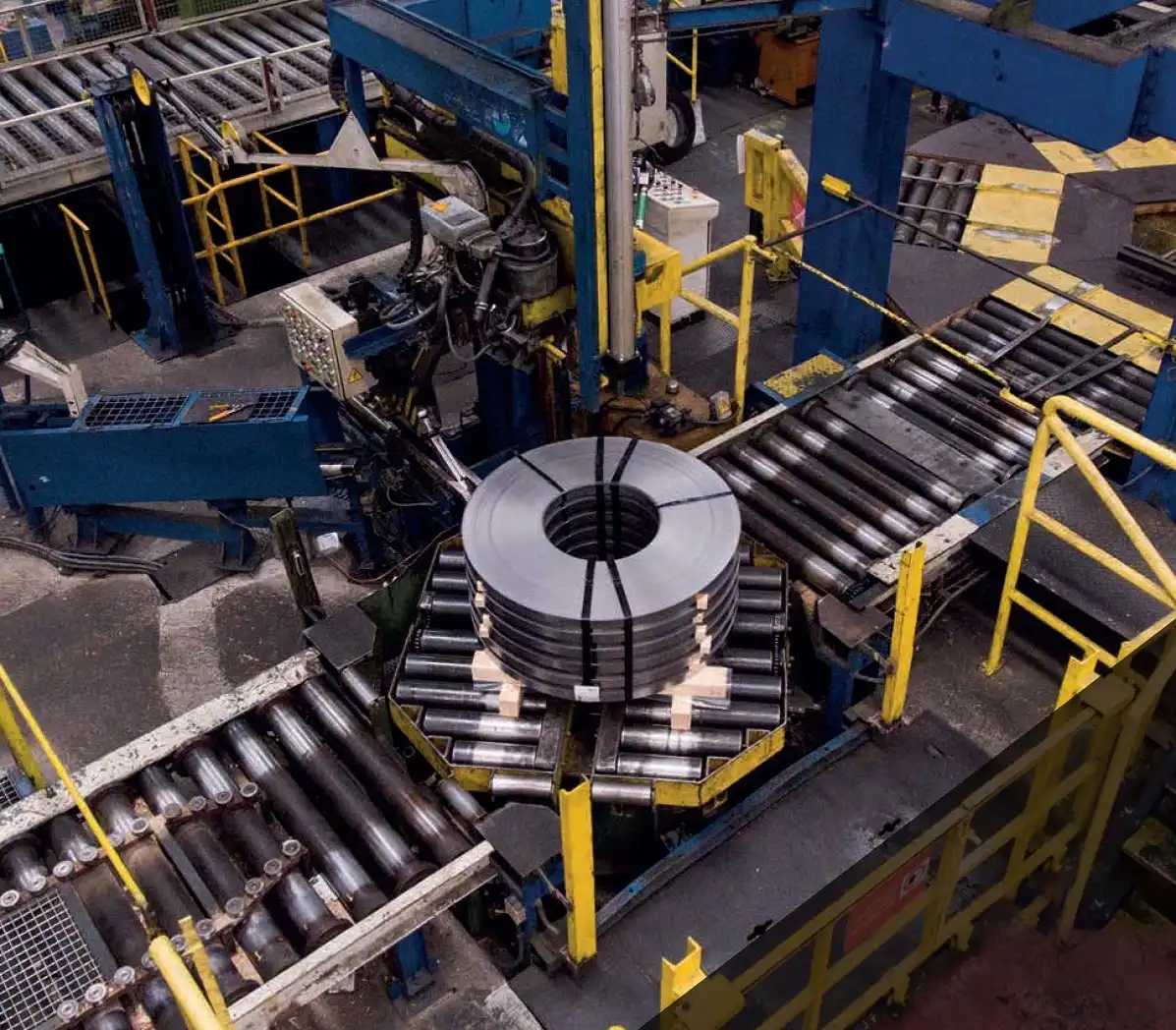

For factory managers like Michael in Mexico, who face daily pressures of output, cost, and safety, this decision carries even more weight. It’s not just about buying a machine; it’s about investing in a partnership for long-term operational success. Let’s break down the essential questions you must ask to make an informed choice and avoid costly mistakes. (coil packaging line selection guide, automated strapping system for factory)
1. What Are Your Coil's Specifics and Required Output?
You wouldn't buy a truck without knowing what you need to haul. The same logic applies to your coil packing line. The physical characteristics of your product and your production targets are the non-negotiable starting points. A system perfect for thin aluminum coils will struggle with heavy, dense steel coils, and a line designed for low-volume job shops will collapse under the demand of a high-throughput mill.
The first step is to conduct a detailed audit of your coil parameters—including type, weight, dimensions, and required handling speed—and match them to a packing line's technical specifications to ensure compatibility and prevent operational failures. This data forms the foundation of your entire equipment search. (coil specifications for packing machine, production capacity requirements)

🔍 The Core Data You Must Gather
Before speaking to any supplier, compile this checklist. Being precise here saves immense time and money later.
| Parameter | What to Measure/Define | Why It Matters |
|---|---|---|
| Coil Type | Steel, aluminum, copper, wire rod. | Material density affects machine strength needs. Surface finish dictates handling method. |
| Core Type | Solid, collapsible, or no core. | Determines how the coil is supported and centered during packing. |
| Weight Range | Minimum and maximum weight (e.g., 1-20 tons). | Defines the required capacity of lifts, conveyors, and the structural frame. |
| Dimensions (OD/ID/Width) | Outer Diameter, Inner Diameter, and Coil Width. | Sets the size limits for the infeed, processing area, and exit conveyor. |
| Required Output | Coils per hour or per shift. | The single most important factor for choosing between semi-automatic and fully automatic systems. |
| Packaging Style | Horizontal vs. vertical strapping, full wrapping, corner protection. | Directly links to the type of machine (strapper, wrapper, combination line). |
🎯 From Data to Decision: Matching Throughput to Technology
Your output target directly dictates the level of automation and the machine configuration.
- Low Volume (< 5 coils/hour): A semi-automatic strapping machine might suffice. An operator places the strap, and the machine tensions and seals it. It's a capital-efficient step up from manual strapping but still labor-dependent. (semi-automatic coil strapper)
- Medium Volume (5-15 coils/hour): This is the sweet spot for fully automatic strapping lines. Coils are conveyed automatically, positioned, and strapped with minimal human intervention. Brands like Fengding excel here, offering robust systems that provide excellent ROI for growing operations. (automatic coil strapping line throughput)
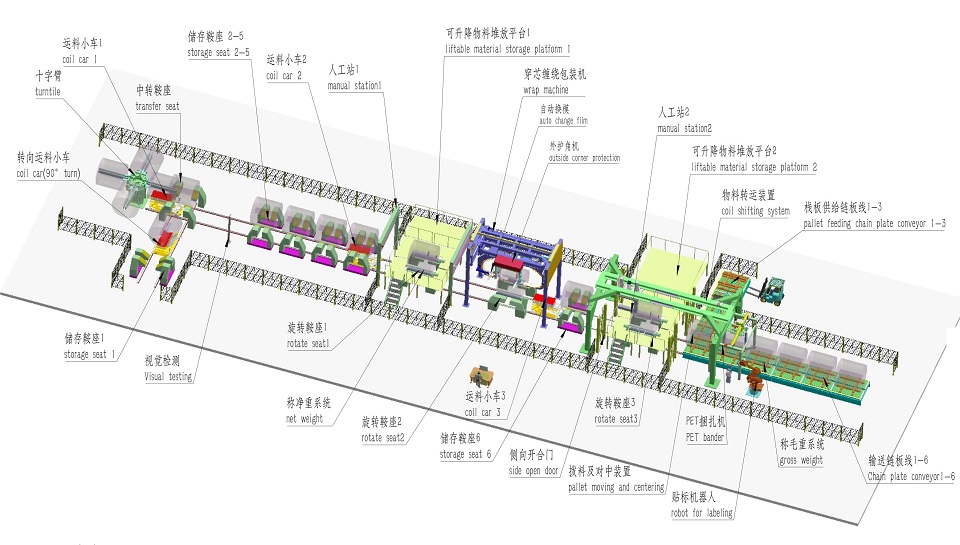
- High Volume (15+ coils/hour): For mills and large processors, a fully integrated packing line is essential. This includes automatic coil transfer, positioning, strapping (often in both directions), and sometimes even automatic film wrapping or labeling. This level requires significant planning and investment but eliminates the packaging bottleneck entirely. (high-speed integrated coil packaging system)
Ignoring this fundamental match between your product/throughput and the machine's capability is the fastest route to disappointment. A machine that’s too weak will break down; a machine that’s too slow will create a queue; a machine that’s overly complex for your needs will drain your budget without providing extra value. (coil packing machine compatibility checklist)
2. How Much Automation Do You Really Need?
Automation is a spectrum, not a simple on/off switch. The goal isn't to buy the most robots; it's to solve your specific problems—labor costs, safety risks, and consistency. For Michael, whose challenges include high injury risk from manual handling and slow packing speeds, moving up the automation ladder is likely essential. But the step you take depends on your budget and pain points.
The level of automation you need is determined by balancing your budget constraints with clear operational goals like reducing direct labor, eliminating heavy lifting, and achieving consistent packaging quality. A phased approach, starting with automating the most dangerous or slowest task, is often the most practical strategy. (coil packing automation levels, ROI on automated packaging)


⚙️ The Automation Spectrum: From Manual to Hands-Free
Let's visualize the options:
-
Manual / Semi-Automatic (Low Automation):
- Process: Coil movement via crane/ forklift. Operators manually apply straps or film.
- Pros: Lowest upfront cost.
- Cons: High labor cost, low speed, high injury risk, inconsistent quality.
- Best for: Very low volume, diverse product sizes, tight initial budgets.
-
Unit Automation (Medium Automation):
- Process: Coil is placed into a station. An automatic strapping machine (like those from Wuxi Bu Hui) applies straps with the push of a button. The coil may still be moved manually between stations.
- Pros: Significant safety improvement (no manual strapping tension), better consistency, good speed for medium volume.
- Cons: Still requires material handling labor, multiple pieces of equipment may not be linked.
- Best for: Factories looking to tackle the specific safety hazard of manual strapping first.
-
Integrated Line (High Automation):
- Process: Coil is automatically transferred from production, through positioning, strapping, and onto outfeed. Operators only monitor and perform maintenance.
- Pros: Maximizes speed, minimizes labor, ensures perfect repeatability, optimal safety.
- Cons: Highest upfront cost, requires more floor space and integration planning.
- Best for: High-volume producers where packaging is a critical bottleneck, and ROI is calculated on labor savings and throughput increase.
💡 Making the Smart Choice on Automation
Ask yourself these questions:
- What is my most expensive problem? Is it labor cost, worker's compensation claims from injuries, or slow throughput causing delivery delays?
- Can I automate in stages? Perhaps start with an automatic strapping station this year, and add automatic conveyors next year.
- Does the supplier understand my industry? A partner who has built factories, like Randal at FHOPEPACK, won't just sell you a machine. They will analyze your workflow and recommend the right level of automation for your goals. They might advise that a Fengding automatic strapper is your immediate solution, with a path to integrate more automation later.
The wrong choice here is either under-automating (and not solving your problems) or over-automating (and wasting capital on features you don't use). The right choice aligns technology with your specific operational and financial reality. (strategic investment in packaging automation)
3. What Should You Look for in a Reliable Supplier?
This might be the most important section. A coil packing line is a long-term investment that will run for years. The supplier standing behind it is as crucial as the steel it's built from. Michael's past experience with poor after-sales service makes this point painfully clear. A reliable partner provides peace of mind, while a poor one becomes a source of endless headaches and lost production.
You should look for a supplier with proven industry experience, strong technical support capabilities, ready availability of spare parts, and a portfolio of successful installations similar to your operation. The best suppliers act as consultants, not just salespeople. (reliable coil packing machine manufacturer, industrial equipment supplier evaluation)


✅ The Supplier Evaluation Checklist
Don't just look at a brochure. Investigate.
- Industry Specialization: Do they focus on metal and coil packaging, or are they a general machinery maker? Specialists understand the unique stresses and requirements of your environment.
- Technical Expertise: Can their engineers discuss your specific coil specs and layout? Do they offer customizations? Can they provide a detailed layout drawing?
- Quality of Construction:
- Frame: Is it heavy-duty welded steel or lighter assembly?
- Components: Are key parts (strapping heads, PLCs, drives) from reputable brands (e.g., Siemens, Mitsubishi, Signode)?
- Welding & Finish: Is the workmanship clean and robust? This reflects overall build quality.
- After-Sales Service Network:
- Local Support: Do they have technicians or partners in your region (e.g., Latin America for Michael)?
- Spare Parts: Is there a clear parts catalog and guarantee of availability for 5-10 years?
- Training: Do they provide comprehensive training for your operators and maintenance staff?
- References & Track Record: Ask for and actually contact references from factories with similar applications. Visit an installation if possible.
🏆 Why Experience Matters: The FHOPEPACK Perspective
From my own journey—from engineer to factory owner—I learned that the best partnerships are built on shared understanding. When you talk to a supplier, listen for questions about your challenges, not just your budget. A good partner will ask about:
- Your floor space constraints.
- Your maintenance team's skill level.
- Your biggest source of product damage.
- Your future expansion plans.
Brands like Fengding have earned their reputation as a first recommendation not just by making good machines, but by building them for the real-world punishment of a metal factory. A supplier like Wuxi Bu Hui is also a solid choice, often providing good value. The key is to find a partner whose reliability is baked into their business model, ensuring your success is their success. This transforms a equipment purchase from a transaction into a strategic alliance for operational excellence. (evaluating packaging machinery supplier, after-sales service for industrial equipment)
4. How Do You Calculate the True Total Cost of Ownership (TCO)?
The purchase price is just the entry ticket. The real cost of a coil packing line is spread over its entire life. Focusing only on the initial quote can lead to choosing a cheaper machine that costs far more in downtime, repairs, and inefficiency. A true financial analysis looks at the complete picture, from delivery day to decommissioning.
Calculating the True Total Cost of Ownership (TCO) requires adding the initial purchase price to all projected future costs, including installation, energy consumption, routine maintenance, spare parts, and potential downtime, then comparing it against the quantifiable benefits of labor savings, reduced waste, and increased throughput. (total cost of ownership for packaging line, coil packing machine ROI calculation)
📊 TCO Breakdown: Seeing the Full Picture
Consider these cost categories over a 5-10 year period:
| Cost Category | Description & Considerations | Impact on TCO |
|---|---|---|
| Capital Expenditure (CapEx) | Machine purchase price, taxes, delivery. | The most visible, upfront cost. |
| Installation & Commissioning | Foundation work, utility connections, on-site assembly, startup. | Can be 5-15% of machine cost. A good supplier provides clear guidance. |
| Operating Costs | Energy: Electricity for motors, compressors. Consumables: Strapping, film. Labor: Reduced operator count. | Ongoing, recurring costs. Automation drastically reduces labor costs here. |
| Maintenance & Repairs | Planned preventative maintenance (PM) and unplanned repairs. | The most overlooked factor. A robust machine (like from Fengding) has lower long-term repair costs. |
| Downtime Cost | Lost production revenue when the line is stopped. | The single largest hidden cost. A reliable machine minimizes this. |
| Disposal/Resale Value | Value at end of life. | Well-built machines hold residual value. |
➕ The Benefit Side of the Equation: It's Not Just Cost, It's Investment
To justify the TCO, you must quantify the benefits. This is where the ROI becomes clear.
- Labor Savings: How many workers are freed up? Multiply their fully-loaded wages (salary, benefits, insurance) by the hours saved per year.
- Product Damage Reduction: Estimate the annual cost of coils damaged during manual handling and packaging. A gentle, automated system can virtually eliminate this.
- Throughput Increase: How many more coils can you ship per day/week? This translates directly into increased revenue.
- Safety Cost Avoidance: Reduced risk of costly workplace injuries lowers insurance premiums and avoids litigation.
Example Thought Process: "This automated line costs $150,000. It will save me 2 workers ($80,000/year), reduce product damage by $15,000/year, and increase output by 5%. The payback period is under two years. The cheaper $100,000 option requires the same labor, has higher maintenance costs, and doesn't solve my bottleneck."
By forcing yourself to run these numbers, you move the conversation from "What does it cost?" to "What is it worth?" This financial discipline ensures you invest in a solution, not just spend on a machine, and guides you toward partners who build for low TCO and high long-term value. (financial justification for packaging automation, calculating payback period for equipment)
Conclusion
Selecting the right coil packing line is a strategic process of matching your specific operational needs with reliable technology and a trustworthy partner. By carefully evaluating your requirements, automation level, supplier, and total costs, you can transform packaging from a bottleneck into a competitive advantage. For a robust solution, explore the engineered reliability of a Steel Coil Packing Line built for demanding environments.